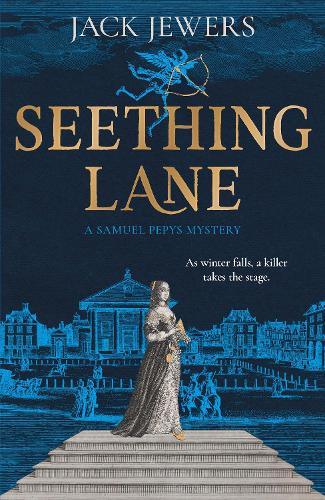
I know you don’t expect me to be reviewing a novel on this theatre blog but I think you’ll be interested in this because a substantial part of Jack Jewers‘ gripping whodunit Seething Lane is set in a theatre at the time of the Restoration of the Monarchy. The book is the follow up to The Lost Diary of Samuel Pepys featuring the famous diarist as a proto-detective.
In this mixture of fact and fiction, Sam, who was a fan of theatre (fact), spends time at the Theatre Royal in Drury Lane investigating some murders (fiction). For anyone interested in theatre, the preparations for a production of As You Like It provide many fascinating insights into what went on backstage in the latter part of the seventeenth century.
Women had only just been allowed to appear on stage, and Nell Gwyn was wowing the crowds, as well as King Charles II. Sam, Nell and the King aren’t the only real people in this book, and if you know your theatrical history, you won’t be surprised at one of the revelations of Sam’s investigation.
Mr Jewers’ historical knowledge also covers London post-Great Fire and the feverish politics of the time. He wears his research lightly but it helps enormously in his evocation of life in London- the muddy streets, the primitive system of law and order, the transport (did you know you could hire a horse like you might hire a car?) and especially the bitter cold weather of the winter of 1670.
Samuel Pepys and his right-hand man Will Hewer are recruited by the King to look into the grisly murders of someone close to his son and of a mysterious second person. The son is illegitimate but controversially tipped to be his successor. This comes on top of Sam’s spying on a firebrand preacher. Inevitably, the two activities are linked, although I found the connection slightly stretched credibility. No matter, there’s plenty of intrigue and excitement- and more unpleasant deaths- as the detective team peel back the layers of a conspiracy and find themselves in danger.
This book is a pastiche of Samuel Pepys’ diary but Mr Jewers writes in a tight easy-to-read style that, while it suggests the language of the period, is never obscure or anachronistic, and always thrilling. Incidentally, Seething Lane is where Sam lives and works, and where the first murders take place.
If you’re familiar with the real Samuel Pepys, you may be surprised to find this corrupt government official, who enjoyed sexual liaisons with servants and actresses, has metamorphosed into a moral beacon who is devoted to his wife. So, he’s a fictional character based on fact, and all the better for it. Mr Jewers’ Samuel Pepys is determined, despite obstacles and threats, to uncover the truth. In doing so, he becomes a hero we admire and care about, whose adventures keep us turning those pages.
Seething Lane by Jack Jewers is published by Moonflower Book on 3 September 2026.
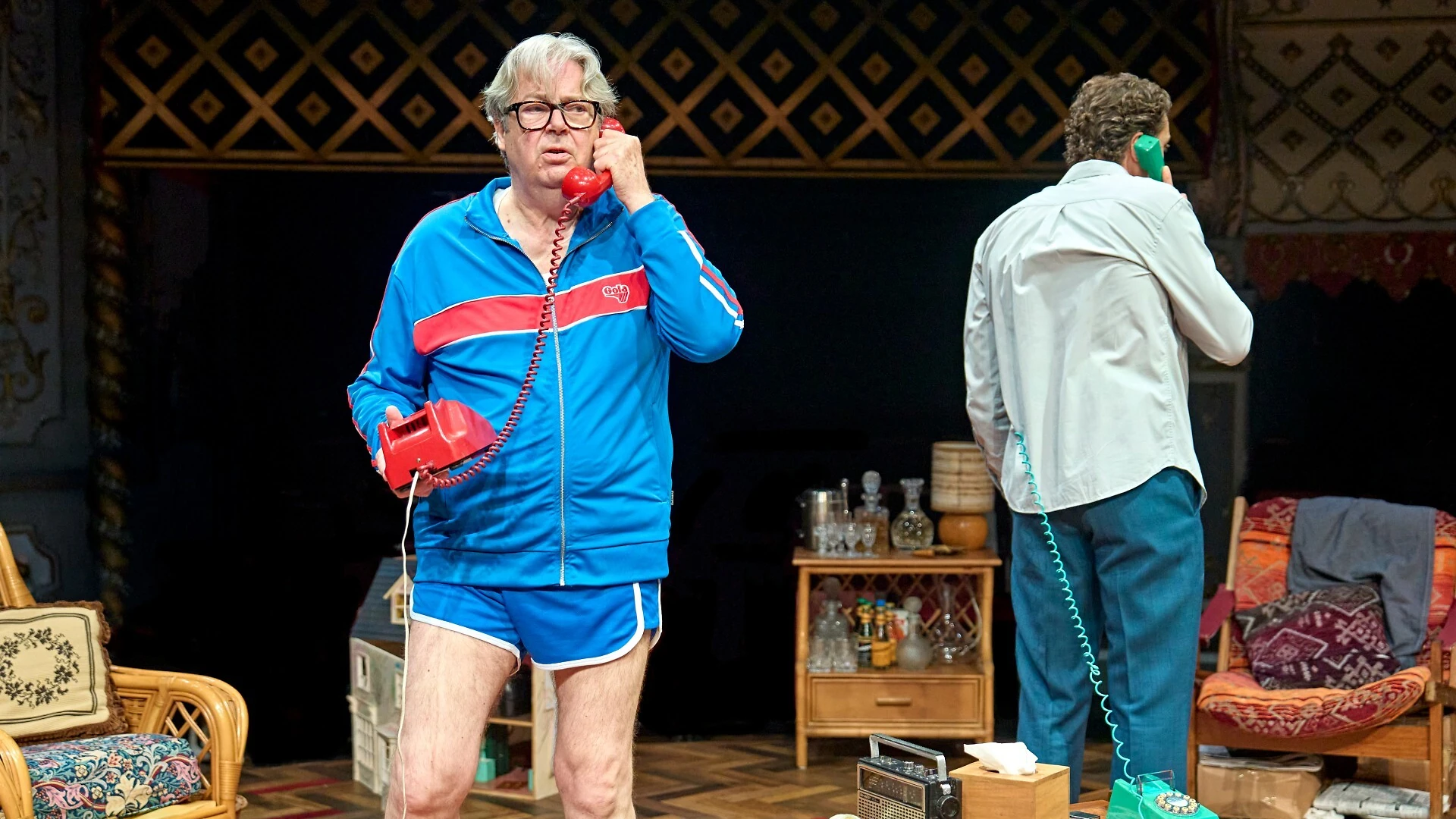
Roger Allam in How The Other Half Loves. Photo: Manuel Harlan
There was a time when there were five plays by Alan Ayckbourn running at the same time in the West End. That was 1975. His work is not so regularly performed these days, so it’s possible there are theatregoers who have never seen one of his plays. In which case, this is the perfect introduction. A farce about infidelity infused with deception and misunderstandings, a cast whose comic timing works with the precision of a Swiss watch, and, talking of running at the same time, a set in which two sitting rooms occupy the same space and the action segues between the two.
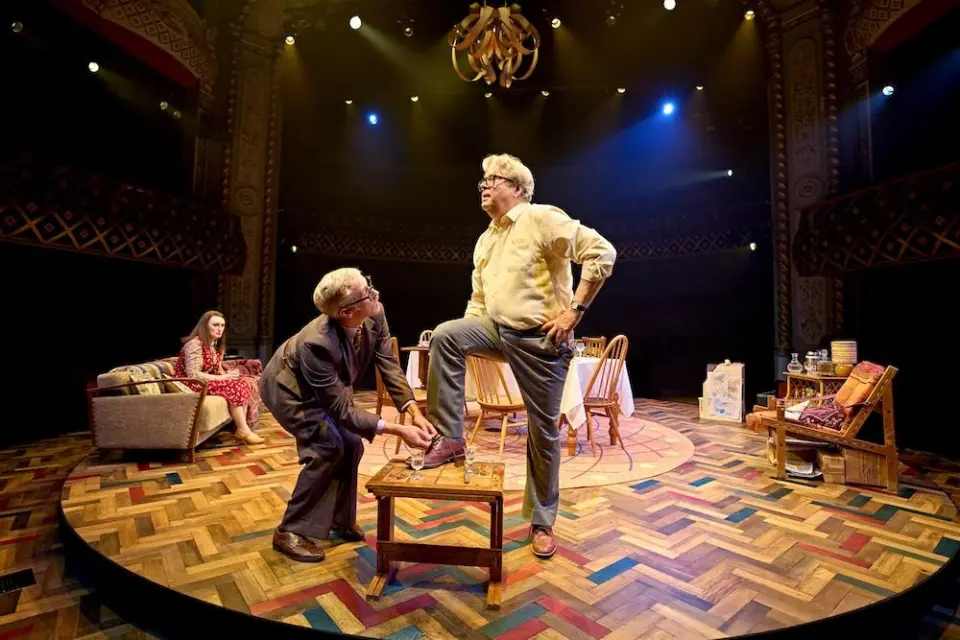
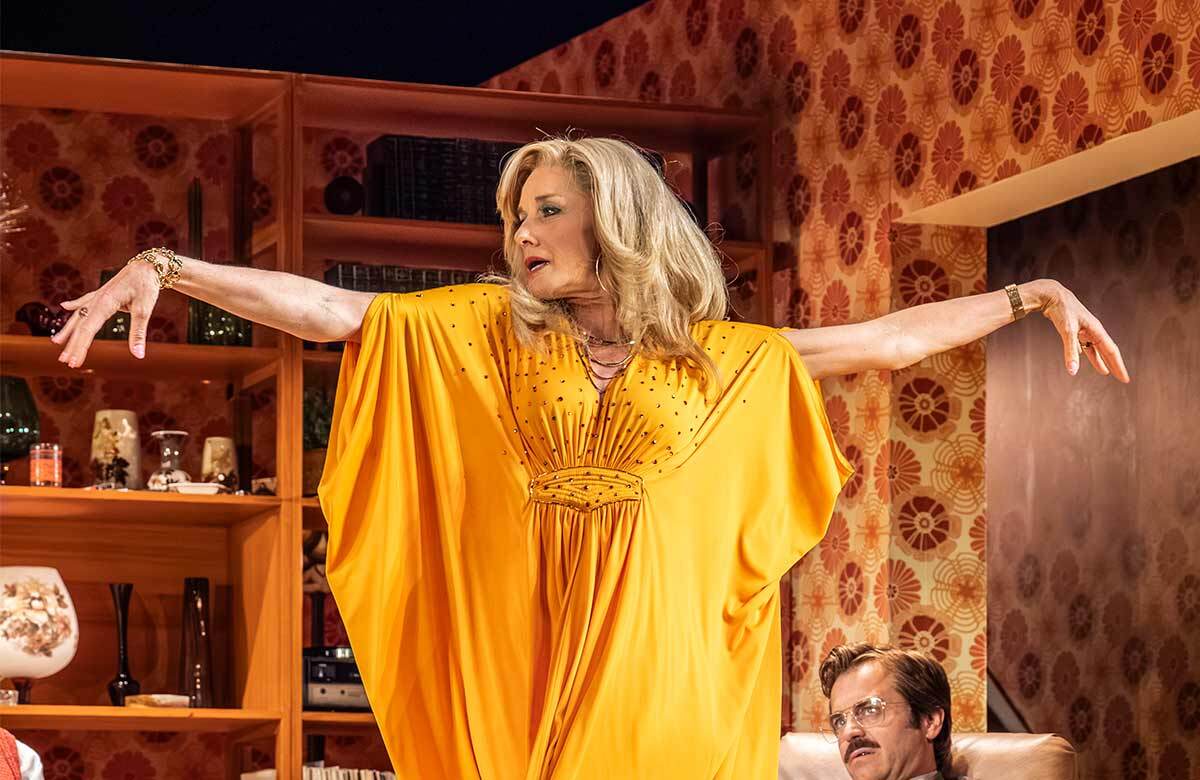
This production at The Old Vic takes place in the round, as it did when it was premiered back in 1969. Since it’s nearly always performed within a proscenium arch, it’s fascinating to see what a difference this makes. You really feel you’re in the thick of it, with actors entering and exiting in four different directions, front, back and sides. Rob Howell‘s set is a masterpiece of construction. He presents two sitting rooms in the same space while keeping it simple enough not to block anyone’s view,. It also evokes the late sixties and early seventies with some deft touches in the choice of furniture and costumes, including Roger Allam‘s very short shorts.
The households that are both present on stage belong to two couples- well-off Frank and Fiona, and flat dwelling Bob and Teresa. Fiona and Bob are having a secret affair. To try and keep it that way when their partners become suspicious, they both, independently, pretend that they are spending time helping someone who suspect their partner is having an affair. The two ‘someones’ are another couple William and Mary. Things start to spiral out of control when Frank and Teresa invite William and Mary to dinners on successive nights. The simultaneous view of what other characters are doing elsewhere underlines the secrets, the lies and the self deception.
Adam Gillen & Roger Allam in How The Other Half Loves. Photo: Manuel Harlan
The genius of the play is to be seen when the consecutive dinners take place on stage simultaneously with William and Mary flitting between them, culminating in an hilarious incident with flying soup.
You may know that on this website I compile roundups of critics’ reviews. Well, they all praised Roger Allam‘s performance as Frank, more than one referring to his masterclass in comic timing. I absolutely agree that there can be no-one better at the pause and the look, before pouncing with a killer line. His character is pompous but with a dimness that doesn’t live up to his image of himself as someone in charge of situations. So he puts two and two together and makes five with continuous regularity while being so absorbed in his view of the world that he doesn’t notice hat’s happening in front of him.
Excellent as he is, all the cast are to be commended for their comic timing, as is Philip Breen for directing their propulsion through time and space. Dorothy Atkinson‘s flustered Fiona is a triumph of staring looks and tight lips. Rowan Polonski moves smarmy Bob from inconsiderate to downright nasty. You can almost see the sparks coming off Ayesha Antoine‘s explosive fiery Teresa. William, an abusive husband, is given a slimy obsequiousness by Adam Gillen. Laura Elsworthy as Mary is painfully shy but so full of emotion it feels like she could explode at any moment.
Although it concerns three very different marriages, none of them entirely happy but all of them somehow rubbing along, How The Other Half Loves only looks in depth at Frank and Fiona. We can see why she might have wanted a temporary escape from the dullness of her patronising husband. Less fully portrayed are the other two couples. In both of their cases, the men are abusive and the women seem to forgive them relatively easily. More insights into the female characters would be needed if the play was written today.
As a farce, though, it’s a great night out.
How The Other Half Loves can be seen at The Old Vic until 19 September 2026. Buy tickets directly from the theatre www.oldvictheatre.com
Follow Theatre Reviews With Paul Seven on Instagram, threads, Mastodon, BlueSky and Facebook
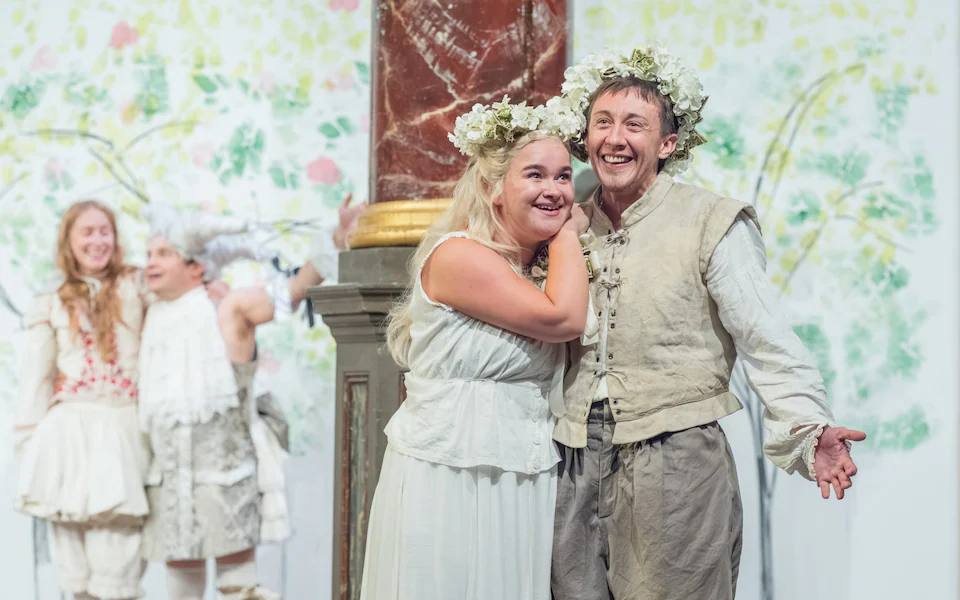
Lola Shalam & Charlie Josephine in As You Like It at The Globe. Photo: Marc Brenner
There’s never a long gap between productions of Shakespeare’s much loved comedy As You Like It. Despite its familiarity, it remains quite confusing. WhatsOnStage tried help with the plot: ‘Two duke brothers, one usurping the other, another set of three brothers, their father an enemy of the usurping duke, the oldest bullying the youngest (where is the third?) who, while wrestling the usurper’s wrestler, falls in love at first sight with the usurped duke’s daughter. They all end up fleeing to the woods where they meet a whole new bunch, and so forth.’ The critics enjoyed Sean Holmes and Charlie Josephine‘s comical production (‘rambunctious fun’ Telegraph), and praised many of the actors including Lola Shalam‘s Rosalind, Jonnie Broadbent‘s Touchstone and Katherine Pearce‘s Jaques.
4 stars ⭑⭑⭑⭑
Time Out’s Andrzej Lukowski assured us: ‘This is not a production that (as far as I can tell) comes with a massive high concept’. It’s simply; ‘a burst of late summer sun.’ He mentioned: ‘Katherine Pearce’s Jaques is a lovely, human take on the role, somebody with a sensitive, downbeat disposition rather than the sort of thunderous performative melancholy that the role is typically saddled with.
Matt Wolf for LondonTheatre called it: ‘a production that has scant time for rest and wants instead to release the audience into a late-summer landscape of mischief and mirth.’
Clement Scott at BroadwayWorld found: ‘Lola Shalam’s take on Rosalind, perhaps Shakespeare’s most finely crafted female character, highlights her open pursuit of sexual desire, and hints at the gender euphoria the character might feel when dressing as Ganymede.’
Miriam Sallon for WhatsOnStage was not fond of the set: ‘Paul Wills’ stage design is charming in theory: huge blank canvases lean against the back walls, later filled in with quick charcoal drawings of trees to portray the banished duke’s forest, finished with roller-painted leaves. But it would take a very talented crew of artists to create a forest so deftly and casually, and instead it’s left to an enthusiastic cast of actors scribbling in the background, and it ends up looking like a primary school project.’ Nevertheless, she loved almost everything else: ‘The music, as always at the Globe, is the cherry on top.’
3 stars ⭑⭑⭑
Rachel Halliburton for The Times asked: ‘How do you make such a staple of the summer repertoire shine? Here, in no small part through music and design. Katie Richardson’s ebullient band … shifts compellingly from baroque formality to folk, while Paul Wills’s elegant set blooms as woodland inhabitants draw trees and leaves onto the blank canvases.’
The Guardian’s Arifa Akbar noted: ‘Many aspects of this production soar high, including the comedy, sublimely eked by almost every character. Touchstone (Jonnie Broadbent, bare-chested with lacy ruff) is a comic highlight, Jaques’ (Katherine Pearce) “All the world’s a stage” speech is quietly moving and Shalam is a commanding Rosalind, full of charm and cheek.’ She cautioned: ‘although the comedy entertains, it takes away the play’s subversive edges’.
Tom Wicker for The Stage loved Rosalind: ‘Shalam dazzles nearly everyone else off the stage. In a play full of self-important characters, her flailing attempts to be ‘a man’ are funny, but always heartfelt. With the lightest of touches, she captures Shakespeare’s delight in treating no identity as permanent, ‘essential’ or off-the-table for playful parody.’ His reservation was: ‘Where this staging loses ground is in never varying its self-consciously breezy, cheeky tone enough to tap into the play’s more melancholic depths.’
‘Even if it doesn’t always convince emotionally, this pacy production, which leans into the play’s bawdy humour, is still rambunctious fun’ said Kirsten Grant in the Telegraph. She concluded: ‘Holmes and Josephine’s staging doesn’t concern itself with As You Like It’s emotional depths. (Katherine Pearce’s Jaques is less melancholy and becomes a rather understated figure.) Instead, peppered with audience sing-alongs and folk music, this evening of “rustic revelry” will send audiences out on a giddy high.’
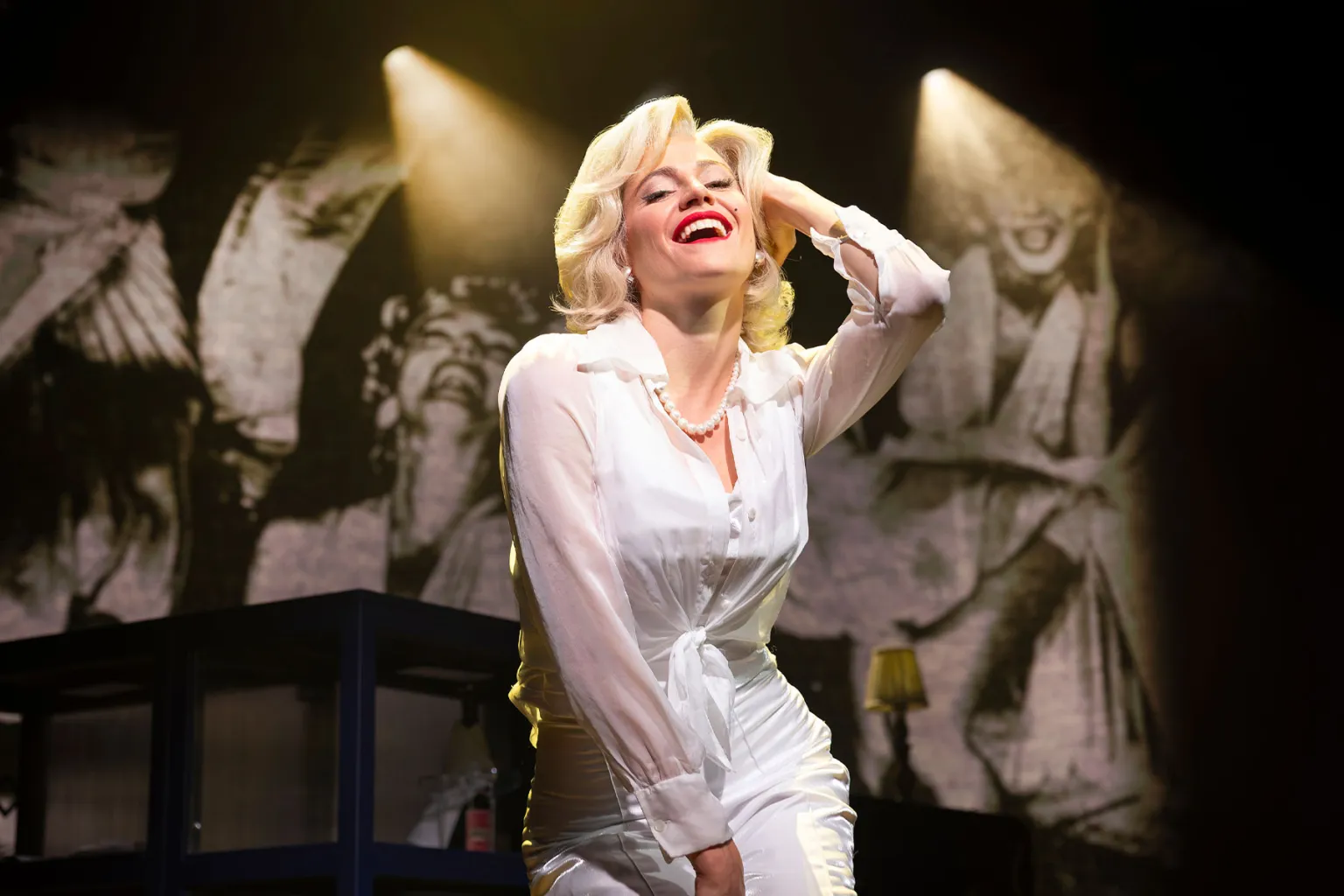
Pixie Lott in Who Killed Marilyn? Photo: Pamela Raith
The worst reviews of the year (worst even than those for Trainspotting) greeted Sharlene Cooper Cohen’s play about the life and death of Marilyn Monroe. Pixie Lott as the iconic movie star emerged with a few kind words (not many) but the play , directed by Philip William McKinley, was declared lifeless (like a ‘Wikipedia’ entry- Mail, WhatsOnStage, BroadwayWorld).
[Links to full reviews are included but a number are behind paywalls and therefore may not be accessible]
2 stars ⭑⭑
The Daily Mail’s Patrick Marmion said it was ‘a play that has all the drama of a Wikipedia entry’.
Julia Rank of WhatsOnStage had the same thought: ‘Sharlene Cooper Cohen’s prurient play that has all the dramatic tension and emotional impact of a Wikipedia article.’ She gave some credit to the star: ‘Lott does her best with what she has to work within her bouffant bobbed wig(physically, she would be more convincing as Princess Diana than Monroe),though there is overreliance on the breathy voice and coquettish mannerisms. Her lengthy final monologue to her psychiatrist is handled capably, granting her some dramatic dignity.’
Fiona Mountford, reviewing for the Telegraph, endured a ‘stubbornly spark-free two hours’. She laid some of the blame on ‘director Philip William McKinley, who oversees a production that is almost entirely devoid of energy.’
[2 stars assumed] Time Out‘s Andrzej Lukowksi said emphatically: ‘it’s simply not a good drama’.
1 star ⭑
Mica Blackwell for BroadwayWorld came up with a familiar comparison: ‘Despite seemingly based on years of research and the insistence that Monroe isn’t a dumb blonde boy crazy victim, Cooper instead regresses her life with as much substance as a Wikipedia summary’. She told us: ‘With little cohesion, McKinley’s direction sporadically flashes – quite literally from Jack Weir’s blinding lighting design and Justin Williams’ uninspired set – back and forth between the moments after Monroe’s death and a series of memories that are ridiculous at best and crass at worst.’
‘The whiff of drama school end-of-year show persists’ sniffed The Guardian’s Arifa Akbar. She concluded: ‘the bigger mystery of who Monroe was remains entirely untouched.’
The Standard’s Nick Curtis called it a ‘tawdry and irredeemably awful trawl through Marilyn Monroe’s life and last moments’. As for the star: ‘Lott seems to have only two modes of expression as Marilyn – eyelash-batting flirtation and screaming anxiety … on this evidence she shouldn’t give up her day job as a pop star.’ He ended: ‘Unfortunately our online content management system does not allow for zero-star reviews. If it did, this would be my first.’
’The only mystery here is how this comically inept conspiracy theory drama ever made it to the London stage’ revealed The Times’ Clive Davis. ‘You leave the Emerald Theatre feeling sorry for the actors, especially the pop singer Pixie Lott, whose version of Marilyn essentially consists of one pout followed by an even bigger one.’ He pointed out: ‘It somehow seems appropriate that an enema makes an appearance before the end of the evening. If only someone had applied one to the script.’
Tamsin Outhwaite in Abigail’s Party. Photo: Ellie Kurtz
Alison Steadman is forever associated with the part of Beverly in Abigail’s Party but all the critics agreed that Tamsin Outhwaite made it her own (‘flinty, ferocious and quite fabulous’ Financial Times). They were not so unified about the quality of Nadia Fall‘s production and whether Mike Leigh‘s 1977 play had dated, although most felt it worked well (‘Fall’s deft direction maximises the comedy, but also the agonising and almost unbearable sadness lurking below’ BroadwayWorld).
[Links to full reviews are included but a number are behind paywalls and therefore may not be accessible]
4 stars ⭑⭑⭑⭑
The Financial Times’ Sarah Hemming praised: ‘Tamzin Outhwaite’s flinty, ferocious and quite fabulous performance as a woman who can turn the offer of a drink into a proposal so loaded it might give a mafia don pause.’ She continued: ‘she also radiates a sense of deep misery, frustration and nihilism, and her instinct to drive all that towards destroying others is horribly recognisable.’ She had good words for how well the play has come through the years: ‘Leigh, likewise, gradually shifts the tone. The brittle humour gives way to something darker and a desolate picture of a class-ridden and consumer-driven society emerges. Nadia Fall’s astringent staging retains the period setting, rolling the whole thing out on Peter McKintosh’s gloriously strident set and lacing it with 1970s music, but it also drives home the current resonances.’
The Stage’s Sam Marlowe also gave her full credit: ‘this is Outhwaite’s show. It is inevitably stagey – the heightened quality of Leigh’s work gives the play an air of contrivance that in its way is as dated as the decor – but Outhwaite seizes and stomps her way through it with glittering conviction. And it’s still horribly entertaining.’
Time Out’s Andrzej Lukowski too liked the way Bev has changed in this production: ‘Outhwaite … is wickedly calculating, a middle aged mean girl who deftly manipulates her hapless guests as a means of making herself feel better about her rut of a life, in which a veneer of aspiration masks boredom and mundanity. She is just awful, but she is shrewd and calculating’. He pointed out: ‘The fact Outhwaite is actually from a working class Essex background surely helps: she doesn’t have Steadman’s weirdly affected drawl, but rather sounds like somebody with a regional accent trying to lose it – it’s less overtly amusing than Steadman but also less mocking of the character.’ He decided: ‘it basically works because the play’s a stone cold classic. Many of the lines are gaspingly, immortally funny, and as a simmering study of passive-aggressive Britishness it is utterly peerless’.
Kirsten Grant for the Telegraph reported that the play ‘still has the power to make us cringe and laugh in equal measure.’
BroadwayWorld’s Aliya Al-Hussan also praised the production: ‘Fall’s deft direction maximises the comedy, but also the agonising and almost unbearable sadness lurking below. Abigail’s Party is the ultimate drinks party from hell, but this vibrant and perfectly-pitched production means you just can’t take your eyes off it.’ She thought: ‘Fall’s decision to cast a South Asian couple as Angela and Tony works well’ and liked the two actors: ‘Omar Malik is a suitably sullen Tony who displays very jagged edges in his harsh treatment of his wife. Lauren Patel … creates a child-like Angela, who constantly looks adoringly at Beverly as she puts her foot in it again and again’.
The Times’ Clive Davis praised the production and cast: ‘Fall’s production, first seen at Stratford East in 2024, is so deftly crafted that the best of the dialogue sounds freshly minted. Tamzin Outhwaite’s bored, vampish wife steps out of the shadow of Alison Steadman (…) Her guests and her poor husband, Laurence (Kevin Bishop strikes just the right aggrieved tone), become her props (…) Pandora Colin captures the gaucheness of Sue, the painfully prim neighbour who is taking refuge from her daughter’s rave-up.‘
WhatsOnStage didn’t review the West End presentation, having reviewed its premiere at Stratford East in 2024. This is what Theo Bosanquet said then: ‘There are flaws – notably, the ending doesn’t quite live up to the promise of what precedes it – and aspects of the text have inevitably dated, not least the use of the word ‘rape’ for cheap laughs. But Fall’s revival revels in its sheer entertainment factor, emphasised by Peter McKintosh’s sitcom-esque living room set, and in Outhwaite has a comic lead on stellar form.’
3 stars ⭑⭑⭑
The Guardian’s Arifa Akbar loved the new Beverly: ‘Tamzin Outhwaite’s incredible achievement is that she banishes Steadman’s original portrayal of Bev as the definitive one (…) Beneath her patter as party hostess is rage, hurt and an almost Madame Bovary boredom.‘ She had reservations about the play: ‘the darkness of the ending does not land. It is partly because there are unanswered questions around their marriage but also because it has all been so enjoyably comical that this switch to tragedy leaves Bev speechless and at sea, for once.’
The Independent’s Alice Saville was disappointed with production. First she explained what she thought the play is about: ‘It’s more of a study of how one bullying personality can gradually distort and poison everything around them – by painting their aesthetic and moral choices as the only possible correct ones, and by slowly obliterating anyone who refuses to enter their orbit. Fall’s production, though, favours a consistent tone of brash silliness over psychological intensity.’
Julia Rank of LondonTheatre didn’t think the play had worn well: ‘The way in which it originally captured a zeitgeist and was developed through improvisation, blending elements of a middlebrow sitcom with Who’s Afraid of Virginia Woolf?, was groundbreaking in its time and has influenced any amount of cringe comedy over the past half-century (…) while much of the audience was in stitches, my response to the humour was more muted.’
Critics’ average rating 3.7⭑
Value Rating 39 (combining critics’ rating with typical ticket price)
Abigail’s Party can be seen at the Harold Pinter Theatre until 19 September 2026. Buy tickets directly from haroldpintertheatre.co.uk
If you’ve seen this production of Abigail’s Party, please leave your review and/or rating below
Death Note: The Musical at The Barbican. Photo: Manuel Harlan
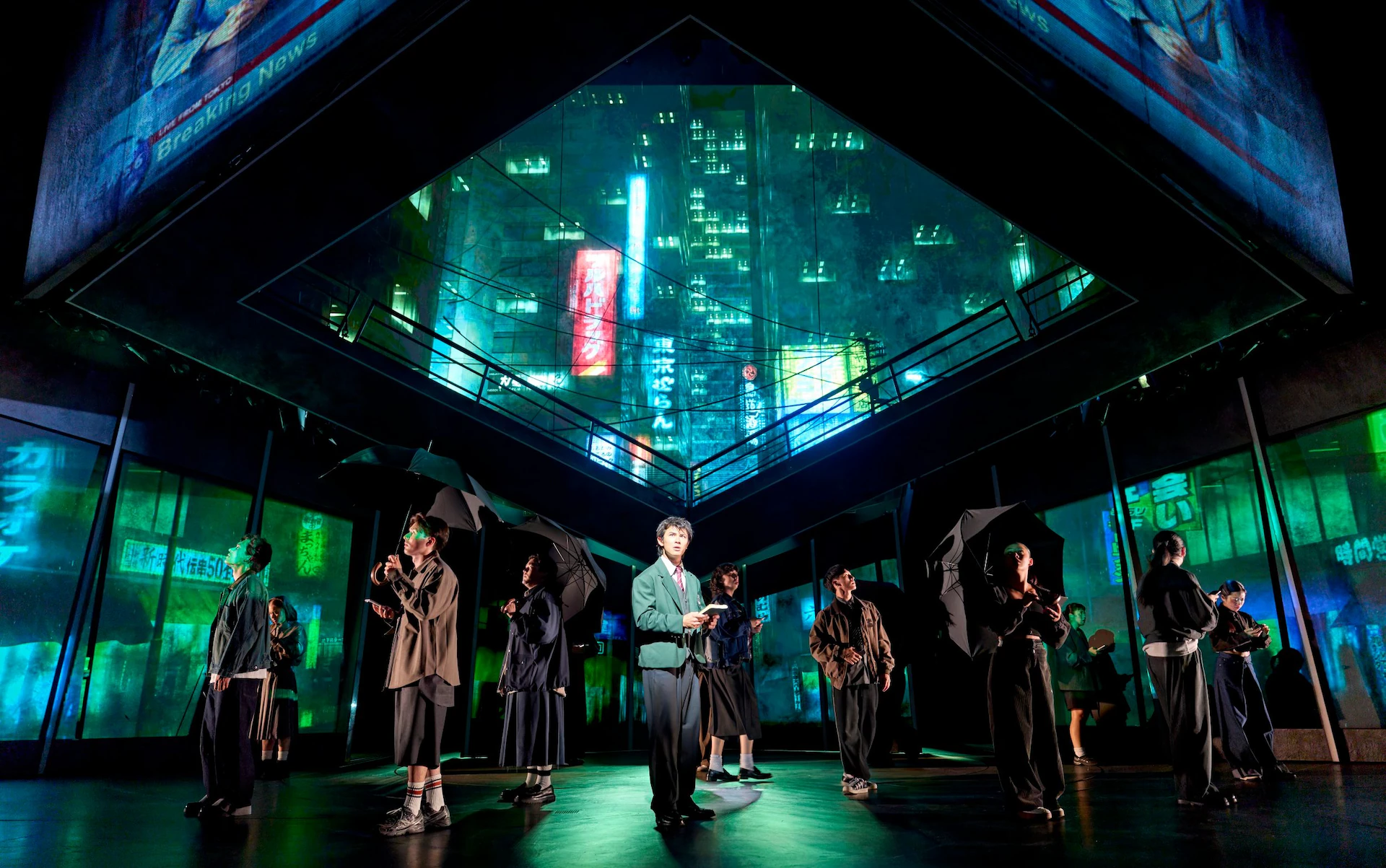
A new musical based on a popular Manga tells the story of a student who is given a ‘Death Note’ by the gods and discovers whoever’s name he writes in it will die. He becomes a killer and is hunted by a genius detective. Most of the critics loved Stephen Whitson’s production (‘stunning visuals and all-around formidable cast’ BroadwayWorld) but a couple didn’t (‘dead on arrival’ Telegraph). They couldn’t even agree about Frank Wildhorn and Jack Murphy‘s music (‘haunting, majestic’ WhatsOnStage; ‘compositions alternate between pop-rock anthems and mopey ballads’ Standard).
[Links to full reviews are included but a number are behind paywalls and therefore may not be accessible]
4 stars ⭑⭑⭑⭑
WhatsOnStage‘s Alun Hood loved it. He likened it to a ‘gleaming, glittering fantastical beast. This is a very big show in every sense: ambition, emotions, scale, spectacle, cast… and sheer entertainment value.’ He admitted: ‘In the cold light of day, it’s utterly preposterous, of course, but such is the world-building in Stephen Whitson’s epically stylish production and the consistency of tone in Menchell’s writing that, once you buy into the bombastic madness, this really is a terrific time in the theatre.’ He continued to pile on the praise to the end of his refiew: ‘the production values alone outstrip most current West End musicals, and the haunting, majestic pop score is surely enough to inspire repeat visits from fans. This is a total blast.’
Mica Blackwell for BroadwayWorld assured us: ‘Putting aside the plot’s occasional disjointedness, there is much to enjoy in Death Note. Diehard fans will love seeing the world brought to life with its stunning visuals and all-around formidable cast, while newcomers will quickly give themselves over to the thrilling melodrama. If there’s one thing Death Note won’t do this summer, it’s leave you dying of boredom.’
Andrew Pulver for The Guardian found: ‘Shorn of the original’s convoluted digressions, and with a dilution of the original manga’s play for the teen-boy readership, this emerges as a smart, metaphysical whodunnit – or perhaps, more accurately, howdunnit – with a nice line in emotional intensity cranked up by its power-ballad musical score (…) Death Note purists might not be completely on board with the alterations, but I would challenge anyone not to have a good time with this.’
Olivia Rook at LondonTheatre liked the look: ‘Jon Bausor’s striking set uses a platform to separate the gods from the humans, which doubles as gritty architecture for Tokyo’s skyline. Video designer Akhila Krishnan’s flickering projections of neon lights and rain evocatively capture a sense of place, helping to pull together a stylish production that is dressed to kill.’
The Financial Times’ Sarah Hemming wrote that it was ‘a riotous spectacle, and the young central trio give cracking performances. Pang is excellent as the increasingly megalomaniac Light; Ryan makes L weirdly charismatic and has a great voice; Stephanie Zaharis shines as Misa, the pop star who, somewhat improbably, gets mixed up in it all. Leung is very enjoyable as the cackling, amoral Ryuk and Grace Mouat is a standout as Rem, the spirit who falls in love. Not to die for, but an entertaining night out.’
2 stars ⭑⭑
The Standard‘s Nick Curtis was blunt: ‘it’s a mixture of mumbo-jumbo, crime-story cliche and anodyne teen wish-fulfilment. Frank Wildhorn’s compositions alternate between pop-rock anthems and mopey ballads. Stephen Whitson’s heavy-handed production is full of brutish air-clawing choreography and wooden exposition.’
1 star ⭑
Tim Robey, the Telegraph‘s film critic, was unimpressed: ‘Death Note: The Musical crash-lands at the Barbican – not so much souped-up as dead on arrival. Not a single one of the 27 belted-out songs has the power to resurrect it (…) Even fathoming why it’s a musical at all is beyond me (…) You’d be hard pressed to send this music anywhere other than the bin: it serves up tranche after tranche of undifferentiated rock-opera sludge, with rudimentary lyrics, and far too many songs that run in circles getting the story nowhere.’
Critics’ average rating 3.4⭑
Value rating 21 (Average rating combined with typical ticket price)
Cleansed is a play containing a lot of scenes of torture. In fact, if you see it, you might feel you’ve been tortured yourself, at least mentally. The trigger warnings issued by The Almeida Theatre read like a litany of everything that could possibly cause upset: Torture, murder and violence, including sexual violence, Depictions of sex and nudity, Drug abuse, Depictions of suicide, Homophobic language, Misogynistic language, Blood.
Oh yes, there’s a lot of Kensington Gore or whoever makes stage blood these days. And no explanation of why, where or who. But this is a serious work by a talented playwright, not out to shock for the sake of it. Sarah Kane, who sadly committed suicide a few years after writing it, claimed that Cleansed could only be done in a theatre with no mediating by TV or film censors. It’s just them on stage and us in the audience. Except, thirty years on, I doubt any of the incidents that take place on this stage would be censored in an 18 certificate film. Ironically, this production’s director Rebecca Frecknall has censored it quite a bit.
Nevertheless it is still more potent as theatre than it would be on screen because we are present in the same space as the actors, who use their own voices and bodies, to communicate directly with our senses to stir our imagination. And the power of imagination is where theatre scores every time. This is especially so when stimulated by Sarah Kane’s beautifully constructed play and spare, lyrical writing.
‘Cleansing’ has a specific meaning in religions, particularly the Catholic one, where immorality needs to be cleansed. Also, we have witnessed too often in our own lifetimes attempts at ‘ethnic cleansing’. Only four years prior to the premiere of Cleansed, the Rwandan Civil War had taken place, in which the Hutus in power tried to wipe out Tutsis completely, and murdered up to a million people including fellow Hutus who opposed them. The play takes to the extreme the way moral disapproval or disagreement can spiral into punishment and elimination.
She knew that the torture and, for some, the sexual relationships would be shocking. Her first play Blasted had been described by Daily Mail theatre critic Jack Tinker as a ‘disgusting feast of filth’. Perhaps to counter this way of dismissing her work, she incorporated many echoes of previous respected plays and other works, some of which I’ll mention.
In this play, we meet a number of what you might call transgressive people. There’s a homosexual male couple- and this play was written when there were still restrictions on gay relationships that didn’t apply to heterosexual ones. Even today gay people in the UK don’t feel entirely safe. Elsewhere, including that influencers’ and holidaymakers’ paradise Dubai, same sex relations are illegal. In the UK’s great ally Saudi Arabia, the death penalty still applies.
We meet a brother and sister, Grace and Graham, who are or were in an incestuous relationship, something still illegal in the UK. It didn’t end well for a similar relationship in John Ford’s 17th century play ‘Tis Pity She’s A Whore, nor does it here. The line ‘Love me or kill me’ which Grace says to Graham is a direct lift from it.
Completing the victims, Robin is a submissive transvestite; and a character described as Woman, who performs in a peep show, would seem to be a sex worker.
The play is set in a place said in the script to be a university but it bears all the hallmarks of a secret prison or asylum. Madeleine Girling‘s set is an anonymous grey. If it is a university, this may be a humorous reference to the re-education taking place under the tutelage of a man called Tinker. (Probably not coincidentally the name of the aforementioned theatre critic.) He is played by Leo Bill as a seedy and creepily unpleasant psychopath but with hints of anxiety. He sets about punishing the inmates, for want of a better term. The gay couple promise love to each other, although the heart-on-his-sleeve naive Carl, played by a wide-eyed Luke Cinque-White, is far more certain of his commitment than Parth Thakerar’s Rod who settles for love in the here and now. Thus, it is Carl who undergoes one ‘correction’ after another, his tongue removed to stop him talking about love, his hands to stop him writing about it, and more. That’s a straight steal from Shakespeare’s Titus Andronicus, and there’s further scene that echoes the red hot poker fate of Christopher Marlowe’s Edward the Second.
Ms Kane seems to be reminding us that there’s nothing new in the horrors of the world, nor the challenges that authors present to audiences and directors in portraying them. Carl does betray his lover, and here there are echoes of George Orwell’s 1984, another story of the intolerance of totalitarianism.But it is Rod who pays the ultimate price when he realises that his love is deeper than he realised.
Graham, the brother in the incestuous couple, played by Jack Riddiford, dies at the very beginning of the play in a scene that sets the tone for the evening. He begs to end it all and is injected by Tinker with a drug in the eyeball. But he remains on stage as someone in the imagination of his sister, Grace. This is a clue for some that the play is a dream, or series of dreams. It’s a possible interpretation and one that was leaned on in the National Theatre production of 2015, but I don’t think we should give in to our need to understand and explain. There’s no plot in Cleansed, and no need to try to find one. Rather than a dream, Cleansed seems to offer a metaphor, floating outside the confines of narrative or plot, for the price of love, the pain it causes in a loveless world.
The Kinks’ Days is played at one point which I assume is significant for its lyric: ‘though you’re gone, you’re with me every single day, believe me’. We also hear Handel’s Water Music throughout, as if art is neutral in the battle between love and hate. Only Angus MacRae’s repetitive background sound picks up the menace.
Grace, who is played with passion by Pearl Chanda, arrives asking for her dead brother’s clothes. She is introduced to Robin, who is wearing Graham’s clothes. Both are made to strip off and put on each other’s clothes. I think the nudity here is meant to prove she is a woman, since she subsequently identifies with her brother, first seeing her and him as one, and ultimately seeing herself as him. Shades here of Viola’s adoption of her brother Sebastian’s persona in Twelfth Night,, and of Cathy’s exclamation ‘I am Heathcliff’ in Wuthering Heights. Grace is submitted to a number of horrible humiliations, including rape, and eventually a possibly logical but not necessarily welcome surgery.
Robin, played with sensitivity by the Stuart Thompson, falls in love with Grace, and is punished for that. Grace tries to teach him to read. Tinker burns the books. Book burning has gone on through the centuries when authorities have wanted to eliminate opposition, immorality or whole cultures. In the 20th century, the Nazis burned books by Jews and left wing writers.
Love is tested, and characters are punished for their love, but it survives until they die. Flowers, first a sunflower, then a field of daffodils represent a world of beauty.
Tinker himself is susceptible to feeling love, although in his case it manifests as lust which he cannot satisfy. Every so often he makes a peep-show dancer called Woman, played by Lizzie Connolly, perform for him while he masturbates unsuccessfully. She says her name is Grace and eventually takes advantage of his lust by showing him her breasts, saying she loves him, and having sex with him, even though she is probably exploiting his weakness in order to escape.
So, how does Rebecca Frecknall handle the violence? She starts with two explicit events- the injection in the eyeball, and the cutting off of a tongue. This serves to put us on edge as to what might happen next. What does happen is that she moves much more towards suggestion. I do see the difficulty of making torture on stage convincing, without distracting us into thinking ‘how did they do that?’ or ‘that wasn’t very realistic’. What Ms Frecknall does is go all symbolic. So hands and feet are not prosthetics that are actually cut off. Instead, these bodily extremities remain attached and are simply soaked in blood. A castration is so symbolic, you might not even realise what was happening.
The characters are beaten up, hurled against walls, or sexually assaulted. Their attackers are invisible and the actors mime their reactions. Ms Frecknall makes this beautiful and balletic but not particularly upsetting. Rats, a prominent feature in the script, don’t make an appearance although we do hear them.
Maybe Sarah Kane would have approved of the violence becoming beautiful. After all, she went on to say after writing, and even performing in it: ‘I’m past violence – I’m really sick of it.’ She did go on to write less violent plays but my impression is, she intended this play to make us confront the violence in ourselves, not skirt around it. To look squarely at what we as humans are capable of. And what we as individuals fear: the point at which we might cause violence to others, even someone we love, to save ourselves. For me, Rebecca Frecknall’s interpretation toned it down too much.
Cleansed’s representation of evil and the fight for love does lack subtlety. Personally I find the less explicit plays of Harold Pinter more menacing and more effective in their explorations of intolerance and domination. Even so, Cleansed is a well constructed piece of theatre from a playwright who had much insight into our world of hate and love.
Cleansed can be seen at The Almeida Theatre, London, until 29 August 2026. Tickets from https://almeida.co.uk
Dorothy Atkinson & Roger Allam in How The Other Half Loves. Photo: Manuel Harlan
Alan Aykbourn’s early play about marital troubles consolidates its reputation as a comedy classic. Some reviewers found certain elements of misogyny dated but most felt the play was either skewering the failings of men back in the sixties, or still relevant. The story of infidelity being covered up at two dinner parties that take place on separate nights but simultaneously on stage was well received, as well as Philip Breen’s in-the-round production (‘highly enjoyable’ FT). The cast were praised, especially Roger Allam (‘a masterclass in comic timing’ Telegraph & Times).
4 stars ⭑⭑⭑⭑
Marianka Swain for the Telegraph explained: ‘What could be funnier than one excruciating dinner party? Try two – played simultaneously’. She continued: ‘Phillip Breen’s production is in the round, as originally intended, heightening our voyeuristic sense of peeking behind the suburban net curtains’. She liked the look: ‘Howell supplies eye-popping design, from a turquoise landline to orange stripes, flares and, memorably, Allam’s skimpy running shorts. This is firmly embraced as a period piece, though Ayckbourn’s sharp observations about class, matrimonial malaise, gender inequality and English repression still hit home. It’s a reminder that this genius writer delivers his comedy with a sting in the tail.’
The Financial Times’ Sarah Hemming agreed: ‘Phillip Breen’s highly enjoyable revival at London’s Old Vic relishes the period detail, while also scoping out the shrewd social commentary and fundamental human truths that underpin the chaos.’ She raved about Roger: ‘Allam’s Frank is a joy, a man lost in the mists of his own self-esteem, who can make a tediously detailed instruction on how to find the bathroom into a masterclass in comic timing’.
The Independent’s Alice Saville noted: ‘In this surreal domestic comedy, the marital state becomes an elaborate instrument of torture. Three couples become entangled in its workings, their spirits crushed and their wits mangled by it.’ She ended: This revival is full of broad, sprawling performances, which sometimes warp this drama’s neat structure, but often illuminate the terror of living in a world whose social rules were changing at lightning speed. Break the rules of marriage and the whole world starts to collapse along with them.‘
The Times’ Clive Davis centred on Roger Allam: ‘Whether he’s simply putting on his raincoat or making an entrance in his underpants, you can’t take your eyes off Roger Allam. If there are moments when the Old Vic’s revival of How the Other Half Loves grinds through the gears — some characters are closer to props than real people — Allam delivers a masterclass in comic timing. Every pause, every hesitation, every bumbled phrase is a delight.’
Mark Lawson reviewing for The Guardian had a good evening: ‘The cast of six … is more than half the joy, their verbal and physical humour stopping the show as surely as big numbers in musicals’.
Aliya Al-Hassan popped up at WhatsOnStage to say: ‘director Phillip Breen delivers a masterful interpretation of Ayckbourn’s How The Other Half Loves. A deliciously amusing exposure of class anxiety and gender politics, it is as relevant today as it was when written in 1969.’ She concluded: ‘is testament to the skill of the performers that the energy never drops. A laugh-out-loud and multi-layered production.’
BroadwayWorld’s Alexander Cohen praised members of the cast: ‘Adam Gillen’s mesmerisingly Buster Keaton-like physicality (…) Roger Allam relishes in sending up Frank’s public school pompousness, bobbing around like a stiff-necked owl’.
Cheryl Markoski for LondonTheatre called it ‘utterly hilarious and at times shockingly painful’.
3 stars ⭑⭑⭑
The Stage’s Sam Marlowe was a bit sniffy about it: ‘There’s not a lot here to chew on, really, but Breen serves up the chuckles and the winces with aplomb. Theatregoers with a taste for Ayckbourn’s brand of adroit old-school entertainment will no doubt tuck in.’
The Standard’s Nick Curtis was unmoved: ‘It’s meticulously plotted and executed, elegantly staged in the round as originally conceived, and coasts successfully on the comic timing of Dorothy Atkinson and Roger Allam … It’s also wildly implausible and dated. I found myself smiling thinly amid belly-laughers.’
Critics’ average rating 3.8⭑
Value rating 50 (Critics’ rating combined with typical ticket price)
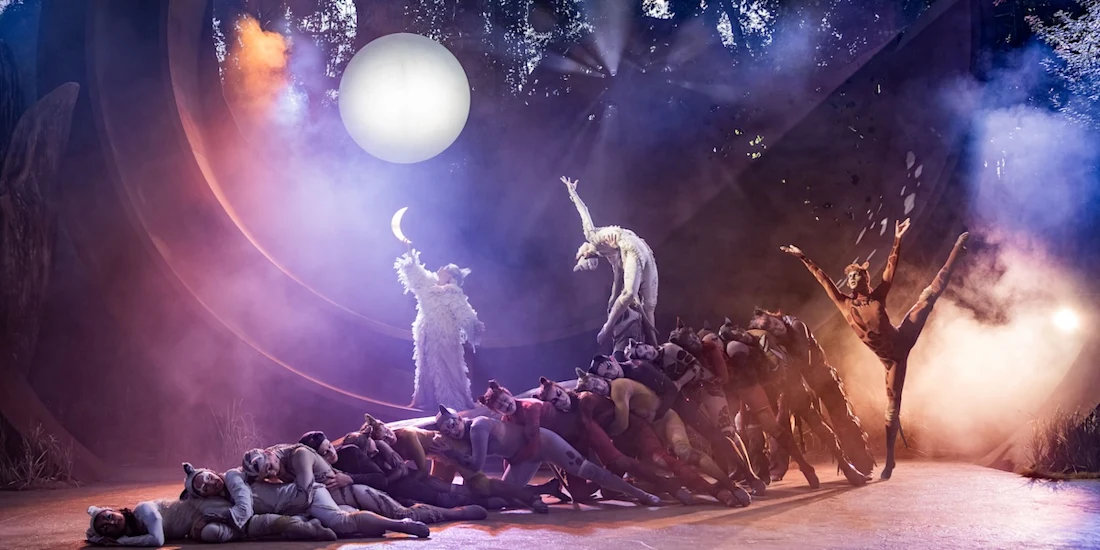
After becoming pretty tired in its old incarnation, and then having its reputation trashed by a misguided movie, Andrew Lloyd Webber’s Cats has made quite the comeback at Regent’s Park Open Air Theatre, mainly thanks to the choreography of director Drew McOnie (‘lifts the source material to a new level’ Times). All the critics, to a greater or lesser extent, praised the new production, not only for the continuous dancing but also the costumes, set and performances. The main criticism remains that the basic story is ‘absolute nonsense’ (Independent).
[Links to full reviews are included but a number are behind paywalls and therefore may not be accessible]
5 stars ⭑⭑⭑⭑⭑
Marianka Swain for LondonTheatre told us: ‘Regent’s Park boss Drew McOnie now directs and choreographs a bold, contemporary, exhilarating revival that banishes all thoughts of the nightmarish 2019 movie. It is, in short, a purr-fect rebirth.’ She noted that Gillian Lynne’s original choreography was ‘virtuosic’: ‘McOnie honours her legacy while finding his own fresh language: earthier, infused with commercial, contemporary, street dance and acrobatics, as well as feline touches, from undulating, slinking bodies to the dancers curling up in a big sleepy pile. Tellingly, his company wear knee pads rather than leg warmers, and there’s no fur here: the costumes are more like sleek running gear’.
4 stars ⭑⭑⭑⭑
James Hall for the Telegraph wrote: ‘this version of Cats wisely focused on the dancing and the darkness. And so it should have. Because the big issue with Cats, and it’s sadly an intractable one, is its plot. Or, should I say, lack of it (…) So Cats relies on characterisation and choreography. Lots of it.’ And that’s what he got: ‘Standout performances came from Jaydon Vijn as a rock ‘n’ roll Rum Tum Tugger – all leather, tassels, tousles and attitude – and Elliot Broadfoot as the corpulent bon vivant Bustopher Jones’.
City AM‘s Adam Bloodworth commented: ‘It’s looser and more naturalistic than the pirouetting gang in the film, and thank goodness for that. The ensemble were presumably told “act like Cats!” rather than “do some ballet as a Cat!” and that was a great instruction indeed. After all, they are delicate, ingenious animals, and as you would with your own pet, you end up glued to watching these intuitive creatures prowl across Sami Fendall’s pleasingly minimalistic moon-shaped set.’
Louise Penn for Broadway World remarked on the appearance: ‘The set and lighting are excellent for the setting, although I still miss the rubbish dump and strings of coloured lights of old. Here the stage is dominated by a large metal structure that suggests the moon, and an industrial-style floor. The lighting is always a highlight in any Open Air Theatre production, and tonight was no exception, with warm glows, intriguing shadows, and flashes of pyrotechnics.’ She concluded: ‘The final verdict has to be that this is an accomplished production that is worth your time if you like dance, cats, or the score which remains one of Lloyd Webber’s best. At nearly 50 years since he first toyed with Old Possum, and 46 years since its first appearance as a song cycle at Sydmonton, Cats still has the claws, the purrs and the attitude.’
WhatsOnStage‘s Sarah Crompton liked ghe new approach: ‘The costumes are both stylised and cleverly textured; fake fur is used sparingly. The makeup is glittery and unreal. It’s all silkily performed.’ She noted: ‘things tend to proceed at a stately pace as the cats, in Sami Fendall’s design, assemble in sleek body suits and tails around a great bronze spiral where they can prowl and sit and pose as the action (what there is of it) unfolds. McOnie’s movement for the cats is sleek and balletically delicate; their bodies unfurl slowly, each motion from the tip of their fingers to the points of their feet, mimicking the way muscles run gently through real cats’ bodies, rippling beneath the skin.’
Donald Hutera for The Times said: ‘McOnie’s Cats is a triumph of staging — polished and fluid, with wall-to-wall choreography that at its best lifts the source material to a new level. A large, fiercely committed cast also do their utmost to mitigate the piece’s sometimes cringeworthy whimsicality, redeeming it after the disastrous 2019 film adaptation.’ He praised the cast: ‘it is the slithery, gymnastic actor-dancers inside and behind the fuzzy, sparkly garb and make-up that animate the action. They are an outstanding ensemble.’
3 stars ⭑⭑⭑
The Guardian’s Arifa Akbar approved but with reservations: ‘These animals, directed and newly choreographed by Drew McOnie, are more balletic and graceful than those in the 1981 original and the production definitely reclaims the musical’s reputation from Tom Hooper’s film (…) they dance and dance and dance through the flimsy and patchwork story of “Jellicle cats”‘. The negative side to this was: ‘It results in some lovely expressive scenes but makes the structure even more disjointed, with less of a story to bind it.’ Add to which: ‘Some of the movement between cats has a slow, ritualistic quality which verges on corny and slows the pace considerably’.
’after the horrors of the film, this is a night of eccentric but undemanding fun’ said Time Out’s Andrjez Lukowski. He noted: ‘The biggest difference between the two incarnations of Cats probably lies in the choreography – high energy and aerobic in the original (by Gillian Lynne), sinuous and twitchy under McOnie.’ He found: ‘a lot of it is really quite good, especially in the second half when it’s dark and the set and lights look loads better. The ethereal, glittery ‘Mungojerrie and Rumpleteazer’ section is lovely; stage vet Gary Wilmot is a treat as the doleful but slyly egotistical Gus the Theatre Cat; Dianté Lodge’s monstrous Macavity is a brimstone-whiffing treat and Jet Yau’s Magical Mister Mestophiles has both one of the best songs and a slightly gratuitous but extremely fun set of B-boy dance moves.’
This was the final view of The Independent‘s Alice Saville: ‘McOnie is all about the dancing, and exciting as the choreography often is here, he lacks the consistent vision to rein in this show’s daftness and make it make sense for new generations. As it is, your ability to enjoy this show depends on your tolerance for watching performers prance about in unitards, intoning absolute nonsense as though they’re imparting the deepest secrets of the universe. Things work better in the second act, after the sun sets – this musical is the kind of warped affair that should be conducted under the cover of darkness, and I mean that with the greatest of affection.’
Critics’ average rating 3.8⭑
Value Rating 48 (Average rating combined with typical ticket price)
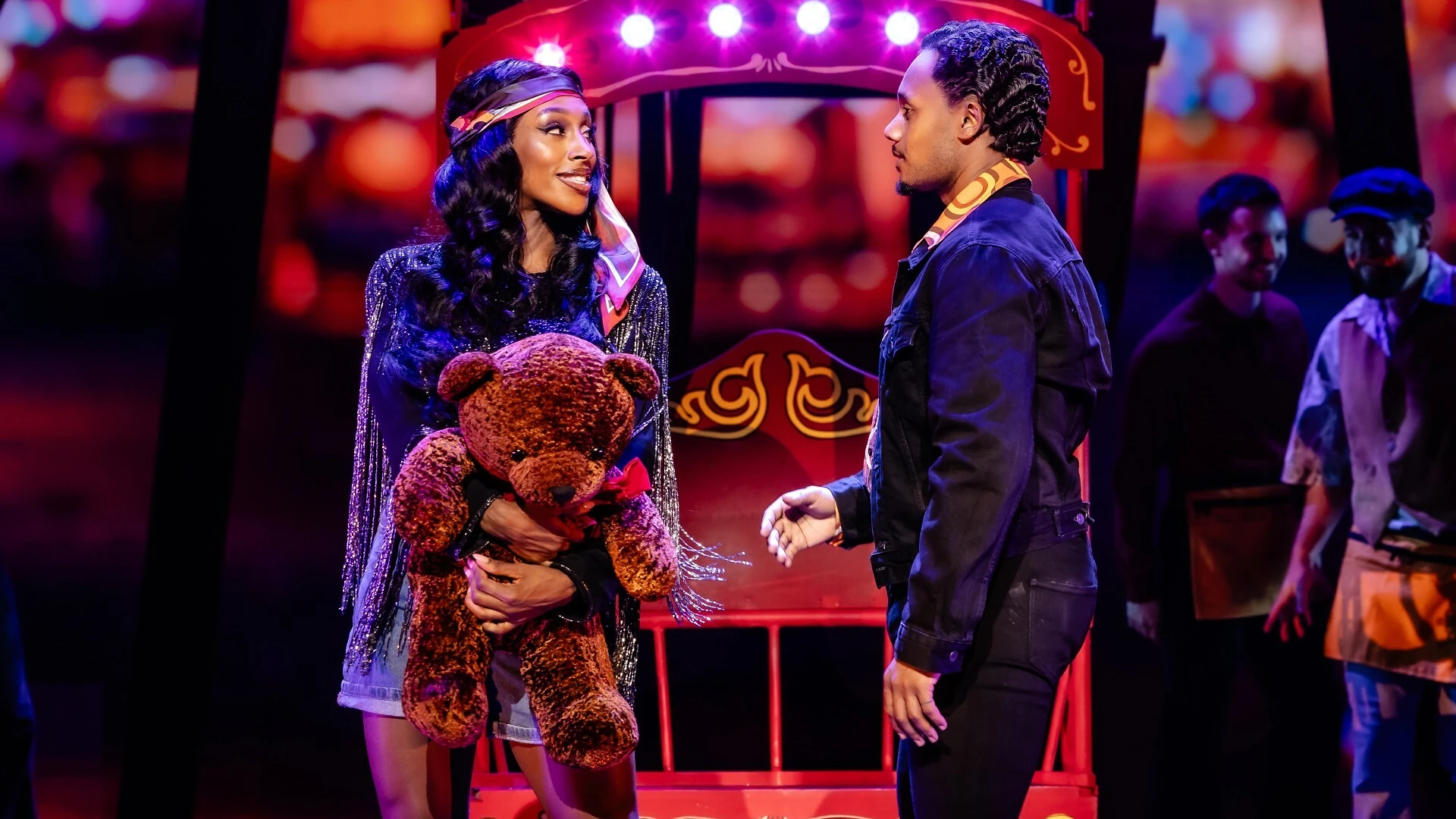
With one exception, the main review outlets were between lukewarm and highly critical in their reaction to the Chaka Kahn bio-musical. It was universally agreed that the Queen of Funk has a great voice and an interesting life. They almost all concurred that the book (script) by Khan’s creative director Nia T. Hill let it down (‘gallops breathlessly along in the manner of a loosely fleshed-out Wikipedia entry’ Telegraph). Most liked Alexandra Burke‘s singing.
[Links to full reviews are included but a number are behind paywalls and therefore may not be accessible]
4 stars ⭑⭑⭑⭑
Christiana Rose, reviewing for BroadwayWorld, was a fan: ‘I’m Every Woman boasts an exceptionally talented cast whose extraordinary vocal performances consistently honour Chaka Khan’s remarkable catalogue. It offers an honest reflection of Chaka’s life, a raw look at the perils of addiction, an important exploration of the music industry’s darker realities, alongside an exploration of intimate partner violence, survival, resilience, female empowerment and reclaiming one’s voice.’
3 stars ⭑⭑⭑
The Times’ Clive Davis noted: ‘Racky Plews, the director, oversees a production embellished with striking period detail (dig those funky Seventies Afros) but undermined by a script by Nia T Hill which drifts from one stilted scene to another.’ He ended: ‘Still, the music lifts the spirits. Burke is in commanding form on the vocals, and the songs from Khan’s years with funk band Rufus still shimmer.’
The Guardian’s global music critic Ammar Kalia disagreed about the singing. Hoping for Kahn’s ‘soaring, multioctave vocal range, he found ‘Burke plays Khan with an energetic youthfulness – but when it comes to vocals faces a sisyphean task. She makes a valiant effort of singalong hits like Ain’t Nobody and Tell Me Something Good, but lacks the resonance to replicate Khan’s power.:’ He wasn’t impressed by the way the ‘book by Khan’s own creative director, Nia T Hill (…) sprints through a remarkable girlhood and young adulthood’ in the first half.
2 stars ⭑⭑
Fiona Mountford reviewing for the Telegraph was damning: ‘Nia T Hill’s script gallops breathlessly along in the manner of a loosely fleshed-out Wikipedia entry, leaving no time for niceties such as characterisation.’ She conceded: ‘If the script is sappy, Burke’s voice is mercifully magnificent, although she could do with fewer distracting hand gestures.’
LondonTheatre’s Anya Ryan was disappointed with the book: ‘with each episode dispatched almost as quickly as it arrives – and all of it delivered through clunky, unnatural dialogue – we barely have a chance to feel it.’ She went on to say: ‘the production never quite decides what it wants to say. Is this a redemption arc for Khan? Does it simply give us a picture of her at each stage of her life? Or is it merely a way to shoehorn as many of her songs in as possible, however unconnected they may feel? Perhaps, trying too hard to be Every Woman means this show has no real identity at all.’
Tom Wicker for The Stage called it ‘heartfelt and well intentioned, but clumsy’. He opined: ‘Burke gives every song her all, turning the music into a deserved high point. But the show flies so wildly all over the place that ultimately, the courageous, talented and complex Khan is short-changed.’
WhatsOnStage’s Sarah Crompton thought Alexandra Burke ‘not only has a voice that rises to any occasion but also has a presence and an acting quality capable of transforming moments of a written-by-rote show into theatrical magic.’ Unfortunately: ‘The problem lies most of all in Nia T Hill’s script, which reduces Khan’s life to a series of clichés’. She continued: ‘it’s made worse by direction from Racky Plews that allows the portrayal of the musical figures Khan meets en route … to descend into a series of comic turns and bad wigs.’
Isobel Lewis reported for Time Out (2 stars assumed): ‘It is a messy, overly long piece of theatre, its script a bizarre mix of stilted scenes and strange song choices that squanders lead Alexandra Burke’s talent and does little to convince us of Chaka’s very real star power.’
1 star ⭑
The Standard’s Nick Curtis summarised: ‘The script (by Khan’s creative director Nia T. Hill) is bad. The projection-based designs are bad. The cartoonish cameo appearances by Stevie Wonder, Whitney Houston, Miles Davis and others are traducingly awful. The singing voices of a cast led by an extravagantly bewigged Alexandra Burke are pretty much the only saving grace, though the garish costumes are fun in a Wembley-hen-night kind of way.’
Critics’ average rating 2.4⭑
Value rating 26 (Combination of critics’ rating and typical ticket price)
I’m Every Woman can be seen at the Troubadour Wembley until 27 September 2026. Buy tickets directly from imeverywomanthemusical.com
If you’ve seen I’m Every Woman, please leave your review and/or rating below
Manage Consent
To provide the best experiences, we use technologies like cookies to store and/or access device information. Consenting to these technologies will allow us to process data such as browsing behaviour or unique IDs on this site. Not consenting or withdrawing consent, may adversely affect certain features and functions.
Functional
Always active
The technical storage or access is strictly necessary for the legitimate purpose of enabling the use of a specific service explicitly requested by the subscriber or user, or for the sole purpose of carrying out the transmission of a communication over an electronic communications network.
Preferences
The technical storage or access is necessary for the legitimate purpose of storing preferences that are not requested by the subscriber or user.
Statistics
The technical storage or access that is used exclusively for statistical purposes.The technical storage or access that is used exclusively for anonymous statistical purposes. Without a subpoena, voluntary compliance on the part of your Internet Service Provider, or additional records from a third party, information stored or retrieved for this purpose alone cannot usually be used to identify you.
Marketing
The technical storage or access is required to create user profiles to send advertising, or to track the user on a website or across several websites for similar marketing purposes.
 I know you don’t expect me to be reviewing a novel on this theatre blog but I think you’ll be interested in this because a substantial part of Jack Jewers‘ gripping whodunit Seething Lane is set in a theatre at the time of the Restoration of the Monarchy. The book is the follow up to The Lost Diary of Samuel Pepys featuring the famous diarist as a proto-detective.