Theatre reviews roundup: David Harewood & Toby Jones in Othello

Stars shine in a solid production

Theatre Royal Haymarket
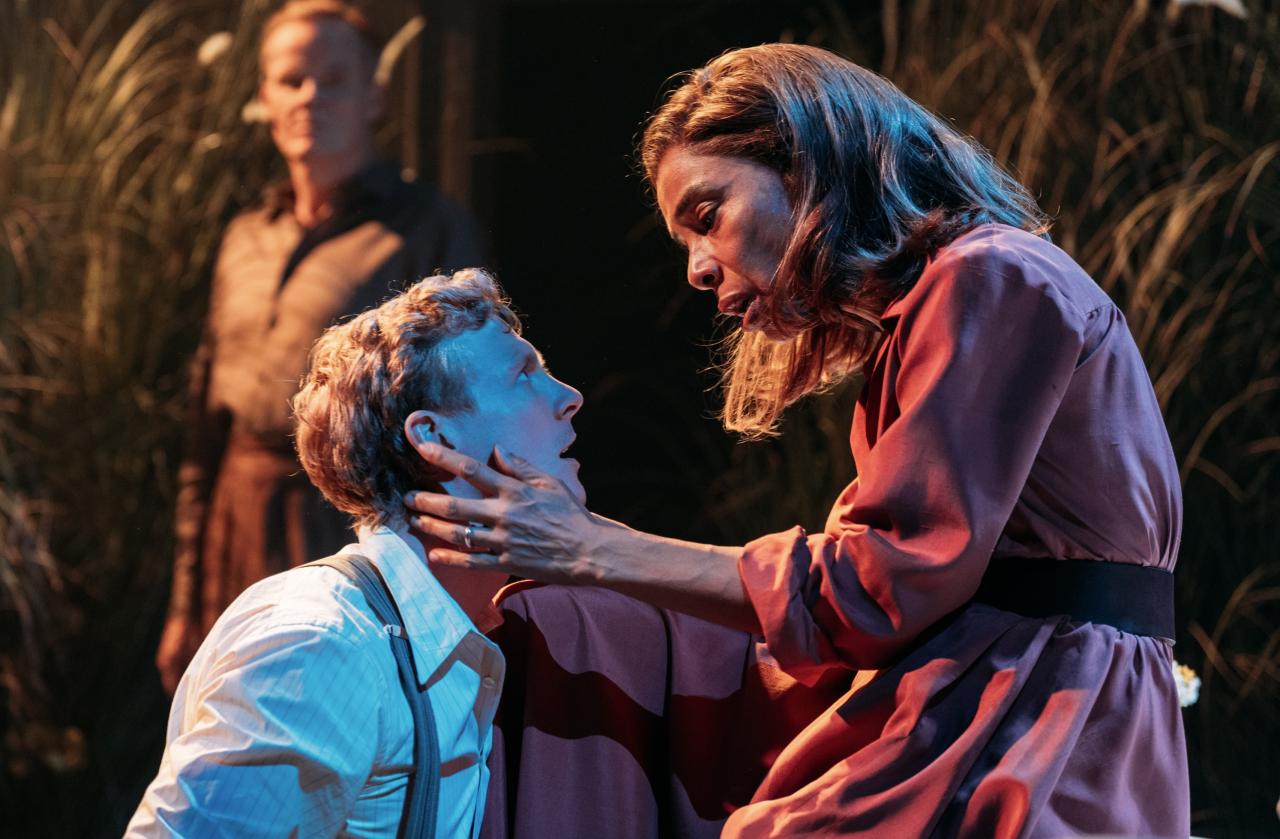
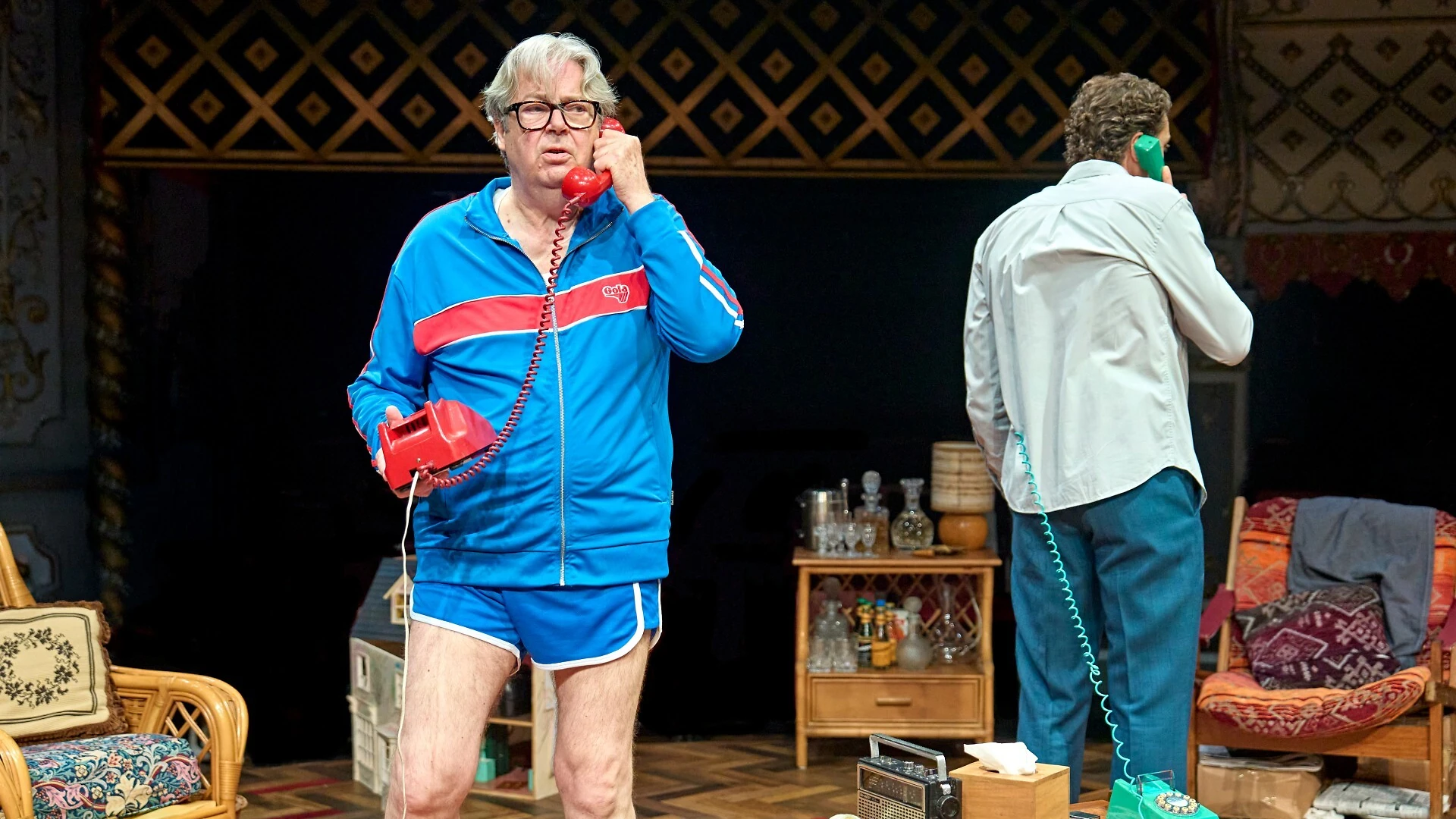
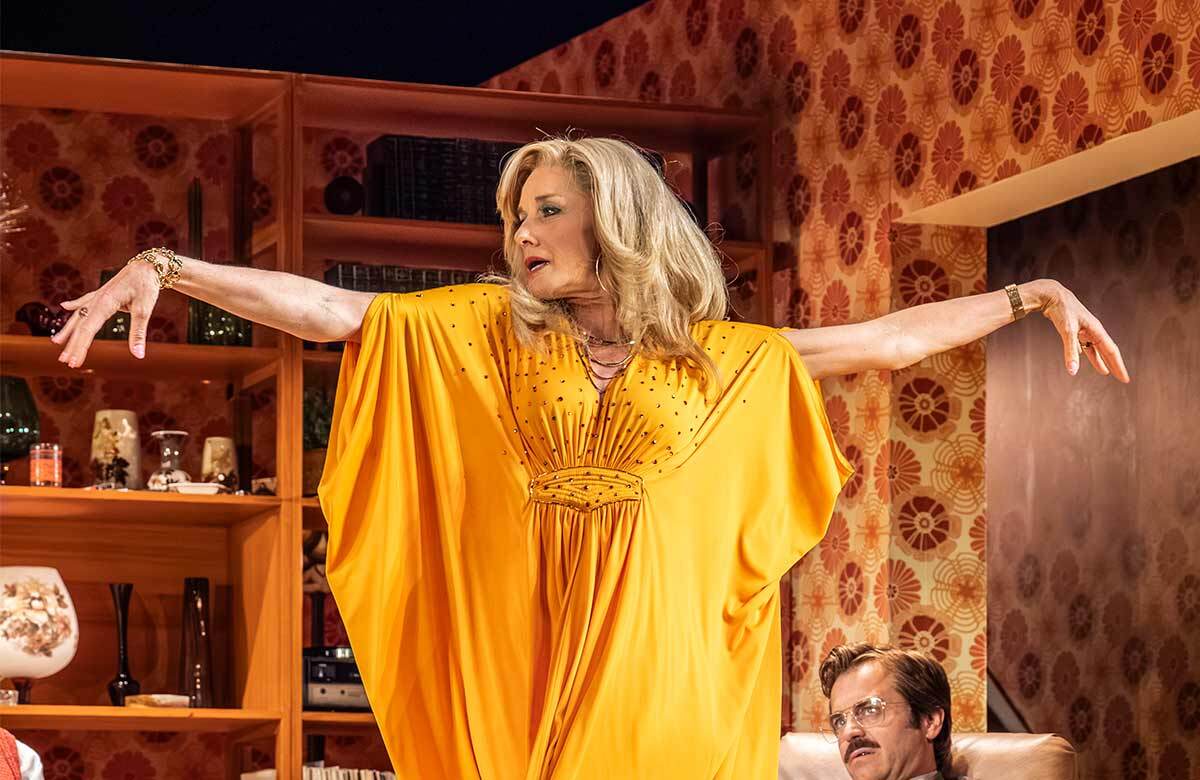
Toby Jones, Caitlin FitzGeraqld & David Harewood in Othello. Photo: Brinkhoff/Moegenburg

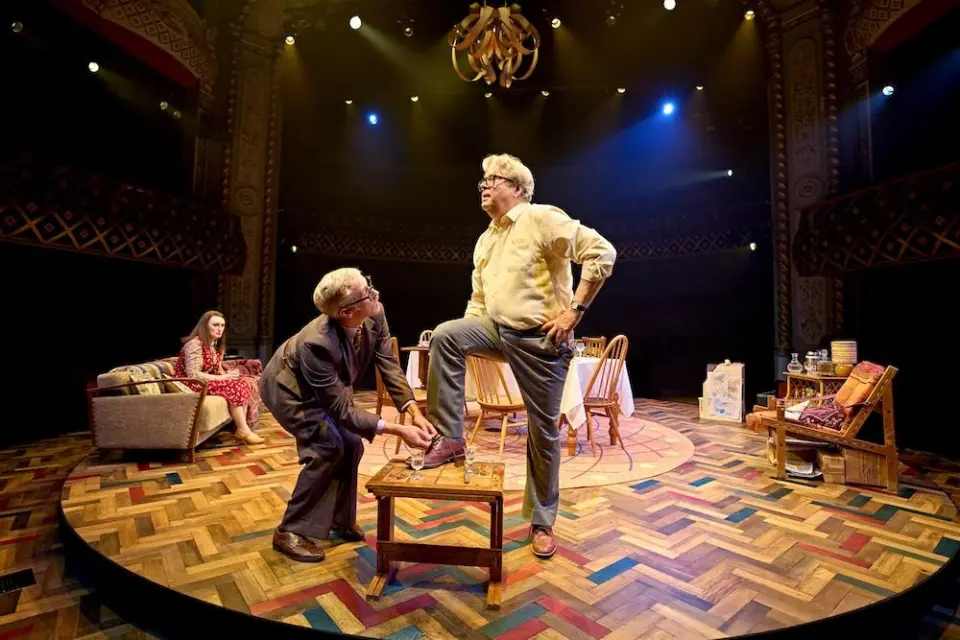
David Harewood is back on stage as Othello 30 years after he became the National Theatre’s first Black Othello. The critics liked his dignified general and most enjoyed Toby Jones‘ devious Iago tricking him into killing his wife. Caitlin FitzGerald is an unusually mature Desdemona and all the better for it, thought the critics. Despite the modern setting, critics found Tom Morris’ production safe and traditional, which may have disappointed them but probably comes as a relief to those theatregoers wary of experimental productions.

[Links to full reviews are included but a number are behind paywalls and therefore may not be accessible]

4 stars ⭑⭑

Fiona Mountford was enthusiastic: ‘There are no fussy tricks or overbearing directorial conceits at work here; instead, the key notes of Tom Morris’s production are clarity and confidence. Purists will be relieved and delighted, whereas everyone else will be glad to be reminded in a highly compelling fashion of what an intimate, domestic tragedy Othello is.’ She has something positive to say about all ghe main actors and ends: ‘For once, the now inevitable standing ovation come the curtain call is entirely earned.’

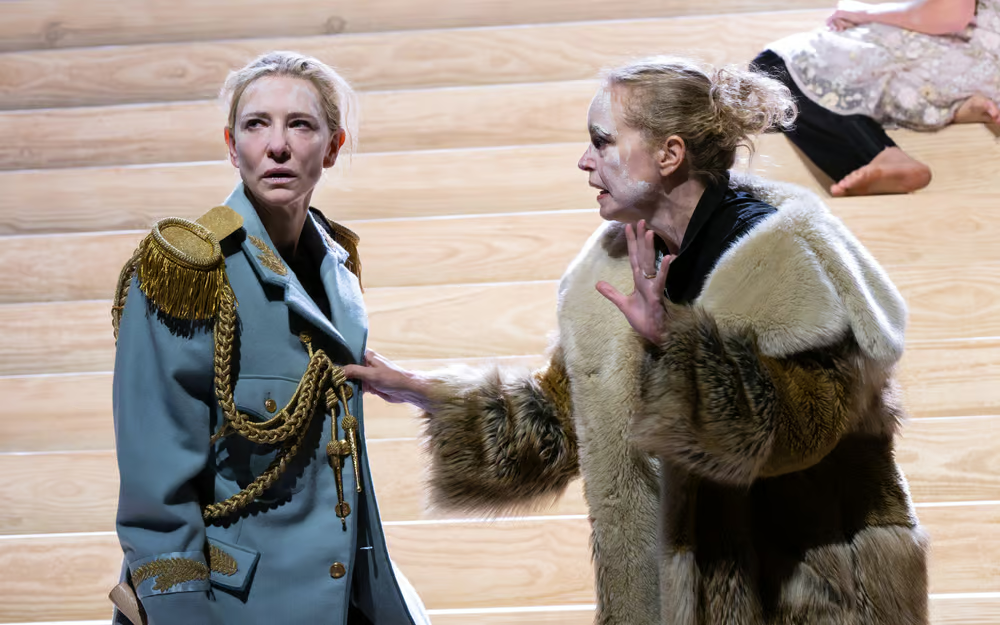
The Mail’s Patrick Marmion loved David Harewood’s acting : ‘Coasting about in a crisp cream uniform with crimson epaulettes, he is sweet, subtle and tender, but – fatally – also gullible and easily led.’ He concluded: ‘Great as the acting often is on Ti Green’s gracefully metamorphic set, the play endures as a queasy, morally dubious melodrama.’

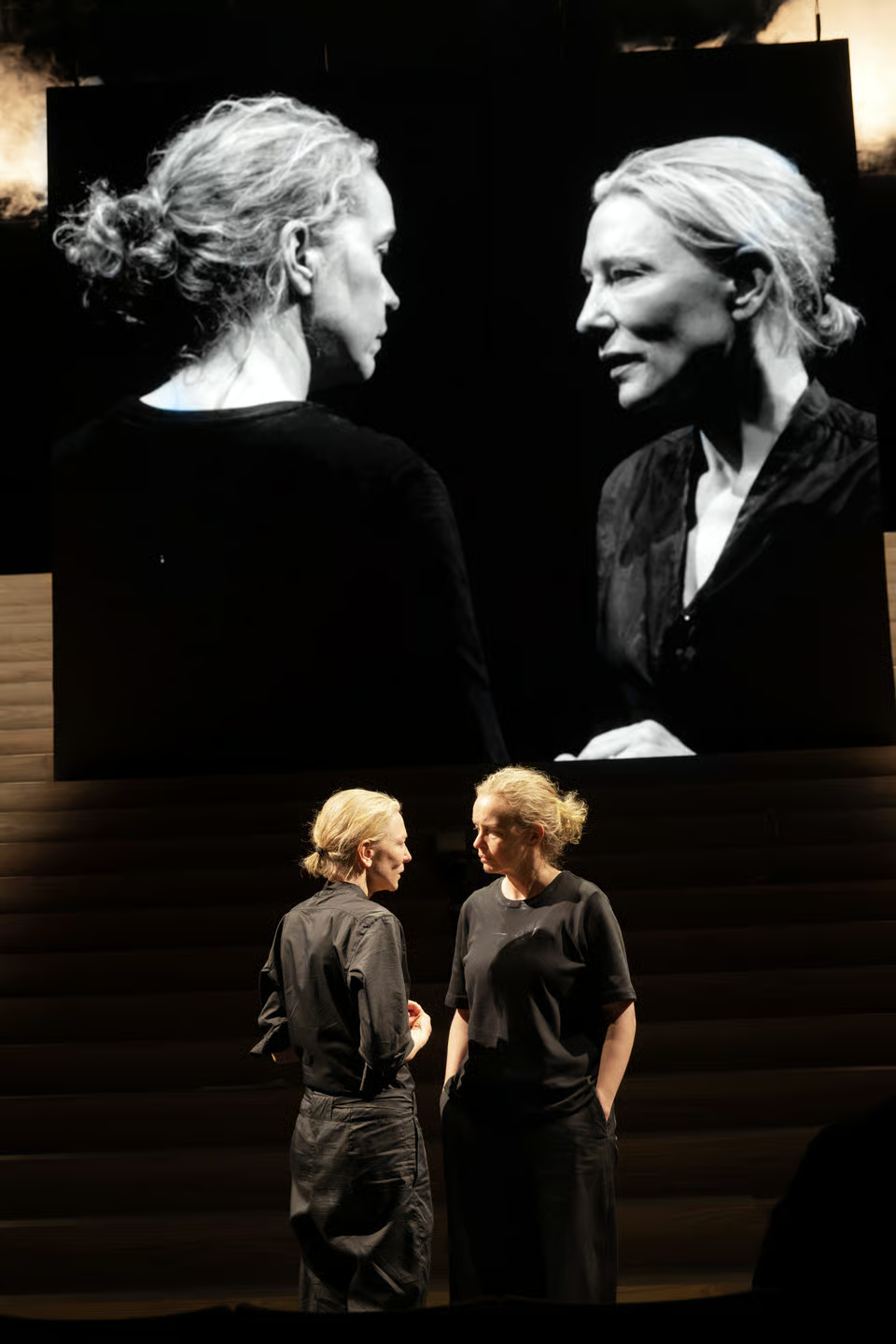
The Telegraph‘s Dominic Cavendish liked all three stars. He declared David Harewood ‘A great, under-sung Shakespearean, he summons a martial authority and dignity that’s registered in much of the verse.’ He thought Toby Jones ‘exudes a rumpled, bloke-next-door affability, punctured by gleeful nastiness’. And ‘Caitlin Fitzgerald’s terrific, finally terrified Desdemona, combining innocence with independent-mindedness, stands her ground too.’ He cautioned: ‘The acting makes the evening, then, and Morris need only trust it more. We don’t require intrusive lighting rigs in the final scenes, or imposing projected images, or eccentric costuming. When the core cast is as strong as this, less is more; the sparer the better.’

3 stars

Even if she had reservations about the production, The Guardian‘s Arifa Akbar stated upfront: ‘Harewood’s Othello holds your attention with his physical presence and imperial quality, the sniffs, smirks and tics in the lead up to his murderously wounded rage.’ In fact she liked all the main actors: Toby Jones ‘fights his battle for domination with a shining relish that borders on the comically conniving’ and ‘Caitlin FitzGerald, as Desdemona, is a smooth blend of strength and fearfulness’. However: ‘This is every bit a “West End Othello” that is ravishing to look at, immaculately choreographed and darkly humorous. It is pacy and does not probe deeply or seek to connect the play’s manipulations with our era of Trumpian truths and lies’.

Having praised David Harewood’s ‘gravitas and initially, the lucky-me geniality of someone lately fortunate in love’ and Toby Jones’ ‘layered, loathsome, inveigling Iago ‘, The Standard‘s Nick Curtis asks: ‘Why then does the whole thing feel so humdrum and inert?’ His answer: ‘There’s a lack of dynamism and propulsion to the direction. There’s also an uncertainty of tone: the endless assertions of Iago’s honesty come across as absurd rather than ironic (…) There’s a lot of laborious signposting (…) there’s a sense of slapdash carelessness’.

For The Independent‘s Alice Saville, David Harewood’s Othello has ‘a self-contained, confident energy’ although she found a ‘certain chemistry’ between him and Caitlin FitzGerald’s Desdemona missing. As for Iago: ‘Jones is completely convincing without channelling the inner darkness you’d expect from this destructive force. Instead, an excellent Vinette Robinson becomes the emotional heart of the play as Desdemona’s maid Emilia.’ She liked the way ‘Tom Morris’s production grows into its horror, building into a deeply nasty tale of murder and manipulation’ but thought ‘This staging could do with more moments of lyricism and menace, to capture the insidious nature of the evil that patterns through it. Instead, it feels like an entertaining but ultimately unpersuasive take on Shakespeare’s story of an arch manipulator. ‘

Holly O’Mahony at LondonTheatre commented: ‘The women are also pleasingly rounded, and in the month where Vogue has declared it officially embarrassing to have a boyfriend, hearing Caitlin FitzGerald’s earthy, serene Desdemona and Vinette Robinson’s fiery truthsayer Emilia bemoan the male-female dynamic with views akin to what we now call heterofatalism feels thrillingly before its time.’ Complimenting David Harewood and Jones, she said: ‘this Shakespearean tragedy is in good hands, and if it’s not a revelatory production, it’s certainly a slick one, with each interaction fine-tuned and deftly choreographed – especially the violence.’ She was impressed by the set: ‘It plays out on Ti Green’s opulent set of golden geometrics, where open doorways could also be mirrors, challenging these characters to see themselves and others in the frame clearly.’

Time Out‘s Andrzej Lukowski foundt Tom Morris’ direction ‘a lighter-than-usual take on the play. Not out-and-out hilarious, but with a glossiness that speaks of a desire to go easy on a West End audience.’ He described David Harewood’s Othello as ‘a precise, confident, seemingly unflappable man who shows little sign of jealousy or doubt for a long time. But his extreme rationalism proves his downfall: once Toby Jones’s Iago presents ‘proof’ of Othello’s wife Desdemona (Caitlin FitzGerald) being unfaithful’. Furthermore, ‘Jones is a thoroughly entertaining Iago, who tackles Shakespeare’s elegant verse with a coarse vigour that helps explain why the other characters like him so much: he comes across as plainspoken, down to earth, and funny (…) Also good is FitzGerald as Desdemona. The character is usually young and often drippy, but here she’s a self-confident middle-aged woman’.

Aliya Al-Hassan at BroadwayWorld thought the production ‘looks impressive, is well acted, thoughtful and glossy, but lacking in sufficient darkness.’

2 stars

WhatsOnStage‘s Sarah Crompton found it ‘a curiously old-fashioned and superficial version of a play that cries out for a powerful vision. A disappointment.’ She also baulked at the stars’ performances: ‘Its principal problem is that all its stars seem to be starring in a different version of Shakespeare’s play. Harewood is a tragic hero, a dignified warrior undone by his own vulnerability; Toby Jones, as his nemesis Iago, seems to be playing a stock Medieval villain, all surface evil. And Caitlin Fitzgerald as Othello’s wife Desdemona is American. Every side of this doomed triangle feels as if it is pulling in a different direction.’ She noted:’The advance publicity has suggested that Morris’s intention was to play Othello both as a love story and as a thriller, yet in the end, it is not suspenseful or engaging enough to be either.’

Critics’ average rating: 3.1⭑

Value rating 32 [Value Rating is a combination of Critics’ average rating and typical ticket price]

Othello can be seen at the Theatre Royal Haymarket until 17 January 2026. Buy tickets direct from the theatre.


Theatre review: Nicola Walker in The Unbelievers

Nicola Walker carries the story of a missing son

Jerwood Theatre Downstairs at The Royal Court


Nicola Walker in The Unbelievers. Photo: Brinkhoff/Moegenburg

A boy vanishes without a trace just before his sixteenth birthday. His mother, Miriam, played by Nicola Walker, is devastated. We witness her and her family’s unravelling in the days immediately after his disappearance, one year later, and then seven years later. It’s a harrowing experience for them — but does it make for compelling theatre?

The point of the play is also the problem with it. While the boy’s two siblings and his father gradually attempt to reconcile themselves to his absence, Miriam refuses to accept that her son will not return. The timeline jumps back and forth, as if to show that she never changes, that time has stood still. The family find it increasingly difficult to coexist with her, despite their evident compassion. Their struggle stems partly from her obsessive focus on her missing son and partly from her perpetual anger. Unfortunately, this unchanging emotional state eventually alienates us as well, or alienated me at least.

Nick Payne’s play examines what happens when someone is psychologically unable to move beyond trauma. It’s a fascinating concept in theory, yet as drama, it can feel repetitive — despite the best efforts of the superb director Marianne Elliott, who injects pace and passion into the production.

Nicola Walker delivers an intense and characteristically nuanced performance, complete with her familiar tics and stutters, and emotional authenticity. However, and I hate to say this, after a while her sarcastic giggling at others’ perceived absurdities and repeatedly saying people should go fuck themselves become somewhat wearisome. Convincing as she is, it becomes difficult to remain emotionally invested.

The supporting characters remain sketchily drawn, defined mainly by their reactions to Miriam. Paul Higgins, as the husband, spends much of his time shouting. Alby Baldwin, portraying the elder sibling, grieves in silence. Miriam’s ex-husband, a priest played by Martin Marquez, flounders helplessly. Only the younger daughter (Lucy Thackeray) develops — she finds a partner, becomes pregnant, and tries hardest to reconnect with her mother. “I just want my mum back,” she pleads poignantly.

The Unbelievers at The Royal Court. Photo: Brinkhoff-Moegenburg

Walker is on stage almost continuously, while other actors, when not in a scene, sit silently in a dimly lit upstage area. Ordinarily, performers would exit, allowing the illusion that their lives continue offstage. Here, however, the visible ‘waiting room’ seems to symbolise how, for Miriam, her missing son Oscar remains ever-present, whereas everyone else is out of sight out of mind. Defending her attitude, she says that if any of them had disappeared, she wouldn’t give up on them either, but ironically she has. The spare set, designed by Bunny Christie, effectively mirrors Miriam’s single-minded preoccupation.

We glimpse Miriam’s experience over the course of the seven years: the early dealings with the police, subsequent false sightings and internet trolls, and the desperation of spiritualism and prayer. These should-be heart-wrenching moments but they failed to resonate with me, because I never felt sufficiently connected to the characters.

Because there is no story arc, no character development, and no resolution (we never know how or why Oscar disappeared, or whether he is alive or dead), I found the journey a little monotonous and felt deflated rather than emotionally drained by the end. On the other hand, it was interesting and unexpectedly humorous. And, as always, Nicola Walker delivered good value.

The Unbelievers can be seen at The Royal Court until 29 November 2025. Click here to buy tickets direct from the theatre.

Paul paid for his ticket.

Watch Paul’s review on YouTube

Read a round up of other critics’ reviews here

Theatre reviews roundup: Wendy and Peter Pan

Christmas comes early

Barbican Theatre

In JM Barrie’s original play was called Peter Pan, the subsequent novel was Peter and Wendy, so the decision to call the latest iteration of the story Wendy and Peter Pan is not without significance, as the critics noted. This Royal Shakespeare Company production is written by Ella Hickson and was first staged in 2014. Despite it being a traditional seasonal treat, this outing at The Barbican closes before Christmas.

[Links to full reviews are included but a number are behind paywalls and therefore may not be accessible]

Four stars ★★★★

The Standard’s Nick Curtis informed is: ‘It features a nimble Daniel Krikler as a feral, sybaritic Peter Pan, Hannah Saxby as a physically gung-ho, jolly-super Wendy Darling, and Toby Stephens as a winningly louche Captain Hook. The design, the effects and the vibe are all spot-on.’ He also told us: ‘Colin Richmond’s sets, including a full pirate frigate, are a detailed delight and the choreography, combat and aerial scenes are beautifully done. On balance, magic.’

Julia Rank at LondonTheatre said: ‘this is a gorgeous spectacle and real “total theatre” experience sprinkled with plenty of fairy dust to delight every member of the family.’

Lucinda Everett for WhatsOnStage enjoyed the way ‘Hickson’s script is stuffed with laughs, and Jonathan Munby’s exuberant direction ramps up the fun. Young audience members will love the physical comedy, toilet humour, and Joe Hewetson’s perfectly useless pirate.’

Calling it ‘a splendid treat’, The Telegraph’s Dominic Cavendish explained that the adaptation ‘puts a feminist emphasis on Wendy’s struggle for independence amid the lost boys of Neverland, while also reflecting the brevity and fragility of life itself.’

Welcoming a feminist version of the story, at BroadwayWorld went on: ‘Hickson’s script is light and witty, with deeper tinges of loss, love and liberation that all children ­– young and old ­– can relate to. And of course, there’s all the added fun of pirates, fairies and a ticking crocodile’. She found it ‘flies along at an exhilarating pace,’

Three stars ★★★

Holly O’Mahony in The Stage noted: ‘there’s plenty of charm to this revival, which is sure to delight young audiences, in particular, with its fiery explosions and liberal sprinklings of glittering fairy dust.’

Time Out’s Andrzej Lukowski gave us some highlights: ‘even if the play can’t help but compulsively spell out its points, there’s still fun to be had along the way. The fight scenes are great and the actors inhabiting the Lost Boys enjoyably spoof childishly mangled versions of masculinity. Daniel Krikler impresses as Peter, a tangle of loose-limbed bluster. Meanwhile, as Captain Hook (and Mr Darling), Toby Stephens eats most of the scenery before the crocodile gets round to eating him.’

The Independent’s Alice Saville described it as ‘a fascinating, feminist riff on a classic – albeit one that’s more suited to misty-eyed adults than actual kids.’

Is it drama or panto? Helen Hawkins at The Arts Desk got mixed messages: ‘the whole needs to be turned down from 11 and the comic scenes tightened up. The mixed tone isn’t helped by Shuhei Kamimura’s rather standard-issue music, which signals a kind of dramatic portentousness that isn’t on the stage. This is not a production graced with sentiment, though a dash of it would be welcome.’

The Sunday Times’ Dominic Maxwell felt it didn’t live up to its promise: ‘the show can feel like a jumble of good ideas, partly because, on a set that never entirely leaves the playroom, Neverland remains a notional place rather than somewhere fully specific and vivid. Hannah Saxby’s Wendy is lively and likeable but not quite as outright fascinating as the script wants her to be. Shuhei Kamimura’s recorded soundtrack is more filmic than theatrical.’

Two stars ★★

The Guardian’s Arifa Akbar found it all a bit much: ‘It should all arrest the senses but seems like a cheap sugar-rush of spectacle that does not hit the spot. Actors rush around, often shouting or screeching their lines so that they really do seem like adults playing at being children too energetically.’

Critics’ average rating 3.4★

Value Rating 42 [Value Rating is a combination of Critics’ average rating and typical ticket price]

Wendy and Peter Pan can be seen at the Barbican Theatre until 22 November 2025. Buy tickets direct from the theatre

If you’ve seen Wendy and Peter Pan, please leave a comment, review and/or rating below

Theatre reviews roundup: The Line of Beauty

Prize winning novel is filleted

Almeida Theatre
The Line of Beauty at The Almeida Theatre. Photo: Johan Persson

Alan Hollinghurst‘s novel won the Booker Prize and now Jack Holden has adapted it for the stage. Let’s turn to The Stage for a plot summary: ‘it charts an agile odyssey from 1983 to 1987 through sex and love, financial and political chicanery, class division and the AIDS crisis.’ The critics liked Michael Grandage‘s restrained direction and Holden’s fidelity to the story, but on the whole they were not engaged by the production.

[Links to full reviews are included but a number are behind paywalls and therefore may not be accessible]

Four stars ★★★★

Alex Wood at WhatsOnStage said: ‘Rather than reimagining Hollinghurst’s novel, Holden translates it for the stage with precision, capturing its wit, sensuality and quiet melancholy. The result feels less like a radical reinterpretation and more like a refined condensation: a world of dinner parties, desire, denial and drug-sniffing brought vividly to life within Grandage’s clear, uncluttered production, with design by Christopher Oram.’

For such a positive rating, The Telegraph‘s Dominic Cavendish is surprisingly restrained: ‘(Jack Holden’s) adaptation is straightforwardly episodic, its instinct faithful but restrained. Without the interiority the novel brings and the wider context he could add, he’s scratching the surface, both of the characters and the era.’ He concluded: ‘Assisted by nostalgia-stirring pop sounds, here’s another bittersweet evocation of a momentous decade that cast a long shadow. It’s just a shame there’s not a bit more dramatic meat to chew on.’

Alice Saville of The Independent commented: ‘Grandage’s deliciously witty production is so good at delineating the subtle class tensions of this world: the gaffes, the blunders, the ways in which outsiders are tolerated – provided they know their place.’ She cautioned: ‘Holden’s take here is subtly moralistic, giving Nick a clear choice between humble true love and the false blandishments of wealth. What it’s missing, perhaps, is time and space to explore his agony as he’s crushed by the wagon he hitched himself to. But it’s still a wild, witty ride, powered by slow-burning anger at a political elite that’s updated its shoulderpads – but not its values.’

The Standard‘s Nick Curtis declared: ‘this is a hugely entertaining skim across the shiny surface of 80s Britain, and a return to form for Grandage (…) (Jasper) Talbot, (Charles) Edwards, (Claudia) Harrison and (Francesca) Amedwudah-Rivers stand out from a fine ensemble.’

Three stars ★★★

The Guardian‘s Arifa Akbar called it ‘a warning for our age of rising intolerance, and an adaptation well worth seeing’. She picked out certain aspects: ‘Michael Grandage brings fantastic directorial polish and pace and the cast are excellent, from Alistair Nwachukwu as Nick’s wryly funny, working-class boyfriend Leo, to Arty Froushan as the uber-rich Wani, who is engaged to a woman but in a secret relationship with Nick.’ She had reservations: ‘what a lot of story, and feelings, to fit in’ which meant ‘we do not really enter into these relationships fully.’

The Stage‘s Sam Marlowe wasn’t fully on board: ‘The smooth-running intricacy of the piece and its dislikeable denizens mean we experience it at arm’s length. But it’s unarguably adroit and accomplished.’

Andrzej Lukowksi’s review in TimeOut seems more enthusiastic than some of the four star ones: ‘it does a tremendous job of cutting Hollinghurst’s period odyssey into a gripping, flab-free two-and-a-half hours of theatre. It is, above all, a great piece of storytelling.’ He expects it to transfer to the West End where ‘it would stand as a smart, sympathetic take on a somewhat daring choice of novel for commercial theatre. At the edgier Almeida it feels exquisite, but MOR.’

Two stars ★★

The Times’ Clive Davis was unimpressed: ‘It’s not just the music that goes thud, thud, thud (…) Jack Holden’s adaptation, stripped of the languorous, Henry James-ish embellishments, turns into a lumbering string of scenes from a high-society soap’ and ‘the production is alternately gauche and garish’ and  ‘it’s undercut by some oddly uneven performances’ and ‘The dialogue … is closer to the drawing room clichés of a rainy Sunday afternoon at Downton Abbey.’

Critics’ average rating 3.4★

The Line of Beauty can be seen at the Almeida Theatre until 29 November 2025. Buy tickets direct from the theatre

If you’ve seen The Line of Beauty, please leave a comment, review and/or rating below

Theatre review: The Maids at The Donmar

Kip Williams’ comedy about superficial lives is full of depth

Donmar Warehouse

⭑⭑⭑⭑⭑

The Maids at The Donmar. Photo: Marc Brenner

Jean Genet’s 1947 play about class jealousy and working class revenge has been reimagined by Kip Williams as a biting satire on social media and influencers. Reviews ranged from 5 stars to 1 star (My roundup is here). The more critical called it ‘superficial’ and ‘exhausting’. I couldn’t disagree more. If you think nothing happens in Waiting For Godot or in plays by Pinter, then fair enough, this may not be for you. For me, it was a searing exposure of the human condition told with acerbic wit and incisive insight.

​For a start, let’s not confuse depicting the performative superficiality of our curated age, with actually being superficial. This production, directed as well as written by Kip Williams, is in the tradition of Theatre of Cruelty and Theatre of Absurdity which Genet was part of. Theatre of Cruelty is intended to break down our distancing intellectual approach to art and jolt us viscerally with the nastiness of human existence. Theatre of the Absurd does as it says on the tin, and is a response to the meaninglessness of existence. These are movements that were born out of the inhumanity of the first and second world wars. It may be that these forms of theatre are less effective today. Perhaps for younger people, human existence doesn’t seem so nasty or absurd, or is simply a given.

The existence we are talking about here is that of two maids, who are also sisters, repeatedly playing a game in which one is their mistress and the other, one of the maids. The ‘servant’ is so verbally and physically abused by the ‘mistress’, that they fantasise about killing her. They are clearly psychologically unhinged.

Both speak in a high speed, declaratory way using the language of a generation brought up on socials. I cannot understate the achievement of Lydia Wilson and Phia Saban in spewing out the words with such pace and venom. The dialogue given to them by Kip Williams is musical, poetic and very funny. I think I need to emphasise that latter adjective, because, on the night I saw The Maids, the audience for the most part received it in silence, and those of us who did laugh were sometimes subjected to puzzled looks. So maybe I am an outlier in my reaction.

Their mistress is a media influencer on matters of beauty and fashion, with 28 million followers. When she finally appears, gloriously played by Yerin Ha, she is a spoilt rich girl, but not the abuser she was made out to be. She is undeniably entitled but it is more the assumption of superiority that makes her obnoxious, and darkly humorous for it. Her conversation is littered with the words ‘literally’ and ‘actually’. She is a drama queen but it’s hard to think she deserves to die.

The thing is, the maids may talk about killing their mistress but they don’t really want to end the dominance of what we may see as fake imagery and the malign influence of social media. They are totally obsessed by it.  They may want to destroy their mistress’s career but they aspire to live her life. They use their mistress’s makeup and wear her clothes. They use apps on their phones to create fake images of themselves. These are images we see on screens at the back, which, I repeat, are crazily funny. The existential futility we observe is a metaphor for the absurdity of all human life- ‘a tale told by an idiot, full of sound and fury signifying nothing’, as an earlier playwright described it.

Disquieting eroticism

The Maids at The Donmar. Photo: Marc Brenner

Genet wanted his play to be a comment on the ‘class struggle’ and this version be seen as an allegory of the exploitation of the poor by the rich and the struggle of the working class to overthrow their oppressors. But it seems that the sisters are really using their rituals to abuse each other. Their criticism of each other’s characters may speak to the way the political left tears itself apart, rather than really attacking their rulers.  At times, this interplay is charged with a disquieting eroticism.

There is also a swipe at religion, more obvious perhaps when the play was written. Genet was inspired by the repeated rituals of the church which serve to reinforce the believers’ common faith and their superiority over non believers. So the sisters are in a world of their own, existing in the echo chambers of social media.

A word about the set designed by Rosanna Vize. We begin with the action taking place behind a gauze. So, we are encouraged to see the sisters as in a separate world from us, muted and mediated,. Then the curtain is pulled back to reveal dazzlingly vivid hues, packed with big blooming peonies and other flowers, bathed in eyeball-searing light. Suddenly, their world is alive and overwhelming.

In the story, such as it is, the maids have faked evidence against their mistress’s lover, and he’s now in jail. This is ostensibly to destroy her reputation, which they, for self deceptive reasons, believe will benefit them. Their plan falls apart when the lover is released on bail and their conspiracy looks like being exposed. The only way out seems to be to kill their mistress for real. As the play reaches its climax, the sisters retreat further into their digital fantasy, until it becomes entirely real to them. I don’t want to say more about that but it is very well done and ends literally, and I mean ‘literally’, with a denouement.

Rather than dismissing as superficial the fantasy world of unattainable beauty and imaginary murder, the play seems to suggest it may be a valid way of coping with the futility and nastiness of life.  A way that may be more fun, if less heroic, than being two tramps ever hopeful that Godot will turn up.

The Maids can be seen at The Donmar Warehouse until 29 November 2025. Buy tickets direct from the theatre.

Paul paid for his ticket.

Watch this review on the YouTube channel Theatre Reviews With Paul Seven

Read a roundup of other critics’ reviews here


Theatre reviews roundup: The Maids

Visceral version of murderous maids divides the critics

Donmar Warehouse
The Maids at The Donmar. Photo: Marc Brenner

Kip Williams, the writer/director who had a huge success last year with his adaptation of The Picture of Dorian Gray, has turned his attention to Jean Genet’s 1947 classic The Maids. Williams’ familiar use of screens is again prominent in this visceral version of the story of two maids who plot to murder their mistress. The screens project the social media conscious women’s digital images as they act out their fantasies and plot against their employer. The frantic pace elicited a full range of reactions in the reviews from 1 to 5 stars. Whether you find the production ‘conveys the corrupt value systems and ludicrous hierarchies of much of 21st-century culture’ or ‘has nothing new or interesting to say’ may depend on your taste.

[Links to full reviews are included but a number are behind paywalls and therefore may not be accessible]

Five stars ⭑⭑⭑⭑⭑

The Stage’s Sam Marlowe, one of the least generous critics when it comes to handing out stars, loved it: ‘Williams’ experiential production conveys the corrupt value systems and ludicrous hierarchies of much of 21st-century culture with visceral force: it crushes nuance beneath Bottega Veneta heels and assaults our eyes with fake spectacle. It’s draining, it’s overwhelming, it’s kind of gross – and it’s brilliant.’

Four stars ⭑⭑⭑⭑

The Guardian’s Arifa Akbar complimented Kip Williams’ take on Genet’s original work, saying he ‘gives a modern meaning to the play through the technology itself: influencer image-making and online celebrity culture are critiqued. The analogy is obvious, once it is introduced, and ingenious (….) The slippages into fantasy, for all three women, are into a curated online space of augmented reality and performance.’ She praised the cast: ‘There are storming performances, especially from Saban and Wilson, and a hurtling dread as the projections become wilder, the set seeming to disassemble as their inner worlds crack apart.’

Calling it a ‘wild ride’, The Standard’s Nick Curtis Williams said ‘Williams draws powerful and intricately precise performances from a magnetic Lydia Wilson and relative newcomers Phia Saban and Yerin Ha.’

Cheryl Markosky for BroadwayWorld described it as ‘a hugely strong play with a moving denouement where no one escapes from a spiral of love and hate in a fantasy social media world.’ She also described the ‘terrific set design by Rosanna Vize’: ‘luxurious white wall-to-wall carpeted bedroom stuffed with ostentatious flowers and tall wardrobe doors with mirrors and shiny surfaces’.

Three stars ⭑⭑⭑

Time Out’s Andrzej Lukowski found: ‘For a good half an hour there’s something totally hypnotic about the blur of wild visuals and undigested, darkly comic loathing that pours out of the women’s mouths. It’s exhilarating, hilarious, horrifying stuff. But the trouble is it doesn’t really have anywhere to go.’ He noted: ‘A tonal gearshift in the middle would have really done so much for it. But I still think you should see it. The cast is great, especially Wilson. And did I mention it looks incredible?’

Alex Wood for WhatsOnStage found: ‘The production is, without doubt, a feast of bells and whistles – technically immaculate, visually audacious, and conceptually dense – but that polish sometimes comes at the expense of intimacy (…) Bells and whistles are all well and good – but sometimes they just add to the noise.’

Olivia Rook at LondonTheatre said: ‘Williams leans heavily on hilariously grotesque Snapchat filters and live streaming through Zakk Hein’s video design, cleverly implicating the superficial world of social media in the unravelling of maids Solange and Claire. They crave visibility, but are repeatedly denied any form of independent identity’. Like other critics, she observed that Kip Williams’ version of Genet’s play ‘is still grasping to find something more than its surface-level spectacle.’

The Times’ Clive Davis declared: ‘The set is the winner in this manic update’ but asked: ‘does all this frippery — the vibrant visuals leave you feeling as if you’ve been locked in a cupboard with Paris Hilton and Katie Price — make the play, which has been baffling audiences since 1947, any more comprehensible?’ Apparently not.

2 stars ⭑⭑

The Independent’s Alice Saville complained: ‘it feels like spending one hour and forty minutes eavesdropping on private conversations that are so trivial you wish you hadn’t bothered. Like a smartphone filter, it creates a pretty picture – but seeing the uglier realities underneath would have been more interesting.’

Claire Allfree for the Telegraph didn’t like what she heard: ‘The dialogue is a relentless hyperactive stream of toxic, quasi-ironic OMG-style hyperbole.’ Nor what she saw: ‘Williams’s faintly misogynistic production may playfully gesture towards a nightmarish, narcissistic online future in which women are eaten alive by their own trout pouts, but it fundamentally resembles a mirror of itself – a two-dimensional onslaught of eye-rolling vacuity.’ Her final message was: ‘Genet’s play is hard to like at the best of times. In Williams’s version, it’s borderline unwatchable.’

1 star ⭑

The Express’ Stefan Kyriazis had a terrible evening: ‘For 100 interminable minutes that felt far, far longer, three actors on stage screamed at each other, at full speed, non-stop, barely taking a breath. It’s exhausting.’ He continued: ‘It has nothing new or interesting to say and treats the important social and mental health issues it raises with as little respect as it treats us’. His final message: ‘Avoid at all costs.’

Critics’ average rating 3.1⭑

The Maids can be seen at The Donmar Warehouse until 29 November 2025. Buy tickets direct from the theatre.

Read Paul Seven Lewis’ 5 star review here

If you’ve seen this production of The Maids, please leave your comment, review and/or rating below

Theatre reviews roundup: The Unbelievers

Nicola Walker at her best in a below par play

Jerwood Theatre Downstairs at Royal Court
Nicola Walker in The Unbelievers. Photo: Brinkoff-Moegenburg

Perhaps most famous for Constellations, Nick Payne returns to the Royal Court for his latest play. The Unbelievers concerns the aftermath of the disappearance of a 15 year old boy, and is told in a series of flashbacks that some critics found confusing. In fact, not many reviews had a good word for this exploration of the devastating effect on the mother. Although Royal Court has pulled together a starry creative team, with Marianne Elliot directing and Bunny Christie designing the set, for most critics the show was saved by an exceptional performance from Nicola Walker.

[Links to full reviews are included but a number are behind paywalls and therefore may not be accessible]

Four stars ⭑⭑⭑⭑

The Sunday Times’ Dominic Maxwell acknowledged some might find it ‘monotonous’ but declared: ‘I’m slightly obsessed now with this new play about trauma, grief, family and obsession. And I can’t imagine anyone making it more vivid than Nicola Walker does here. It’s a joy to spend time in her unrelaxed company.’

Time Out‘s Andrjez Lukowksi was bowled over by Nicola Walker, claiming this as her best stage performance yet: ‘its star gives a turn that is absolutely, magnificently, unfettered Nicola Walker. Her unique gift for proper nuanced acting filtered via an unshakeable deadpan grumpiness is harnessed to perfection as she plays a grieving mother whose sorrow and grief at the unexplained disappearance of her son has curdled into something darker and more disturbing.’ He had this insight into the play: ‘the out-of-order scenes feel like a sort of random anthology of grief for a while. But for my money they do eventually coalesce into something wonderful. (….) What happens (at the end) totally wrongfoots you, but it’s beautifully written and the point at which I realised this was really a play about human faith and the fundamentally unknowable nature of the world.’

Fiona Mountford in The i found much to like. She said Nicola Walker gave a ‘performance of blistering potency’. She described how ‘this family’s excruciating limbo-like state of non-grief is anything but a straight line; every social interaction down the years has an inescapably hollow sense of people small-talking over the immeasurable chasm of loss.’ She even liked the comedy which others were uncomfortable with: ‘Payne allows shards of dark humour to leaven the gloom’. And the set? ‘One half is the family living room, bleached of all colour and individuality in this new landscape of loss, while the other is a waiting area in which the actors sit slumped, a tableau vivant of isolation and despair, when they do not feature in a scene.’

Three Stars ⭑⭑⭑

‘It’s an intermittently engrossing, well-acted and slickly staged look at loss, grief and how closure is impossible without answers,’ wrote Alun Hood at WhatsOnStage, ‘However, in presenting the inexplicable and unfathomable, Payne’s writing and Marianne Elliott’s production tend to be as elliptical and inconclusive as the subject matter (….) it’s never less than watchable and when it’s good, it’s very, very good, although seldom does it seem to have the complete measure of its complex, emotionally-charged subject matter.’

The Stage‘s Sam Marlowe compared The Unbelievers with Nick Payne’s earlier Constellations: ‘this is a far more sprawling work, lacking the elegance and concision of its predecessor. The writing also, despite an astute and sensitive production from Marianne Elliott, has an air of contrivance.’ She liked the acting for being ‘raw and committed’, including ‘Walker, clenched, aridly funny, furious and utterly desolate, is fiercely compelling.’

Like others, Nick Curtis of The Standard was grateful for the performance of the lead actor, saying: ‘An astonishing performance of rage and grief from Nicola Walker is at the core of Nick Payne’s play’. As for the script, he declared: ‘This is a sincere, empathetic and surprisingly funny work … but it’s also relentless and lacking in tonal variety.’ He ended: ‘Payne’s determination to leave Oscar’s disappearance unresolved, observing the way it works and worms its way through the family over time, is a bold one. But it also gives this play a relentlessness that manufactured moments of comedy or awkwardness don’t fully defray.’

Holly O’Mahony for LondonTheatre focussed on the star: ‘Though the play is uneven as a whole (…) Nicola Walker delivers an astonishing, raw portrayal of a mother navigating a terrible sea of complex emotions (….) this is very much Walker’s show, and her performance alone is worth the ticket price.’ She described the set: ‘Bunny Christie’s set visualises the endless empty hours of waiting with a police reception room in view behind the main strip of stage – a sparse, abstract portrayal of the family home.’

The Telegraph‘s Dominic Cavendish thought: ‘Payne’s tricksy chronology, shuttling across the years, means that vital dramatic depth goes missing in action.’ He noted: ‘even allowing for too many incidental details and moments of humour, there’s too indistinct a sense of the boy himself, his personality, his mates. Real-life cases of this ilk can break your heart. Despite the bravura lead performance, I was left unmoved.’

Two stars ⭑⭑

The Guardian‘s Arifa Akbar was unimpressed: ‘There are strong stand-alone moments but something feels off, with a flatness of tone and an injection of ridiculous comedy that chips away at the family tragedy, shrivelling its effect.’ She praised Nicola Walker and Paul Higgins but ‘as a whole, the emotional range of performances seems limited, maybe hemmed in by the jumping structure.’

Although he found Nicola Walker ‘thoroughly persuasive’, The Times’ Clive Davis decided that ‘by playing with the chronology…Payne makes it hard to share in the anguish of Miriam’s family…we’re left in a sort of limbo.’ He continued:  ‘the production, icily directed by Marianne Elliott, often strikes a jarringly comic note’

Critics’ average rating 3.1

The Unbelievers can be seen at the Royal Court Theatre until 29 November 2026. Buy tickets direct from the theatre

If you’ve seen The Unbelievers, please leave a comment, review and/or rating below

Theatre reviews roundup: Troilus and Cressida

Problem play is still a problem

Shakespeare’s Globe
Lucy McCormick in Troilus And Cressida at The Globe

A rare production of Shakespeare’s romantic story set within a satirical look at the Trojan War. Many of the critics’ reminded us this is a ‘problem play’, incoherent in tone, and neither comedy nor tragedy. Some thought Owen Horsley’s comic interpretation skewing toxic masculinity was inspired, others found it inappropriate. The reviews were a good example of the way critics can help our understanding of a play. Many displayed their knowledge of this obscure play and provided analyses of why it is a ‘problem’ and the extent to which this interpretation did or did not succeed in solving it.

[Links to full reviews are included but a number are behind paywalls and therefore may not be accessible]

4 stars ★★★★

The Standard’s Nick Curtis declared: ‘Owen Horsley’s bracingly ribald, mordant staging is a study of toxic masculinity in which war is treated as a game, or a reality show, that suddenly stops being funny.’ He pointed out: ‘Horsley’s greatest stroke is to gender-swap (some of the roles). Samantha Spiro – a mistress of grotesque comedy – exudes bawdy relish as “auntie” Pandarus, tottering on her heels and twittering filth. Meanwhile, the dazzling Lucy McCormick folds the role of prologue into that of her goth-girl Thersites…who generates an easy, sardonic rapport with the audience.’
The evening is, he said, ‘a vivid, kaleidoscopic exploration of human foibles’.

Rachel Halliburton for The Times came down in favour of the interpretation: ‘for my money this bawdy, ballsy interpretation…arrestingly captures the play’s spirit.’ She explained: ‘Horsley captures the cynical disillusion in a script that punctures heroic myth to convey a nihilistic wasteland of war.’ Against this backdrop, the two lovers pursue their romance: ‘Kasper Hilton-Hille presents a nuanced, sensitive Troilus, alert to his world’s pain and absurdity. There’s real warmth in his connection with Charlotte O’Leary’s cheerful no-nonsense Cressida, a sense that amid the turbulence here is something worth living for.’

Debbie Gilpin at BroadwayWorld liked the comedic treatment but didn’t think it was a total success. She was swayed by the actors: ‘An almost omnipresent Lucy McCormick is the key to the tone and entertainment value of the production. As Thersites, she is part of the Greek camp but also acts as a de facto Chorus’.

Time Out’s Andrzej Lukowski warned: ‘May the gods help you if this is your first Shakespeare play, or you’re unfamiliar with the basic plot outline of the Iliad. But…Horsley’s production is rewarding, an engaging mix of jet-black cynicism and unfettered silliness.’

3 stars ★★★

Matt Wolf for LondonTheatre also wondered: ‘Quite what audiences new to the play will take away from this production by Owen Horsley, here making his Globe debut, is anyone’s guess. You have to admire both the vigour and rigour of an exceptionally committed cast…Horsley’s judicious cuts to the text keep proceedings from resembling a fusty history lesson, but this play’s singular dark, depraved centre never quite lands.’

The Guardian’s Arifa Akbar pointed out it was a difficult play to mount but seemed happy with the director’s response to it: ‘this is satire – if not war-farce – in which the “heroes” of classical antiquity are roundly ridiculous.’ She concluded: ‘It is a heroic attempt at comedy all round.’

Helen O’Mahony for The Stage found the production ‘straddles light and dark, leaning into the play’s lack of clear emotional direction or resolution, to varying effect.’ While finding elements enjoyable, she wasn’t happy overall: ‘it’s a production that never wants you to get too invested in the story’s pretence, and this can be jarring.’

Julia Rank at WhatsOnStage damned with faint praise: ‘it’s probably about as accessible as this deliberately un-crowdpleasing play ever will be.’

2 stars ★★

Fiona Mountford, writing for the Telegraph, made clear she loves the play and didn’t take kindly to the interpretation: ‘the magnificence of the work is lost in an ill-advised attempt to jolly things along by introducing moments of comedy.’

Critics’ average rating 3.3★

You can see Troilus And Cressida at Shakespeare’s Globe, London until 26 October 2025. Buy tickets directly from the theatre 

If you’ve seen Troilus And Cressida at The Globe , please leave your rating and review below 

Theatre reviews roundup: Susan Sarandon in Mary Page Marlowe

Star performances in a fragmented play

Old Vic Theatre
Susan Sarandon in Mary Page Marlowe. Photo: Manuel Harlan

In Tracy Letts’ play, eleven scenes go back and forth through a woman’s life.  The theme of the play, as explained by Sarah Crompton at WhatsOnStage, is: ‘What is the significance of an ordinary life? Are there turning points where we could engineer change or does existence just unfold with an inevitability that we barely notice?’ Questions that were not really answered, said the critics. Even if the play itself left them unsatisfied, reviewers liked Matthew Warchus‘ in-the-round production, and loved the cast, including the screen luminaries Susan Sarandon and Andrea Riseborough.

[Links to full reviews are included but a number are behind paywalls and therefore may not be accessible]

4 stars ⭑⭑⭑⭑

Aliya Al-Hassan at LondonTheatre liked what she saw: ‘Matthew Warchus has reconfigured the space to make an intimate in-the-round experience for the audience. We may see Mary from every angle, but never know the complete person; it is a clever conceit. Warchus handles the fractured timeline well, creating fluidity and really allowing the quieter scenes to breathe. It is the excellent acting that vividly brings every Mary to life, as Letts asks (but never answers) the eternal question of what is fated to happen in a life and what we can control.’

WhatsOnStage‘s Sarah Crompton found: ‘The effect is like watching fragments of a shattered vase, glued back together. The pieces don’t quite fit and the cracks start to show, but the truthfulness of the writing – and of the performances – is the way that they suggest that behaviour is not always tangential. Bad choices are made, and generational trauma is handed down. But also, things happen. Dreams die.’

The Stage’s Sam Marlowe was impressed: ‘Matthew Warchus’ production, performed by an impeccable cast led by Hollywood royalty Susan Sarandon and Andrea Riseborough, could hardly be more finely calibrated.’ She fixed on what she thought might be ‘the nub of Letts’ play: the impossibility of truly knowing another human being, the many selves we all inhabit and present to the world. It’s an elusive piece of writing that changes shape as you stare at it, wriggles away if you try to pin it down. The impact is muted, but the overall effect is disquieting. The execution is faultless.’

The i’s Fiona Mountford noted: ‘Playwright Tracy Letts offers us tantalising “fragments of a life” and leaves it to us to piece them together and fill in the gaps.’ She commented on the set: ‘The Old Vic auditorium has been strikingly reconfigured into an in-the-round setting, which adds to the thrilling sense that we are being allowed to eavesdrop on something fiercely personal, the inner workings of another person’s world.’ She praised ‘Matthew Warchus’s sensitive direction (that) points up the question that Letts floats throughout: how much agency do we really have in our own lives? Is it more or less than we think?’

‘The play is not as profound as it thinks it is’ opined Nick Curtis in The Standard ‘…But it is a subtle and elegantly constructed piece of work.’ Like many of the other critics, it was the acting opportunities that interested him most: ‘The fireworks go to a shifty, slippery Rosy McEwen and a wracked and haunted Andrea Riseborough who play the title character from her later 20s to the age of 50, as a wife, mother, adulteress, divorcee and alcoholic.’ And ‘Sarandon reappears at the end as a 59-year-old Mary Page, careworn but upbeat and absolutely radiant. Pretty amazing.’

3 stars ⭑⭑⭑

The Guardian‘s Arifa Akbar acknowledged: ‘It is beautifully directed by Matthew Warchus, who elicits magnificent performances from the ensemble. Sarandon performs with ease, assurance and total ownership of her character; Riseborough, in scraped back ponytail, is astonishing as a woman whose life has hurtled off-course. Rosy McEwen, as an unfaithful wife who feels like an actor in her own life, is a scintillating, dangerous force on stage.’ However, ‘The play raises (…) questions and then lets them fall away, unanswered.’

Time Out’s Andrjez Lukowski was delighted to see Andrea Riseborough back on stage: ‘chewing the scenery, yes, but with nuance and feeling and a devastating arsenal of facial expressions: she elevates the blank stare into art, and her delicate face acting is probably the best justification for the in-the-round set up.’

The Times’ Dominic Maxwell said Susan Sarandon is ‘so casually excellent in her three shortish scenes that you want the Old Vic to impound her passport and keep her here for an entire season.’ He loved the individual scenes but: ‘You sit waiting in vain for them to add up to something greater than the sum of their parts…Letts wants to let us join the dots for ourselves, but the end result can feel more like a writing exercise than a fully satisfying play.’

For BroadwayWorld, Laura Jones concluded it was: ‘a thoughtful and often moving exploration of a life lived. The performances from each Mary and the excellent supporting cast give the piece its heartbeat, even when the episodic structure keeps the audience slightly at bay. It is a production worth seeing for its remarkable acting and for the way it asks us to piece together, from fragments, the mysteries of an ordinary, complicated life.’

Alice Saville of The Independent noted: ‘To be a woman is to play a part, we’re told. And if all these bodies somehow fail to fit together into a single living, breathing portrait of an actual person, each still brings some brilliance of its own to this fractured story.’

Referring to The Years, Clare Allfree for the Telegraph observed: ‘it’s hard to shake the nagging feeling that we have seen this theatrical conceptualising of a woman struggling to fit inside the various pieces of her life before.’ Nevertheless, she was captured by Susan Sarandon: ‘her deceptively artless performance at once sexy, tricky, playful, effortlessly lived in.’ Even so, ‘she is, whisper it, outclassed here by Andrea Riseborough (who..) delivers a masterclass in pathetic, bravado-charged despair.’

Critics’ average rating 3.4⭑

Value rating 26 (Value rating is the Average Critic Rating divided by the typical ticket price.)

Mary Page Marlowe can be seen at The Old Vic theatre until 1 November 2025. Click here to buy tickets direct from the theatre.

If you’ve seen Mary Page Marlowe at The Old Vic Theatre, please leave your rating and review below

Theatre review: The Importance of Being Earnest – Stephen Fry & Olly Alexander

The importance of being fun

Noel Coward Theatre


⭑⭑⭑⭑

Stephen Fry in The Importance of Being Earnest. Photo: Marc Brenner

I gave a lukewarm review to this production of The Importance of Being Earnest when it premiered at the National Theatre. Part of the reason was, I love this play and, even though I still enjoyed the witty dialogue and the ingenious story of identity and hidden truth, I felt the queer interpretation was laid on a bit thick. I accepted that the two main characters’ double lives could be taken as a metaphor for gay men’s secrecy in past times, but, to my mind, Max Webster‘s decision to foreground the subtext undermined the power of Wilde’s actual text. I now think my prejudice blinded me to the quality of what was in front if me

So I wanted to give it a second chance, and go in more prepared for this approach. And I wanted to compare Olly Alexander‘s Algernon and Stephen Fry’s Lady Bracknell with Ncuti Gatwa and Sharon D Clarke. 
It’s not only the twostars, there’s a complete new cast. Each actor captured the distinctive cadence of Oscar Wilde’s prose, delivering lines with clarity. Putting my gratitude for that aside, I fully expected Alexander and Fry to lack the power of Gatwa‘s dazzle and Clarke’s swagger. And in a way I was right, neither has the charisma of the National’s original casting. However, their more restrained interpretations of Algie and Lady Bracknell create a more balanced production.
They make the parts their own, as judges on talent shows are apt to say. Olly Alexander delivers an exemplary performance, imbuing Algie with endearing boyish charm, while Stephen Fry relied on a quiet, clipped delivery (and to be fair his height) to exert his authority. This is not the pantomime dame I feared but rather a totally believable version of the snobbish, domineering representative of the aristocracy. Where the previous larger-then-life characterisations almost suffocated Wilde’s delicate plot construction, toning them down seems to allow it to breathe a little more.
The rest of the West End cast are as good if not better than their National Theatre counterparts. Outstanding are the two young women, Gwendolen and Cecily, played by Kitty Hawthorne and Jessica Whitehurst respectively, and the object of Jack and Algie’s affections. I still found their overt expressions of sexual frustration somewhat incongruous with the period context, but I went with it, and actually the tongue waggling and the attention they pay to their fiery loins is pretty funny. Come to think of it, their obsession with their husband being called Ernest is just as silly.
Another highlight is Hayley Carmichael playing the manservants Lane and Merriman. It’s hard not to laugh at Merriman’s every entrance, when this diminutive figure dressed in oversized wig and tailcoat moves with mechanical stiffness and an air of complete bewilderment.
Shobna Gulati and Hugh Dennis extract plenty of humour from the relationship between Miss Prism and Canon Chasuble. Their suppressed passions form a delightful counterpoint to the younger lovers’ unbridled emotions. Nathan Stewart-Jarrett is a fine, likeable Jack Worthing.
Olly Alexander and Hayley Carmichael in The Importance of Being Earnest. Photo: Marc Brenner

Far from going further in laying on thick this gay interpretation, the transferred production seems to have reined it in ever so slightly. I admit I was expecting, and therefore was less concerned about the opening where Algie is in a cocktail dress at a cross dressing party, or the men and women being sexually excited by their own as much as the opposite sex, or by the references to modern pop songs.

It may have avoided becoming the pantomime I feared but the production is still deliciously over the top. Rae Smith’s colourful costumes and lavish sets, complete with masses of blooming bushes and two naked male statues, create an exuberant atmosphere. And the curtain call does provide a panto-style walkdown, with the cast dressed in giant petals.
I would still prefer a version of The Importance of Being Earnest that allows the lines to speak for themselves, but I am very happy to concede that Wilde’s timeless comedy is big enough to take a joke, and this is a particularly good joke.
The Importance of Being Earnest can be seen at the Noel Coward Theatre until 10 January 2026. Buy tickets direct from the theatre
×