Theatre reviews roundup: Yentl

Tense and transgressive but too long

Marylebone Theatre
Yentl at Marylebone Theatre. Photo: Manuel Harlan

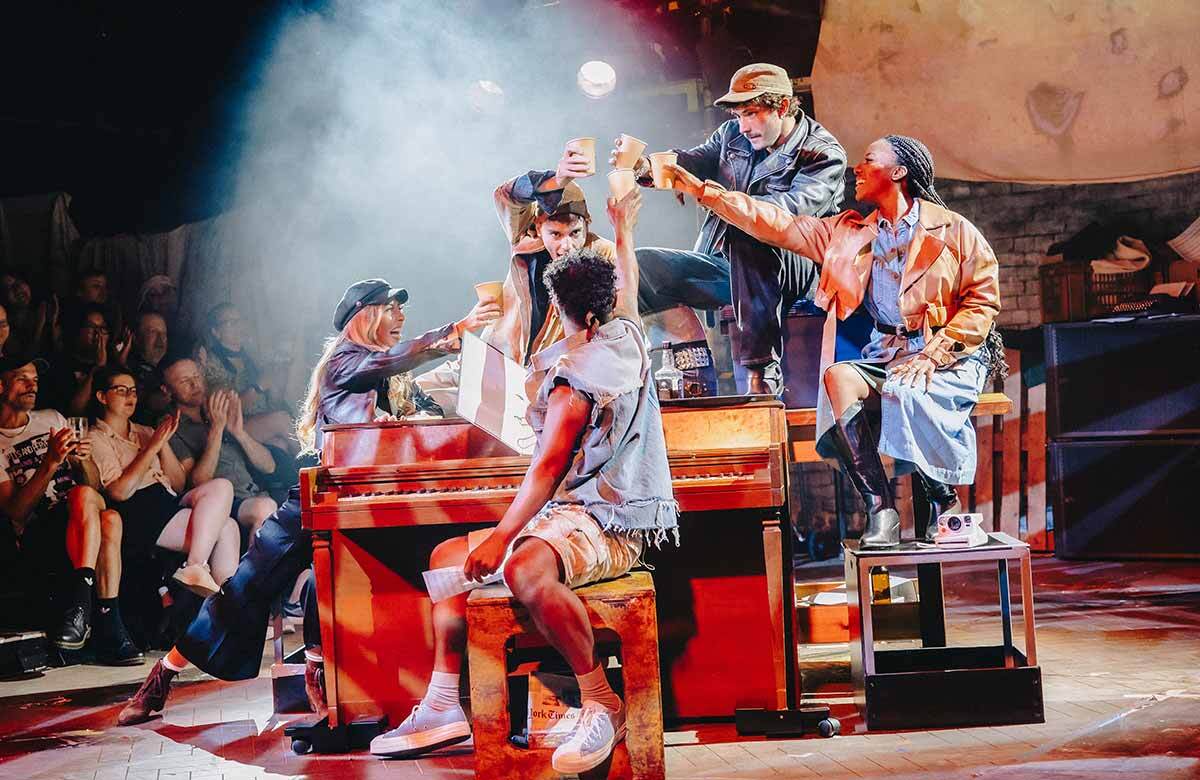
Forget the Barbra Steisand version, this adaptation goes back to the original short story by Isaac Bashevis Singer. The reviews ranged from 4 to 2 stars for this story of a young woman called Yentl, played by  Amy Hack, (‘driven and wholly believable’ The Stage) living in a restrictive turn-of-the-20th-century Jewish community where girls are not able to be formally educated, who disguises herself as a man in order to become a scholar. The production by the Australian Kadimah Yiddish Theatre and directed by Gary Abrahams was considered tense but also too long because of an excess of exposition (‘more subtext, less exposition’ WhatsOnStage). Nevertheless the play’s discussion of such modern issues as gender and inequality were appreciated. Much praise was bestowed on the narrator played by Evelyn Krape.

[Links to full reviews are included but a number are behind paywalls and therefore may not be accessible]

4 stars ★★★★

Gary Naylor of BroadwayWorld discussed Evelyn Krape’s narrator as being ‘the agent of transgression, the counterweight to a society that values conformity (Tevye’s “Tradition”) above both honesty and joy. And that’s where the play punches 2026 in the solar plexus (…) the play demands that its audience confront what are today called culture wars. What is the damage wrought by insisting… that individuals deny their specific manifestation of humanity in order to conform to another’s version of what they should be?’

3 stars ★★★

Paul Vale at The Stage found it ‘both richly theatrical and refreshingly uncompromising’ and ‘a potent story, told with imagination and flair’. He described the way ‘Yentl’s journey becomes a pressure cooker of desire and frustration. Through Hack’s marvellously driven and wholly believable Yentl, we get a real sense of that tension building and the dangers they face on the road they have taken.’

Miriam Sallon for WhatsOnStage summed up: ‘It’s a fun yarn, and the cast and crew are clearly trying to tell Yentl’s story in earnest. But perhaps because of the original short format, or perhaps because half the play is in Yiddish with English surtitles, there are so few moments in which someone isn’t explicitly explaining what’s happening. This is understandable given the audience has to contend both with the Yiddish and the many Jewish customs that are key to the plot. But if you’re going to make a short story a two-and-a-half-hour play, it’s going to need .’

2 stars ★★

The Times’ Clive Davis was the harshest critic: ‘Cut 30 minutes or so from the script, and it might take flight. As it stands, this otherworldly tale becomes the equivalent of a long day in the seminary.’

Critics’ average rating 3.0⭑

Yentl can be seen at Marylebone Theatre until 12 April 2026. Buy tickets directly from marylebonetheatre.com\

If you’ve seen Yentl at Marlebone Theatre, please leave a review and/or rating below

Theatre reviews roundup: The Holy Rosenbergs

Jewish family drama waylaid by big issues

Menier Chocolate Factory
Tracy-Ann Oberman & Dorothea Bennett-Manuel in The Holy Rosenbergs. Photo: Manuel Harlan

The revival of Ryan Craig‘s 2011 play The Holy Rosenbergs was well received by the critics. Most felt the ‘issues’ were laid on a bit thick at times but all agreed it covered important matters (‘brave and intelligent’ – WhatsOnStage), was funny at times (‘sitcom-funny’ – Standard), and well acted (‘finely wrought performances’ – The Times). Many brought attention to its similarities to the plays of Arthur Miller, particularly All My Sons. The cast is led by Nicholas Woodeson and Tracy-Ann Oberman  as the couple preparing for the funeral of their son, lost in Middle East war. Woodeson’s character is also struggling with the failure of his business. Dorothea Myer-Bennett was praised for her role as a lawyer controversially investigating human rights abuses in the war on Gaza. Lindsay Posner‘s direction ‘sets a cracking pace’ (The Stage) but most critics felt the ending was a let down.

[Links to full reviews are included but a number are behind paywalls and therefore may not be accessible]

4 stars ⭑⭑⭑⭑

WhatsOnStage‘s Sarah Crompton said: ‘the play’s strength is that it grounds its arguments so firmly in a family, bound by tradition and love but separated by politics.’ She also declared: ‘The cast are simply superb’. She ended: ‘the final confrontation between Ruth and her father doesn’t quite ring true. But Posner and his cast make sure the tension never lessens.  The Holy Rosenbergs is an imperfect play, but a brave and intelligent one too.’

David Jays for The Guardian began: ‘A death in the family is always a reckoning. In this absorbing revival of Ryan Craig’s play from 2011, it is also an unravelling, one in which morality and geopolitics play out on a highly patterned carpet in a Jewish suburban dining room.’ He pointed out: ‘Craig describes his plays as “comic tragedies”, and there’s certainly humour in Lindsay Posner’s finely acted production as the Rosenberg parents, never knowingly under-catered, frantically paper over the cracks. Goujons are lauded, macaroons and marble cake foisted on the unwilling.’

Matt Wolf for LondonTheatre looked back at the original National Theatre production of 2011: ‘The difference is a production from Lindsay Posner that cuts far more deeply than the text did first time round, coupled with a realisation that the central issues of the play occupy today’s headlines with a gathering ferocity reflected in the commitment of Posner’s first-rate cast.’ He noted: ‘Words, of course, can wound as well, and it’s been some time since I’ve been to a play where one remark or another made a rapt audience so audibly draw breath.’ He recorded: ‘You watch enthralled at Craig’s skill in layering the debate, all the while lamenting the seeming eternal nature of the arguments here laid forth.’

The Times’ Clive Davis was amused as well as moved: ‘This is an evening where a debate about Israel, the morality of war and the meaning of community can suddenly land a sharp blow to the funny bone(…)Time and again, you find yourself laughing through the pain while admiring the finely wrought performances from a cast led by Tracy-Ann Oberman.’

Aleks Sierz at The Arts Desk called it a ‘brilliantly provocative play’. He noted: ‘Lindsay Posner’s well-focused production, which balances pain with humour, is set in a recognizably real suburban interior, designed in detail by Tim Shortall, and fields some emotionally truthful acting.’

3 stars ⭑⭑⭑

Franco Milazzo for BroadwayWorld concluded that it was ‘a sturdy, occasionally engaging examination of family, faith and political conscience. Yet in trying to say everything at once, this revival ends up diluting its strongest ideas. In a play so preoccupied with the question of who we are, the most surprising thing is how hard it is to pin down exactly what this one wants to be.’

The Standard‘s Nick Curtis summed up: ‘This is a serious, and at times seriously funny, bid to show how events in Gaza impact Jews elsewhere, but also a clumsy one.’ He explained: ‘On one level David and Lesley Rosenberg (Nicholas Woodeson and Tracy-Ann Oberman) are a sitcom-funny, kvetching suburban couple but they are also preparing for the funeral of their son Danny, a pilot with the Israel Defense Forces, killed in the first Gaza War’ and ‘the way argument is loaded into the play feels forced, particularly in a blatantly engineered second-act showdown’.

Dave Fargnoli of The Stage thought: ‘Though Craig’s writing is contrived – with various authority figures dropping in at the Rosenbergs’ Edgware home to deliver eloquent speeches advocating specific viewpoints – the piece remains thought-provoking. Director Lindsay Posner sets a cracking pace that never flags, smoothly segueing between each set-piece debate while drawing out the text’s sly, dark humour.’

Time Out‘s Andrzej Lukowski noted: ‘Posner’s production is conservative in its naturalism – the songs are the most flamboyant thing about it – but he gets fine performances out of his cast, particularly Dorothea Myer-Bennett as Ruth, whose fiery dedication to justice masks her vulnerability as a human being.’ Like other critics, he pointed out the similarities to Arthur Miller’s writing: ‘There’s a Miller-esque tone to the domestic side of it, with Woodeson’s struggling caterer David having a whiff of Willy Loman to him as he blithely fails to grasp that he’s yesterday’s man.’ He complained: ‘The trouble is that for all its bracing relevance, the Israel/Gaza stuff is so bombastic as to overwhelm the more nuanced family tragedy.’

Critics’ average rating 3.7⭑

The Holy Rosenbergs can be seen at The Menier Chocolate Factory until 2 May. Buy tickets directly from the theatre

If you’ve seen this production of The Holy Rosenbergs, please leave a review and/or rating below

Theatre reviews roundup: Marie & Rosetta with Beverley Knight

Soaring singing but pedestrian script

@sohoplace
Beverley Knight & Ntombizodwa Ndlovu in Marie & Rosetta. Photo: Johan Persson

The script of Marie & Rosetta by George Brant does not do justice to the thrilling story rock’n’roll godmother Sister Rosetta Tharpe and her protege Marie Knight, according to the few critics who have reviewed its transfer to @sohoplace. However the performances by Beverley Knight and Ntombizodwa Ndlovu were highly praised. I’ve added some reviews from its opening at Rose Theatre. They reached the same conclusion.

[Links to full reviews are included but a number are behind paywalls and therefore may not be accessible]

4 stars ⭑⭑⭑⭑

Theo Bosanquet at LondonTheatre applauded the stars: ‘it features, in Beverley Knight and Ntombizodwa Ndlovu, two powerhouse vocal performances that amply convey the talents of the two women they portray.’ Less so the script: ‘Brant’s script has an unfortunate tendency to feel like filler, the production only really sparking to life during the musical numbers and deftly choreographed moments of physical intimacy…But it’s a poignant story nevertheless, the tension between the free-spirited master and her god-fearing apprentice richly drawn, and their romantic chemistry never too far from the surface, culminating in a deeply moving finale.’

While praising the singers, Clementine Scott at BroadwayWorld pinpointed the problem with the production, ‘Being as constricted as it is to one setting, and one point in time, inevitably sometimes Marie & Rosetta runs out of steam. Much of the dialogue that veers outside the dressing room feels awkward, unfortunately including Rosetta’s account of racism and segregation in the American South, a clumsy historical reference rather than an emotional personal anecdote. Marie’s account of her failing marriage is emotively performed, but lacks some of the specificity of the women’s intellectual and musical conflicts.’

3 stars ⭑⭑⭑

Maygan Forbes for WhatsOnStage raved about the Ms Knight: ‘The evening’s undeniable centre of gravity is Knight. Her portrayal of Rosetta is charismatic, funny and commanding, but it is her singing that truly stops the show. Knight performs with such ferocious power and clarity that the music feels almost otherworldly. At several points, her voice genuinely raises the hairs on your arms…The sound alone is worth the ticket.’ Otherwise: ‘Ultimately, Marie and Rosetta is a production elevated by extraordinary musical talent but held back by a script that never quite matches its subject’s legacy.’

Here are some reviews of the production from its opening at the Rose Theatre:

4 stars ⭑⭑⭑⭑

Ammar Kalia for the Guardian felt: ‘The music is immediate and brilliant, with Knight and Ndlovu reaching a soaring harmony on the swaggering Rock Me, rumbling into a sultry groove on Tharpe’s nightclub favourite I Want a Tall Skinny Papa and highlighting Knight’s mighty solo vocal on Didn’t It Rain.’ But like others, he thought: ‘The script, however, is a disappointment.’

Holly O’Mahony for The Stage said: ‘In George Brant’s intimate two-handed play, studded with rock and gospel hits and directed by Monique Touko, Knight digs deep to embody the Arkansas-born singer, who inspired the likes of Elvis and Johnny Cash but whose potential was stifled by a racially segregated America.’

The Times’ Clive Davis declared it ‘creaks in places, but Monique Touko’s production … is lifted by incandescent vocals from the R’n’B singer Beverley Knight.’

3 stars ⭑⭑⭑

The Standard‘s Nick Curtis summed up: ‘The singing from both leads is magnificent, the acting passionate but the script by American writer George Brant is pedestrian and heavy on exposition.’

Critics’ Average Rating 3.7⭑

Marie & Rosetta can be seen at @sohoplace until 11 April 2026

If you’ve seen Marie & Rosetta at @sohoplace or the Rose Theatre, please leave a review and/or rating below

Theatre reviews roundup: Broken Glass

Strong performances in modern production of late Miller play

Young Vic
Eli Gelb, Pearl Chandra & Alex Waldmann in Broken Glass. Photo: Tristram Kenton

Following last week’s Bird Grove and Evening All Afternoon, another play where the acting seemed to outweigh the play and production. Arthur Miller‘s late play is set in Brooklyn 1938 and concerns a Jewish couple affected by events in Germany. The critics didn’t think it was one of his best but opinions as to its quality varied.  As did the reviews of director Jordan Fein’s ‘modern’ production. However, the actors were universally praised. Eli Gelb plays Philip Gellburg, repressed, self hating and desperate to fit in at his non-Jewish workplace. Pearl Chandra is his wife Sylvia who has been struck by a mysterious paralysis. Her physician is played by Alex Waldmann. The set designed by Rosanna Vize was generally liked even if some effects didn’t hit the mark.

[Links to full reviews are included but a number are behind paywalls and therefore may not be accessible]

4 stars ⭑⭑⭑⭑

The Guardian‘s Arifa Akbar was blown away: ‘The interweaving of the personal, political, social and sexual seems inchoate, but there is so much emotive power in Jordan Fein’s production, such extraordinary performances by Gelb and Chanda, and so many chilling parallels to current political indifference to the horrors around the world, that the play’s lack of internal coherence becomes irrelevant.’

The Standard‘s Nick Curtis was on board for the ride: ‘Self-loathing and Freudian sexual unease haunt the story along with the thinly veiled antisemitism of gentile American society. It’s a peculiar, intense, talky brew with the yadda-yadda energy (and the gender attitudes) of a 1930s movie. Jordan Fein’s production leans stylistically into the play’s strangeness but features terrifically naturalistic performances, especially from Pearl Chanda as the off-centre Sylvia.’

The Telegraph‘s Dominic Cavendish reported: ‘In a taut, timely and finely acted revival by American director Jordan Fein, a drama that might sound contrived and far-fetched becomes brilliantly gripping.’ He was concerned that: ‘under harsh office lighting, the mise-en-scène risks distracting us from the real source of the evening’s power: its nuanced performances.’ He described the latter: ‘Chanda is magnificently understated as the stricken Sylvia (…) Gelb … is superb, too, as her dowdy, defensive hubby – decent but with a bullying edge that explains Sylvia’s primal recoil from him as the fascist enemy within.’ He concluded: ‘Modish trappings aside, Miller’s tale carries a lasting sting of truth. It’s a play for today.’

WhatsOnStage‘s Sarah Crompton described Eli Gelb as: ‘extraordinary here, lending Phillip a buttoned-up physicality that finds release in twitching shoulders and nervous little hand gestures, and chin tucks. He begins as a great lumbering bully…and ends as a frightened child.’ She concluded: ‘Fein’s thoughtful direction holds and tightens the corkscrewing emotions and thoughts of the play in a production that is always gripping and often devastating. It’s a messy play, but an important one, compelling in the richness of its concerns.’

3 stars ⭑⭑⭑

Time Out’s Andrzej Lukowski called the play ‘a seething Freudian stew, spiced with Jewish guilt, a heady, occasionally surreal blend of desire and regret.’

Dave Fargnoli for The Stage commented: ‘Full of powerful themes and brutally unvarnished emotion, this is a knotty, confronting piece, but it lacks the focus and tragic force of Miller’s better-known plays.’ ‘Director Jordan Fein works hard to create a deliberately awkward, uncomfortable atmosphere here, with actors stranded on stage for long stretches ignoring the action or variously crawling over, flopping on to or jumping up on the furniture in eruptive fits of emotion.’ ‘Pearl Chanda gives an intense performance as Sylvia, trying to maintain an air of calm composure, but liable at any moment to snap.’

Alexander Cohen at BroadwayWorld described the set: ‘the boundary between the Gellburgs’ Brooklyn interior and the streets of Berlin has dissolved. Scenes melt into one another; characters linger onstage long after their scenes have ended. Bright office lights are kept on for much of the show, washing the stage in a clinical glare and drawing half the audience into their torrid world.’

The Times’ Clive Davis joked: ‘Watching a fine cast go about their business over the course of two hours with no interval is like watching medics doing their best to keep a patient from slipping away.’ He warned: ‘anyone who has ever been irked by (Miller’s) moralising tendencies will find more to annoy them here. Everything is just a little too schematic.’

Tim Bano for the Financial Times noted: ‘Fein peppers the production with touches of oddness: actors stand zombie-like at the edge of the stage, lights suddenly extinguish with heavy thuds. These flourishes enliven what is otherwise sluggish. There is little emotional charge to the quieter, more tender scenes, but then Fein aces the later moments that take place at screaming pitch as Miller lets pure anguish take hold of his characters.’

The Independent’s Alice Saville found fault with the production: ‘Miller’s play is claustrophobic and intense, set mostly in the couple’s messy bedroom. In contrast, Fein’s production is deliberately bright and spacious, making their marriage explode across a big arena-style stage, every ugly detail highlighted by office-style fluorescent lights. Still, his attempts to refurbish this story get stuck at surface level.’ She conceded: ‘This revival feels worthwhile, without quite achieving the shattering contemporary relevance it strives for.’

Julia Rank for LondonTheatre found it ‘too meandering and repetitive’ but noted: ‘it has got several striking qualities with present-day resonance’.

Critics’ Average Rating 3.4⭑

Broken Glass can be seen at the Young Vic until 18 April 2026 Buy tickets directly from the theatre

If you’ve seen Broken Glass at the Young Vic, please leave your review and/or rating below
Theatre Reviews Roundup: Bird Grove

Elizabeth Dulau soars as young George Eliot

Hampstead Theatre
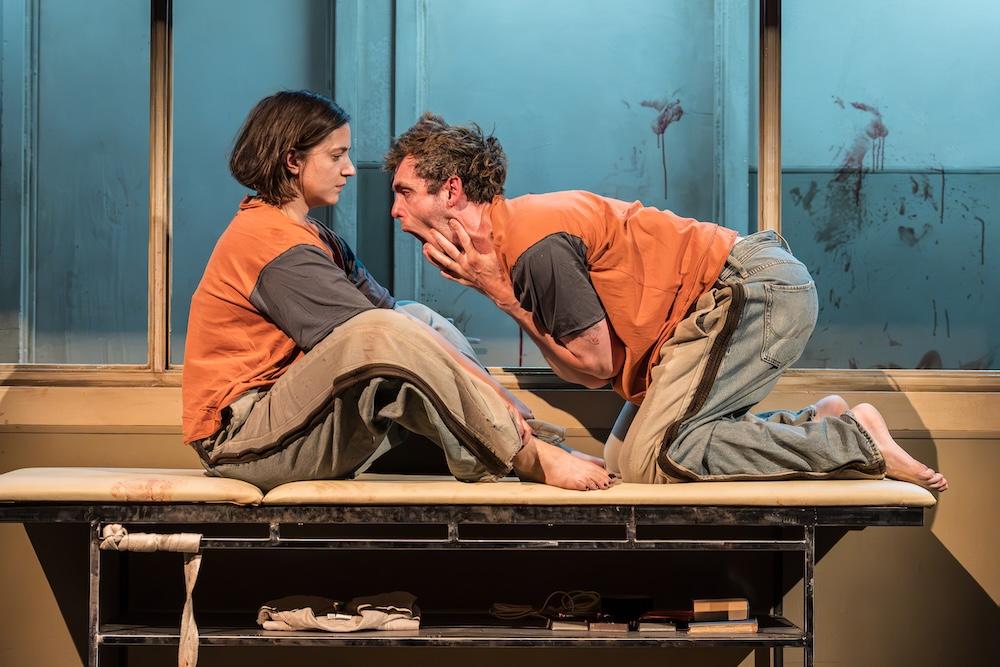
Owen Teale & Elizabeth Delaunay in Bird Grove. Photo: Johan Persson

Before she was George Eliot, Mary Ann Evan’s was a rebellious young woman. Alexi Kaye Campbell’s new play explores the period when she lived at home in conflict with her father and society in general. The critics were unanimous in their praise for the ‘lovely, strong, central performance’ (Guardian) from Elizabeth Dulau (from TV’s Andor) and ‘Wryly funny’(Stage) Owen Teale. They had mixed feelings about the play which was ‘entirely modern’ (LondonTheatre) with a ‘delicate emotional power’ (Guardian) or ‘slightly overlong’ (Arts Desk) and ‘ponderous’ (Standard). Anna Ledwich is the director.

[Links to full reviews are included but a number are behind paywalls and therefore may not be accessible]

4 stars ★★★★

Matt Wolf at LondonTheatre informed us: ‘The narrative ceases before Evans has actually adopted her legendary nom de plume. But playgoers by that point will surely be in thrall to the psychic journey that has led her to this decision’. He claimed: ‘the play feels entirely modern in its insistence on the kind of self-reckoning that people talk about these days when they reference “being seen”. The material wouldn’t land as well as it does, however, without the energy and drive of Dulau’.

3 stars ★★★

The Stage’s Sam Marlowe liked it: ‘Ledwich’s production is lively and vibrantly performed, on a turquoise set by Sarah Beaton that gracefully suggests airy rooms and high ceilings, and makes discreet use of a revolve. Dulau is a forthright, confident, zingily intelligent Mary Ann, and the tenderness between her and Teale’s wryly funny, pragmatic, self-made man Robert feels touchingly authentic.’

The Financial Times’ Sarah Hemming praised the two stars : ‘Elizabeth Dulau handles the central role terrifically. It’s hard to play intelligence, but Dulau achieves it, quietly suggesting a brilliant mind buzzing beneath her mild expression. She’s drily funny, too, as she endures the bombastic overtures of a would-be suitor too stupid to notice his own limitations (enjoyably played by Jonnie Broadbent). In reply, Owen Teale, as Robert, conveys a well of feeling behind a facade of gruff reserve.’

The Guardian’s Arifa Akbar pointed out: ‘The production is a kind of half-way house between a play of ideas and a father-daughter drama.’ She said: ‘the play has a delicate emotional power that takes hold slowly and has a lovely, strong, central performance from Dulau.’

Time Out’s Andrzej Lukowski concluded: ‘It’s not a radical or earthshaking show, but fans of stately period dramas with a feminist twinkle won’t go away disappointed. Teale is great and Dulau shows she can hold a stage as well as a screen. Its real strength, though, is its sweet and rare depiction of the beauty of a loving bond between a father and a daughter.’

Alexi Kaye on The Arts Desk concluded: ‘This is a rather serious, heartfelt and thoughtful, if slightly overlong, account of family tensions and a young Victorian woman’s coming of age.’

Clementine Scott at BroadwayWorld liked the two leads but didn’t mince her words about the play: ‘Too often, oafish suitors, awkward dinners and hackneyed cries of “I want to read!” overwhelm the tender portrait of a complex domestic life that we see glimpses of throughout. Most depressingly of all, we have to be told constantly of Mary Ann’s intellectual capacity, because the play she’s in is too overwritten to give her the chance to show some of that intellect herself.’

Miriam Sallon for WhatsOnStage couldn’t see the point: ‘If this is truly Eliot’s origin story, perhaps we’re best left without it. Let her literature speak for itself.’ She made a plea: ‘I would request a much tighter plot to distract from the lack of Eliot’s words, and perhaps a refocus on what really makes an interesting story, besides simply saying, that fairly ordinary girl is going to be extraordinary some time after this story ends.’

2 stars ★★

’Elizabeth Dulau is the saving grace in this ponderous play’ declared the Standard’s Nick Curtis. He expanded: ‘The play is all text and no subtext, the characters constantly explaining themselves through anecdotes or reference to the conventions of the era.’ Furthermore, Campbell ‘creates unconscionably bad parts for the supporting cast here.’

Critics’ Average Rating 3.0★

Bird Grove can be seen at Hampstead Theatre until 21 March 2026.  Buy tickets directly from the theatre.

If you’ve seen Bird Grove, please leave your review and/or rating below
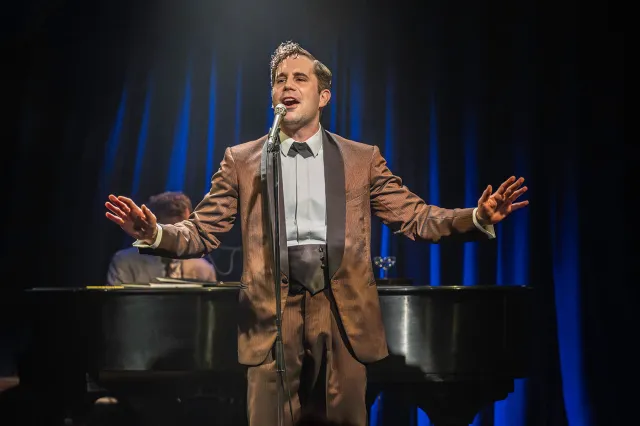
Theatre reviews roundup: Evening All Afternoon

Heavyweight acting in lightweight play

Donmar Warehouse
Erin Kellyman and Anastasia Hille in Evening All Afternoon. Photo: Marc Brenner

The critics loved the two actors in this new two-hander by written by Anna Ziegler and directed by Diyan Zora. Erin Kellyman (‘burningly charismatic’ – Time Out) is Delilah, coping with her mother’s death, and Anastasia Hille (‘a twisted coil’ – WhatsOnStage) plays Jennifer, her stepmother, whom Covid lockdown forces together. Their clashes and emotional connections were disparaged by many critics as lacking in depth. ‘if this is a wisp of a drama, these two actors give its gauzy translucency substance’ summed up The Stage.

[Links to full reviews are included but a number are behind paywalls and therefore may not be accessible]

4 stars ★★★★

WhatsOnStage‘s Sarah Crompton called it: ‘a surprising and quietly powerful study of grief and families.’ She said: ‘It’s a rare thing, a piece of storytelling that constantly surprises and never settles for the obvious.’ She praised both actors: ‘Kellyman’s Delilah is convincing in both her bolshiness and in her sense of being unmoored, grappling with feelings that she cannot quite control (…) Hille is like a twisted coil, all buttoned up in a brown cardigan and high-necked shirt, desperately trying not to be a doormat, to do the right thing, but battling her own demons.’ She added: ‘Diyan Zora directs with a delicacy and gentleness that lets the performances and the text develop at precisely the right pace’.

The Times’ Clive Davis said it was: ‘a hypnotic, sometimes very funny portrait of figures from different generations who discover that the loss of their mothers creates a bond of sorts between them. If that sounds like the outline of a conventionally uplifting piece of against-all-odds storytelling, Ziegler and the director Diyan Zora build the narrative out of shards and fragments, as if piecing together a broken mirror. Each sentence draws us in closer.’ He explained: ‘We are inside the minds of characters who speak a different language and have very different thoughts. We never want to stop eavesdropping.’ 

The Telegraph‘s Dominic Cavendish was enthusiastic: ‘Erin Kellyman and Anastasia Hille give beautifully judged performances in an effective, affecting evening’. He felt: ‘the piece, directed by Diyan Zora, is at its strongest in its conversational ebb and flow. Ice is broken then resealed, the age-gap straddled then left exposed anew. Hille’s Jennifer is diffident, resolute, quietly wise. We enjoy the discomfort inflicted on her, yet empathise as she buckles.’ He also gave praise to Kellyman, who ‘makes a striking stage debut, adopting a taunting, sullen impassivity that masks her character’s bubbling distress.’

Time Out‘s Andrzej Lukowksi was impressed by ‘an absolutely storming stage debut for Erin Kellyman (…) The young actor is burningly charismatic…but it’s the combination of insouciant swagger and cataclysmic fragility that draws us to her.’ He found the play itself ‘a bit too sleek, a bit too streamlined’ but liked the ‘simple revolve set from Basia Binkowska revealing clever hidden depths, abetted by some magical lighting from Natasha Chivers.’

3 stars ★★★

This is how The Stage‘s Sam Marlowe opened, and effectively summed up, her review: ‘It often feels as if this new two-hander … is teetering on the brink of profundity. But somehow, it never quite topples in. It’s a quiet, sensitive piece about grief, love, memory and motherhood, in which a woman and the daughter of her new husband struggle to overcome the ghosts of their past and to forge some sort of understanding. Both are haunted, and Ziegler rather overworks both the spooky metaphor and the self-consciously poetic language into which they sometimes lapse. But Diyan Zora’s production is beautifully acted by Anastasia Hille and Erin Kellyman, and if the pace is more meandering than hypnotic, there are moments that pierce.’

The Guardian‘s Arifa Akbar described the interaction: ‘Artfully directed by Diyan Zora, the play is both a telling (the women narrate in third person) and an enactment of their developing relationship within a circle on stage, which revolves as the two psychologically orbit each other. We see them meet, clash and misunderstand each other while confessing their inner worlds to us, just outside this dramatic circle.’ She ended: ‘The play’s power, ultimately, lies in its liminal spaces: between dream, psychosis and reality, between fiction and its creation, and between the tragedy of death and the capacity for healing found within it.’

Holly O’Mahony for LondonTheatre thought: ‘Both characters are wonderfully flawed creations, and it’s simultaneously moving and wryly funny watching them muddle their way through. Ziegler’s zippy dialogue is shot through with dark wit, and the awkwardly spiky exchanges between her chalk and cheese characters are always entertaining ‘. However: ‘it’s an unremarkable story and the turn-taking monologues start to feel tediously self-indulgent towards the end of the play’s 90-minute run-time.’

The Standard‘s Nick Curtis concluded: ‘As director, Zora invests the fraught verbal engagements between the two women with tension, but the constant resort to soliloquy – one or other character unpacking the last argument or preparing us for the next one – becomes tiresome and saps this 90-minute play of energy. The epistolatory epilogue is trite. I never like to describe a show as a curate’s egg – parts of it are off, parts of it are excellent – but here the phrase is inescapable.’

Cindy Marcolina at BroadwayWorld summed up: ‘The production is sleek and the acting is exquisite, but the narrative is commonplace and the considerations are elementary.’

Maryam Philpott for Plays International was more critical: ‘Ziegler’s play about grief and motherhood tries to do too many things at the same time, drawing in lightly explored mental health challenges, a predatory university environment, the pandemic, and generational miscommunication. With some of these themes acting as a catalyst for the action and others as both motivation and consequences, Ziegler loses sight of a much cleaner two-hander.’

Critics’ Average Rating 3.4⭑

Evening All Afternoon can be seen at the Donmar Warehouse until 11 April 2026. Buy tickets directly from donmarwarehouse.com

Theatre review: Rock And Roll Man

Rock’n’roll musical raises the roof

Salisbury Playhouse


⭑⭑⭑⭑

Constantine Maroulis in Rock And Roll Man. Photo: Pamela Raith

If you’re British and under 75, the name Alan Freed probably won’t mean anything to you. He was an American DJ and he died in 1965. Rock And Roll Man, a musical about his life, could only have originated in the USA, and bringing it over here may be regarded as a bit of a gamble. As it turns out, Freed’s life was richly dramatic- he not only popularised the term ‘rock’n’roll’, he championed Black music to white audiences and pioneered integration at concerts at a time when segregation and racism was entrenched in America. He also strayed from the straight and narrow.

So, Alan Freed is a compelling figure at a pivotal point in music history. Nevertheless, it’s the music that takes centre stage. Even for someone of my vintage, the songs featured in Rock And Roll Man were already history by the time I reached my teens. Having said that, many of them, like Roll Over Beethoven, Tutti Frutti and Yakety Yak have become classics. Even if you’ve never heard them before, you’ll find impossible to stop your hands clapping and your feet tapping. In fact, the show could do with more songs played consecutively to raise the temperature even higher.

The jukebox musical, where the show is built around existing songs, is a difficult genre to conquer. Unlike classic musical theatre, where the songs organically advance the plot and illuminate character, the narrative can feel subordinate, perfunctory even, compared with the power of the music.

It helps therefore that the show incorporates several original numbers by Gary Kupper, written specifically for Freed to sing. They’re not great songs but they do the job of making it feel much more like integrated musical theatre.  Constantine Maroulis, as Freed, is a superb vocalist and persuasive actor, endowed with an audience charming charisma.

In the musical, we see how Freed fell in love with rock’n’roll records by Black artists, started to play them on his radio show rather than bland white crooners despite opposition, then organised concerts with integrated audiences which elicited a violent reaction from the authorities. We see him reach heights of national fame before his TV show is cancelled because a Black man danced with a white woman, and then his downfall.

Rock And Roll Man. Photo: Pamela Raith

The performers are, by and large, accomplished actors as well as singers. The principal singers have voices that are both powerful and mellifluous. Joey James is Chuck Berry personified, down to his signature ‘duck walk’, Marquie Hairston is a splendid Screamin’ Jay Hawkins, Anton Stephens‘ beautiful bass voice is lent is Bo Diddley, and Cherece Richards brings a commanding presence to LaVern Baker, a rare female singer from this period. Jairus McClanahan is a gloriously camp a camp Little Richard who lights up the stage with his presence. Their combined harmonies as The Platters, The Coasters and other groups are gorgeous.

Gary Turner is likeable as both Leo, Freed’s early business partner and friend, and later Morris, his more edgy mate from the Mob. Shelby Speed demonstrates impressive versatility as his mother, wife, daughter and more. Mark Pearce is, among others, an authoritative J Edgar Hoover. Under the assured direction of Randal Myler, with dynamic choreography from Stephanie Klemons, the production is slick, stylish and energetically staged.

There’s a clever plot device in the book, which helps give shape to this superior jukebox musical. Gary Kupper, Larry Marshak and Rose Caiola, who wrote the book, cast much of the narrative as a dream, in which Freed imagines himself on trial for promoting rock’n’roll. There is some reasoning behind this, since the prosecutor is J Edgar Hoover, head of the FBI, and it was that organisation that pursued Freed for encouraging this ‘degenerate’ music. What was degenerate about it? It was blatantly sexual and, perhaps more importantly, it was seen to be encouraging integration between black and white people- a radical proposition in 1950s and 60s America. So, Freed becomes an unlikely yet significant protagonist in the struggle for social change. Regrettably, this useful framework all but disappears in the second half.

Maybe it was because he had a target on his back, that Freed was plagued by scandals. It seems the practices of payola and tax evasion were common in the corrupt music industry but it was he whose career was destroyed, and that causes the musical to peter out. The show loses its shape and impetus as it heads to a distinctly downbeat end (spoiler alert: Freed dies), but the music plays on. Alan Freed may have faded from our collective memory but the music he shared with the the world still raises the roof.

Rock And Roll Man can be seen at Salisbury Playhouse until  7 March 2026 and then on tour to Theatre Royal Windsor (10-14 March), Cambridge Arts Theatre (16-21 March) and Lighthouse Poole (23-28 March)

[This review was revised on 23/24 February to synchronise the phrasing with that of the YouTube version]

Click here to watch this review on the YouTube channel Theatre Reviews With Paul Seven

Theatre review: Ben Daniels in Man And Boy

Terence Rattigan’s play is overpowered by Ben Daniels’ thrilling performance

⭑⭑⭑⭑

Ben Daniels in Man And Boy. Photo: Manuel Harlan

Terence Rattigan is now recognised as one of our great playwrights, spoken of as a successor to Ibsen and Chekov. But this wasn’t always so. After his pre-eminence in the 1940s and 50s, he was swept aside by the new wave of so-called kitchen sink and absurdist drama from the likes of Osborne and Pinter. So when Man And Boy arrived in 1962, it was pretty much dismissed by audiences and critics. It took until 2005 before there was a revival in London, which, although well received, still didn’t bring it into the repertoire of regularly performed Rattigan plays such as The Winslow Boy, The Browning Version, The Deep Blue Sea, and Separate Tables.

Is it then a problem play? Well, the National Theatre is giving us a chance to find out, albeit clothed in a thoroughly modern makeover. The trouble is, Anthony Lau‘s stripped down treatment featuring Ben Daniels leaping on and off tables, tends to overpower the play itself. Then again, it’s such a thrill, maybe that doesn’t matter.
Man And Boy, set in the early 1930s, when financial markets were unstable, centres an amoral, sociopathic millionaire and his relationship with his son. Gregor Antonescu is said to the richest, cleverest financier in the world. Ben Daniels, suited and booted, knocks the role into the acting stratosphere, brilliantly conveying a fast talking charm while occasionally revealing his savage contempt for all around him. He smiles, he bares his teeth, he moves like a raptor.
Ben Daniels in Man And Boy. Photo: Manuel Harlan

‘Liquidity and confidence’ keep him afloat, and it’s a phrase he often repeats. As the play begins, liquidity has deserted him in this world where loans are moved around and called in at dizzying speed, and with that has gone his backers’ confidence in him. Matters are made worse when criminal charges are brought against him. ‘In finance, man makes his own miracles,’ says Gregor, and sets about proving his point. A radio provides an urgent commentary.  It’s a searing, damning portrait of the world of the super rich, that resonates today.

Trying to avoid the media while he attempts to make a deal that will save him, he holes up in his estranged son Basil’s pokey apartment in a poor part of New York. It turns out the venue is not random. He has set up a meeting with a major banker Mark Herries, played with a combination of smarm and steel by Malcolm Sinclair. Herries is a closet gay man, whom Gregor hopes to manipulate by passing off his son as a rent boy that he can link up with.
Basil is played with a moving mixture of sadness and surliness by Laurie Kynaston. He is a sensitive musician with a social conscience, hence ‘weak’ in Gregor’s eyes. At first, Basil is hostile to his father- ‘you are nothing’ he says- yet still shows filial loyalty when his father is under threat. So, the second half of the play looks more closely at this damaged relationship, with a broken Gregor who has previously said ‘love is a commodity I can’t afford’ wondering whether he has underestimated the importance of love, and Basil doing everything he can to gain that missing paternal affection.
So, what about the tables? On the stage of Georgia Lowe‘s traverse-style set are three long tables that are moved into different configurations for no reason that was apparent to me, unless it was an elaborate pun to do with turning the tables on his enemies. In addition, there are a few simple chairs, a piano, a telephone, a radio, and I think that was it.
On one wall at the back of the theatre is projected the cast list and above the stage entrance the neon words ‘Knock Knock’, although it’s always a doorbell that rings. Why? It could be an attempt at Brechtian alienation, intended to make us step back from emotional involvement, and think about the moral issues. I doubt Rattigan would have approved.

Do the tables help or hinder?

So do the tables help or hinder our understanding of the play? Looked at positively, they create some dramatic moments when Ben Daniels jumps onto them and looks down on all around him. At these times, he is the colossus the world believes him to be, and when he crouches on his haunches and leans over his son, he is like an alpha male silverback gorilla. But, also, they are only cheap kitchen tables, an apt metaphor for the flimsy foundations of Gregor’s power. Credit here to Choreographer and Movement Director Aline David.
Ben Daniels & Laurie Kynaston in Man And Boy. Photo: Manuel Harlan

Then again, when other characters clamber onto a table, the effect feels mannered and a bit distracting. Are they isolating themselves from those close to them, as they are already doing emotionally? Maybe. Or are they just doing it because the tables are there? Any way you interpret it, I will always think of this as the ‘table production’.

I guess we’re used to seeing plays by Rattigan’s contemporaries, writers like Arthur Miller and Tennessee Williams, being given minimalist settings, not to mention those by the father of naturalism, Ibsen. But a naturalistic background has come to seem integral to Rattigan’s work.  Very few of us have had the opportunity to see Man And Boy in a conventional production, so it’s hard to judge what is gained or lost in this stripped-bare version.
While the first half dominance of Ben Daniels was thrilling, and his breakdown in the second half shocking, yet his sheer theatrical force, and (yes) the tables, stopped me from getting fully engaged with the evolution of the father-son relationship. This may be intentional, since the play’s centre of gravity is undeniably Gregor.
The other characters we encounter are very much secondary, albeit well played. Phoebe Campbell brings verve to Basil’s girlfriend Carol. Gregor knows all about her, because he has spies, and information is power in his world (that’s how he knows about Mark Harries’ secret life). Leo Wan is David Beeston, an accountant at first confident and aggressive when he tries to prove Gregor’s corruption, but who breaks down in the face of humiliation and frustration. Isabella Laughland gives a delightful performance as Gregor’s semi-detached wife, enjoying the high life but annoyed at the lack of attention from her husband. Nick Fletcher plays Sven, Gregor’s cynical consigliere. It is significant that when Gregor hits rock bottom and craves some human touch, his Wife and his closest friend both make their excuses.
By the way, although I said the set is two-sided, there are gallery and circle seats on the other two sides. I would advise you that those areas offer severely restricted views.
Man And Boy make lack the finesse of Rattigan’s best plays, but Anthony Lau’s bold staging and Ben Daniels mighty performance make the revivial well worthwhile.

Man And Boy can be seen at the National Theatre until 14 March 2026. Buy tickets directly from nationaltheatre.org.uk

Click here to watch this review on the YouTube Channel Theatre Reviews With Paul Seven

Click here to see the roundup of other critics’ reviews of Man And Boy starring Ben Daniels


Theatre reviews roundup: Dracula with Cynthia Erivo

Fabulously sophisticated or theatrical gimmickry?

Noel Coward Theatre
Cynthia Erivo in Dracula. Photo: Daniel Boud.

The much anticipated collaboration of superstar actor Cynthia Erivo and avant garde theatre director Kip Williams received mixed reviews. Some critics thought it was a ‘magic’ (Telegraph), ‘manifestation of desire within us all’ (Standard), while others found ‘there is neither chill nor heat here’ (Guardian) and ‘not enough substance’ (BroadwayWorld). For some, the acting on stage and screen was ‘ingeniously interlaced’ (Times) and ‘fabulously sophisticated’ (Financial Times), but others described this as ‘theatrical gimmickry’ (WhatsOnStage) and ‘Overly elaborate’ (Independent). The star, who played all 23 parts on stage and on screen, was ‘burningly intense’ (Time Out) and a ‘one–woman tour de force’ (Mail).

[Links to full reviews are included but a number are behind paywalls and therefore may not be accessible]

4 stars ⭑⭑⭑⭑

The Standard‘s Nick Curtis summed up the quality Cynthia Evrio brought to the production : ‘Shaven-headed, preternaturally physically ripped and androgynous, her expressive hands lengthened into talons by nail extensions, the Wicked star juggles costumes and accents, interacting with onscreen versions of herself in a hectic 120-minute canter through the Gothic tale. Her performance triumphantly walks a knife edge between virtuosity and absurdity.’ He explained that ‘Williams accentuates the Victorian novel’s barely-repressed queer subtext and general air of heavy-breathing lasciviousness’ and that he ‘foregrounds the idea that Dracula is not an external monster but a manifestation of desire within us all.’

The Financial Times’ Sarah Hemming called it a ‘fabulously sophisticated cine-theatre adaptation’. She was bowled over by the star: ‘It’s an outstanding performance: Erivo, a tiny, mercurial figure, ricochets between 23 characters…a switch of wig, a shift in stance, a lacy skirt or a pair of spectacles, and suddenly she’s someone else’. She was also impressed by the production: ‘It’s clever, technically. But it’s also an ingenious contemporary response to the themes of death, desire, transgression and identity running through the novel, and to prejudiced attitudes to outsiders.’ Unfortunately: ‘As the plot rumbles on, the text itself becomes a drag and the show begins to feel overlong.’

The Telegraph‘s Dominic Cavendish was almost over-the-top in his enthusiasm: ‘It’s feats of stamina like this that keep British theatre un-dead.’ He gave more detail: ‘Over almost two hours, Erivo – sporting elongated nails and with a formidable muscular athleticism – shape-shifts and gender-flips, with costumes and wigs changed swiftly by stagehands. But also she can talk to, and is superimposed beside, a raft of other pre-recorded characters on screen – as the nominal villain steals with rapacity from Transylvania to Yorkshire. Magic.’

Clive Davis of The Times felt a rush of blood: ‘Now that’s what I call event theatre. Watching Cynthia Erivo in this solo rendition of Bram Stoker’s novel is akin to seeing an ice skater going for gold in the Winter Olympics. Can she pull off one triple Lutz after another without taking a tumble? (…) Erivo fumbled a few lines but otherwise gave a commanding display in a Kip Williams production that is part theatre, part cinema.’ He reacted more positively to the cinema content than many of the reviewers below: ‘recorded videos … are ingeniously interlaced with the live action.’

Brooke Ivey Johnson for The Metro stated: ‘The constant doubling — a live body here, a filmed apparition there — reinforces that sense of fragmentation, as though we are witnessing a mind at war with itself. And with Erivo – openly queer and fluid in her masculinity and femininity – inhabiting every role, the novel’s homoerotic undertones surface with a clarity that feels both modern and radical.’

3 stars ⭑⭑⭑

‘is her West End return a show to die for? Not quite’ intoned Olivia Rook at LondonTheatre. Part of her reaction  related to the cine elements: ‘The camerawork is as slick as we have come to expect from Williams’ but ‘Close-up shots of fangs and Erivo’s trademark talons scraping a cut neck aren’t enough to get the blood pumping, however well they’ve been framed. The balance seems to be off between the live work on stage, and the screens that dwarf Erivo.’ She also worried that ‘in a production that demands so much of its performer, you can’t shake the feeling it’s about to run away from her.’

Time Out‘s Andrzej Lukowski felt that ‘Erivo is tiny and the screen is massive, and the pre-recorded stuff is so dominant – as many as four gigantic versions of her on screen versions of her – that it overshadows the technically impressive work happening on stage.’ As the evening progressed: ‘Not only does it become quite a lot like watching a weird pre-recorded film of Dracula, but there’s just too much plot compressed into too little space.’ But he did like the star: ‘Erivo is a burningly intense performer who nonetheless has some fun casting sarcastic looks or exaggerated doe eyes at the camera. Some of her characters verge on stereotypes, but her stylish, implicitly African Count is fascinating. And it’s worth saying that while Erivo has a diminutive stature, her otherworldly looks look great blown up on a giant screen – she’s a movie star!’

WhatsOnStage‘s Sarah Crompton’s blood boiled rather curdled: ‘How wonderful it would have been to see her play Dracula. Or his nemesis, Van Helsing. Or even his prey, Mina. How brilliant it might have been to watch her return to the stage after her world-conquering performance as Elphaba in Wicked in a real play. Instead, she is forced to attempt to lend some bite to Kip Williams’ meandering – and excessively long – adaptation of Bram Stoker’s epistolary novel, which sacrifices her undoubted talent on the altar of superficially exciting theatrical gimmickry.’

Aliya Al-Hassan of BroadwayWorld said it had ‘a lot of style, but not enough substance’. She expanded: ”The production is a technical feat, but is so caught up in its own cleverness that it forgets one of the most intrinsic appeals of theatre; to connect an actor to an audience through their live presence on stage. Not on a screen.’ She did admire the star: ‘Erivo shows remarkable focus and commitment to the material, switching between characters with ease. Even with some curious creative choices, such as Van Helsing’s Gandalf-like wig and Dracula speaking with a Nigerian accent, she seems to carry it off.’

For The Mail‘s Patrick Marmion, Cynthia Erivo was ‘quite simply wicked all the way through this one–woman tour de force. Wicked meaning good. Wicked meaning exciting. And wicked meaning eerily creepy.’ He said: ‘this is a mind–bogglingly complex show, which goes beyond the kitchen sink in its attempts to create an audio–visual hallucination. Yet what’s missing is old–fashioned suspense. We all know, roughly speaking, what’s coming.’

2 stars ⭑⭑

The Guardian‘s Arifa Akbar found it toothless: ‘the story is narrated by Erivo, with only snippets in dialogue, which gives the sense of an audiobook accompanied by screen illustrations. It comprises mostly diary entries from journals and preserves the epistolary form of the book. Why, when it serves no dramatic purpose other than to remind us of the story’s original form?’ Of Erivo, she commented: ‘despite the speed, the atmosphere stays sedate, with none of the fever required, and no peril whatsoever. And characters seem so simplistic that they verge on the comical. Most ludicrous of all is vampire-slayer, Van Helsing, who looks like a gothic version of Gandalf with long white locks and weird goatee. Erivo’s feat of narration also seems to distract her from the actual acting, too neutral in her physical and facial expressions.’ Like Dracula’s victims, she was left cold: ‘The production seeks to focus on the battle between fear and desire in the story but there is neither chill nor heat here.’

The i’s Fiona Mountford found it increasingly ‘bewildering’. She reported: ‘Williams’ adaptation is not an easy one; there are multiple changes of narrator and place to navigate and Erivo speaks at an unwaveringly fast pace for the 110-minute duration of the interval-free production. Goodness knows what this does to her, but for us spectators it is exhausting. I craved a change of tempo, quieter sections to counterbalance the flurry.’ She suggested: ‘If someone were to write a song about (Erivo’s) experience here, “Defying Technology” might be an apposite title.’

The Independent‘s Alice Saville put a stake through its heart, calling it ‘an overly elaborate production that’s not satisfying either as a play or as a film’.

The Stage’s Sam Marlowe asked a rhetorical question: ‘What could possibly go wrong? Sadly, the answer is: almost everything. There are flickers of what makes all the elements here great: flashes of wit and insight, of an enthralling interaction between the art forms and aesthetics of theatre and cinema. But there’s little here of the layered interplay between real and illusory, between established classic and impishly irreverent, technophile modernity, or of that most 21st-century of preoccupations – the fracturing, remodelling and performing of identity – which were the hallmarks of those other Williams productions. Even Marg Horwell’s designs – previously so overwhelmingly, ravishingly rich – are more muted here. And Erivo seems ill at ease with the material.’ She summed up: ‘I wouldn’t go so far as to say it sucks, but it certainly doesn’t bite’.

Critics’ Average Rating 3.2⭑

Value Rating 14 (Value Rating is the Average Critics’ Rating divided by the most common ticket price, in this case £225)

You can see Dracula at the Noel Coward theatre until 30 May 2026. Buy tickets directly from draculawestend.com

If you’ve seen Dracula with Cynthia Erivo, please leave your review and/or rating below
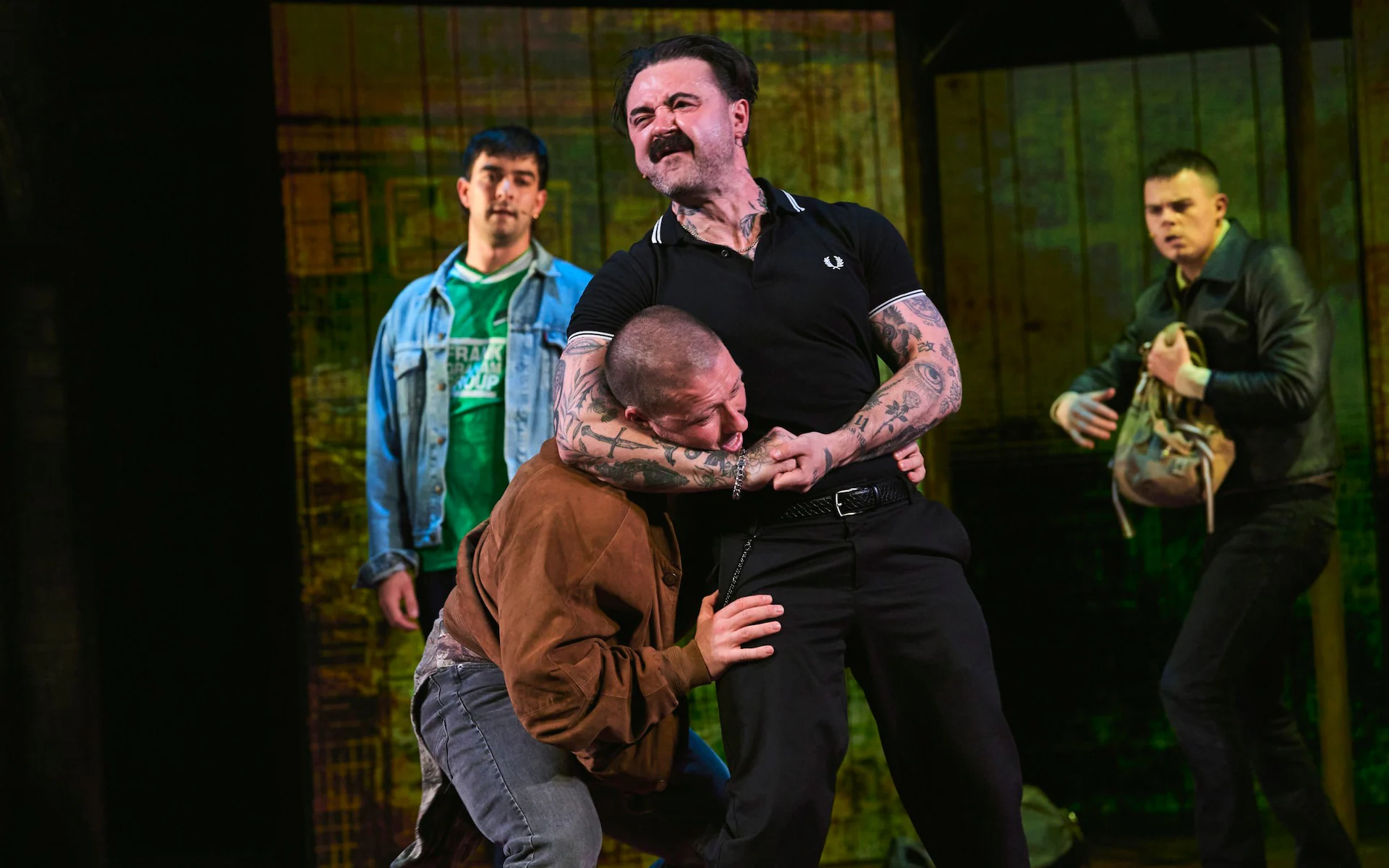
 

Theatre reviews roundup: Sorry, Prime Minister

Hacker & Sir Humphrey have lost the plot

Apollo Theatre
Clive Francis and Griff Rhys Jones in I’m Sorry, Prime Minister. Photo: Johan Persson

Bringing back the much loved Prime Minister Jim Hacker and his nemesis Sir Humphrey as doddery 80 year olds was always a gamble, and for most of the critics it didn’t quite pay off. Some were kinder than others but only the Telegraph loved it and awarded 4 stars. Otherwise, the blanket of 3 star reviews plus 2 stars from WhatsOnStage and The Independent, praised Clive Francis as Sir Humphrey (‘sharp timing’ Standard) and to a lesser extent Griff Rhys Jones as Hacker. Nostalgia seemed to soften some of the critics’ attacks but there was almost universal criticism of the lack of plot and the cliché jokes about wokery from writer Jonathan Lynn. Having said that, the market for the show is likely to be an older demographic that few of the reviewers fall into.

[Links to full reviews are included but a number are behind paywalls and therefore may not be accessible]

4 stars ★★★★

The Telegraph‘s Dominic Cavendish was a fan: ‘While not in the same league as the original, it is an enjoyable, nostalgic coda – oddly topical and surprisingly poignant, too.’ It is, he said: “a light-hearted, clunky yet meaty play of ideas about how the country once “worked” and to whose benefit.’ He described the two stars: ‘there is something winning about Rhys Jones’s portrayal, which sees him hobbling madly about, boggling for Britain in exasperation, and constantly chortling in a cajoling attempt to laugh off serious situations and dismiss criticism. For his part, Francis is impeccably beady as the wily, erudite Sir Humphrey, as prone as ever to tactical prolixity.’

3 stars ★★★

Dave Fargnoli of The Stage was complimentary-ish: ‘The script is typically witty and wordy, built around a series of extended conversations that touch on a range of hot-button topics, from inheritance tax to diversity-hiring policies, from cancel culture to the complex legacies of imperialism. Lynn and co-director Michael Gyngell ensure that these debates never become too heated. The play’s pacing is languid and the energy dips during long, static conversations, but Lynn and Gyngell balance out the cerebral dialogue with plenty of sight gags and lightly farcical moments.’ He concluded: ‘this is an affectionate portrait and a fond farewell to the familiar characters in their last years.’

Brian Logan for The Guardian noted: ‘At its worst, it’s less a play than a vehicle for Lynn and his characters to discourse, not very insightfully, on trigger warnings and safe spaces. Stephanie Levi-John does spiritedly in the thankless role of Sophie, forever correcting her elders’ improprieties. Rhys Jones and Clive Francis as Sir Humphrey are a treat, too, the former blithering and pompous, the latter a delicious mixture of vulnerability and shrewdness.’

The Mail‘s Patrick Marmion was unimpressed: ‘We are left in a low-stakes fug, buried under an electric blanket of humorous nostalgia. Rhys Jones deploys the intellectual acuity of the grunting farmer in Shaun The Sheep. ‘I’m not dead, I’m in the House of Lords!’ remains his best joke. But the funniest moments belong to Francis’.

The Standard‘s Nick Curtis was also critical of Jones: ‘Here we have a baggy, old-fashioned stage finale to a 46-year-old political sitcom that amuses despite the misplaced star casting of Griff Rhys Jones in the role of ex-Prime Minister Jim Hacker. Always untroubled by subtlety, the comedian’s constant mugging and whinnying, guffawing, meandering delivery of every single line here stand in stark contrast to the sharp timing and comic physical precision of Clive Francis as Hacker’s sparring partner, former cabinet secretary Sir Humphrey Appleby.’

On the other hand, Gary Naylor at BroadwayWorld claimed: ‘the biggest factor in filling the warm bath of nostalgia for which most of the house are paying, lies in the casting. Griff Rhys Jones has the name recognition for the playbill and can do exasperated bumbling with a winning charm, but he veers too close to Boris Johnson at times.’

Tom Wicker for Time Out liked the new Sir Humphrey: ‘Francis delivers his lines with the same acidly snobby, guillotine-sharp dryness as Nigel Hawthorne did as Humphrey in the TV series but strikingly mixed with flashes of anger and frailty.’ However: ‘What works less well is Lynn’s attempts to confront Hacker and Humphrey with today’s landscape of de-colonisation, no-platforming and campus protests…the play feels less assured in these moments, touching on contemporary issues in a stiffly regimented way.’

For The Times’ Clive Davis,  it was: ‘a gentle comedy that only occasionally rekindles the ultra-sharp satire of his classic sitcom collaboration with Anthony Jay’. Although he found ‘the plotting…haphazard’, he conceded: ‘ If the storyline doesn’t really go anywhere, the audience still gave a cheer whenever Sir Humphrey launched into one of his wheezy, multi-syllable bouts of obfuscation. Memories of a perfect TV show came flooding back.’

Matt Wolf at LondonTheatre declared: ‘The give-and-take between the two gents is really it for plot in an evening concerned more with striking attitudes and delivering position papers.’

Helen Hawkins at The Arts Desk said  kindly: ‘Fans of the TV series will not be disappointed. The repartee has all the snappiness of old, even if the responses are rather predictable…Overall, it’s an affable evening that many boomers who are no longer working full-time will warm to.’

The i’s Fiona Mountford gave a backhanded compliment: ‘more elegiac and emotive than we might have been expecting.’

2 stars ★★

The Independent’s Alice Saville said: ‘It’s undeniably poignant. But ultimately, its directionless satire of woke politics doesn’t just lose the plot – it forgets it was meant to be looking for one.’ She found: ‘Its ending is both cosy and utterly implausible: like an electric coal fire, it emits a hollow kind of warmth.’

Theo Bosanquet at WhatsOnStage found it: ‘more of a disappointing coda than a fond farewell.’ He explained: ‘It’s a shame (Lynn) seems so preoccupied with airing grievances about the wokerati, when he should be letting his much-loved characters do what they do best: making us laugh.’

Critics’ Average Rating 2.9⭑

Value Rating 31 (Value rating is the Average Critic Rating divided by the typical ticket price)

I’m Sorry, Prime Minister can be seen at the Apollo Theatre until 9 May 2026 and will tour from 19 May. Buy tickets directly from imsorryprimeminister.com

If you’ve seen I’m Sorry, Prime Minister, please share your review/rating below


×