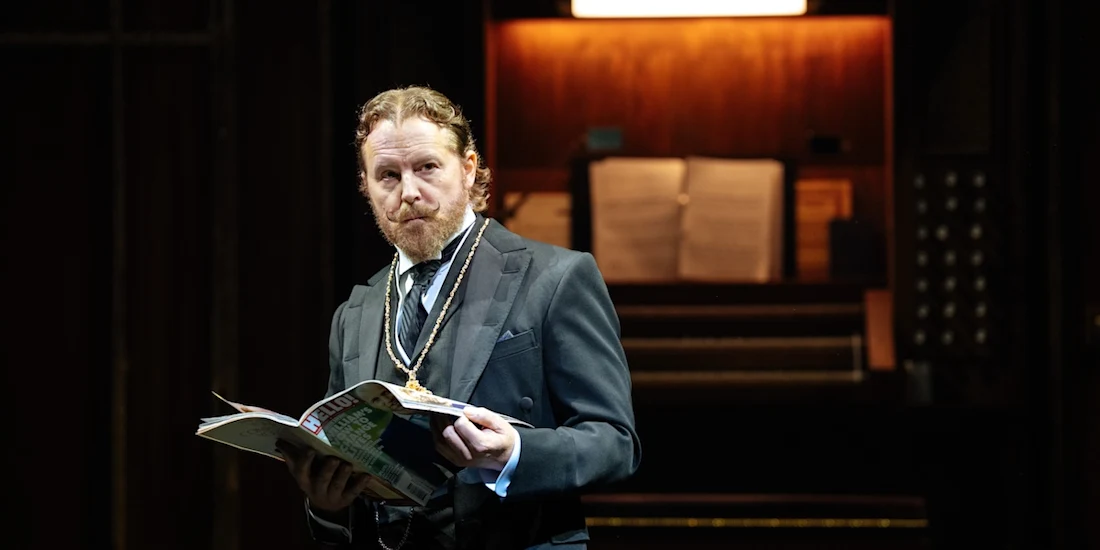
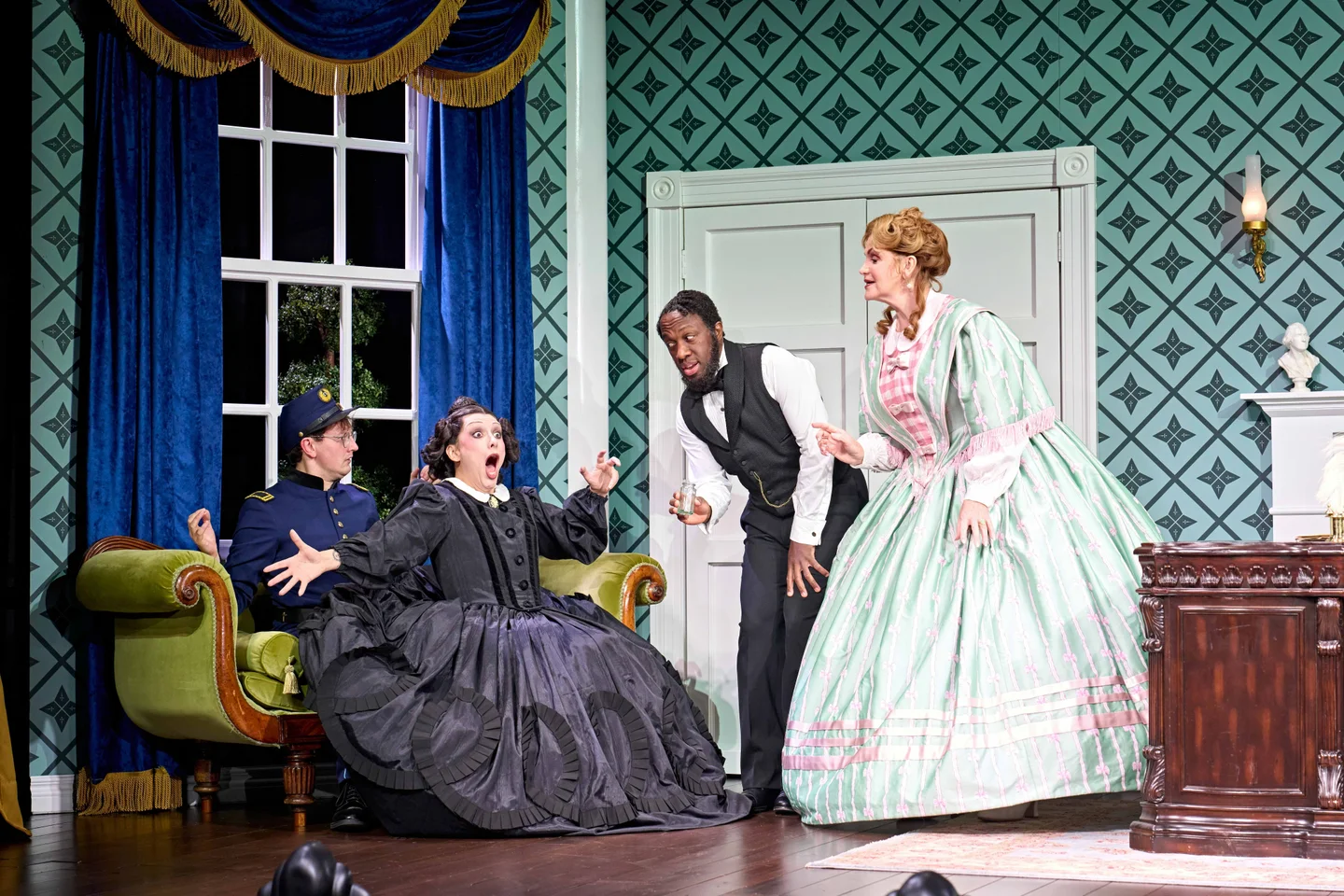
Theatre reviews roundup: Cabaret

Dark immersive production Bowles critics over

Playhouse Theatre (KitKat Club)
Cabaret at the KitKat Club. Photo: Marc Brenner

Cabaret is the top rated West End show of the 2020s. Only the eye-watering ticket prices have prevented it from being top value. The original stars Eddie Redmayne and especially Jessie Buckley (as Sally Bowles) were a significant focus of the many 5 and 4 star reviews, but the many subsequent replacements have shown that Rebecca Frecknall’s production is the true strength of the show. It is a dark interpretation of Kander and Ebb’s musical that uses a dazzling transformation of the Playhouse into the KitKat Club, and immersive elements within the performance to dupe the audience into being complicit in the growth of Nazism. The extracts from the reviews from the opening night that are reproduced below concentrate on the production rather than the stars.

5 stars ★★★★★

Nick Curtis of the Standard was Bowlesd over: ‘Wow. Rebecca Frecknall’s new revival of Kander and Ebb’s musical set in interwar Berlin is a stunning, breathlessly exciting theatrical happening. It feels loyal to the 1966 original yet astonishingly contemporary, and properly immersive.’

WhatsOnStage‘s Sarah Crompton declared: ‘The stamp of a great work of art is that it can bear many interpretations. Director Rebecca Frecknall…has taken Kander and Ebb’s 1966 musical and completely reimagined it. The result is both shattering and utterly magnificent.’ She went into detail: ‘ Scutt’s costumes are a riot of soft colour and texture, and Julia Cheng’s extraordinarily detailed choreography creates a tawdry, sexualised world, where everyone gets to express themselves and no-one is quite what they seem. By the close of a devastating night in the theatre, that image has been replaced with beige uniformity and straight lines of movement…The result, central to Frecknall’s thinking, is terrifying, with a darkness that reaches all the deeper because the audience has been made to feel complicit.’

Marianka Swain for BroadwayWorld said: ‘We came here to escape, but we emerge shattered. This is musical theatre at its absolute finest. A total knockout.’ She described ‘Julia Cheng’s rich choreography’: ‘a mix of styles, from jazz and contemporary to waacking, with angular freezes, chest pumps, swaying and shimmies – knowing and challenging.’ And how ‘Isabella Byrd’s exceptional lighting design creates eerie shadows, casts the characters in sudden shafts of light, or uses the lamps in the audience to draw us into the performance.’

Tim Bano at The Stage pointed out: ‘Frecknall’s direction doesn’t let style sideline substance. Perhaps her strongest play is the careful balance she maintains in terms of the Nazis as metaphor and as literal Nazis. This is a production specifically about antisemitism and the rise of fascism in 1930s Germany. It’s also about attacks on sexuality, gender, ethnicity and religion – or any other marker of identity at any other time.’ He ended: ‘While the whole nonsense of the Kit Kat Club – the secret entrance, the champagne – is completely at odds with what the musical is really about (not to mention the eye-watering ticket prices), it’s also perfect: the production dupes us, turns us into delusionists just like Sally, Cliff and the rest. It tricks us into feeling as if we’re at a party when really we’re at the most visceral display of political theatre in the West End.’

The Telegraph’s Dominic Cavendish wrote that Rebecca Frecknall ‘creates an immersive evocation of the Kit Kat Club, the early-1930s Berlin dive in which much of the action is set. She supercharges the ambience, though. The whole Playhouse has become a louche playground. In the modified auditorium, ranged with tables and with a raised, often revolving circular wooden stage at its heart, old-world decorum mingles with wild abandon.’

Roz Wyllie for LondonTheatre1 said: ‘The whole production is about as good as theatre gets; with every shade of emotion and absolutely no wasted dialogue or scene. It’s tight, it’s tender it’s shocking… it’s sinfully brilliant.’

Alexandra Pollard for The Independent commented: ‘Back in the Sixties, the musical’s original director Hal Prince called Cabaret “a parable of contemporary morality”. In such capable hands, it’s a parable that still packs a punch.’

4 stars ★★★★

Time Out‘s Andrzej Lukowski described the design: ‘the Playhouse Theatre has been heavily retooled by designer Tom Scutt, and literally renamed the Kit Kat Club… Scutt’s revamp is extremely classy. From opening up backstage areas and drenching them in atmospheric lighting to creating a secondary, gold-draped performance space for the fun (if inessential) pre-show cabaret-with-a-small-c entertainment, it’s full of quietly spectacular little flourishes.’ He continued: ‘costumes are angular, vivid, somewhat grotesque; the performers’ faces are sardonic, or sinister, not submissive or lusty. There is an alien harshness and a sense of confrontation and mischief, a feeling we have left the world behind: you really can picture this place as a strange nocturnal bubble removed from the increasingly grim realities of the Germany outside.’

The Guardian‘s Arifa Akbar found: ‘Rebecca Frecknall’s production on the whole lives up to its hype, magnetising us with flamboyant camp and then delivering menace that feels freshly charged.’

Suzy Evans at LondonTheatre noted: ‘Coupled with Tom Scutt’s immersive design and Isabella Byrd’s atmospheric lighting, this production feels like a world away from outside…And Frecknall doesn’t pull any punches with her high-concept approach…The approaching horror and absurdism of this escape is at the forefront, and her highly choreographed tableau feels like a ballet or a marionette show, where someone calculating is pulling all the strings.’

Fiona Mountford of the i pointed out: ‘Despite the immersive backdrop – all credit to designer Tom Scutt – this is a Cabaret that has been stripped back and cleansed of the reassuring layers of jollity that it often wears. Sex might be everywhere, but no one is enjoying it.’

Clive Davis of The Times was harder to please.  ‘Julia Cheng’s choreography for a blowsy set of dancers…never quite overcomes the limitations imposed by the lack of space.’

The Mail’s Patrick Marmion was less impressed than most but still gave it high marks: ‘It may be a little parsimonious in its pleasures, but this eagerly anticipated new staging of Cabaret certainly looks good, sounds good – and runs like clockwork.’

Critics’ average rating 4.5⭑

Value rating 36 (Value rating is the Average Critic Rating divided by the typical ticket price)

Cabaret is currently booking to 23 May 2026. Buy tickets directly from the theatre

If you’ve seen Cabaret at the Playhouse/KitKat Club, please add your review below 

Theatre reviews roundup: Born With Teeth

Charismatic stars save the play when Shakespeare meets Marlowe

Wyndham’s theatre
Ncuti Gatwa & Edward Bluemel in Born With Teeth. Photo: Johan Persson

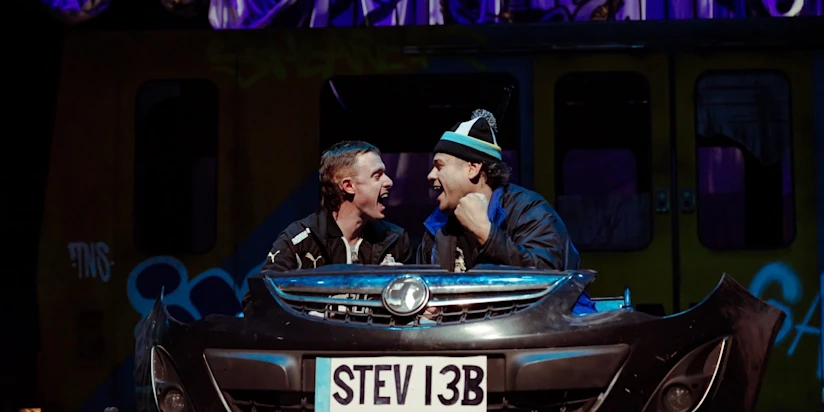
Born With Teeth is an RSC production receiving its premiere in London rather than Stratford, and directed by the company’s co-Director Daniel Evans. The critics were generally agreed that Ncuti Gatwa  and Edward Bluemel were the saviours of the drama. They liked the concept of rising playwrights William Shakespeare (Bluemel) and Christopher Marlowe (Gatwa) revealing their differing characters as they collaborated on a play, but many felt the execution was repetitive and lacking wit.

[Links to full reviews are included but a number are behind paywalls and therefore may not be accessible]

5 stars ⭑⭑⭑⭑⭑

In a review that must have had some of his readers reaching for the smelling salts, the Daily Mail’s Patrick Marmion detailed the outrageous behaviour of Ncuti Gatwa’s Marlowe before declaring: ‘Daniel Evans’s steamy production fizzes with rare theatrical chemistry.’

4 stars ⭑⭑⭑⭑

Marianka Swain for LondonTheatre called it ‘a seriously steamy cat-and-mouse game, as American dramatist Liz Duffy Adams places these two brilliant men in one room so we can watch the sparks fly.’  She assured us: ‘this is an accessible romp that honours Shakespeare’s populist spirit, jubilantly reclaims queer history, and explores a literary mystery that continues to fascinate.’

The Financial Times’ Sarah Hemming (sadly often hidden behind a very expensive paywall) said it was ‘a tantalising piece — for better and for worse. It’s greatly entertaining, peppered with literary gags and impish anachronisms, and delivered with immense flourish. What holds it back is a reluctance to dive deeper into the huge themes it raises and give its characters more time to explore loaded issues such as religion, artistic freedom and self-preservation.’

Nick Curtis of The Standard needed a bucket of water thrown over him: ‘Phwoar! The chance to see a jacked and shirtless Ncuti Gatwa snogging his snake-hipped, chisel-cheekboned former Sex Education co-star Edward Bluemel is undoubtedly part of the appeal of Liz Duffy Adams’s seductively clever two-hander.’ He liked the play, saying it ‘blends intrigue and shifty eroticism with in-jokes and a discourse on creativity. The keynote of Daniel Evans’s production…is fluidity: nothing is every quite what it seems.’ He ended: ‘the way Duffy’s script entwines the vicissitudes of sex, celebrity and Elizabethan politics is enormous fun. And as star vehicles go, Evan’s production is a smart and subtle one.’

Cindy Marcolina for BroadwayWorld was star struck: ‘The production would be a resounding flop without Gatwa and Bluemel. Their bond is fun and attractive, magnetic in how it compels us to forgive the flimsiness of the script, the fluctuating quality of its dialogues, and its (mis)use of specific terminology’. Both she and Time Out’s critic described the play as ‘slash fiction’, which she helpfully explained is ‘a genre of fanfiction that focuses on the romantic relation between preexisting fictional characters of the same sex.’ So now you know.

Heather Neill sitting at TheArtsDesk told us: ‘under Daniel Evans’ spirited direction, Ncuti Gatwa as Marlowe and Edward Bluemel as Shakespeare grab every opportunity to explore their versions of these fascinating, contradictory characters’. She told us the playwright ‘is interested in the cause of – and often barriers to – artistic freedom now as well as in Elizabethan England. This is echoed in designer Joanna Scotcher’s set, the stage surrounded by banks of lights that might suggest interrogation as well as theatricality, and her costumes combining punk materials with Tudor shapes.’

TheatreWeekly‘s Greg Stewart was more enthusiastic about the script than others: ‘a bold and cerebral imagining of a clandestine creative collision between Christopher (Kit) Marlowe and William (Will) Shakespeare.’ He continued: ‘Adams’ writing is dense and richly layered, peppered with references and easter eggs that will delight aficionados of both playwrights. While the dialogue occasionally veers into the overly verbose, it remains riveting, especially when delivered with the electric chemistry of its two leads.’

3 stars ⭑⭑⭑

Sarah Crompton of WhatsOnStage summed it up as ‘an odd confection, at once challenging and comic, slightly circuitous and oddly revealing… it’s brought to vital, charismatic life by its casting’.

Time Out’s Andrzej Lukowski found it ‘comes across like a particularly insane workplace comedy’. He went on: ‘Born with Teeth is pretty trashy. I rolled my eyes at the whole sexual tension thing: our two heroes do end up snogging, but it mostly seems to be because that’s what happens in slash fiction’. Getting down to the nitty gritty, he said: ‘ultimately what Born with Teeth suffers from the most is asking us to imagine a sex and paranoia crazed Elizabethan society while not actually showing it to us.’ He concluded: ‘Born with Teeth is a lot of fun: two charismatic actors having a ball pinging off each other while chomping down on a script that spikes the trashiness with some genuine wit.’

For The Guardian’s Arifa Akbar, ‘this is Gatwa’s show. His boisterous Kit sweats in Zoë Thomas-Webb’s leather two-piece, his every lithe action a flirtation’. For her, the play promised more than it delivered: ‘The stakes simmer throughout but never reach boiling point.’

Sam Marlowe of The Stage described the production: ‘The aesthetic of Evans’ staging is chic modernity. Andrzej Goulding’s video design intercuts fever-dreamlike, monochrome scenes of the two playwrights being subjected to torture by the Elizabethan state with pixellations and static – designer violence, MTV-style. Meanwhile, their interactions take place on a set by Joanna Scotcher, lit by Neil Austin, of enclosing walls made up of banks of lights.’ She ended: ‘We know where this story is heading – after all, there’s no Royal Marlowe Company – and Duffy Adams never builds much tension on the way there. But this is a diverting enough double act, glinting with wit and style.’

Praising the actors’ performances, Fiona Mountford of i-news said: ‘Bluemel gives an understated performance of someone growing in confidence, growing into themselves, whereas Gatwa’s Marlowe is a flame that burns with explosive brightness and is then extinguished.’

‘It’s tragi-comical-farcical-ludicrous’, said the Telegraph‘s Dominic Cavendish, ‘What keeps you watching is the lusty bravura of Gatwa … with Bluemel…neatly evoking Shakespeare’s growing confidence and gnawing doubts.’ He concluded: ‘It’s diverting enough, but ultimately toothless.’

Alice Saville of The Independent took a balanced view about Ncuti Gatwa: ‘Gatwa revels in his role to an almost distracting degree: brandishing an implausibly long feathered quill, making an Olympics-worthy leap across the stage, and baring his gleaming chest. It’s all incredibly enjoyable. But what he doesn’t do is bare his soul, or show the inner torment of a man so obsessed with power and political intrigue that he’ll sacrifice everything else, even his happiness.’ And about the play: ‘It sings with all the sex and politics and religious iconoclasm that the bard handled so carefully in his plays, showing that every literary choice he made was freighted with danger. What it doesn’t do is show the emotional cost of living in this world. And that makes it hard to get deeply invested in this impossible literary love story, however intriguing its twists and turns might be.’

The Times’ Clive Davis found: ‘You wait in vain for this Marlowe to acquire some nuance when he flirts with Edward Bluemel’s ingenuous Will’.  For all its literary references, ‘At its heart, though, it hovers at the level of conscientiously researched fan fiction.’ He was not amused: ‘the attempts at humour soon begin to pall. Each line lands with the same thudding note, so much so that, halfway through, I found myself harbouring nostalgic memories of the much more deft wit of Ben Elton’s Shaftesbury Avenue version of Upstart Crow.’

2 stars

Dominic Maxwell at The Sunday Times couldn’t wait for it to end: ‘Born with Teeth is the kind of night at the theatre I like least: it’s too good in its execution to simply dismiss, too pointless for me not to long for it to end.’

Critics’ average rating: 3.5⭑

Value rating 37 (Value rating is the Average Critic Rating divided by the typical ticket price.)

Born With Teeth can be seen at Wyndham’s Theatre until 1  November 2025.  Buy tickets directly from the theatre

If you’ve seen Born With Teeth at Wyndham’s Theatre, please share your review and rating below

Theatre reviews roundup: The Gathered Leaves

A well acted, old fashioned family saga

Park200
Richard Stirling and Chris Larkin in The Gathered Leaves. Photo: Rich Southgate

The Gathered Leaves seems to have been missed by some of the heavyweight media amidst all the reporting from the Edinburgh Fringe. I admit I missed its opening, but here’s a belated roundup of the limited number of reviews. The critics praised both the acting and Adrian Noble’s direction in this revival of Andrew Keatley’s family saga. Despite it being only ten years old, many felt the play was old fashioned (not always a bad thing) and a little too long.

[Links to full reviews are included but a number are behind paywalls and therefore may not be accessible]

4 stars ⭑⭑⭑⭑

The Standard‘s Nick Curtis declared: ‘It’s an old-fashioned and at times schematic family saga that nonetheless treats its multiple themes with seriousness and care and eventually exerts a cumulative power…Adrian Noble’s elegant revival is peopled with thoroughbred stage actors, who plough determinedly through the boggier bits of dialogue and exposition.’

Louise Penn for BroadwayWorld found: ‘Keatley’s writing rewards his starry cast in every line. The length of the play (2hr 20 of performance) allows storylines to shape and realities to be revealed. Director Adrian Noble and designer Dick Bird allow the beautifully realised set to spread beyond the confines of the stage, spilling out onto the sidelines and into the audience.’

3 stars ⭑⭑⭑

Miriam Sallon for WhatsOnStage claimed: ‘It’s not that Keatley’s writing isn’t sharp and witty, and at times insightful. It’s that it could have been excellent, and instead, he’s settled for something closer to fine.’

Over on TheArtsDesk, Rachel Halliburton wrote: ‘Dick Bird’s fastidiously observed design in beiges and pale greens sets the scene for emotional daggers in the drawing room.’ She ended: ‘You emerge from this play simultaneously feeling as if you’ve taken a gentle walk back in time and thankful that the world has moved on. Keatley’s script holds up well enough, but it’s Noble’s subtle direction – in which the cast doesn’t strike one false emotional note – that gives the evening its pull.’

Holly O’Mahony at The Stage felt it could have done more: ‘While avoiding melodrama is no bad thing, this staid story craves a s midge more disrepute.’

Alan Fitter at LondonTheatre1 had some thoughts about the set: ‘A special mention should go to Dick Bird’s set which is startling. The walls go all the way up to the ceiling of the auditorium, some 25 feet or so, with picture rails, architraves and cornices – just like the walls of a grand house would be. However, it does look as if most of the budget has been spent on the walls, as the furniture in the very grand house is sparce and quite cheap looking – not what you’d expect.’ He concluded: ‘The Gathered Leaves is interesting, if a little old-fashioned and long …What makes it work and what’s at the heart of Keatley’s play is that, amidst all the angst of a family in disarray, is the love and humanity of two brothers who will stick together whatever life throws at them.’

Critics’ Average Rating 3.3⭑

The Gathered Leaves can be seen at Park200 until 20 September 2025. Buy tickets direct from the theatre

If you’ve seen The Gathered Leaves at @sohoplace, please add your review and rating below

Theatre reviews roundup: Juniper Blood

Conflicting views over play about clashes

Donmar warehouse
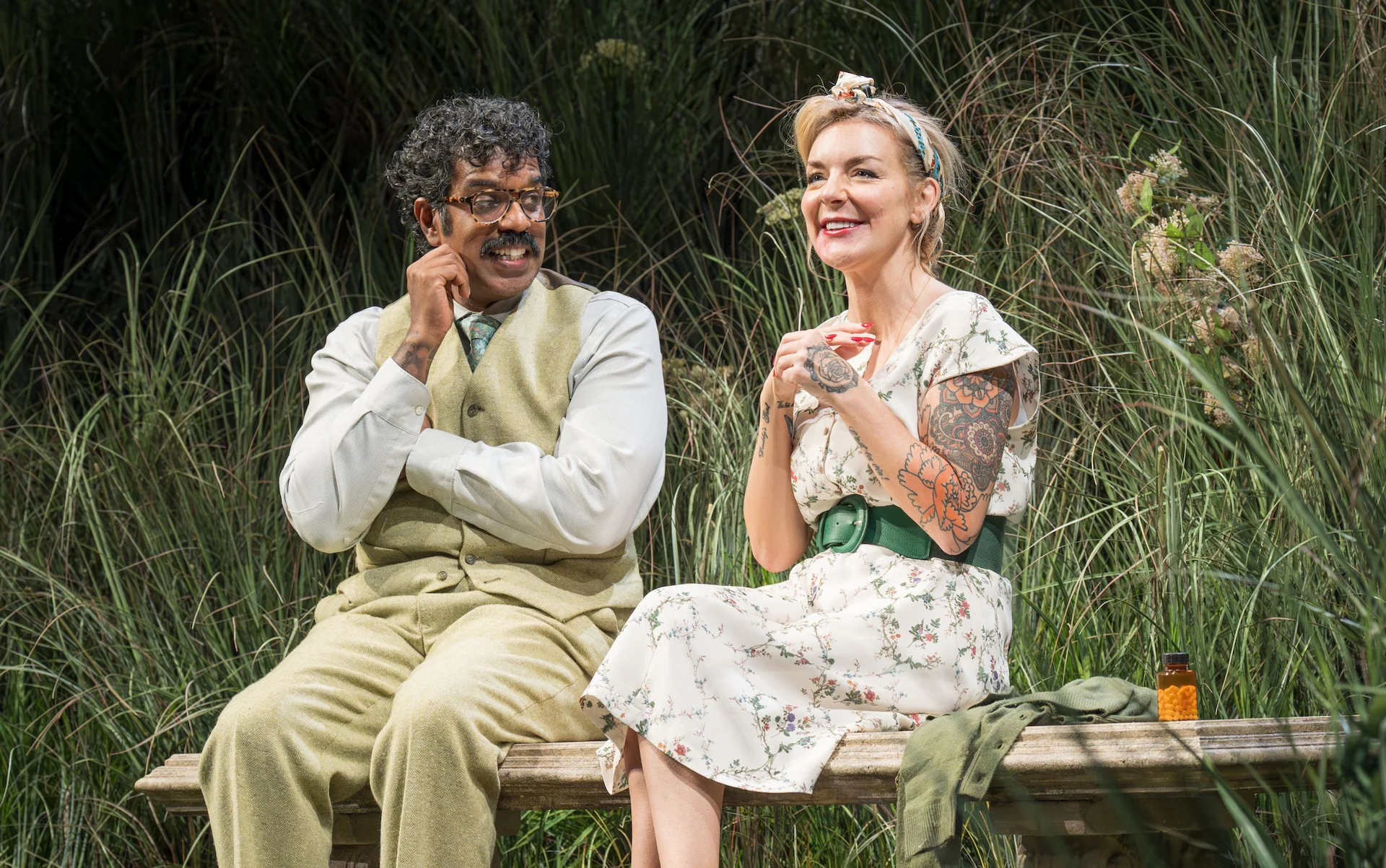
Hattie Morahan & Sam Troughton Juniper Blood. Photo: Helen Murray

Despite the mixed reception to Unicorn, his play advocating the merits of a menage-a-trois as an alternative to the traditional couple, Mike Bartlett continues to push radical re-thinking in his latest play. This time he explores farming and the land. A couple played by Sam Troughton and Hattie Morahan consider extreme living off the grid. Many ecological and generational debates are explored, with a state of the nation motif running through it. It was too didactic for some critics but others liked the challenge. Most found it funny. If you want to read a thoroughly positive review, go to Sarah Crompton’s at WhatsOnStage. Her customary insight and meticulous detail make her one of our best reviewers. For the polar opposite point of view, try the damning review from Clive Davis in The Times.

[Links to full reviews are included but a number are behind paywalls and therefore may not be accessible]

4 stars ⭑⭑⭑⭑

WhatsOnStage’s Sarah Crompton called it ‘a questing, knotty, philosophical piece, often circular and didactic but always utterly gripping as the arguments twist and turn. Juniper Blood does exactly what theatre has always done: offers a forum for debate, lining up the arguments with a clarity and courage that is rare.’ As for the set, ‘Designer Ultz has turned the Donmar into a patch of the countryside, with a living bank of grass surrounding a wooden platform.’ She concluded : ‘It has the feeling of being ancient myth and a report from the front line. It is utterly absorbing.’

The Telegraph’s Dominic Cavendish reassured us: ‘Although Juniper Blood suffers from some trowelled-on exposition, Bartlett’s ability to dig deep into a rich subject with flair and wit is again to the fore.’ ‘Hattie Morahan and Sam Troughton lead the small cast, superbly, as a flaky middle-aged couple making a go of it as “permaculture” farmers in north-west Oxfordshire, forging a sustainable life in the sticks. Think Chekhov meets Clarkson…Bartlett’s asking if something more radical is needed.’

Aleks Sierz at The Arts Desk found it ‘more cerebral than emotional’. He decided ‘The main problem with the play is that the deadlock between its conflicting ideas is never really resolved in a satisfying way…Nevertheless, for all its imperfections, this is a compelling evening mainly because of James Macdonald’s directing and the acting of his cast. Macdonald’s production has the vibe of hyperrealism.’

3 stars ⭑⭑⭑

The Guardian’s Arifa Akbar had reservations: ‘The cast give excellent performances and the action is intriguing, the arguments holding us, but the story in itself seems contrived around the play’s ideas.’ However, ‘Despite its lecturing and trowel-load of ideas, it is compelling and ambitious, Chekhovian in glimmers. Bartlett masterfully weds levity through social satire with complexity and depth of subject matter.’

Holly O’Mahony popped up at Time Out with an equivocal review: the ‘production directed by Barlett’s regular collaborator James Macdonald is really very funny. But for a play that holds a mirror up to the gaping chasm between idealism and pragmatism, it has some disparities of its own. Though rivetingly performed all round, several characters become wildly different people between its three acts, while its form is slippery too.’

For Marianka Swain at LondonTheatre ‘There are keen observations here and sharply witty lines, but rather than developing the characters’ inner lives’.

Adam Bloodworth at CityAM took a similar line: ‘Bartlett’s writing, as it always has been, is often funny, though too much of the script feels didactic. The talk about tech solutions to climate problems, and idealism versus pragmatism, starts to feel a little too on-the-nose and gets a bit dreary.’

Mary Beer for LondonTheatre1 summarised: ‘As a showcase for a thoroughly brilliant cast, including younger faces to watch, Juniper Blood succeeds.  With some decent bits of theatrically and a winning set by ULTZ along with some zinging lines, there is pleasure to be found in taking in this play.  But it is not fresh or revelatory or frankly remotely important or urgent despite the themes that underpin it.

After a long analysis at BroadwayWorld, Cindy Marcolina summed up her review regally: ‘It generates enough of a conversation to get you going, but is it Bartlett at his best? We don’t think so.’

2 stars ⭑⭑

The Times’ Clive Davis had no time for it, calling it ‘a maddeningly self-indulgent play of ideas, tosses around one half-formed notion after another…you sit there, gazing at the mound of turf on the set, wondering who thought this script was worth inflicting on the audience at the Donmar’.

The Standard’s Nick Curtis was of the same mind: ‘the play itself feels thin and undercooked, the plot twists and emotional revelations unearned. Every character is underwritten’.

Sam Marlowe’s review in The Stage was also dismissive: ‘Static, effortful and irredeemably verbose, it pits its dislikeable characters against one another in a series of overworked debates…James Macdonald’s rather languid production…fails to inject Bartlett’s contrivances with much nuance or urgency.’

Juniper Blood can be seen at the Donmar Warehouse until 4 October 2025. Click here to buy tickets directly from the theatre  

Critics’ average rating 3.0⭑

If you’ve seen Juniper Blood at the Donmar, please add your review and rating below

Theatre reviews roundup: Twelfth Night or What You Will

‘Joyous’ or ‘empty’?

Shakespeare’s Globe
Twelfth at Shakespeare’s Globe. Photo: Helen Murray

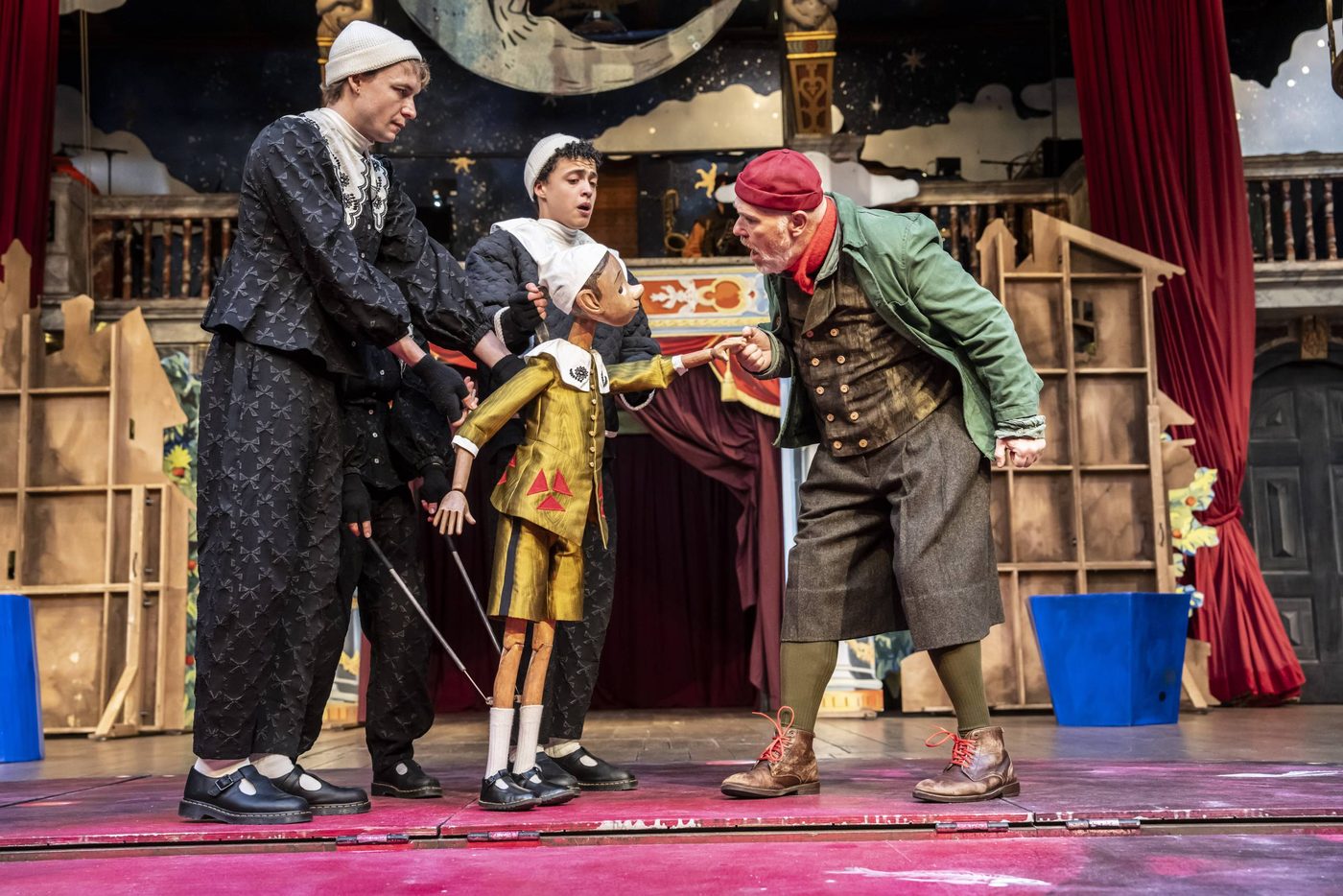
Carnival’ and ‘carnivalesque’ were words that cropped up frequently in reviews of Twelfth Night at The Globe. However there were contrasting views on Robin Belfield’s production (‘joyous’ vs ‘empty’, ‘strongest rapport with an audience’ vs ‘may try a little too hard to engage the crowd’), the performances (Ronkẹ Adékọluẹ́jọ́ as Viola gives a ‘delicious central performance’ or needs to play the part  ‘with more depth’), and the design. Take from them what you will.

[Links to full reviews are included but a number are behind paywalls and therefore may not be accessible]

4 stars ★★★★

There was a rare but welcome review from Dzifa Benson in the Telegraph. With her usual perspicacity she analysed the gender themes of the play and how the production exploits them before praising the actors and concluding: ‘this summer jamboree is riotous fun and joyfully tongue-in-cheek’.

Rachel Halliburton for The Times liked the way ‘in Robin Belfield’s joyous, kaleidoscopically coloured production, Quigley makes (Malvolio’s) humiliation in love every bit as resonant as the gender-swapping romances of the main characters.’ She said: ‘Amid the prevailing colourful whirligig, this is the production’s darkly beating heart.’

Dave Fargnoli for The Stage stated: ‘Belfield’s production never lets us forget that a dangerous current of lust and cruelty lurks beneath the whimsical frivolity.’ He was not alone in praising the design: ‘The bold aesthetics of Jean Chan’s gorgeous costumes are integral to evoking the play’s weird world and marking shifts in the characters’ emotional states.’

The Standard’s Nick Curtis said: ‘Inclusion and exclusion are the keynotes of Robin Belfield’s carnivalesque production of Shakespeare’s play, which features a delicious central performance from as Viola. The cast build what’s possibly the strongest rapport with an audience that I’ve ever felt at the Globe and the comedy is delightfully on point.’

3 stars

Matt Wolf for LondonTheatre disagreed with The Standard (above) about Ronkẹ Adékọluẹ́jọ́, finding that ‘this fine performer only intermittently lands the passion and pathos that help drive the play forward’. He also disagreed about the rapport with the audience: ‘The production may try a little too hard to engage the crowd in a vapid clap-along’. However he was impressed by ‘Jos Vantyler’s beautifully spoken (and danced), Harlequinade-adjacent Feste’ who ‘steers an expert course through the contrasting shores of the sublime and the sad between which this play navigates.’

Time Out’s Andrzej Lukowski was unimpressed: ‘Robin Belfield’s production falls into a very Globe-ish trap of having a lot of fun individual turns but failing to really cohere into a whole that makes much sense. And the lack of set changes leaves it without any sense of place, just groups of characters mucking about in front of Jean Chan’s unhelpfully abstract sun-ray set design.’

Clementine Scott for BroadwayWorld felt ‘Belfield’s direction too often allows the complex, gender-bending love triangle between Viola (in disguise as ‘Cesario’), Olivia and Orsino to play second fiddle to the Saturnalian slapstick.’ To support this view, she pointed out: ‘it’s a shame that our audience avatar, Viola (Ronkẹ Adékọluẹ́jọ), the only character who’s experiencing this fantasy world for the first time alongside us, isn’t played with more depth.’ She conceded: ‘This production might not probe Twelfth Night’s nuances as far as it could, but even the most hardened critic can’t resist the serotonin hit.’

2 stars ★

The Guardian’s Arifa Akbar summed up: ‘A period-dress production with passing modern-day asides, it is extremely knockabout, steering away from the play’s anguished layers.’ She explained: ‘You do not feel the pangs of unrequited desire, and much of the verse is dampened by unremarkable delivery in general.’ For her, Malvolio was ‘ almost loveably crabby’ and his ‘gulling never enters the realm of the tragic’. It was, she said, ‘a baggy production whose japery spills into messiness, leaving some plot points opaque.’

Alun Hood at WhatsOnStage was disappointed: ‘Belfield certainly rips through the play with commendable pace and attack, but the overall lack of subtlety or real emotion robs this entrancing comedy of much of its magic. When the majority of the characters are reduced to clownish ciphers, it’s pretty hard to care about them and that ultimately renders this Twelfth Night, for all its freewheeling irreverence and high energy revelry, a disappointingly empty experience.’

Critics’ average rating 3.2★

Twelfth Night can be seen at Shakespeare’s Globe until 25 October 2025. Buy tickets directly from shakespearesglobe.com

Theatre reviews roundup: Brigadoon

Romantic dance but silly musical

Open Air Theatre, Regent’s Park
Brigadoon at the Open Air Theatre

Lerner & Loewe’s Brigadoon is rarely seen, and for good reason thought quite a few of the critics. Even though Rona Munro had updated the book to make it more authentically Scottish and changing the visitors from lost tourists to crash-landing World War 2 pilots, they still found the plot about a village that only appears every hundred years somewhat silly. Other reviewers were carried away by the romance, Drew McOnie’s choreography and the look of the production.

[Links to full reviews are included but a number are behind paywalls and therefore may not be accessible]

4 stars ⭑⭑⭑⭑

It put LondonTheatre’s Marianka Swain in a romantic mood . She reported that it ‘has been ingeniously and gloriously revamped by director-choreographer Drew McOnie and Scottish playwright Rona Munro. Why, it’s almost like being in love.’ She laid responsibility clearly at McConie’s dancing feet: ‘McOnie’s detailed production balances (a) poetic, psychologically rich reading of Brigadoon with a realistic, lived-in village.’ She continued: ‘McOnie’s choreography is absolutely knockout. He embraces the lush romanticism by evoking Agnes De Mille’s lyrical Golden Age dances, and incorporates Scottish folk like a reel and sword dance (we also get accompanying bagpipes), while also infusing the whole thing with thrilling, contemporary expressiveness’.

Holly O’Mahony for The Stage was also impressed, although perhaps not as much as Marianka: ‘it’s charmingly whimsical.’ It is, she said, ‘a tight, traditional production – winningly so – with Agnes De Mille’s original dances interwoven with McOnie’s sprightly ballets’. She also noted: ‘Sami Fendall’s costumes of rustic tartan in meadowy shades of yellow and green’ and ‘Basia Bińkowska’s atmospheric set’.

’The show is delightful’ wrote Claire Allfree for the Telegraph. She found: ‘McOnie’s production retains Brigadoon’s old-fashioned MGM musical quality with beautifully choreographed Oklahoma!-style scenes of swirling village women in full skirts and lace-up boots, and men merrily loading wagons with milk churns, images that knowingly lean into the idea of the art form itself as escapism incarnate.’

WhatsOnStage’s Sarah Crompton declared: ‘It is a truly magical evening. Drew McOnie’s…production…has a shining clarity of purpose. With the help of a book by Rona Munro that keeps the emotion but strips away the sentiment, the production sweeps along on a wave of luscious songs’.

Fiona Mountford at the i is a fan of Brigadoon (‘a tune-stuffed delight’) and thought Drew McOnie’s production did it proud: ‘a sumptuous spectacle of movement’.

3 stars ⭑⭑⭑

For Aliya Al-Hassan at BroadwayWorld, ‘the production feels like an odd choice for a revival. The characters are thinly drawn, the plot bizarre and uneven and the musical numbers are just not memorable. Much of the mawkishness of the romance has been stripped back, but it still feels a little cloying.’ Although she did admit: ‘The ensemble bounds with energy and their movement is as beautiful as you would expect from McConie.’

The Standard’s Nick Curtis was reserved, saying it ‘just about works thanks to some fine performances, spirited choreography and a strikingly effective Grand Designs set by Basia Bińkowska. But it’s an effort to tough your way through the more saccharine moments.’  His review is an amusing read for its list of holes in the plot.

The Independent’s Alice Saville called it ‘a strange fable that feels out of step with the times, however beguiling its dance may be.’ She acknowledged Mcconie ‘lovingly recreates and reimagines golden age Hollywood choreographer Agnes de Mille’s balletic sequences of yearning and skittish flirtation. Lerner and Loewe’s score is sumptuously romantic, too, and beautifully rendered here by a sizeable orchestra placed centre stage.’ But in the end, ‘no amount of sylvan magic can hide the fact that this is a very, very silly kind of story.’

The Times‘ Clive Davis acknowledged the changes to the story but felt ‘The results are less sentimental, but still haven’t solved the problem of how to inject pace, not to mention plausibility, into a meandering book…we’re left trying to keep track of a tangled narrative’.  He did like many other aspects of the show: ‘The dozen or so musicians led by the MD Laura Bangay generate just the right mixture of velvet and tartan… Basia Binkowska’s diagonal set design, which evokes the stark timber lines of a Frank lloyd Wright house, is topped by an assortment  of heather shimmering under Jessica Hung Han Yun’s subtle lighting.’

2 stars ⭑⭑

The Guardian’s Arifa Akbar called it a ‘too tame, too purposeless revival seems simply to be a love letter to Scotland with bagpipes and drumming galore’. On the plus side: ‘The cast is filled with strong singers…but the songs sound anodyne and generic…McOnie’s choreography is beautiful and balletic in itself’.

Critics’ average rating 3.4⭑

Brigadoon can be seen at the Open Air Theatre until 20 September 2025.  Buy tickets directly from the theatre

If you’ve seen Brigadoon at the Open Air Theatre, please share your review and rating below


Theatre reviews roundup: Every Brilliant Thing

A Brilliant Show

@sohoplace
Lenny Henry in Every Brilliant Thing at @sohoplace. Photo: Helen Murray

After over ten years of performing in the UK and around the world, Every Brilliant Thing by Duncan Macmillan and Jonny Donahoe finally made its West End debut, and the critics were delighted. The solo show will star Minnie Driver, Sue Perkins, Ambika Mod, and Jonny Donahoe over the next few weeks, but the run started with a much appreciated Lenny Henry in charge.

When a mother attempts suicide when she has acute depression, her child decides to make a list about all the things that make life worth living. They  keep adding to the list as they move through adolescence into adulthood.

[Links to full reviews are included but a number are behind paywalls and therefore may not be accessible]

5 stars ⭑⭑⭑⭑⭑

Ke Meng for TheatreWeekly was impressed that ‘Macmillan’s writing is both endearing and nostalgic, a feeling I haven’t encountered in ages. His language is equally funny and poetic’. She said: ‘Lenny Henry masters the space as if it’s his own living room—chilled, playful, and chatty.’

Marianka Swain reviewing for the Telegraph was uplifted: ‘the communal storytelling format remains a neat demonstration of the play’s central thesis: it’s vital to reach out and connect with one another, whether through therapy or theatre. This life-affirming show proves that and more – an absolute tonic.’ As for Lenny Henry, she found it ‘enormous fun watching him take charge of the intimate, in-the-round @sohoplace auditorium and roll with the punches.

4 stars ⭑⭑⭑⭑

The Standard‘s Nick Curtis described it as ‘a unique show with the texture of theatre but the communal immediacy of stand-up.’ He found Lenny Henry was perfectly suited: ‘Thanks to his pre-thespian career in comedy, his natural bonhomie and the indulgence granted to him as a bona fide national treasure, Henry manages the crowd and the pivots of mood adroitly.’ He declared ‘the auditorium of @sohoplace, with its uncluttered intimacy, suits the material perfectly’

In her review for Time Out, Anya Ryan took a different view of the venue: ‘With a much greater capacity and the audience spread across three tiers, creating the world of the play feels less like a communal endeavour and more the responsibility of a select few.’ However, she added: ‘If there’s any larger venue fit to house Macmillan’s mini masterpiece, it is @sohoplace.’ She concluded: ‘For all its sorrow, the play gleams with hope. It is a truly brilliant thing.’

Fiona Mountford at the i reported: ‘Jeremy Herrin’s appealing production plays to Henry’s many strengths – twinkling with joy and mischief, he exudes an affable affinity with the audience from the get-go. This rapport is all-important, as we are integral to the action…Our fellow spectators, with all their quirks and idiosyncrasies, are delightful in their contributions’.

Helen Hawkins, sitting on The Arts Desk, thought: ‘Henry is a natural for this assignment, still a livewire performer (watch him fly as he listens to his favourite bongos solo), but warm and accessible, a born communicator and improviser who can coax even the shyest person to deliver.’ She declared: ‘In its decision to balance grief and glee and not to allow one to exclude the other, this is a clear-sighted, heartening show.’

Dave Fargnoli in The Stage described Lenny Henry’s technique: ‘Lenny Henry demonstrated his consummate facility for building a rapport with an audience through a mix of playful mockery and easy-going warmth. Henry owns the part, filling out the narrator’s character with precise personal detail. When he plays a taciturn father, a hint of a gruff Jamaican accent creeps in. When he’s representing a child, his words become clipped, shy, hesitant. There is always a smile or a wince about to break out on his face, a hitch in his voice as he prepares to share some melancholy memory.’

Holly O’Mahony at LondonTheatre compared Lenny Henry’s version to the original: ‘While there’s plenty of warmth and humour to it, I felt a depth missing. Watching Donahoe perform the part, it truly felt like his story, his depression. This version never quite plumbs those depths, and the plot is held aloof, as if secondary to the audience participation. Yet what Henry pulls off is no small feat – as a collective, participatory experience, it’s really quite brilliant.’

3 stars ⭑⭑⭑

Miriam Gillinson reported for The Guardian that ‘there’s something about the scale and downright snazziness of this production that doesn’t quite gel’ and found ‘It’s only when Henry isn’t trying to be funny that the show settles. There’s a stillness and steeliness to him when he talks about the importance of protecting our mental health.’

At BroadwayWorld, Alexander Cohen found ‘Where other performers have leaned into the childlike innocence of the narrator, Henry opts instead for something heavier. Memories are explored with emotional clarity rather than nostalgic whimsy, a choice that lends this iteration a quiet gravity that avoids sentimentality.’

Critics’ average rating: 4.0⭑

Every Brilliant Thing can be seen at @sohoplace until 8 November 2025. Click here to buy tickets directly from the theatre

If you’ve seen Every Brilliant Thing at @sohoplace, please add your review and rating below


Theatre reviews roundup: Good Night, Oscar with Sean Hayes

A Very Good Night with Sean Hayes

Barbican Theatre
Good Night, Oscar at The Barbican. Photo: Johan Persson

With a couple of exceptions, the critics loved Good Night, Oscar. Plays don’t always travel well across the Atlantic, even a big hit like this, and, as the 2 and 3 star reviews pointed out, the subject of the play, Oscar Levant, is not well known over here and author Doug Wright doesn’t enlighten us. Also, the true story of how this musician-comedian-actor-raconteur was temporarily released from a psychiatric hospital to appear (and be exploited) on a popular TV show may seem very American. However, the 5 and 4 star reviews acclaimed one of the performances of the year by Sean Hayes in bringing the troubled artist to life.

5 stars ⭑⭑⭑⭑⭑

For Gary Naylor at BroadwayWorld it was the Sean Hayes show: ‘He simply inhabits the part. There’s the desperate vulnerability of the addict, the ticks that speak of a roiling mind, the ruthless exploitation of the decency of others. But there’s also the speed of the wit, the grudging willingness to do the right thing, the sheer chutzpah of the man. Most of all, and this elevates the  performance to the very best of any I’ve seen, there’s the charisma – Levant’s and Hayes’ – that bounces around this large house like a laser show.’

LondonTheatre’s Julia Rank also praised him: ‘Hayes…has the hangdog expression and an abundance of tics and twitches… To make the casting even more ideal, Hayes trained as a pianist before becoming an actor and plays a rendition of “Rhapsody in Blue” that’s essentially a nervous breakdown on the piano.’ She was one of many who complemented the set design: ‘Rachel Hauck provides a series of mid-century modern sets, the piece de resistance being a soundstage with sound-absorbent walls that could double as a padded cell. What is television if not another madhouse, one of the characters notes.’

Chris Omaweng at LondonTheatre1 called it ‘A delightful, memorable and charming night out.’

4 stars ⭑⭑⭑⭑

Dave Fargnoli in The Stage liked the writing: ‘Through a series of focused, fast-paced scenes, the play touches on themes of artistic integrity, the exploitation of performers and drug addiction.’ And he liked the production: ‘Director Lisa Peterson gives the production a slick, effective staging, conveying both the exhilarating momentum and crushing time pressure of a live broadcast’. And he definitely liked the star: ‘Sean Hayes gives a consummate, larger-than-life performance as Oscar, channelling a profoundly unsettled, manic energy’.

Helen Hawkins at The Arts Desk was also taken with the star: Hayes gives an impeccable physical performance, one part or another of his body constantly in motion, a jiggling foot, a rocking upper body. After he downs a bottle of Demerol, he makes his body move in slo-mo, each casual gesture attenuated. His features are unrecognisable as fresh-faced Jack’s, drawn and haggard, like a mournful spaniel’s. He pratfalls and slumps and tumbles.‘

Tom Wicker for Time Out commented: ‘Hayes is extraordinary as Levant, crumpling into himself even as he makes the one-liners prompted by Paar sing off the stage. His well-honed way with comedy is the play’s secret weapon. Our laughter is complicit in the implosion we know is happening.’

The Standard’s Nick Curtis wrote about Sean Hayes: ‘Doug Wright’s play is a fast-paced, highly polished, zinger-packed vehicle for his astonishing performance, which culminates in an electrifyingly expressive live rendition of Rhapsody in Blue’.

Ben Dowell in The Times noted: ‘What sets this dazzling, considered Tony award-winning Broadway transfer apart is the fantastically energised performance from Sean Hayes… (He) puts the versatility and high-octane physicality that fans of that show will know to brilliant use, timing Levant’s sizzling wordplay…smoking furiously, anguish written on every twist of his face.’ He was impressed by the director: ‘Lisa Peterson snaps sure-footedly through the action, while allowing the tender moments to breathe’.

Alun Hood for WhatsOnStage concluded: ‘Inevitably, Good Night, Oscar won’t resonate with British audiences as keenly as with their American counterparts…but this remains a waspish, compulsive, meticulously well-crafted piece of theatre. Hayes’s brilliance elevates it into a must-see.’

3 stars ⭑⭑

The Independent’s Alice Saville accused the play of ‘delivering a glimmering, beguiling surface without looking too hard at what’s going on underneath’ while acknowledging ‘Sean Hayes drenches this role in pathos and awkward brilliance’.

Mark Lawson for The Guardian commented: ‘Hayes gives a performance of such busyness – twitches, tics, lip curls, cigarette business – that you wonder if the stage has a fast-forward button. He also, in the moment that surely guaranteed his Tony award, delivers the piano climax live at a Steinway with exceptional panache. Lisa Peterson’s slick, whizzy production, co-starring Rosalie Craig as Levant’s wife June, is a thrilling theatrical experience but, perhaps perversely for a play arguing for television to be more serious, does not bear looking at too closely.’

2 stars ⭑⭑

Fiona Mountford writing for the Telegraph complained: ‘we leave this 100-minute play no wiser as to the real man behind this troubled facade. Although we understand that Wright has serious points to make about the shifting morality of what is served up in the name of ratings and entertainment, we cannot help but feel a little bit grubby.’

Critics’ average rating 3.9⭑

Value Rating 27

Good night, Oscar can be seen at The Barbican until 21 September 2025. Buy tickets  directly from the theatre

If you’ve seen Good Night, Oscar, please leave a review and your rating below

Reviews roundup: Inter Alia with Rosamund Pike

Tour de force from Rosamund Pike

Lyttelton at the national theatre / Wyndham’s Theatre
Rosamund Pike in Inter Alia. Photo: Manuel Harlan

Comparisons with Prima Facie abound in reviews for Inter Alia: same writer (Suzie Miller), same director (Justin Martin), and a major star playing a female lawyer specialising in rape cases (then Jodie Comer, now Rosamund Pike). The latter is universally praised for her performance as Judge Jessica, juggling marriage, motherhood and meting out justice to misogynists, before her life spirals out of control. Some critics found the plot predictable and preachy.

The production has transferred to the West End but not all media chose to review it twice. Some did but sent a different reviewer. The average rating was slightly higher from the West End reviewers.

[Links to full reviews are included but a number are behind paywalls and therefore may not be accessible]

Reviews of the West End transfer

5 stars ★★★★★

Clementine Scott for BroadwayWorld gave out top marks: ‘Pike is an inherently physical performer, and flaws in the script are glossed over by her constant bounding around the set, morphing from courtroom gravitas to dinner party femininity and back again.’ She pointed out: ‘it does more than simply present ethical dilemmas. At its heart is a compelling character study of a woman forced to be everything at once’.

4 stars ★★★★

WhatsOnStage‘s Sarah Crompton declared: ‘It is Pike’s play and Pike’s night, and she seizes it with such relish, whether belting out a karaoke number and downing shots with the girls before getting in a taxi exhausted at 9pm, or facing her worst fears of failure as a wife and mother. She is supremely witty and sharp, but also devastatingly exposed and tender.’

Caroline McGinn for Time Out noted: ‘Multitasking is the watchword for Justin Martin’s bold, high-energy production, which really relishes the plate-spinning scenario of working motherhood, sending Pike bouncing all over Miriam Buether’s wonderful set, a pistachio-green kitchen-diner whose cupboard doors pop open to supply the props needed for the various different aspects of her life: a slinky red husband-pleasing dress; her judge’s wig; a steaming iron; a tray of baked fish; a karaoke mic.’

Olivia Rook commented for LondonTheatre: ‘What Miller does so adeptly is explore the impossible burden often placed on women, specifically the task of protecting your child whilst honouring your own principles. Pike masterfully works her way through Miller’s demanding script, hurtling through the lines with precision from the moment she enters the stage, poised with a microphone in hand, as though ready to begin her opening set in a rock band. Her arena is her courtroom, and the fans, her jury.’

The Standard‘s Nick Curtis, who reviewed the production at The National, noted: ‘This transfer feels slightly tighter, the ending tweaked and the architecture of a West End playhouse pulling the story and Pike’s bravura central turn into closer focus.’

The Daily Mail’s Patrick was enthusiastic: ‘Marmion Pike’s one hour and 40 minute whirlwind of a performance, changing in and out of judge’s wig and robes and slipping into silk blouses and a scarlet cocktail dress, ensures we don’t get too much time for lateral thinking. It’s a gripping, socio-political railroad. Justin Martin’s production steams ahead, powered by Pike’s breathless performance’.

The Times’ Dominic Maxwell was more taken by the play than his colleague Clive Davis who reviewed the premiere: ‘Take this as a story about the wild challenge of balancing morality and legality, of protecting your children and letting them go, and you have something fine indeed. All rendered vivid by a remarkable central turn that is all action yet deeply felt.’

3 stars ★★★

Holly O’Mahony in The Stage was disappointed (although not as critical as her colleague Sam Marlowe last time out): ‘The play breathlessly unpicks its knotty moral conundrum, packaged in a style that grates. Pike’s Jess Parks is narrator as well as main character, and she describes her situation (high-flying career woman diminished to a doormat at home) and the events that befall her family (18-year-old son Harry gets accused of something life-shatteringly terrible) with so much exposition that it never scorches as it might.’

Critics’ average rating 4.0⭑

Value rating 42 (Value rating is the Average Critic Rating combined with the typical ticket price)

Inter Alia can be seen at Wyndham’s Theatre until 20 June 2026. Buy tickets directly from the theatre 

If you’ve seen Inter Alia, please share your comments, review and/or rating at the bottom of the page

Reviews of the National Theatre premiere

4 stars ★★★★

The Standard‘s Nick Curtis got straight to the point:  ‘Rosamund Pike gives a hectic, vital, riveting performance at the centre of Suzie Miller’s gut-punch of a play, as a judge, Jess Parks, who discovers that the toxic masculinity she sees in the courtroom has taken root in her own home’

As The Mail’s Patrick Marmion put it: ‘the wheels come off Jessica’s dream.’ He added: ‘The fact that we can see it coming a mile off simply adds to the sense of dread in Martin’s helter-skelter production’. Pike, he said, ‘blazes alone: multitasking in the kitchen and in her judge’s chambers, walking a mental tightrope and talking us through her 360-degree collapse.’

Emma John for The Guardian called it ‘a searing commentary on the justice system and a purposefully uncomfortable insight into contemporary parenting.‘ She had a reservation: ‘Determined to give every issue and angle a fair hearing, Inter Alia sheds its nimbleness and wit as it grapples with the serious stuff in its later stage’.

Dominic Cavendish of the Telegraph couldn’t stop thinking about Prima Facie: ‘the play revisits the emotive subject of sexual offences and how the law works, only this time involving teenagers. It grips, too, and is gut-wrenching, but in comparison feels sketchier’…’Once again, the piece calls for a transfixing, shape-shifting performance from its star, and the hurtling 105-minute action showcases Pike’s theatrical bravura’…’if the evening stirs debate about how one generation guides the next, how men should behave and how the culture can foster respect, safety and justice for women, it’s all to the good. Whether it will have the same impact of Prima Facie is open to question.’

About Rosamund Pike, Time Out‘s Andrzej Lukowski declared: ‘she is good: of course she’s posh, but she’s earthy, likeable, open, vulnerable, somewhat demystifying of her profession. And it’s not entirely unsubtle writing, just full tilt. We’re bouncing around in Jessica’s head, and being asked to consider that she is attempting to fulfil several impossible roles: neither the perfect mother nor the perfect judge really exist, and certainly not a seamless mix of the two.’ He ended: ‘Inter Alia is kind of a big performance lecture exploring a subject that is close to Miller’s heart to the point of artistic fixation. It is a contrivance that her plays concern women who are high up in the legal profession and thus able to clearly explain the mechanics of what’s going on. But once warmed up Inter Alia hits home thoughtfully and forcefully…Inter Alia benefits from a gale-force Pike and a sophisticated production from Martin – its final image will chill you to the bone.’

Lucinda Everett for WhatsOnStage enjoyed Rosamund Pike’s performance: ‘Pike streaks out of the blocks with just the right blend of possessed energy and blindsiding anxiety. Shimmying expertly in and out of clothes and roles, swapping judges’ gowns for aprons for dinner party dresses, she addresses the audience, actors and her courtroom in quick succession without misstep. The play keeps Jessica’s mental anguish close to the surface, as images from her cases and concerns about Harry (unpopular and often bullied) plague her…Pike also relishes a script which beautifully captures the singularity of motherhood – the beaming pride and protective fury, the pain of letting go, the seesaw of smugness and shame – as well as the effect Jessica’s job has had on her parenting.’

Alice Saville of The Independent was bowled over by all aspects of the evening: ‘Inter Alia’s impact builds and builds until it’s almost unbearable. That’s a testament to Martin’s production, which uses jagged bursts of light and sound to turn this intimate story into a swaggering epic – while Miriam Buether’s design creates a stage that feels like the contents of Jessica’s brain, childhood scenes emerging from the blackness. But most of all, it’s down to Pike’s immaculately judged performance, as the principles Jessica has built her life upon start to crumble to dust.’

LondonTheatre1‘s Chris Omaweng summed up his experience thus: ‘Rosamund Pike is a convincing tour de force, giving her central character a wide range of palpable emotions. A worthy and worthwhile experience’.

3 stars ★★★

The Times’ Clive Davis declared: ‘Pike will surely be in line for the big prizes at the end of the year. In an interval-free piece that is more monologue than straight play, she’s forever centre stage, flitting between courtroom and kitchen’. The production also pleased him: ‘Justin Martin… ensures that the tempo never falters. It’s an intensely choreographed evening, executed on a fluid set design by Miriam Buether that brings a rare sense of intimacy to the Lyttelton’s stage.’ However, ‘Miller’s tale is actually quite slender fare. The writing may be more nuanced than in Prima Facie but you can still see where the story is heading long before the final scene…for all the quality of the production, I have the nagging feeling that deep down it’s really a lecture.’

2 stars ★★

The Stage‘s Sam Marlowe was unimpressed: ‘We cycle through all the obvious, well-worn topics: the stranglehold on power of the patriarchy, working mothers’ feelings of guilt and their struggle to “have it all”, the devastating travesty of rape trials and their pitiful conviction rates. These still merit discussion, but the baldness and lack of nuance or originality with which they’re raised here feels hackneyed.’ She conceded: ‘Martin’s staging strives to dress all of that up in some style. Miriam Buether’s set, a multi-room composite of the family’s tastefully pistachio-painted home, dissolves cleverly into a courtroom, robing room or a murky fairytale forest where nightmarish horrors might lurk, threatening to encroach on these comfortable lives.’ She ended; ‘Pike does her impressive best to galvanise the material, bringing intelligence, humour and sparkle to even the most heavily contrived moments. But it’s an unenviable task. She is, frankly, much better than this lumpen play deserves.’

Critics’ Average Rating 3.7★

Value rating 43 (Value rating is the Average Critic Rating divided by the typical ticket price.)

Inter Alia premiered at the National Theatre and closed on 13 September 2025.

If you’ve seen Inter Alia, please share your comments, review and/or rating below

Theatre reviews roundup: Burlesque

Musical is all right on the night

Savoy Theatre
Burlesque at the Savoy. Photo: Pamela Raith

Burlesque is a stage musical based on the film starring Cher and Christine Aguilera. In a rewritten plot, a young woman with a big voice goes to New York in search of her mother and ends up at a financially troubled Burlesque club run by a woman with a big voice.
Reviews are often described as ‘mixed’, in these roundups, usually meaning there are 2, 3 and 4 star ratings. It’s rare for the full range from 5 stars to 1 to feature. We had feared the worst, with rumours of chaos backstage and previews reporting a mess onstage. But it’s the official Press Night that matters, and for many of the critics, it was ‘all right on the night’.

[Links to full reviews are included but a number are behind paywalls and therefore may not be accessible]

5 stars ⭑⭑⭑⭑⭑

The Guardian’s Arifa Akbar talked of ‘its monster sound, energy and blinding bling’. Compared to the original film, it is ‘grittier and less sanitised’ and ‘far raunchier and more outre’. She was knocked out by so many aspects of the production: ‘You could generate electricity with the combined sound of Orfeh, as burlesque club owner Tess, and Jess Folley as Ali, a small-town singer with a big voice’…’Todrick Hall’s choreography is a sensation, with jaw-dropping athleticism, balletic moves and circus acrobatics, while Marco Marco’s “more is more” costumes deserve an award.’ She concluded: ‘It is over-adrenalised and messy in its plotting, but you forgive the blips. This is a production stuffed with personality, spectacle and wow factor. Come for the nostalgia, perhaps, but stay for the new kicks: bigger, naughtier and camp as hell.’

Anya Ryan for LondonTheatre loved the stars: ‘With Folley and Orfeh playing the mother-daughter duo, the show is in excellent hands. Both have the vocal chops to rival the Aguilera-Cher partnership and then some. Folley makes a Hannah Montana-esque transformation as Ali, growing from a naive gospel singer from Ohio “with a big voice” to a full-blown burlesque star. Every time she sings, the whole auditorium tingles. Orfeh, who makes her West End debut as Tess, might have fewer opportunities to show off her husky growl, but she makes her mark just the same. Together, they send this musical soaring.’ She declared: ‘it would take industrial-strength scepticism not to fall for this glitter-ordained marvel.’

4 stars ⭑⭑⭑⭑

CityAM’s Adam Bloodworth said: ‘it feels pacey, high-octane, and often funny, and is more slathered than sprinkled with incredibly eye-catching performances.’ He declared: ‘The plotting feels thin and becomes increasingly confusing by act two, but Burlesque as a set of megawatt performances is so strong that you forgive the holes.’

Noting its pre-opening troubles, Claire Allfree for the Telegraph said: ‘it is so cheerfully itself, so zestily camp and so sharply performed it somehow snatches victory from the jaws of defeat.’

3 stars ⭑⭑⭑

The Independent‘s Alice Saville reported: ‘writer Steven Antin and mammoth songwriting team of Aguilera, Sia, Todrick Hall and Jess Folley have given this messy source material a thorough once-over. And it scrubs up surprisingly well, enlivened by endless queer in-jokes, spectacular burlesque routines from both male and female dancers, and a naked desire to give audiences what they want.’ She ended: ‘it’s genuinely fun to watch. It might be skimpy, but it covers all the bases it needs to.’

Alex Wood at WhatsOnStage seemed almost disappointed it wasn’t the mess anticipated: ‘An entirely average, run-of-the-mill, engaging evening.’ He continued in the same vein: ‘Some powerhouse performances, popping choreography and a select few one-liners bring the joy in perfectly adequate measures.  But it’s a show broadly lacking in flare or heart – chugging through the motions like a well-oiled machine without the sweaty, grainy authenticity that made the film so memorable. There’s also little here that feels original’.

Aliya Al-Hassan of BroadwayWorld was similarly underwhelmed: ‘the length and wobbly script mean that Burlesque The Musical ends up feeling a bit meaningless. Many good musicals have paper-thin stories, but there must be compensation elsewhere. There’s nothing new or exciting to see here, but it’s an entertaining evening at the theatre. It’s not fabulous, but it’s perfectly fine.’

The Times’ Clive Davis was expecting the worst but ‘All I can say is that, despite its rough edges — the book, by the film’s director, Steven Antin, gets hopelessly tangled in the second half — Todrick Hall’s production has more vim than that other recently arrived contender in the hen party stakes, The Devil Wears Prada. And in the pairing of Jess Folley and the American singer Orfeh… the evening unfurls some powerhouse vocals.’

Time Out‘s Andrzej Lukowski said: ‘Burlesque isn’t totally inept, but it’s ultimately just bludgeoning, a clangorous three-hour pantomime on steroids that makes the original film look like a model of tastefully plotted restraint.’ He wasn’t keen on the sound: ‘It’s very silly and very loud: Folley is a sensational singer but across a three hour, 30-song night her weapons-grade vocals are so piercing and so constant it feels like being trapped in a warzone.’ He ended: ‘Basically if you’re a big fan of Todrick Hall, this show will be a real treat for you. Everyone else should approach with extreme caution.’ No rating was given but it seemed like a 3 star review at best.

Nick Curtis of The Standard was another critic surprised at finding it better than he expected, if not exactly in the top tier: ‘I’d take this daft paean to self-empowerment through wiggling around in complicated underwear over many other recent stage adaptations of established cinematic properties, from Mean Girls to Clueless.’

Paul Vale at The Stage had some nice things to say: ‘Burlesque is an upbeat, sassy story packed with astounding vocals – extensively from Folley and Orfeh – and some genuinely exciting dance routines choreographed by Hall.’ He ended: ‘It could all be much tighter and Hall, in his debut as director, loses focus occasionally. Otherwise, this is a noisy, fun show that actually stands head and shoulders above the source material.’

1 star

The Mail’s Patrick Marmion hated  it. ‘How to make a travesty out of a travesty?’ he began, and went on to tell us: ‘Antin’s script, adapted from his film, is flat as an Iowa homestead’ and ‘The would-be steamy choreography (is) rote, oven-ready eroticism.’ Even the lead singers failed to impress: ‘Both women… run a tortuous scale on every syllable of every song, bending notes like Uri Geller.’  He summed up: ‘The upshot is rambling raunch, musical cliche and automated whooping. May it rest in peace.’

Critics’ Average Rating 3.3★

Value rating 22 (Value rating is the Average Critic Rating divided by the typical ticket price.)

Burlesque can be seen at the Savoy Theatre until 6 September 2025. Click here to buy tickets direct

If you’ve seen Burlesque at the Savoy Theatre, please add your review and rating below

×