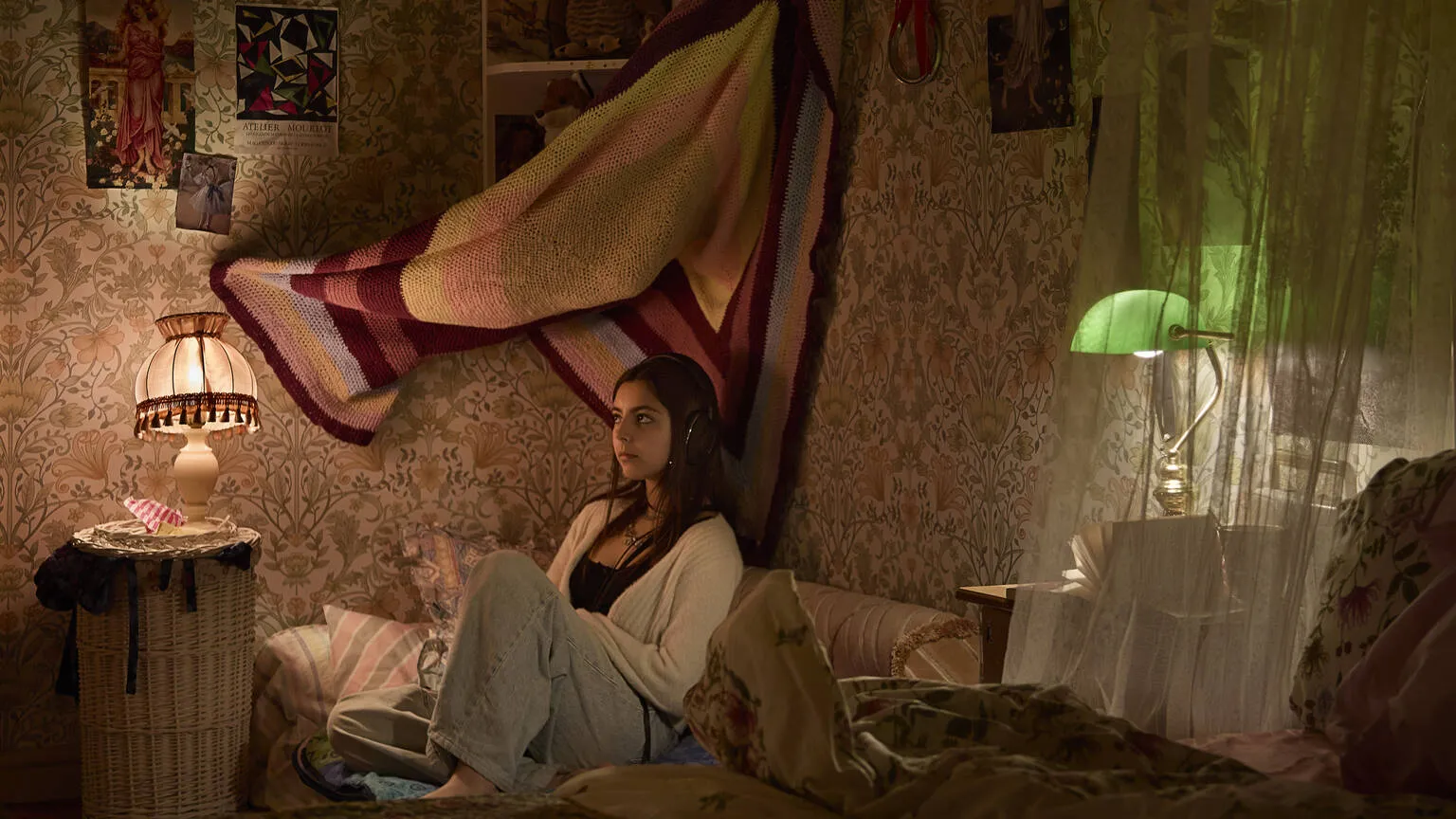
Theatre Reviews Roundup: The Cabinet Minister

Menier Chocolate Factory

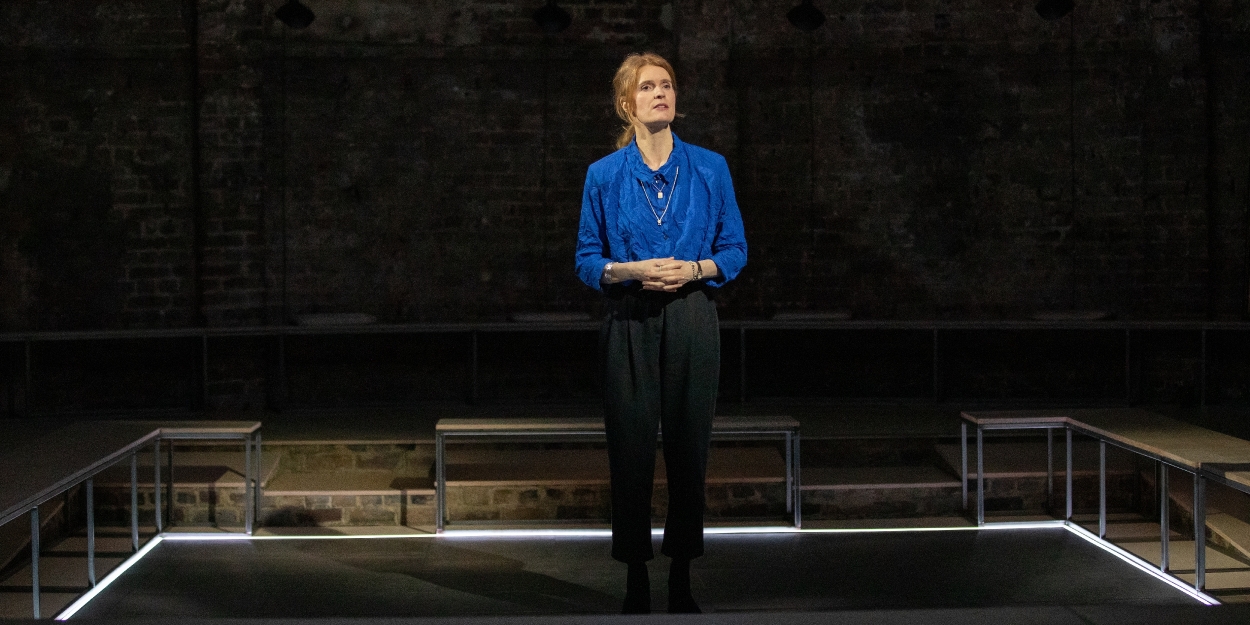
The cabinet Minister at The Menier Theatre. Photo: Tristram Kenton

Arthur Pinero’s The Cabinet Minister has been given a thorough overhaul by Nancy Carroll (who also performs in it). Paul Foster directs the production. The result is that this Victorian comedy about a government minister, whose reputation is under threat when the media discover he has massive debts, has received some of the best reviews of the year.

[Links to full reviews are included but a number are behind paywalls and therefore may not be accessible]

LondonTheatre‘s Marianka Swain (5★) declared, ‘This is, hands down, one of the funniest shows in London theatre right now…this is primarily a total romp, jam-packed with witty one-liners, physical humour, sublime character comedy, and some very, very silly double entendre.’ She praised Nancy Carroll: ‘Carroll not only supplies this zippy update to Pinero’s work, but also gives a fabulously charismatic performance as the mercurial Lady Katherine’ and picked out two ther members of the cast: ‘the supreme scene-stealers are Dillie Keane (having almost indecent levels of fun) and Matthew Woodyatt as a doughty, overbearing Scottish matriarch and her tongue-tied son: they are absolute comic bliss.’

Cindy Marcolina at BroadwayWorld (5★) loved it. She talked of a ‘captivating cast list under Paul Foster’s crisp direction, delivering a one-laugh-a-minute play bound to lighten up the dreariest autumn day.’ She reserved the highest praise for ‘Nancy Carroll, who ‘is dazzling both as adaptor and performer; she commands the stage with scrumptious irony, deliciously flawless comic timing, and double-entendres galore’.

Of Nancy Carroll, Alun Hood for WhatsOnStage (5★) picked out: ‘Dillie Keane, resembling a dyspeptic Caledonian version of Whistler’s Mother, steals every scene she’s in as bonkers Lady Macphail’. He noted, ‘everybody and everything from the sublime cast to Oliver Fenwick’s glowing lighting, Betty Marini’s elaborate wigs and the joyful dances by Joanna Goodwin, are on the same crazy page.’ Of Nancy Carroll, he said, ‘At her most adorable when she’s behaving most appallingly, it’s virtually impossible to take your eyes off her. She’s a highlight in an evening of rare, unexpected pleasure.’ He noted, ‘there’s a poignancy to The Cabinet Minister opening on the day Maggie Smith’s death was announced, since the production’s leading lady Nancy Carroll has, perhaps more than any other actress of her generation, inherited the dame’s mantle when it comes to high comedy.’

For Helen Hawkins on The Arts Desk (5★), it was the memory of another Dame that Nancy Carroll conjured up: ‘Something in the range and versatility of Carroll’s voice echoes Judi Dench’s. She can be all soft winsome charm, then pivot to an imperious snap with pinpoint-sharp comic timing. Her asides are mercurial; her way with innuendo, hilarious.’ Comparisons with both Dame Maggie and Dame Judi- praise indeed.

Lindsay Johns for the Telegraph (5★) said, ‘This delightfully pacy, elegant and stylish new adaptation by Nancy Carroll (who also stars as Lady Katherine Twombley) positively brims with vitality, full of salacious double entendres and unmistakable contemporary political allusions. With an enchanting set and period-costume design by Janet Bird, the four-act play…is directed with a winning combination of levity, riotous exuberance and occasional moral seriousness by Paul Foster.’

Clive Davis in The Times (4★) agreed. He was particularly pleased with the way Nancy Carroll had updated Pinero’s play: ‘the script is peppered with jokes, leering double entendres and music reminiscent of Isobel McArthur’s irreverent update of Jane Austen in Pride & Prejudice (*sort of)’… ‘This play is like a glass of fizz that hits the spot.’

The Guardian‘s Arifa Akbar (4★) said it was ‘springy, silly and full of satirical sting’. She opined, ‘There is no stage comedy out there quite so funny, and this is as frothily enjoyable as it is pertinent.’

Holly O’Mahoney in The Stage (4★) added to the accolades: ‘Foster’s direction, with Joanna Goodwin’s concise movement coordination, ensures each player is in the optimal position on Janet Bird’s grandly dressed set to squeeze out every possible drop of comedy.’

Only Tom Wicks in Time Out (3★) seemed lukewarm about the show: ‘What stops this production from being truly great, as funny as some of its lines and scenes are, is the lack of that singular and relentless escalation you find in the best of the genre. In spite of Carroll’s changes, there’s too much going on, too many trifling side-plots, in every way. It doesn’t build to that perfect pinnacle of comedic disaster.’

Critics’ Average Rating 4.4★

The Cabinet Minister is at the Menier Chocolate Factory to 16 November 2024. Click here to buy tickets direct from the theatre.

Read Paul Seven Lewis’s review of The Cabinet Minister here. Watch Paul’s review on YouTube here.

If you’ve seen The Cabinet Minister at the Menier, please add your review and rating below

Theatre Reviews Roundup: A Night With Janis Joplin

Peacock Theatre, Sadlers Wells

Mary Bridget Davies in A Night With Janis Joplin. Photo: Danny Kaan

For music fans of a certain age, the legendary Janis Joplin, who died far too young, holds a special place. They should enjoy A Night With Janis Joplin which most critics heralded as an excellent (albeit slightly too loud) concert, thanks to an ‘uncanny’ performance from Mary Bridget Davies. However, the telling of her life story was criticised by many as being too thin and too vanilla. (Sharon Sexton appears instead of Ms Davies at selected performances.)

[Links to full reviews are included but a number are behind paywalls and therefore may not be accessible]

Charlotte Vickers at WhatsOnStage (4★) was not too concerned that there was ‘very little plot to keep the narrative going’, she was swept along by ‘the power of the performances, and the dedication of the production to making the night with Janis Joplin real.’

Adam Bloodworth for CityAM (4★) felt ‘A Night with Janis Joplin is best when it feels like a proper gig.’ He protested ‘It’s too loud’ but ‘Otherwise, this is a commendably raw ode to a legend.’

Will Hodgkinson reviewing for The Times (3★) found ‘Mary Bridget Davies’s embodiment of all things Janis for this cabaret-style show was uncanny’, but thought it an ‘entertaining but slight show in which such a wild spirit as Joplin proves an ill fit for the clean-cut constraints of the jukebox musical format.’

Franco Milazzo from BroadwayWorld (3★) liked Mary Bridget Davies’ performance but was unimpressed by the show: ‘at times, it feels that this show was created not to tour theatres than to provide cruise ship diners with some aural entertainment.’

Helen Hawkins at TheArtsDesk (3★) commented, ‘As a concert, it’s top-notch; as a theatrical piece about its subject, it could do with a stronger structure and a less forgiving spotlight’. She too praised the star: ‘It’s when Davies unleashes her phenomenal voice that the show really lives up to expectations.’

Matt Wolf for LondonTheatre (3★) said, ‘Davies is a wonder, even if the woman she is playing remains largely a cipher right through to the end.’

Paul Vale in The Stage (3★) described the show as ‘less a fully fledged musical than an immaculately performed tribute act’.

It may be fortunate for the rating, that Nick Curtis’ review in The Standard is not rated. He described the show as ‘a star performance in a shoddy vehicle’ and concluded ‘the overall effect is hollow’.

Critics’ Average Rating 3.3

A Night With Janis Joplin can be seen at the Peacock Theatre until 28 September 2024. Click here to buy tickets direct from the theatre  

If you’ve seen A Night With Janis Joplin at the Peacock Theatre, please add your review and rating below

Theatre Reviews Roundup- Death of England: Closing Time

@sohoplace

Death of England: Closing Time. Photo: Helen Murray

Closing Time is the final part of the Death of England trilogy which began with Michael and then Delroy. It features Sharon Duncan-Brewster and Erin Doherty as Delroy’s black mother and white girlfriend respectively in an emotional but also funny drama that explores race in Britain today. Currently, all three are performing at @sohoplace and, as The Telegraph said, the trilogy together ‘makes for the most layered and satisfyingly complete theatrical experience.’ But how well does Closing Time stand alone?

[Links to full reviews are included but a number are behind paywalls and therefore may not be accessible]

Dzifa Benson for the Telegraph (5) called it ‘a ferocious way to bring the cycle to a close’ and thought ‘what an astounding, kinetic force the pairing of Sharon Duncan-Brewster and Erin Doherty proves to be’.

BroadwayWorld’s Alexander Cohen (4) proclaimed, ‘The political trumpets ring loud, but the humanity beneath it echoes louder.’ The actors ‘Doherty and Duncan-Brewster conjure combustible humour,’ he said.

Sam Marlowe for The Stage (3) gave such a good review, it is hard to understand why she didn’t award more stars. She did say the play is ‘at times over-deliberate and unsubtle’ but she praised the acting to the hilt. She explained that the play ‘switches between fervid, direct-address confessionals and confrontational dialogue. Such is the scorching talent of Sharon Duncan-Brewster and Erin Doherty that the solo set pieces are riveting – but the writing reaches its most potent intensity when they interact. The acting is flawless’.

By contrast, Arifa Akbar in The Guardian (3) had so little to say that was complimentary, it’s a wonder she gave even 3 stars: ‘its emotional power is drowned out by exaggerated and flattening comedy, the women shouting and stomping so their hostility verges on farce…for too long the dialogue wanders aimlessly…the tone is too screamy for the tension to build, and some deliveries are so fast that lines are swallowed’.

Alun Hood at WhatsOnStage (3) was thankful for ‘the opportunity to watch a pair of actresses of this calibre firing on all cylinders’. However, Duncan-Brewster and Doherty are probably better than what they’ve been given to work with here. The former is fiery, humane and affecting, while the latter finds a bruised, watchful vulnerability beneath all of Carly’s defensive bite. Neither actor hits a false note’. He elaborated his opinion of the play, ‘Closing Time is a captivating, troubling slice of modern British life that feels unsettlingly accurate, if never revelatory.’

Suzy Feay writing for the Financial Times (3) was even harsher on the writing: ‘There are two skilled, high-octane performances to enjoy here, but with its talk, talk, talk and lack of character development or incident, this doesn’t feel like a play’.

Critics’ Average Rating 3.5

Death of England: Closing Time can be seen at @sohoplace until 28 September 2024. Click here to buy tickets direct from the theatre  

If you’ve seen Death of England: Closing Time at @sohoplace, please add your review and rating below

Antony and Cleopatra

The Globe Theatre

Nadia Nadarajah and John Hollingworth in Antony and Cleopatra at The Globe. Photo: Ellie Kurttz

In the Globe’s new bi-lingual production of Shakespeare’s Antony and Cleopatra, the Egyptians speak in British Sign Language, while the Romans speak in English. Surtitles are provided for both languages. A couple of reviews labelled it a success, but many of the critics, while praising the actors, had doubts about whether the mix of languages worked, and some decided it definitely didn’t.

[Links to full reviews are included but a number are behind paywalls and therefore may not be accessible]

The Stage‘s Dave Fargnoli (4★) praised the production, ‘Director Blanche McIntyre and associate director Charlotte Arrowsmith – who, like a significant portion of the cast, is deaf – make the transitions between signed and spoken segments almost seamless.’ He liked the leads: ‘As Antony, John Hollingworth makes clear the general’s inner struggle between duty and desire. He is vapid and changeable, yet there is no doubting the intensity of his fascination with Cleopatra. Deaf actor Nadia Nadarajah ably ties together the Egyptian queen’s many contradictions. Sometimes regal, sometimes outrageously extra, she is never less than a commanding presence.’

Lucinda Everett for WhatsOnStage (4★) was positive about the use of BSL: ‘the cast’s signing powerfully brings to life Shakespeare’s imagery.’ ‘The way the languages and captions are used,’ she explained, ‘mixed, withheld, chosen above one another – becomes symbolic of many things…diplomacy…pain…death…love.’ She was concerned that ‘John Hollingworth’s Antony seems a touch too level-headed. Although his commanding physicality and charisma still make him a compelling watch.’ However, ‘Nadarajah’s Cleopatra meanwhile is a pint-sized powerhouse. Mercurial and witty, as all good Cleopatras are, but also charming, fierce, and at times delightfully petulant.’

Kate Wyver reported for The Guardian (3★) ‘Nadia Nadarajah is a regal Cleopatra. Obsessive and quick to temper, she is rash and romantic’, and referring to the surtitles, ‘Far from being distracting, they offer a strong case for such visual aids becoming a permanent fixture in the theatre.’

Other critics had more reservations and some were downright hostile.

The Standard‘s Nick Curtis (3★) was both impressed: ‘To have brought something so bold and complex to the stage at all is a technical triumph for director Blanche McIntyre. And disappointed: ‘Her production captures granular relationships but misses the big picture.’ ‘The whole thing,’ he declared, ‘is a mishmash of the thrillingly radical and the ridiculous.’

Julia Rank for LondonTheatre (3★ ) noted, ‘the production is most effective in building the relationship between Cleopatra and her ladies-in-waiting’. Despite acknowledging that the use of BSL sent out a ‘powerful contemporary message’, she said she found it ‘something of an endurance test’.

Sarah Hemming of the Financial Times (3★) pointed out, ‘This is a knotty, wordy play, brimming with great poetry. That makes for a great deal of intricate text, quite long to sign, and some passages, such as the countryman’s gag-riddled speech near the end, fell flat. Unless you know the play by heart, you find yourself reading the surtitles a lot, at the expense of experiencing the performances fully.’

Time Out‘s Andrjez Lukowski (3★) found it ‘fun’ and thought ‘Nadarajah is excellent: she plays Cleopatra with her whole body, and her heady physicality and total sense of living in the moment sets the whole stage alight.’ However he summed up, ‘It’s a spirited and breezy take on Shakespeare’s oft-dense tragedy that I’d say doesn’t quite work.’ He explained, ‘the production’s switching between languages has a tendency to disorientingly change the energy of the show’.

Debbie Gilpin for BroadwayWorld (3★) also didn’t think the mixing of two languages worked and she too found it an ‘endurance test’: ‘Unless you fit in the Venn diagram of hearing person and BSL fluent, if you want to know what’s going on you need to spend at least half of the play reading big chunks of text – and the whole thing with Shakespeare is that it has a far greater effect on you if you get the words direct from the actor. This is why teachers bring students to the theatre, rather than just making them read the script.’

The Telegraph‘s Claire Allfree (3★) agreed somewhat: ‘Blanche McIntyre’s admirably well intentioned production struggles to achieve lift off. Surtitles are a necessary irritant in theatre, regardless of what language is being translated; here, they end up badly marginalising individual performances.’ She blamed its failure primarily on ‘a production that, simply put, lacks ideas.’

Fiona Mountford at i-news (2★) was more blunt, ‘Unfortunately, the finished product is dismal, nigh-on incomprehensible and with almost no depth of characterisation.’ Referring to the surtitles, she observed, ‘Essentially, the evening entails a speed-read of this towering tragedy and that is a tough ask even of those intimately familiar with its shifting allegiances. Shakespeare without the aid of spoken tone and inflection is a considerable challenge.’

Clive Davis in The Times (1★) was even less impressed by what he called ‘Blanche McIntyre’s woefully unfocused bilingual production’. ‘Much of the time…the drama is played out like a clumsy, leering sitcom,’ he said. ‘Nor is there any sense of electricity between Nadia Nadarajah’s Cleopatra and John Hollingworth’s Mark Antony.’

Critics’ Average Rating 2.9★

Antony and Cleopatra can be seen at the Globe Theatre until 15 September 2024. Click here to buy tickets direct from the theatre

If you’ve seen Antony and Cleopatra at the Globe Theatre, please add your review and rating below


Theatre Reviews Roundup: The Hot Wings King

Dorfman, National Theatre

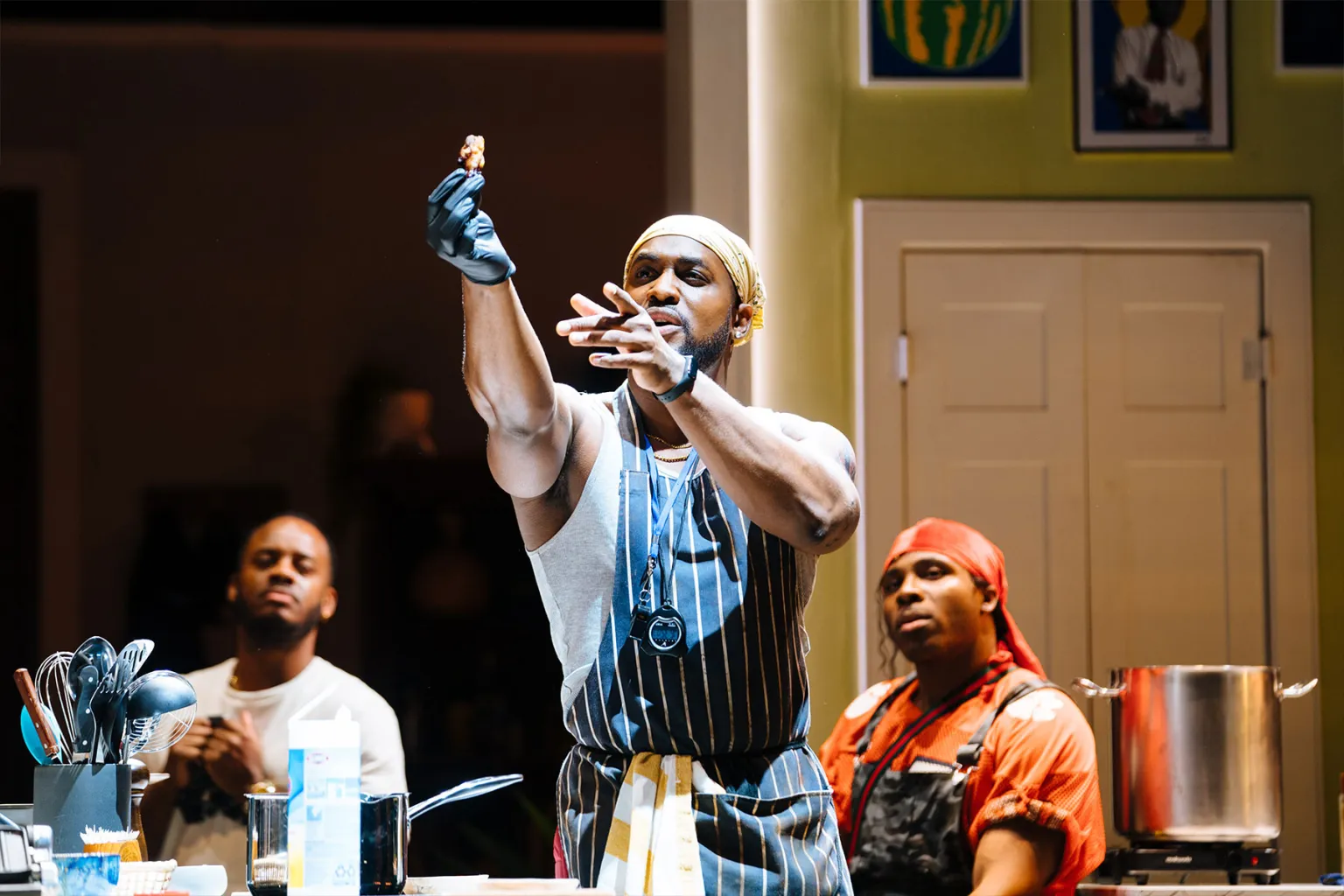
The Hot Wing King at the Dorfman Theatre. Photo: Helen Murray

It doesn’t look like Katori Hall‘s Pultizer Prize winning comedy about race, masculinity and homophobia will be winning many awards this side of the Atlantic, if the predominantly three star reviews are anything to go by. The critics like the characters and the comedy in Roy Alexander Weise‘s production, as four black gay men in a Memphis kitchen prepare for a hot wings contest, but they found it overlong and some craved more depth.

[Links to full reviews are included but a number are behind paywalls and therefore may not be accessible]

The Observer’s Kate Kellaway (5 ★) found it ‘a heartwarming, refreshing and original show’. Frey Kwa Hawking at WhatsOnStage (4★) found it long ‘But the characters are so likeable, and being in this house with them is so irresistible, that slowness can’t really be resented.’

Andrzej Lukowski’s review in Time Out (3★) made a similar point: ‘Hall’s play is a pleasure, but there are moments where it feels like an endurance test’. A similar thought came to Alexander Cohen at Broadway World (3★): ‘Hall’s flavours may not always mix and the bombastic jauntiness makes the melodramatic moments feel drawn out by contrast, but so what. This is a summer comfort watch.’ Nick Curtis in The Standard (3★) felt something similar: ‘Though overlong, this is a tasty, stimulating experience.’

The Times’ Clive Davis was warm rather than hot in his review in The Times (3★) saying it ‘trundles along merrily enough without justifying its ample running time.’ Arifa Akbar in The Guardian (3★) enjoyed the ‘humour, Black joy and relationship drama – in that order.’ Sarah Hemming in the Financial Times (3★) found much to appreciate, ‘Weise’s production savours both the playfulness and the emotional truths in the plot, and his cast all give affectionately observed and beautifully rounded performances.’

Claire Allfree in the Telegraph (3★) felt that Hall ‘in the end opts for feelgood emotion’.  Dave Fargnoli for The Stage (3★) said, ‘As charismatic and vividly-drawn as these characters undoubtedly are, Katori Hall’s Pulitzer prize-winning culinary comedy tells an overstretched, overfamiliar story.’ Tom Birchenough for The Arts Desk (3 ★) concluded, ‘there’s richness of writing here, and the sheer enjoyment evident from the ensemble cast carries it resoundingly.’

Critics’ Average Rating 3.4★

The Hot Wings King can be seen at the Dorfman, National Theatre until 14 September 2024. Click here to buy tickets directly from the theatre

If you’ve seen The Hot Wings King at the Dorfman, please add your review and rating below
Theatre Reviews Roundup: Alma Mater

Almeida Theatre

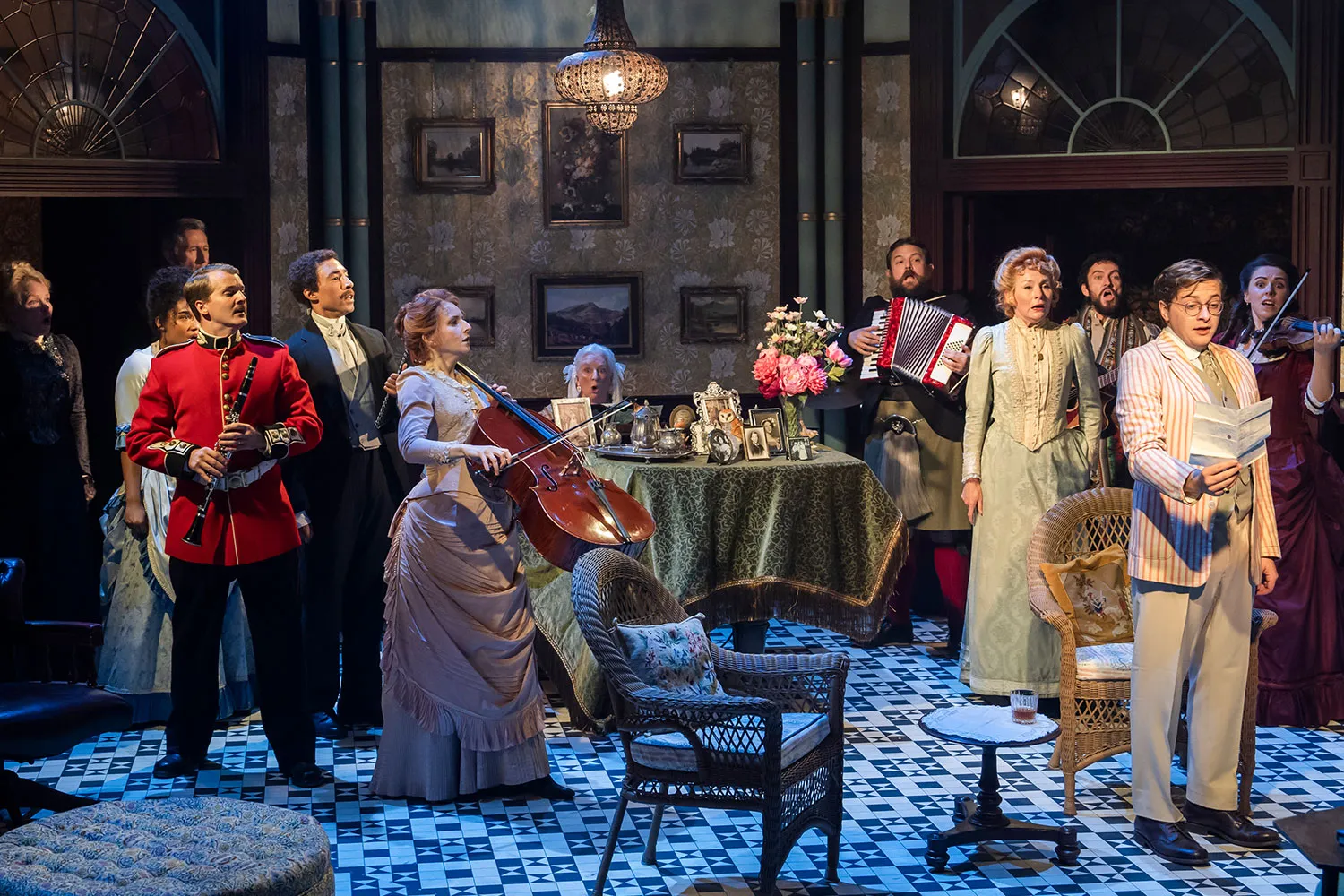
Justine Mitchell in Alma Mater at the Almeida Theatre. Photo: Marc Brenner

Kendall Feaver‘s drama covers the many ramifications of a sexual assault at a top university. Justine Mitchell only replaced Lia Williams in the lead role at the last minute but received excellent reviews. Some critics found the many complications of the plot satisfying, others simply confusing.

[Links to full reviews are included but a number are behind paywalls and therefore may not be accessible]

Claire Allfree of the Telegraph (5★) declared, ‘Directed with pincer-like sharpness by Polly Findlay and beautifully performed, Feaver’s drama is one of the best yet to grapple with today’s culture wars’. She said Justine Mitchell brought to the lead role ‘magnificent, acid-tongued, arrogant flamboyance’.

The Financial Times‘ Sarah Hemming (4★) declared, ‘It’s not a perfect play — it is too schematic in places — but it’s a compelling, sharply resonant ethical workout.’ Sarah Crompton at WhatsOnStage (4★) found it ‘utterly absorbing and very powerful’. The characters, she said, ‘are always fully alive in their humanity and their shifting positions.’

Matt Wolf at London Theatre (4★) praised the new lead, ‘Is there a more quietly essential actress these days than Justine Mitchell…who illuminates every production in which she appears’? He liked the director too, ‘(Deborah) Findlay steers it with a cool, keen eye for the heated rhetoric it contains’. He pointed out, ‘Like any good play of this sort, you find yourself nodding in assent to one point of view only to soon be taken by another perspective altogether’, he continued.

What Matt found ‘satisfyingly labyrinthine’, others found confusing. Cindy Marcolina at Broadway World (3★) thought, ‘Alma Mater gets a lot right, but also puts too many irons on the fire’. Ryan Gilbey for The Guardian (3★) found ‘so many skeletons tumbling out of closets that the stage resembles a crypt rather than a college.’ Nick Curtis in the Standard (2★) was notably put off: ‘it’s undermined by Feaver’s desire to constantly wrong-foot the audience and cover every base. Think this is about assault? No, it’s about race. No, privilege. No, the power-dynamics of student-teacher relationships. No, the internal fault-lines of feminism.’

Two critics looked rather than loved it. Holly O’Mahony writing for The Stage (3★) felt the play was ‘guilty of intellectualising its subject matter instead of making us feel for it.’ Dominic Maxwell of the Times (3★) gave this advice: ‘You may not surrender entirely to the fiction, but you’ll have plenty to talk about afterwards.’

Critics’ Average Rating 3.4★

Alma Mater is at the Almeida until 20 July 2024. Buy tickets direct from almeida.co.uk

If you’ve seen Alam Mater at the Almeida Theatre, please add your review and rating below

Theatre Reviews Roundup: Grud

Hampstead Theatre Downstairs

Catherine Ashdown and Kadiesha Belgrave in Grud. Photo: Alex Brenner

Sarah Power‘s second play sees a teenage woman balancing home life with an alcoholic father and sixth form with a new friend. Jaz Woodcock-Stewart directs. Not many critics took the journey to Hampstead but those that did enjoyed it.

[Links to full reviews are included but a number are behind paywalls and therefore may not be accessible]

Chris Wiegand in The Guardian (3) called it an ‘emotionally acute drama’ but said it ‘would benefit from a stronger arc and a more richly detailed social backdrop’.

Katie Kirkpatrick at Broadway World (3) commented, ‘Power’s writing demonstrates a knack for realistic dialogue and humour, as well as compelling interpersonal dynamics. The issue with this particular project is that it fails to say anything new.’

Dave Fargnoli at The Stage (3) found ‘the play is lifted by the deep empathy, touching tenderness and charmingly offbeat humour’. Helen Hawkins for The Arts Desk (3) called it ‘an oddly refreshing evening’.

Critics’ Average Rating 3.0★

Grud can be seen at Hampstead Theatre until 3 August 2024. Click here to buy tickets direct from Hampstead Theatre

If you’ve seen Grud at Hampstead Theatre, please add your review and rating below
Ben Whishaw in Bluets – Royal Court Theatre

Bluets is a dream of a show

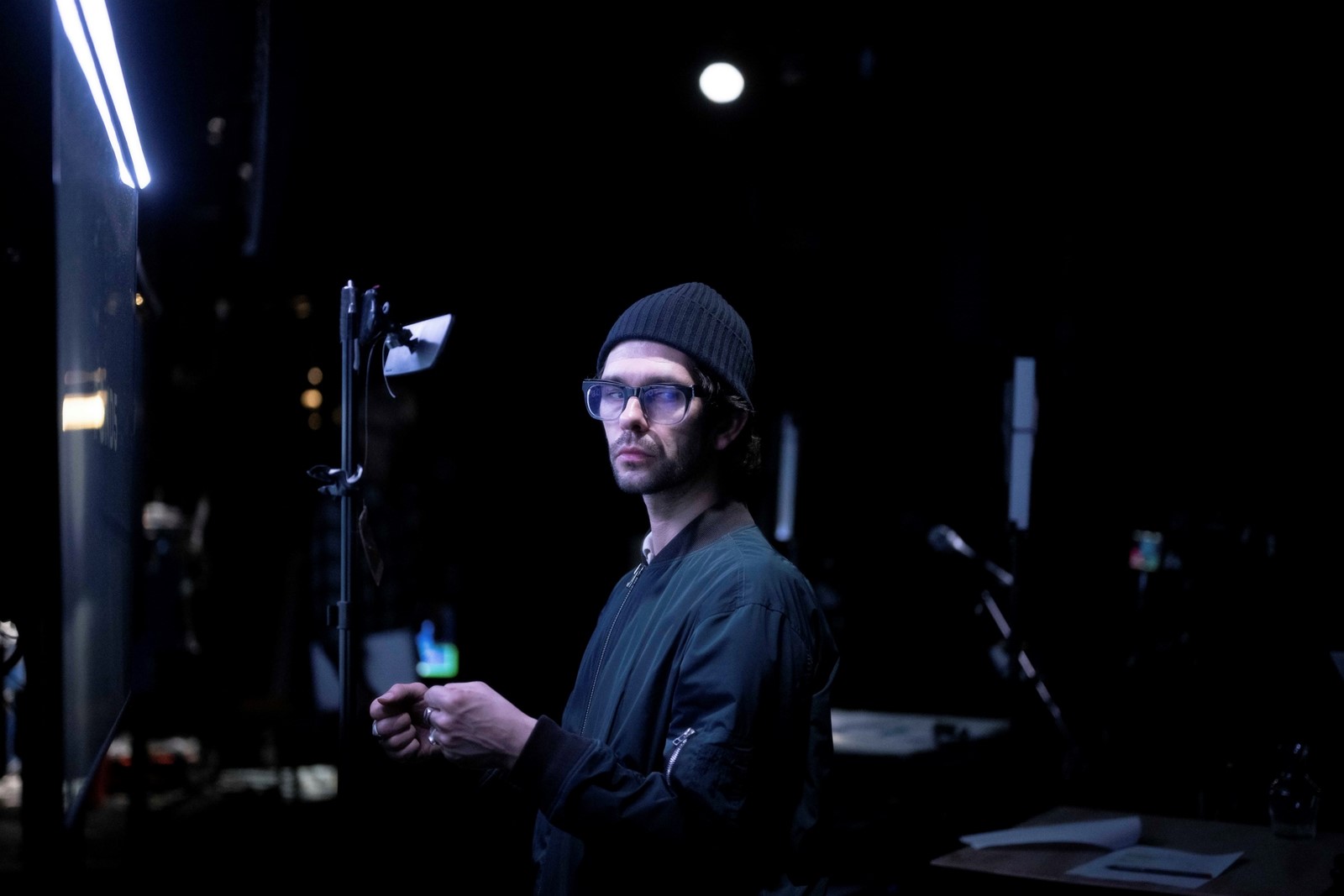
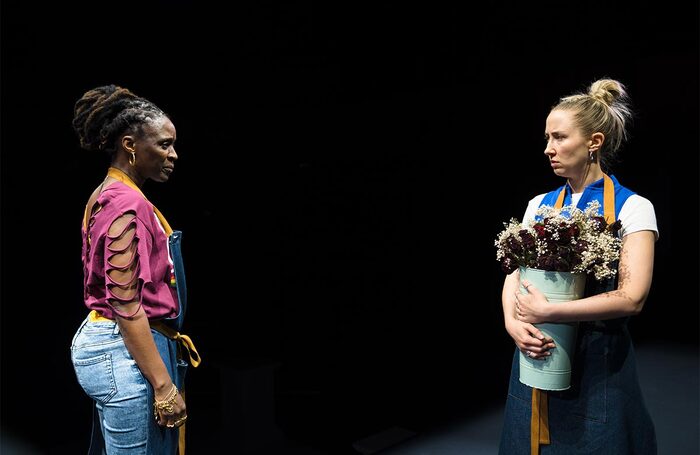
Ben Whishaw in Bluets at the Royal Court. Photo: Camilla Greenwood

Bluets is not a theatre show, it’s an unusual hybrid of stage and screen. It certainly won’t appeal to everyone, particularly those who love pure theatre. On the plus side, it’s not like far too many recent gimmicky stage productions where video is used to provide close-ups or scenes of what’s happening off-stage. Normally I would avoid that sort of thing, but this is something special.

It’s the making of a film, live, with the actors reciting words from Maggie Nelson’s book Bluets, while carrying out actions that are projected on a large screen. I admit this sounds more like something you might see at Tate Modern, and without the presence of Ben Whishaw, maybe it wouldn’t have made it to the stage of the Jerwood Downstairs theatre at the Royal Court. Having said that, director Katie Mitchell does have a long and distinguished record of creating what she calls ‘live cinema’. But, if it does sound strange, or even off-putting to you, I can only say I found Bluets both fascinating and deeply moving.

Let’s start with the words. After all, it is based on a book of what could be called short prose-poems, in which Maggie Nelson describes and meditates on three recurring themes- the effect of and gradual recovery from the breakup of a relationship, a close friend’s reaction to becoming a quadriplegic, and her fascination with the colour blue, which is genuinely interesting.
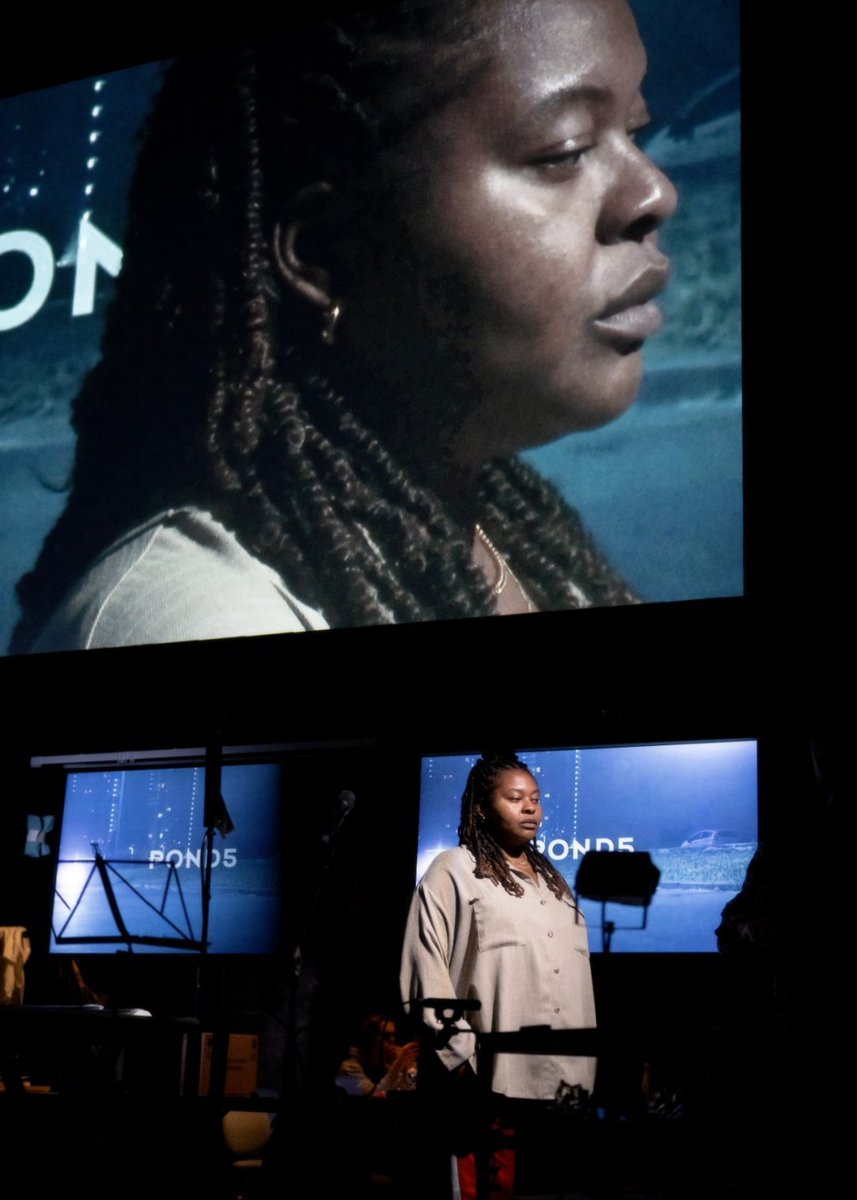
Kayla Meikle in Bluets. Photo: Camilla Greenwood

The language- its rhythms and metaphors- is poetic and moving. It’s also quite funny in a self-deprecating way. For example, she is excited to come across a book called Deepest Blue (I think) in a bookshop, only to find it’s about depression. She hastily puts it back, only to tell us she bought it six months later – pause- ‘online’.

Ben Whishaw will have sold many of the tickets and he does deliver, with a sad voice and a twinkling eye, but so do the other two actors Emma D’Arcy and Kayla Meikle. The trio sit in a row, sharing the lines, so that the words are delivered almost staccato by their alternating voices. The effect is to make you concentrate and hear every word. I found that the varied voices and personas made the author and her highly personal subject matter seem more universal.
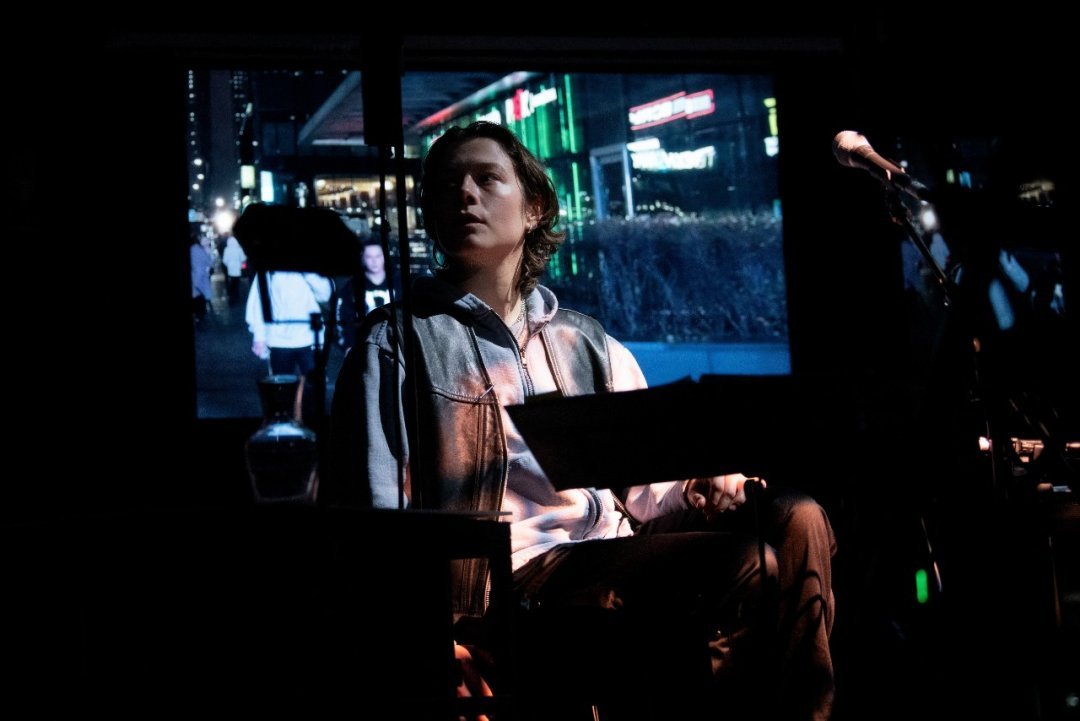
Emma D’Arcy in Bluets at the Royal Court Theatre. Photo: Camilla Greenwood

Then there is the videoing. Each actor has a table next to them, a camera in front of them, and a monitor behind them. The film, shown on a big screen above them, illustrates what is being said. The actors sometimes stand in front of the monitors, as if they are green screens, and this, thanks to superb lighting by Anthony Doran, converts onto the large screen as them seeming to walk down a street, drive a car, or dry their hair in a changing room. Often, the actors’ heads or hands are viewed in close-up as they rest on a pillow, or touch each other, or handle blue objects. It is an extraordinary experience to watch them talk and move, sometimes in synch, and then see this, combined with some pre-recorded moments, become a movie before one’s eyes.

Cinema, which is usually immutable, becomes a live performance. The way it can change in small ways from night to night suggested to me the way our mental lives -feelings, memories, dreams- change with each circumstance and in each moment. The live video is a masterpiece in coordination, designed by Ellie Thompson and directed by Grant Gee.
The adaptation of Maggie Nelson’s book by Margaret Perry is a fine work in itself, and the soundtrack by Paul Clark, which mixes music, nature and street sounds, is as disturbing and reflective as the language.
Bluets is only 70 minutes long but it has the timeless quality of a dream or a memory.
This is the opening production of the first season by the Royal Court’s new artistic director David Byrne. After a lacklustre period under Vicky Featherstone, when I all but stopped going to the Royal Court, I am now looking forward to some exciting times ahead.
Bluets can be seen at the Royal Court until 29 June 2024
Paul was given a review ticket.

Reviews Roundup: Punchdrunk’s Viola’s Room

One Cartridge Place, Woolwich

Punchdrunk’s Viola’s Room. Photo: Julian Abrams

After the scale and complexity of The Burnt City, Punchdrunk are back with a more intimate immersion piece in which the audience are led six at a time through a series of rooms listening to a story narrated by Helena Bonham-Carter, and there are no live actors. Co-directed by Felix Barrett and Hector Harkness, it tells of a search for a doomed teenage princess.

[Links to full reviews are included but a number are behind paywalls and therefore may not be accessible]

The Guardian‘s Arifa Akbar (5★) loved it: ‘it inspires so much puzzling wonder that you want to go straight back in to find other undisturbed paths in the search for Viola.’ She explained that it ‘hovers delicately between bedtime story, fairytale, children’s game and nightmare…The story does not follow rational logic but turns into a weird kind of liminal babble dealing in unnameable fear, and you feel it as you travel through ever darker, narrower spaces.’

Andrjez Lukowski at Time Out (4★) was impressed: By its climax I felt like a character in a horror film, not least because of the tremendous soundtrack relayed by Gareth Fry’s extraordinary sound design…It might be short, but in those 45 minutes you’ll live a haunted lifetime.’

For Dominic Cavendish in The Telegraph (4★), ‘it cast a simple, singular spell. Like Viola, I couldn’t quite bear to tear myself away; and in surrendering to feeling lost there lies an intoxicating sense of self-discovery.’ The Stage‘s Sam Marlowe (4★) said, ‘this is a beautifully wrought enchantment that skilfully blends the exquisite and the sinister.’

Anna James at WhatsOnStage (4★) praised ‘Impeccable design, labyrinths both literal and figurative, and a deep fascination with storytelling, intimacy and ritual maintain that ineffable Punchdrunk feel.’ The Observer‘s Susannah Clapp (4★) concluded: ‘Though often exquisite, sometimes apparently folkloric, Viola’s Room is sophisticated in its paradoxes. Its story is about compulsion and loss of control, yet this is the show in which Punchdrunk has most evidently controlled its own audience.’

Franco Milazzo reviewing for BroadwayWorld (3★) decided that, compared with The Burnt City, ‘Viola’s Room is overall a tighter work which offers a far more cohesive theatrical experience but, unlike many of the Punchdrunk productions before it, does not have enough wow factor to justify a second viewing.’

Nick Curtis in The Standard (3★) was underwhelmed. ‘Visually and atmospherically, it’s a work of rich detail, executed with elan…Unfortunately the story itself, by Booker-shortlisted novelist Daisy Johnson, is a thin, by-the-numbers assemblage of darkly symbolic fairytale tropes with a sensual modern topspin.’

The Times‘ Clive Davis (3★) was blunt in his response: ‘It’s pointless, I suppose, expecting much in the way of substance: Punchdrunk, you see, are masters of visual muzak. Viola’s Room resembles a fairground ghost train for hipsters, only there’s no train.’ Dominic Maxwell in The Sunday Times  summed up, ‘Fabulous trimmings, needs more meat.’

George Simpson for The Express (3★) said, ‘Punchdrunk certainly lean into the sensory aspects of this piece over the substance of the narrative…It’s not for everyone, but if this is your bag you’ll get lost in wonder for 45 minutes.’

Fiona Mountford in the i (2★) was disappointed, ‘So underwhelmed was I by the whole set-up that I increasingly found myself longing to be frightened: anything for an enlivening dash of excitement…It’s an experience so evanescent as to leave barely any trace in our memory.’

Critics’ Average Rating 3.4★

Viola’s Room can be seen at One Cartridge Place, Woolwich, until 15 September 2024. Buy tickets direct from punchdrunk.com

If you’ve seen Viola’s Room, please add your review and rating below



Izzard Hamlet 2★

Riverside Studios

Izzard Hamlet at Riverside Studios. Photo: Amanda Searle

Is this the worse show in London? The Izzard Hamlet, in which the stand-up comedian and actor (now using the pronoun ‘she’) plays every role, has been greeted by extraordinarily bad reviews, including two 1 star ratings. The theme seemed to be that she failed to provide any depth to the characters.

[Links to full reviews are included but a number are behind paywalls and therefore may not be accessible]

The Telegraph‘s Dominic Cavendish (3★) was one of the few critics to award more than two stars, and he was far from complimentary- ‘The dividends…in a daunting test of stamina, textual focus and gender-flipping, seem pretty minima,’ he said. He continued that the acting was ‘efficiently and lucidly executed, but lacking much interiority and passion’. Cheryl Markosky at Broadway World (3★) enjoyed her evening, ‘You’re right there with Izzard, a lone figure on stage who makes Hamlet real and vital.’

Sarah Hemming in the Financial Times (2★) commented, ‘any reading of Hamlet is hard to fathom. There is little interiority, little sense of the agony or gravity of his predicament nor the huge issues at stake.’ Dominic Maxwell at The Times (2★) had the same thought: ‘what Izzard doesn’t do is bring inner life to these ricocheting ruminations…Without more solidity, the performance is only as good as its last well-spoken line.’ He didn’t hold back: ‘this is indulgent nonsense’.

Fiona Mountford at inews (2★) hitout: ‘Izzard’s take is simply too frenetic, little more than a glossy vanity project, an impressive feat of line-learning.’ ‘What is entirely lacking,’ she said, ‘is any sense of Hamlet’s grief, soul-searching and existential angst.’ Georgia Luckhurst in The Stage (2★) was also unimpressed, ‘after landing heavy hitters like “to be, or not to be”…she adopts a hasty delivery that suggests an insecurity about the play’s supporting characters.’ She concluded, ‘if you like your Hamlet less harried, this may not be for you’

The Guardina’s Arifa Akbar gave what for her is a rare 1★, saying, ‘Izzard diligently channelling words rather than any meaningful interpretation of the role.’ ‘Most frustratingly,’ she vented, “Izzard uses the same tone for every character’. Nick Curtis gave a no-holds-barred critique in The Standard (1★), calling it ‘risible’ and ‘an act of colossal vanity and hubris, hung on the skimpiest artistic justification’. He complained, ‘Izzard musters barely any characterisation, emotion or grandeur’. He ended with a heartfelt: ‘Why? That’s the question you ask yourself throughout.’

Critics’ Average Rating 2★

Izzard Hamlet can be seen at the Riverside Studios in Hammersmith, London, until 30 June 2024. Buy tickets direct from riversidestudios.co.uk

If you’ve seen Izzard Hamlet, please add your review and rating below
×