Is Benjamin Button the British Musical of the Decade?
★★★★
Clare Foster and John Dalgliesh in The Curious Case of Benjamin Button. Photo: Marc Brenner
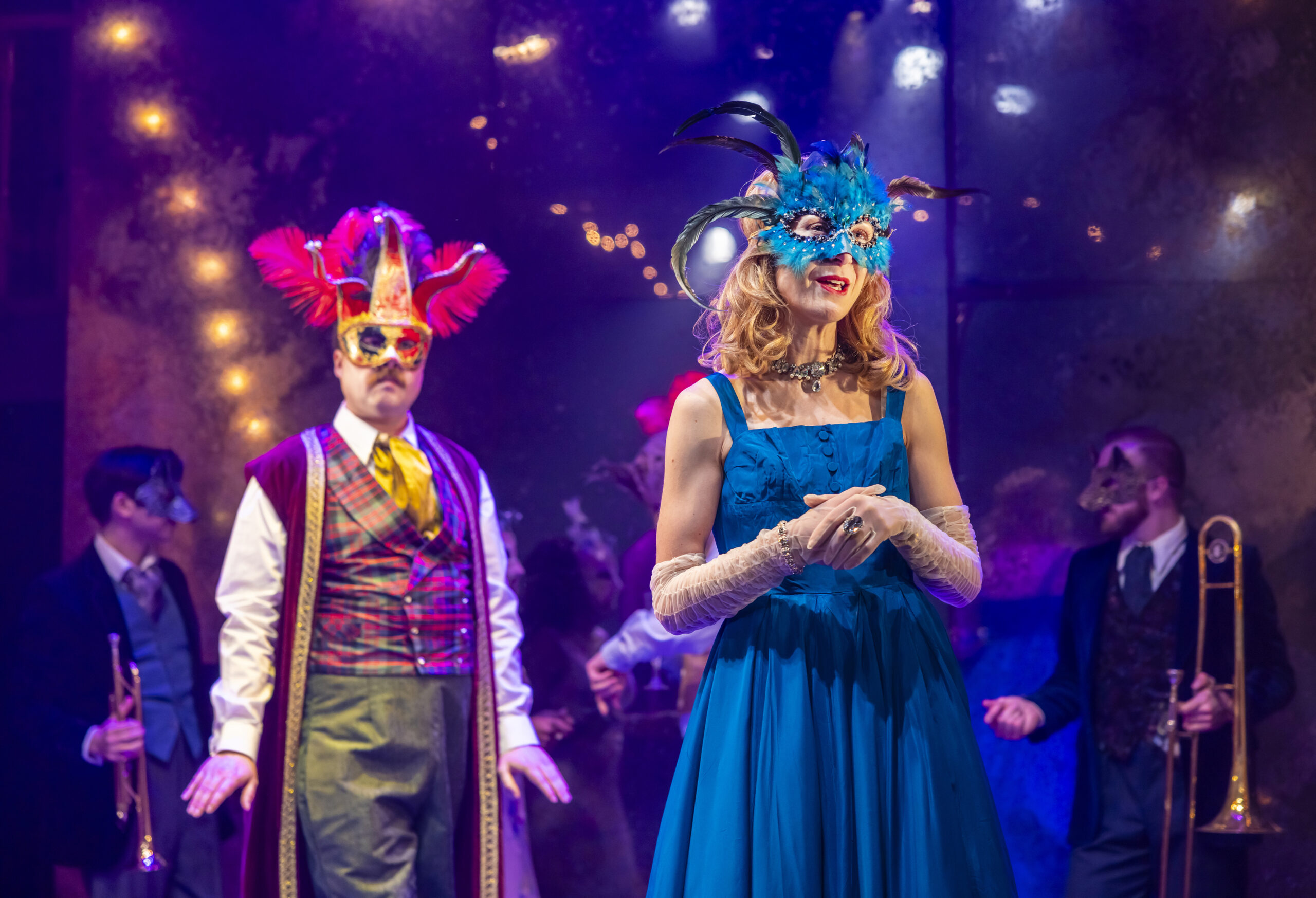
You may know the film which starred Brad Pitt. Forget about it. You may know the F Scott Fitzgerald short story on which it was based. Forget about that. Jethro Compton has relocated The Curious Case of Benjamin Button to Cornwall in the 20th century and has probably created one of the best British musicals of the past decade.
What’s the story? Don’t be put off if I tell you it’s about someone who is born old and over the next 70 years becomes younger and younger.
Think of it as a grown-up fairy tale or simply an excuse for an evening of rousing folk music about love and belonging.
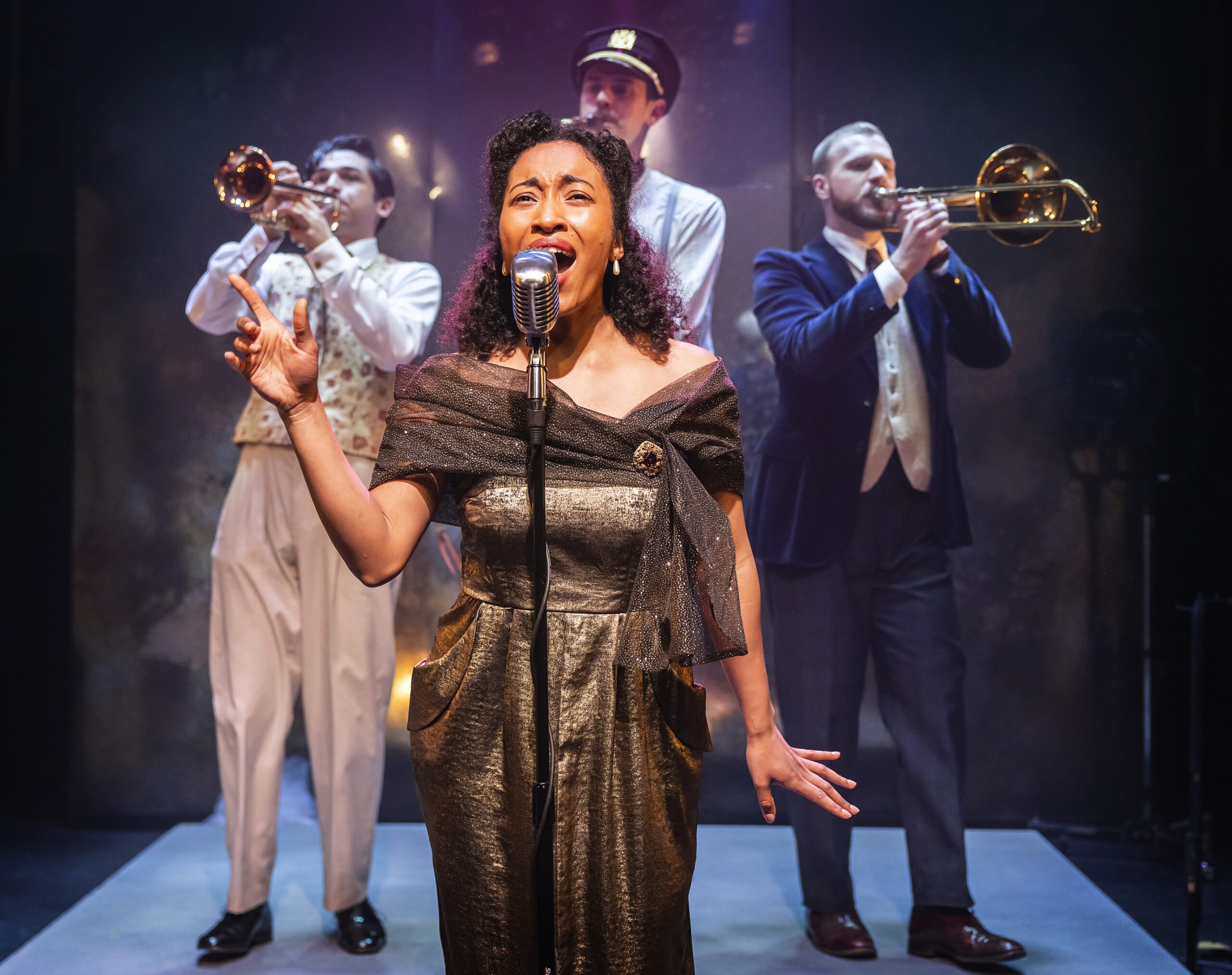
The multi-talented Jethro Compton wrote the book, the lyrics to the songs, designed the set and directed the show. Talking of the set, it comprises rough hewn timbers salvaged from Cornish beaches that, put together as a floor with ramps and stairs and ropes, segues from streets to a pub to a ship. The story is told by the so-called Strangers, played by the talented ensemble of musician singer actors. Each plays specific parts as required but together they are phenomenal.
John Dalgliesh is the de-ageing hero. He doesn’t reverse age by use of makeup, he simply carries himself differently. And in theatre that’s all we need, isn’t it? Because he’s different, Benjamin is rejected by his parents , which leads to him being uncertain about his place in society. Time is very much the theme of this musical but so is place, in the sense of where you belong. And, while Cornwall is in the DNA of this show, love is at its centre. Even so, his love story is tentative with many moments in which he retreats, thanks to his lack of confidence.
The Curious Case of Benjamin Button. Photo: Marc Brenner
Elowen is the caring woman who becomes the love of his life. Played by Clare Foster, she exudes warmth. His two children are played by the excellent Anna Fordham and Oonagh Cox. He has travels and adventures, which take place against the background of major events in the 20th century, particularly the Second World War and the race to the moon.
Along the way, he meets interesting and funny people such as Little Jack, played by Jack Quaron, another person treated with contempt because he is different. In this case, it’s because he appears to be of low intelligence, yet heturns out to possess natural wisdom. But Benjamin’s winding path always leads back to Elowen, where he belongs despite their widening age gap.
It is fascinating to see someone living his life backwards but, while we live our lives from childhood to old age, we are an accumulation of memories that, at any given moment, can take us to any part of our life, so we don’t exactly go forward. And Benjamin’s own experience is very similar to any person who is different, an outcast who needs to find somewhere he belongs, and who eventually fades. Time, which the chorus measures precisely to the second, turns out to be very flexible.
Unlike me, you may find the story too fantastical, too full of coincidences or just a bit thin, but you will love the music, written and arranged by Darren Clark. It has the overall effect of a folk concert in a Cornish pub, underpinning a joyous and moving evening.
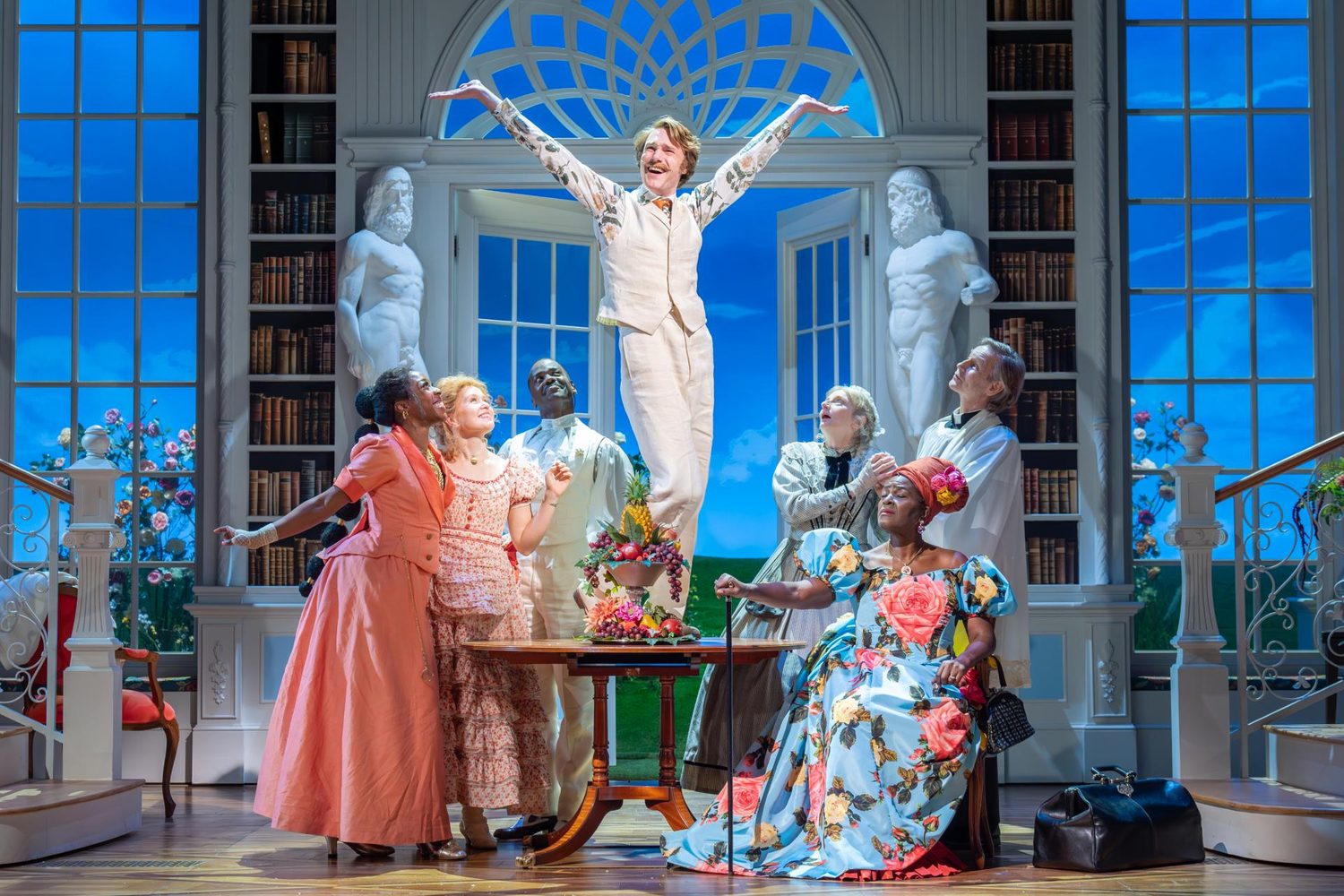
The Importance of Being Earnest. Photo: Marc Brenner
Did you know Oscar Wilde was gay? I’ll be surprised if you didn’t, but after seeing Max Webster’s production at the Lyttelton, you’ll be in no doubt. His subtle references to the Victorian gay community are circled with a pencil, underlined with a marker pen, and coloured in with a fluorescent highlighter in this panto style production.
The generous view would be that Mr Webster has turned the familiar classic into a Pride Party. To me it was like saying the Mona Lisa is smiling, so let’s make that clear by painting a big toothy grin over her mouth. Fortunately, Doctor Who’s Ncuti Gatwa and Sharon D Clarke save the day.
We start with a scene in which Ncuti Gatwa appears in a slinky dress in the middle of what appears to be a gay party. Then the curtain goes up on Oscar Wilde’s actual play, but with added text, added gestures and added modern touches.
Whenever Max Webster’s production sticks to the text, it works really well. The central character Algernon is a kind of proxy for Wilde himself: decadent, amoral and bubbling over with cynical epigrams. Even people who have never seen the play before will probably know some of them, such as ‘In matters of grave importance, style, not sincerity is the vital thing.’
Ncuti Gatwa is a very good Algie: cool, laid back, with a mischievous smile, which he often employs in the direction of the audience. He delivers those epigrammatic lines as they are meant to be- clear and confident, defying argument. That he wears colourful tight-fitting clothes and poses like a cat is all we need to suggest a fluid sexuality. But we get a lot more.
His friend Earnest is played by Hugh Skinner projecting the same kind of puppyish naivety he brought to the character Will in W1A. Both the young men have secrets that will inevitably be exposed.
Earnest, whose real name is Jack, is in love with Algy’s cousin Gwendoline. The main obstacle to their marriage is her mother Lady Bracknell who cross examines him for suitability and discovers that he was abandoned as a baby in a railway station in a handbag, leading to the most famous two word line in theatre history.
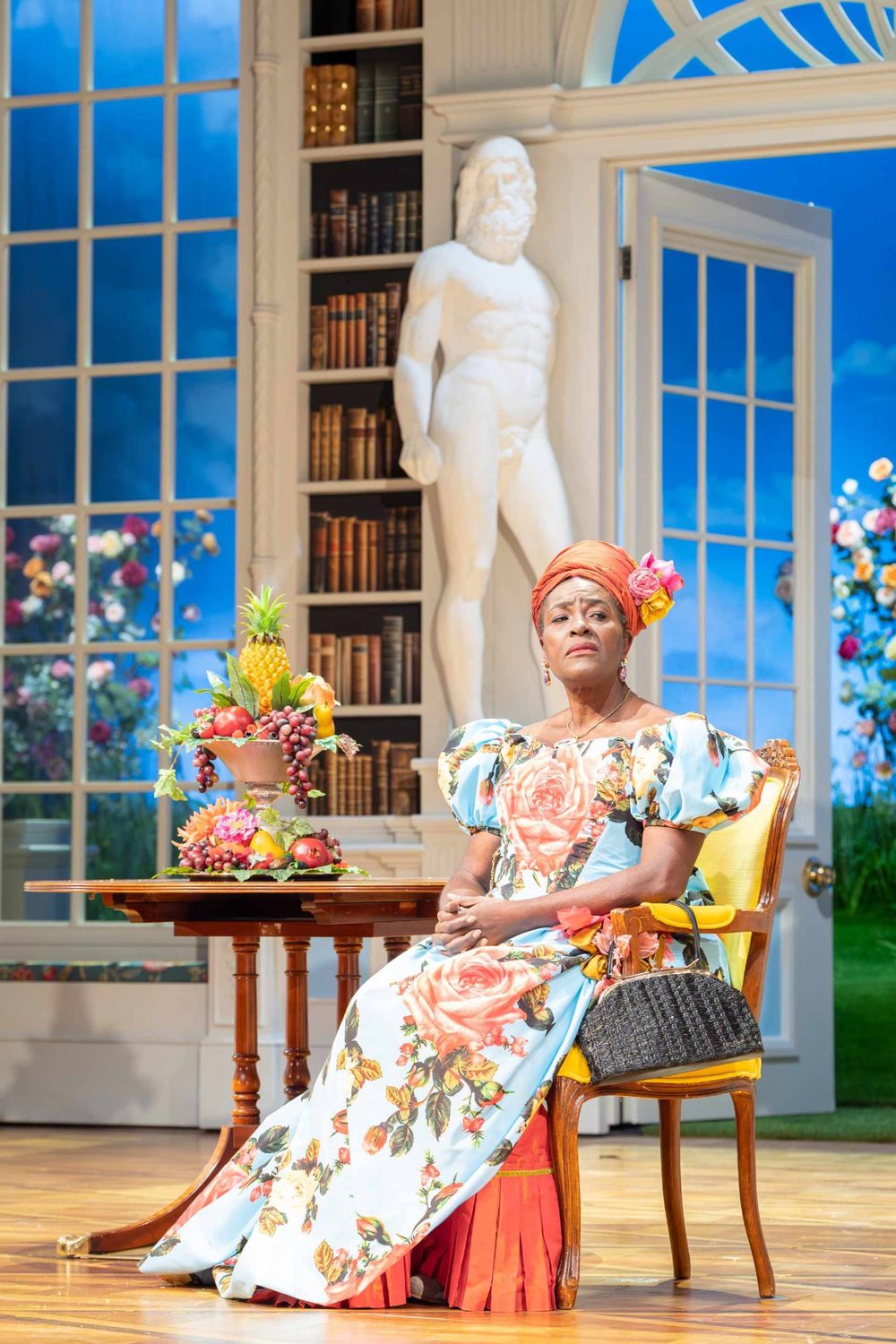
Sharon D Clarke in The Importance of Being Earnest. Photo: Marc Brenner
With all due respect to other members of the cast, Sharon D Clarke is the saviour of the evening. Her Lady Bracknell is every bit as imperious and formidable as she should be, which of course is what makes her pronouncements about the rules of society so funny. You know the sort of thing: ‘Fortunately in England, at any rate, education produces no effect whatsoever.’ Making the character Caribbean in origin is inspired. Her slight lilt gives extra weight to every word. She is as good as any Lady Bracknell I’ve seen, including the legendary Judi Dench.
Before long, Algy too is in love with a woman, namely Jack’s ward Cecily. The girls have in common that they can only love a man named Earnest. I won’t say any more about how the plot rolls out and resolves, in case you’re unfamiliar with it.
Part of the joy of Wilde’s dialogue is that you are left in no doubt that the young women are physically attracted to the men, and more predatory, without actually saying it. Yet, Ronkẹ Adékọluẹ́jọ́ and Eliza Scanlen as Gwendoline and Cecily respectively are required by the production to make clear their sexual arousal with shuddering bodies and flicking tongues. Gwendoline rolls her eyes and gives the audience lascivious looks, while Cecily talks like Miranda Richardson playing the randy Queen in Blackadder.
Far from trusting the audience to pick up the subtext, bits of business are added throughout. And I’m hard pressed to find one addition that doesn’t actually take away from the play’s effectiveness. Here are some examples. To a list of overdue bills from The Savoy is added Dalston Superstore (a contemporary gay bar). When Algie and Jack come through a door, they are singing James Blunt’s You’re Beautiful. Faced with having to ask Lady Bracknell for help, Jack mutters ‘crap’. The celibate Canon Chasuble and Miss Prism, played with gentle affection by Richard Cant and Amanda Lawrence, won’t admit they are attracted to one another. Their skirting around the subject is what makes their relationship amusing, not Canon Chasuble hiding an erection under his hat, which belongs in a 1970s farce. When volumes of books which each cover a letter of the alphabet are picked out, the first three are G A and Y. Subtle it ain’t.
I’m fully at ease with modernising classics. It can breathe new life in them, it can add to our understanding of them. And I also think it’s great that we should honour Oscar Wilde as a gay man who courageously exposed Victorian hypocrisy and was persecuted for it. I like challenging work but, frankly, this production does Wilde and the audience – even non theatregoing Whovians- a disservice by seeming to treat the play as if it’s too subtle for its audience to appreciate.
This production is running over Christmas which may explain the decision to turn it into an adult pantomime. In fact, it’s great fun if you ignore the assault on the play. There’s even a panto style walk down in which all the cast wear glittering sexy costumes and enter to beat music, encouraging clapping along rather than applause.
By the way, all the dazzling costumes and the sets, designed by Rae Smith, are fabulous. They are recognisably Victorian within a false proscenium arch, so the design pays homage to the style of a late Victorian stage play while using bright light and colour to open it up, in a way that the direction aspires to but doesn’t.
Oscar Wilde triumphs despite the production, thanks to Ncuti Gatwa, Hugh Skinner and Sharon D Clarke doing justice to his witty, perceptive script.
Paul paid for his ticket. He saw the last preview before the official opening night. This review was slightly revised on 2 December 2024 for the purpose of clarification.
The Importance of Being Earnest is at the National Theatre until 25 January 2025. Tickets from nationaltheatre.org.uk
It’s a Mystery why Witness For The Prosecution is a Success. Here are the Clues
★★★
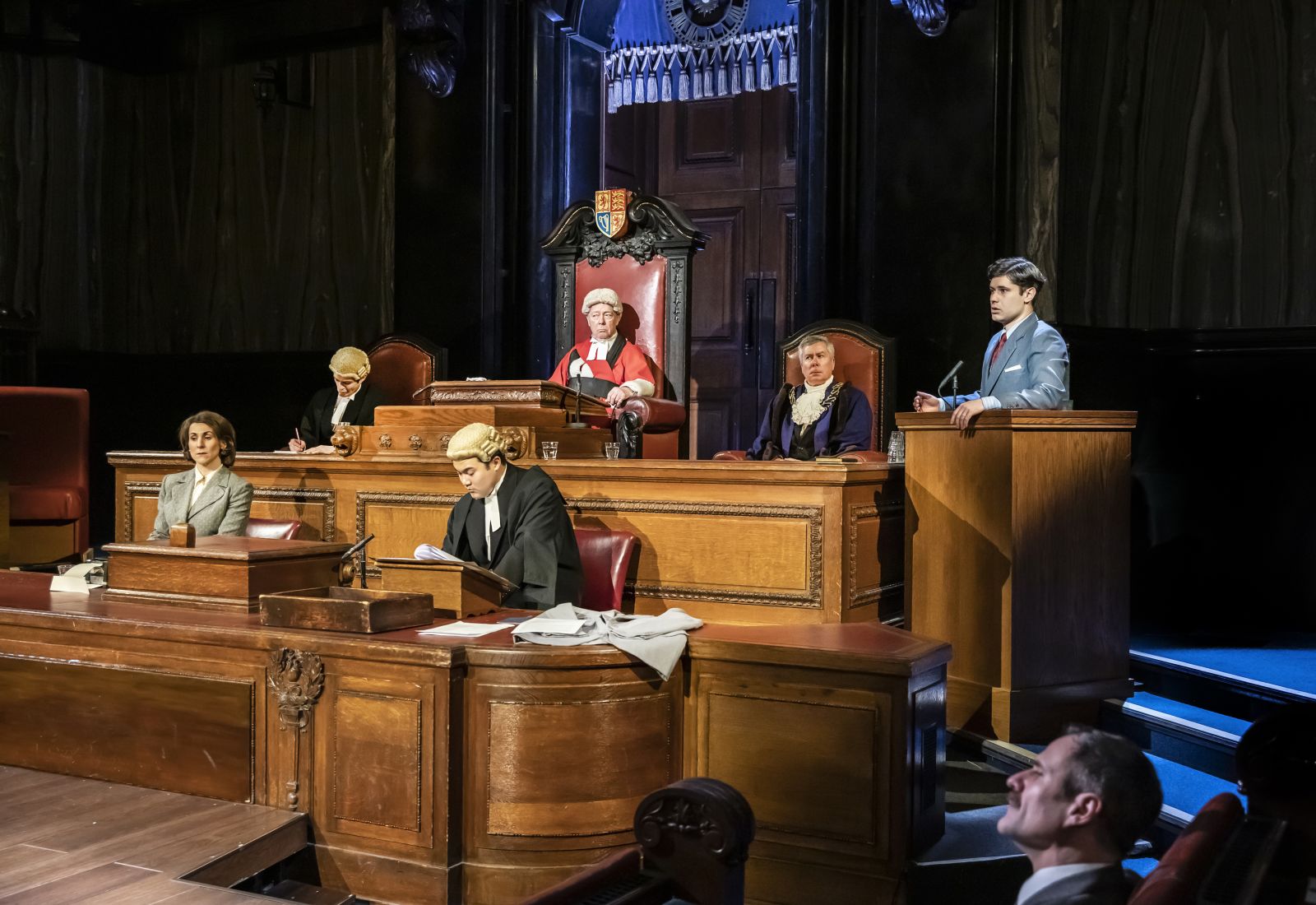
Witness For The Prosecution at County Hall. Photo: Pamela Raith
It’s been on since 2017 but somehow I never quite got round to seeing Witness For The Prosecution. To be honest, there was a little bit of prejudice involved. Partly, much as I enjoy an Agatha Christie novel, I have seen her plays before and found them a little stilted. Secondly, it seemed a bit gimmicky to be presenting the play in the old County Hall. The mystery is, it works. So, I’ve engaged my little grey cells and I think I’ve solved the mystery of why it’s a success.
The first clue is the venue. County Hall, near Waterloo, and by the Thames, is a magnificent building. It was the home of the old London Council. Just entering is a stunning experience. The auditorium for Witness For The Prosecution is the former debating chamber. Consequently, it has very comfortable seating, with a terrific view- you wouldn’t expect anything less for the politicians running the capital city. It’s almost worth going to see the play just to sit in the chamber.
Although you can regard setting the play there as a gimmick, it may be more generous to call it ‘site specific’. The important thing is, it works. That’s partly because the auditorium has the grandeur you associate with the Old Bailey, where most of the play is set, and partly because the layout of the chamber with two sides facing one another matches the adversarial nature of a court case, which is the main subject of the play.
Then there’s the play itself. It starts with a scene in the chambers of a defence barrister Sir Wilfrid Robarts. This seems to confirm your worst fears. In 1953, when Agatha Christie wrote Witness For The Prosecution, theatre was changing- it’s the same year that Samuel Beckett’s Waiting For Godot premiered, and three years before John Osborne‘s ‘kitchen sink’ drama Look Back In Anger opened- both of which are being revived in the West End this year, by the way. But the style of this play looks backward rather than forward. The people are middle class, and everyone speaks as they ought to, rather than as they would. The dialogue is like any standard so-called ‘drawing room’ play- or film- from the early part of the century.
Then, we are taken to the criminal court. The place where to this day, they still behave like people from the 1950s, or 1850s even.
The clue here as to why Witness of The Prosecution is a success against the odds is in the talent of the creators of this production, director Lucy Bailey and designer William Dudley, to see the potential for this old building as a setting for a play mainly taking place in a courtroom. Chris Davey’s lighting is pretty impressive too- emphasising drama and contrast.
And the final clue: Agatha Christie herself. Now her characters may be ciphers, in the sense that they exist purely in the service of the twisty legal drama and don’t have a lot of depth, but the plot is grippingly good. It’s not just a clever story full of mystery and twists (although it is) but it’s also supplied with a lot of realistic detail. Ms Christie studied many court cases and had the help of a barrister to make sure the legal details are accurate.
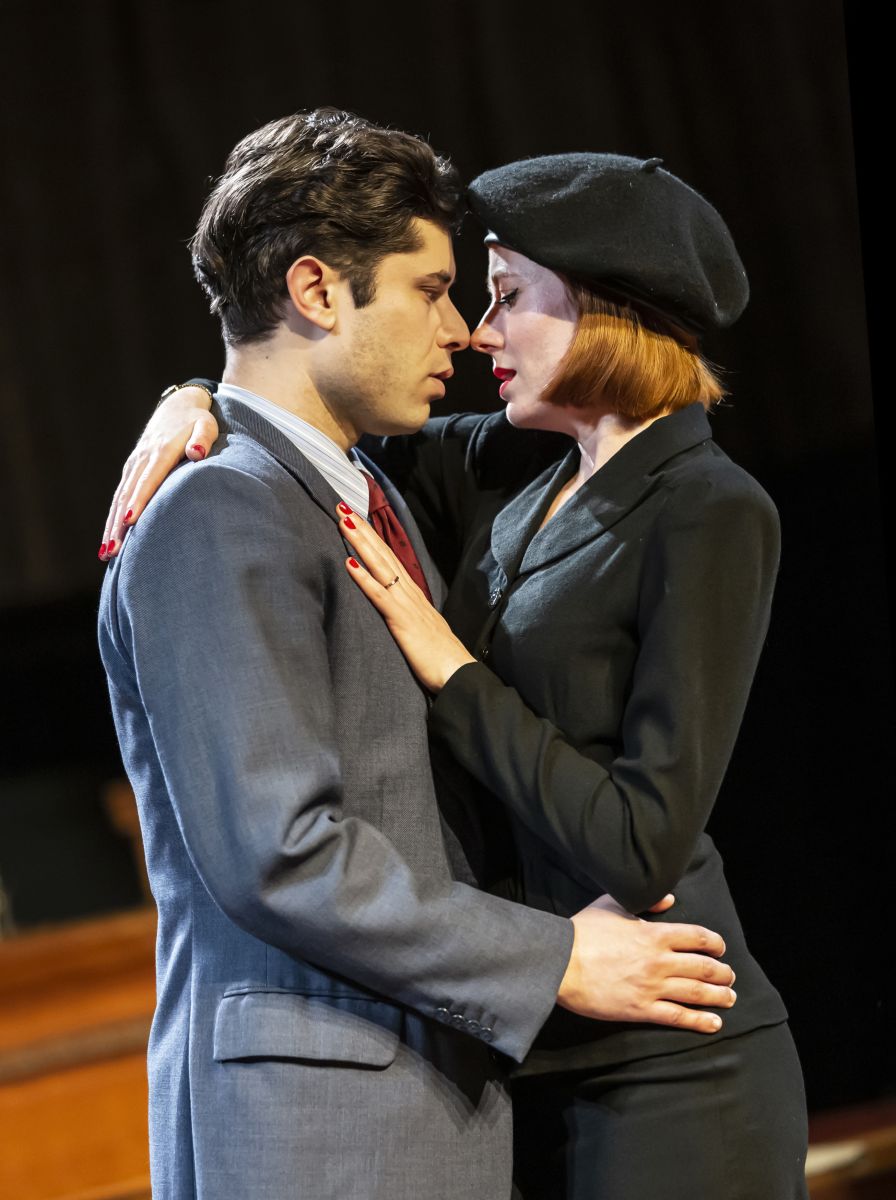
George Jones and Meghan Treadway in Witness For The Prosecution. Photo: Pamela Raith
That helps a lot. But so does her story. We begin with Leonard Vole, a handsome cockerney lad accused of murder. He protests his innocence and we believe him but he is clearly too honest and too naive for his own good. The cast changes every so often but currently George Jones plays him with conviction – sorry, that’s probably an inappropriate word, better to say, ‘convincingly’. Leonard had befriended an older well-off woman who was found dead one evening not long after he had visited her, and it turns out she’s left him her fortune.
It’s a challenge to defend him but Sir Wilfrid, with humour and a degree of arrogant self confidence, decides to take on the case. Oliver Boot nails the role and dominates the stage, as he should. Sir Wilfrid and Leonard’s concerned solicitor Mr Mayhew, played by Ewen Cummins, subsequently discuss the case with condescension, patronising humour, and a dash of misogyny.
And the case goes well. A benign and predictably stuffy judge Mr Justice Wainwright is played by David Killick with authority and a twinkle in his eye, as he watches Sir Wilfrid run rings around the exasperated prosecution lawyer Mr Myers, played by Gyuri Sarossy who keeps bouncing back like a punch drunk fighter. He destroys witness after witness including the forensic scientist Dr Wyatt played by Nicholas Chambers, and the vindictive housekeeper Janet MacKenzie, given an scene stealing turn by Veronica Roberts. Finally, Leonard’s wife appears as a witness for the prosecution and, under oath to tell the truth, demolishes Leonard’s alibi. It’s a bravura performance by Meghan Treadway.
Why has she done this? The second act reveals all. And you realise as twist follows twist just how much Ms Christie has misled you, maybe even taken advantage of your expectations of a traditional ‘drawing room’ play. You see that, dammit, just like the people who meet her character Miss Marple, you’ve underestimated the Queen of Crime.
It turns out to be a very satisfactory evening, well put together, well acted and well produced in a striking venue. Mystery solved.
Witness For The Prosecution can be seen at the County Hall in London for the foreseeable future.
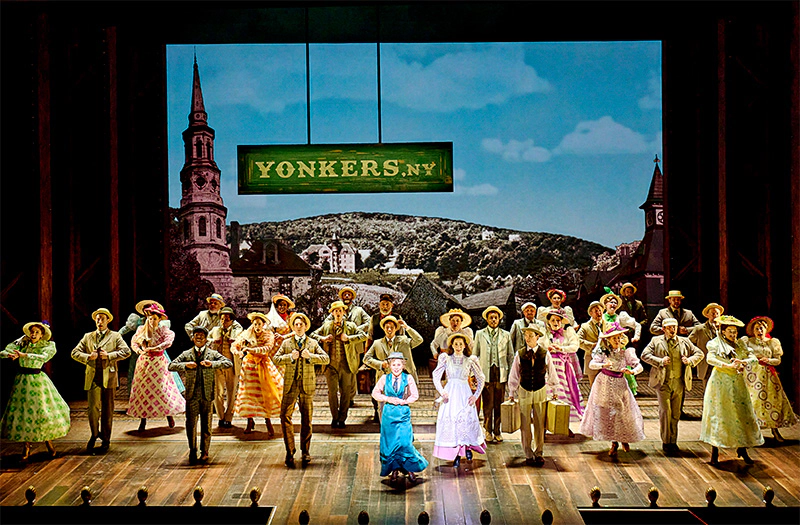
Imelda Staunton and the cast of Hello, Dolly! Photo: Manuel Harlan
It’s a legendary show from the Golden Age of Musicals. It’s one of the most successful shows of all time in terms of awards and performances. Yet (whisper it) Hello, Dolly! isn’t very good. Michael Stewart‘s book comprises a ludicrous plot and is saved only by the amusing machinations of its main character. Jerry Herman contributed hardly any memorable songs except the title number and Dolly’s other great song Before The Parade Passes By. Worse, the score also features the execrable It Only Takes A Moment.
Its greatness lies in two redeeming features: the opportunity to put on magnificent chorus numbers, like Put On Your Sunday Clothes (which I admit has a nice hook) and the title number; and providing a vehicle for a female musical star to shine. Fortunately, if a production can get those right, that’s all it needs. And this new production, directed by Dominic Cooke who was responsible for the National Theatre’s legendary Follies, does get it right.
For a start, it is a sumptuous production in the great tradition of the Golden Age. The large London Palladium stage is not only packed with people, it is filled with Rae Smith‘s set and costumes that conjure up the glamour of the end of the nineteenth century. Among its delights are a conveyor that stretches the width of the stage and creates even more movement, a full-size train that is jaw-dropping in its execution, and an enormous staircase to accommodate the arrival of Dolly for her big number.
The choreography was originally by Gower Champion, who wowed Broadway and gets a credit to this day. Bill Deamer is named as choreographer of this production, and his chorus numbers are magnificent in their scale, co-ordination and vitality. There are something like three dozen members of the company but, in case you’re wondering, there’s not much opportunity for individual brilliance on the dance floor.
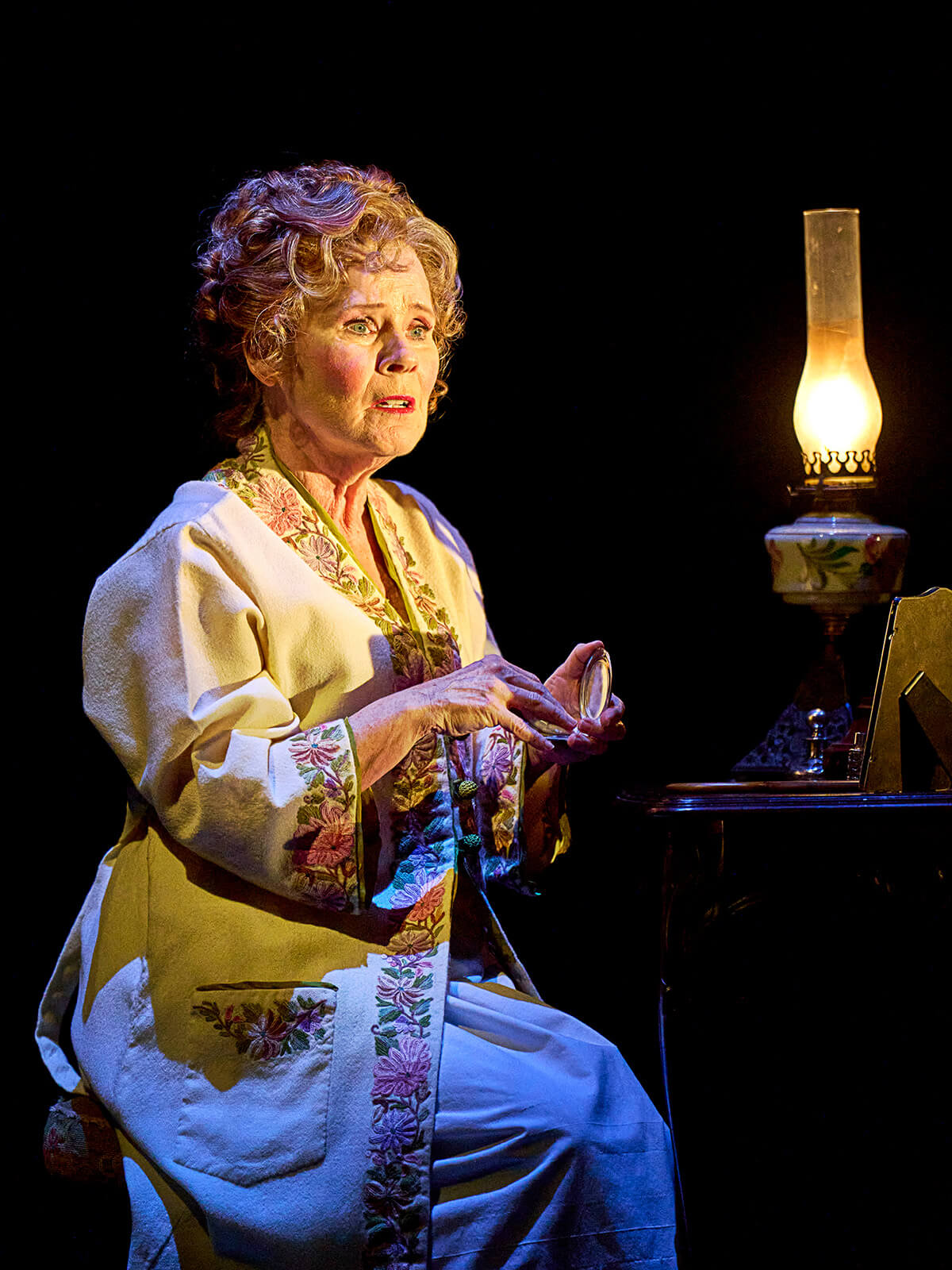
Imelda Staunton in Hello, Dolly! Photo: Manuel Harlan
Then there’s the star. Carol Channing first played Dolly, the matchmaker and all-round entrepreneur, to massive acclaim. Since then, many top musical stars have added it to their cv, including Ethel Merman, Mary Martin, Pearl Bailey, Bernadette Peters and of course Barbra Streisand in the film version. Can any have bettered Imelda Staunton? I don’t see how. She has a great voice that hits the back of the circle when it needs to, but also an ability to plumb a depth of pathos you didn’t even realise was there in a potboiler song like Before The Parade Passes By. Plus she injects the whole proceedings with a level of energy that could single-handedly power the government’s new Great British Energy company.
Fans of her film and television work would probably have no idea of her ability as a singer, but she has played the Baker’s Wife in Into The Woods, Miss Adelaide in Guys And Dolls, Mrs Lovett in Sweeney Todd, Sally in Follies, Gypsy Rose in Gypsy, and now Dolly Levi. All triumphantly. Only Mame remains before she has a full house of the great musical roles for mature women.
She is supported by a strong cast but the characters don’t give them much to get their teeth into. In fact, the term ‘character’ may qualify as misinformation. Andy Nyman is an excellent actor but as Dolly’s prospective husband, the rich but miserable Horace Vandergelder, he has little to do except be irascible while his suitor draws him into her web. The same goes for Jenna Russell as Irene Molloy, Dolly’s friend who has her own romantic ambitions: she does what she does very well but she hasn’t much to do. Irene’s romantic interest Cornelius Hackl is a traditional (for which read ‘cliché’) ‘juvenile lead’, with little to do except look pretty and behave cheekily. Harry Hepple handles the role well. Their friends Minnie Fay and Barnaby Tucker are supposed to be the comical parts but remain resolutely unfunny despite the Olympian efforts of Emily Lane and Tyrone Huntley.
With due respect to all of company and creative team, the evening belongs to Imelda Staunton.
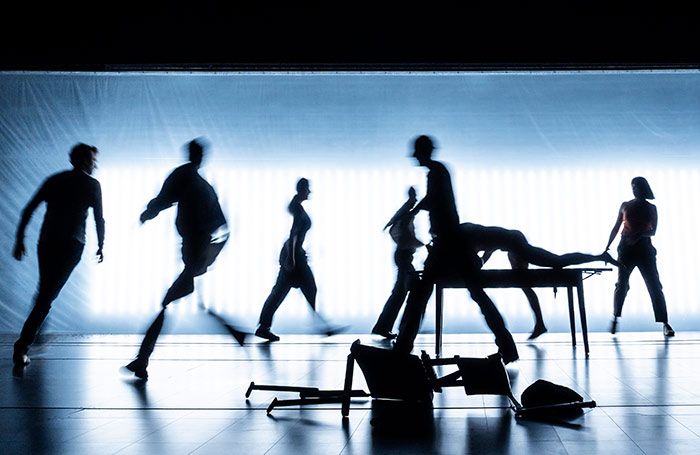
Theatre de Complicite’s Mnemonic at the National Theatre. Photo: Johan Persson
Even now, as I reconstruct my memory of Complicité‘s Mnemonic in order to write this review, it has changed from my instant reaction after the show. Which is only right. This is a play about how memory works, the way it is constantly revised by new experiences, how it is vital for imagining the future.
But it’s more than a trip down Memory Lane: it’s a trip across Europe and a journey 5000 years into the past. It becomes a search for origins, and shows how our past, both personal and shared, informs where we are now and where we might go.
When I came out of the Olivier auditorium at the National Theatre, I was feeling I’d seen a familiar but nevertheless impressive use of mime to tell interesting but fairly simple stories. Now, I feel I saw something hugely important. Why the revision? Partly it’s because I’ve thought about it, but also it’s because the ongoing riots in Britain, which seem to be triggered by a desire to defend a vision of the past against change blamed on immigrants, have reminded me how Mnemonic is not an academic exercise but an examination through theatre of a contemporary issue that will affect all our futures.
I’m sure you know but, just in case, a mnemonic is any device or trick we use to jog our memory, from tying a knot in your handkerchief to using the first letters of words in a phrase to remind you of a sequence. For example: Richard Of York Gave Battle In Vain for the colours of the rainbow. This production of Mnemonic itself could be a mnemonic for those who saw the original and are taken back 25 years to what will now be a memory revised by the intervening years and this reimagined version.
In the intervening years, Complicité‘s techniques have come to seem less experimental, some are even commonplace. Few West End musicals are as naturalistic as they once were: they expose how the show is constructed, they use mime. But the book usually takes precedence. Very few productions give equal weight, as Complicité do, to every aspect: sound, light, set, props and the actors’ bodies in what you might call ‘total theatre’ to tell their stories, with text simply the starting point.
We start with a bare stage and a chair. In the style of a rambling comic, a man gives an introduction to the physiology of memory: how each new memory draws on and changes our existing memories (thanks to the hippocampus since you ask). We are invited to put on an eye mask and remember our past, then imagine being a child with our parents and their parents and their parents’ parents, going back through 5000 years at which point everyone on the planet is one of our ancestors which relates neatly, too neatly perhaps, to a recounting of the real life discovery of a human body frozen in the Alps for 5000 years, the so called Ice Man.
Parallel to this is the story of Omar whose girlfriend Alice has left him abruptly to search across Europe for her long-lost father. Cue many fragmentary adventures on a journey which she remembers and recounts, possibly unreliably. In a bravura performance by Eileen Walsh gives a bravura performance as Alice, increasingly frantic and riven with grief, ploughs her way through the diaspora of Jews, Greeks, Arabs and more who have spread across the world to escape danger or find a better life. It seems we are all migrants or the descendants of migrants, and may yet migrate ourselves.
The many possibilities of her ancestry are laid on thickly but show the futility of latching onto one past when you have an almost infinite number, all of which inform your present and, most importantly, your future. The determination to cover so much ground in Alice’s story makes it hard to get involved but it is told with the verve that Complicité are famous for. In particular, there is a moment when her money is stolen, and the memory of someone bumping into her is repeated and repeated, with variations, until finally we see exactly how she was robbed.
A stand out performance from Khalid Abdalla
The tale of the 5000 year old Ice Man was also, on the surface at least, an origins story rather that one obviously about memory. In the gradual development of the archeologists’ understanding of who he was and how he died, we do see an analogy of how memory works. In a wonderfully satirical moment, the scientists are shown sitting in a row at a conference, each imposing their own beliefs onto their interpretation of the scanty evidence that has been uncovered- so the Ice Man is said to have been a shaman, a trader, a hunter and so on. More than that- and it’s rare that Complicité works only on one level- there is the implication that as our common ancestor, he is all the things we are.
At a time when politicians, populists and owners of social media use fear and division to their own ends, it is a good moment to speak up for our common humanity and the way all history flows into each of us and out again.
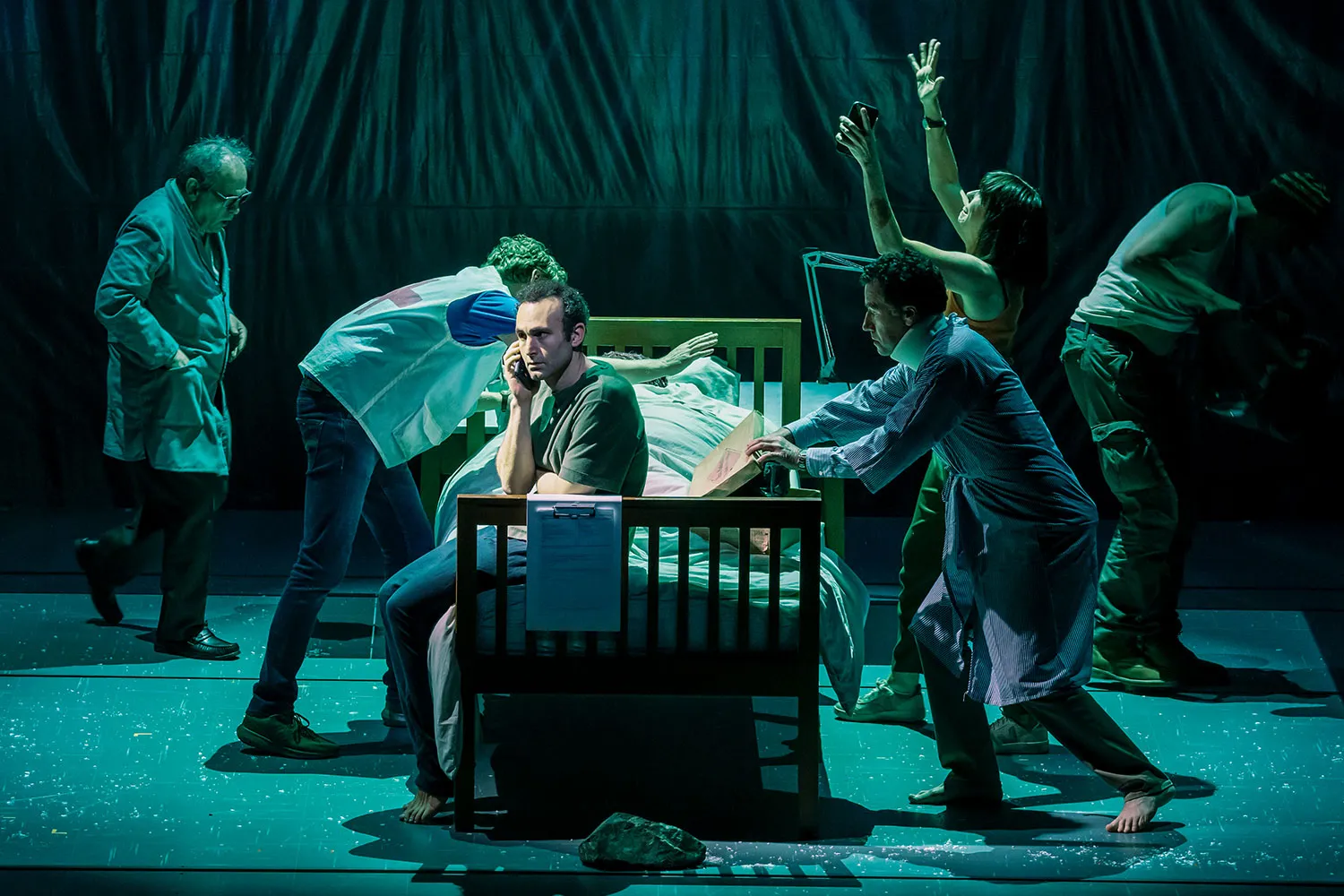
Mnemonic at the National Theatre. Photo: Johan Persson
But it would be pure didactics without Complicité‘s outstanding way of creating theatre to convey the stories. A bed, a table, a couple of chairs are all that was needed most of the time in Michael Levine‘s spare set. Dialogue is echoed, movements repeated, actors flow around the stage like migrants might flow around the world. A seemingly simple chair transforms into a puppet that takes the last steps of the Ice Man before he died.
At the climax of the evening, the various characters follow one another faster and faster round the stage, as if in a vortex, in which their individuality becomes blurred.
You can imagine this is no walk in the park for the actors. Nearly all are required to take on multiple roles, but also to mime and move with precise choreography. Tim McMullan is tremendous as a senior archeologist full of wonder, humour and enthusiasm. Richard Katz, Laurence Laufenberg, Kostas Philippoglou and Sarah Slimani are all superb.
But the stand out performance comes from Khalid Abdalla, whom you might recognise as Dodi Al Fayed in the TV series The Crown. He plays both Omar, falling apart as he misses Alice, and the Ice Man, picked apart by archeologists. In both roles, he spends much of his time naked, because that’s how the corpse was discovered, and because that’s how Alice likes to see Omar. In both cases, nakedness seems to become a symbol of humanity stripped of all defences and pretences. Without clothing, they are not part of a tribe or a profession or any group, they are Everyone, at either end of 5000 years. Just as the Ice Man is at the mercy of scientists, journalists and nationalists, so Omar’s future is subject to Alice’s wishes.
All of which may seem a long way from memory, or indeed a mnemonic, but what Complicite‘s artistic director Simon McBurney has pulled together, in collaboration with the company, is a piece of pure theatre- in the sense that it would not work as film or any other art form- that evokes how memory of the past is reformed in the present and gives us the possibility of moving forward together. What better way than through the shared experience of theatre to feel our common humanity? My memory says that, despite its weak stories, I witnessed something very special.
Mnemonic can be seen at the National Theatre until 10 August 2024.
Starlight Express at the Troubadour Wembley Park. Photo: Pamela Raith
Andrew Lloyd Webber’s Starlight Express is back, and this time it’s a new production in The Troubadour, a warehouse-like venue that has been transformed into an immersive space. It’s the tale of a children’s train set come to life, and underdog Rusty being inspired to win a race with other engines. It may sound like a children’s show but the lively songs and roller skating cast provide plenty of adults to enjoy. Most, but not all, reviewers liked it, some loved it. It was generally agreed to be a spectacular production.
[Links to full reviews are included but a number are behind paywalls and therefore may not be accessible]
Dominic Cavendish in the Telegraph (5★) was so knocked out by this production, he saw stars, five of them. It’s a ‘head-spinning wonderland’, ‘jaw-dropping’, ‘part theme-park ride, part theatrical revolution’, he enthused, with ‘much magic and life-affirming meaning’. He ended, ‘The energy and bravura of it all are frankly out of this world.’
Paul Vale for The Stage (5★) also gave full marks: ‘(Tim) Hatley’s design is a fusion of industrial brutalism and disco chic, with a racetrack that weaves around the auditorium with ramps, tunnels and a revolve. Gabriella Slade’s sculpted costumes are a meticulously constructed mix of colourful body armour and Lycra that reflect each character.’
The Daily Mail‘s Patrick Marmion (4★) proclaimed, ‘This eyeball-scorching, ear-blasting revival of Andrew Lloyd Webber’s train-racing musical-on-roller-skates is an audio-visual blitzkrieg, the like of which I’ve never seen before.’ Arifa Akbar in The Guardian (4★) was impressed: ‘tailor-made for the Troubadour’s massive auditorium, it erupts like a Vesuvius of light, sound, projection and dry ice under the direction of Luke Sheppard’. The songs, she said, ‘are masterfully sung all round, alongside the athletic feats of the cast.’
The Independent‘s Tim Bano (4★) confessed, ‘It’s more spectacle than sense, an extraordinary creative onslaught, with songs about steam engines cranked out at max volume, all designed to delight your inner child – which it really does.’ He expanded, ‘Everything about it is maximalist. Tim Hatley’s set has ramps and revolves and sliding doors, costumes by Gabriella Slade turn humans into Transformers/Power Rangers/living cartoon things.’
‘Starlight Express is possibly one of the world’s most bizarre musicals,’ declares Aliya Al-Hassan at Broadway World (4★). Nevertheless, ‘The auditorium itself feels like being thrown into the middle of an arcade game’ and she concludes, ‘As a theatrical experience, this will make a life-long impression on many young theatre-goers’.
Marianka Swain for LondonTheatre (4★) sounded like she needed to breathe into a paper bag: ‘the actors playing trains whizzed right past me on roller skates at heart-pounding speeds. But that’s just the beginning of this mind-blowing state-of-the-art experience.’ She continued, ‘This tech-wizard production also boasts the biggest lighting rig I’ve ever seen in theatre, and a phenomenal display from Howard Hudson’ and concluded, ‘It’s an awe-inspiring stadium gig-meets-theme park ride of a show’.
The Times’ Clive Davis (4★) thought it was a great show for children: ‘The director Luke Sheppard moves things along at a gallop.’
Time Out’s Andrzej Lukowski (3 ★) admitted, it’s ‘a lot of fun and has no aspirations to be anything other than exactly what it is.’ ‘It is technically dazzling,’ he added. Dominic Maxwell in the Sunday Times (3 ★) summed up: ‘mostly catchy songs, a crack cast, choreography and design let the trains take the strain of anything so tedious as rational thought.’
There’s always someone who’ll throw leaves on the line, and on this occasion it’s Fiona Mountford at the i (2★) Among the many things she disliked was the way ‘Large video screens pump out irredeemably naff 80s-style graphics’. She was left in the sidings by the production: ‘this slick but soulless show left me none the wiser’
Critics’ Average Rating 3.9★
Value rating 38 (Value rating is the Average Critic Rating divided by the typical ticket price.)
Starlight Express is at the Troubadour Wembley Park Theatre until 19 April 2026. Click here to buy tickets direct from Troubadour Theatres
If you’ve seen Starlight Express at the Troubadour, please add your review and rating below
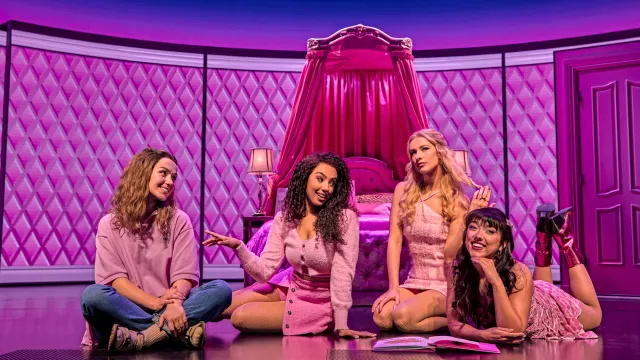
Mean Girls at the Savoy Theatre. Photo: Brinkhoff Moegenburg
Mean Girls, in the words of WhatsOnStage’s Sarah Crompton, is ‘a cautionary musical tale of high school rivalries, corruption and betrayal wrapped in a very pretty pink bow‘. Tina Fey’s stage musical version of her movie script was a Broadway hit; six years later, it has arrived in the West End. Was it worth the wait? The critics generally liked Tina Fey’s book (script) but there was disagreement on the quality of the songs.
[Links to full reviews are included but a number are behind paywalls and therefore may not be accessible]
Fiona Mountford in the i (4★) was a fan: ‘Jeff Richmond (composer) and Nell Benjamin (lyrics) supply a highly tuneful score that is a riot of peppy, poppy songs; unusually for a new musical, I came away humming several of the numbers.’ She said, ‘Director/choreographer Casey Nicholaw…certainly knows how to concoct a slick production’.
Adam Bloodworth at CityAM (4★) was equally enthusiastic: ‘it feels freshly powerful for a new generation rather than treading in the footsteps of the original. That’s mainly thanks to Nell Benjamin’s pumping musical score that neatly translates the sassy characters’ stories onto the stage, and Casey Nicholaw’s direction and choreography, which is gripping and pacey…it feels freshly powerful for a new generation rather than treading in the footsteps of the original.’
Sarah Crompton at WhatsOnStage (4★) discovered ‘a book as corrosive as acid but much funnier’. She had a reservation: ‘The problem is that the songs, with music by Fey’s husband Jeff Richmond and lyrics by Nell Benjamin, are syrupy where the script is sharp…they crucially extend the show…to a slightly sagging two and a half hours.’ She concluded, ‘All the skill involved makes it hard not to succumb. This is a genuinely enjoyable show with its heart in the right place’.
Despite describing it as ‘mere chaff’, the Telegraph’s (4★) reviewer called it ‘a rare combination of warmth, goofiness, snarky wit and perceptiveness.’ It came across to Susannah Clapp in The Observer (4★) as ‘a friendly, popular show‘.
Chris Wiegand for The Guardian (3★) felt ‘too many routines are efficient rather than euphoric. The pristine school surroundings and several bland songs result in a sometimes flat production’. He conceded, ‘It’s often fun, and is well cast and impressively acted, but just needs an extra shot of dazzle and acidity.’
The Sunday Times’ Dominic Maxwell (3★) ‘found an oddly sluggish first half’ with songs that ‘run the gamut between the passable and the adequate’. Fortunately, ‘Jokes still land, the acting is terrific and the songs have more emotion to play with as the story clicks into gear in the second half.’ His colleague at The Times, Clive Davis (3★), said, ‘it’s engaging enough, although Fey’s one-liners linger longer in the memory than most of the bubblegum songs’.
Nick Curtis in the Standard (3★) thought it was a ‘breezy, arch but boneless musical adaptation’ with ‘poppy, mostly forgettable songs’. He found, ‘You find yourself wishing for each number to end so we can get back to Fey’s insouciant wit.’
Anya Ryan for The Stage (3★) was disappointed that ‘Nothing feels surprising.’ However, ‘Jeff Richmond and Nell Benjamin’s poppy songs feature plenty of bangers’ and ‘Fey has certainly put her finger on something: she knows girls can be savage, sly and criminally mean’. She is sad that ‘It’s just a shame then that the constant re-churning of this story is starting to feel soulless’.
Tim Bano in The Independent (2★) wasn’t mean exactly,but he was sarcastic: ‘If the movie didn’t exist, this would be fine. I mean, the score by Fey’s husband Jeff Richmond would still be a bit anodyne, every song filler-y, most of them unmemorable, the direction by Casey Nicholaw functional, his choreography fruitlessly maximal, the digital set a bit empty and unimaginative.’
Critics’ average rating 3.3★
Value rating 37 (Value rating is the Average Critic Rating divided by the typical ticket price.)
Mean Girls The Musical can be seen at the Savoy Theatre until 6 April2025. Buy tickets direct
If you’ve seen Mean Girls at the Savoy Theatre, please add your review and rating below
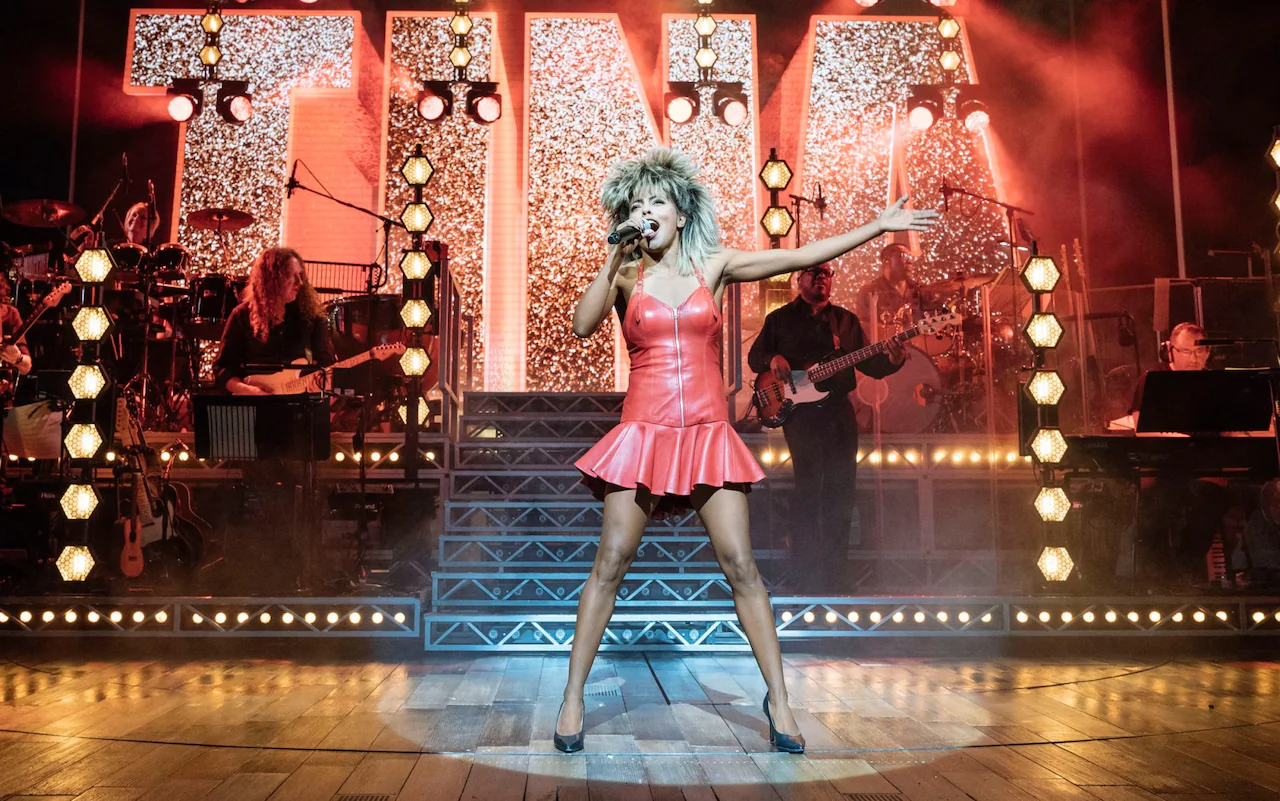
Tina: The Tina Turner Musical. Photo: Manuel Harlan
Most reviews of Tina: The Tina Turner Musical date back to its opening in 2018. The reviewers often gave its then star Adrienne Warren as much or more praise than the musical. This makes it hard to decide how much difference her successors will make to the evening’s entertainment. Having said that, there’s no reason to suppose the current lead is any less impressive.
[Links to full reviews are included but a number are behind paywalls and therefore may not be accessible]
Dominic Cavendish of the Telegraph (5★) called it ‘slickly choreographed, beautifully designed and roof-raisingly well-sung bio-musical.’ Neil Norman in The Express (5★) was another evangelist for the show, going so far as to say: ‘This is one of those shows that has healing power.’ He enthused, ‘Phyllida Lloyd’s dazzling production has you in its grip throughout.’
The much-missed Michael Billington in The Guardian (4★) described it as ‘a heady celebration of triumph over adversity’…’both intelligent and consistently good to look at’ ‘As bio-musicals go,’ he said, ‘this is as good as it gets.’ Paul Taylor at The Independent (4★) proclaimed, ‘It has everything going for it.’ He cites the back catalogue and the ‘inspiring story’. He did have reservation: ‘Katori Hall’s book feels like a brisk summary of events, as it hops too evenly from one episode to another.’ In complete contrast, Anne Treneman in The Times (4★) said, ‘the story rarely dips into the superficial.’ For her it was ‘a show that reaches the parts most bio-theatre doesn’t touch.’
There were momentsTim Bano’s review in The Stage (4★) that made one wonder if the four stars were acting as a fifth column to lure readers in and then put them off: ‘nothing about the production is particularly interesting or innovative. It’s a standard bio-musical’ and ‘The design is unimaginative, the story skeletal’ and ‘pure hagiography’. Even some of his praise is of the ‘with friends like these’ quality: ‘wrapped around the bare bones of this extraordinary woman’s life, we watch a Tina Turner tribute band of supreme quality’. But he was absolutely clear the musical is ‘incredible’.
Fiona Mountford writing in those days for The Standard (3★) didn’t share the enthusiasm of the above. ‘this musical never fully sparks into life,’ she opined, explaining, ‘the material surprisingly lacks rigour, too often staying in soft-focus when a more forensic examination is required.’ ‘Simply the best? Not quite,’ she concluded.
‘Is a feelgood jukebox musical the absolute best medium to tell a story about domestic abuse?’ questioned Andrzej Lukowski at Time Out (3★) and answered ‘too often Phyllida Lloyd’s production struggles to make a sensitive synthesis of the two.’ Lloyd directs fluidly and at a pace, but there is, also, a weird feeling of it being clogged with ephemera.’ Despite his reservations, he concedes ‘it’s an entertaining night’.
Michael Arditti for the Sunday Express (3★) was possibly the least appreciative, calling it ‘a banal and scrappy account of the singer’s rise’ and commenting: ‘it is less an integrated musical than a Tina Turner tribute show with a highly accomplished central performance.’
It always fascinates me the way critics bring their own expectations to a show. So while Michael Billington (The Guardian) lamented ‘I’d have liked to have heard more about how her Baptist upbringing and Buddhist conversion sustained her during the dark times.’ Time Out’s Andrzej Lukowski pleaded, ‘Do we need interludes about Tina’s Buddhism?’
James Mack and Katherine Jack in Much Ado About Nothing. Photo: Pamela Raith
Much Ado About Nothing is my favourite Shakespeare comedy. I’ve seen many productions, so believe me when I say that, if you’re in the Newbury area, The Watermill’s new slapstick version is well worth your time.
The play has two, maybe three plot strands. There is a comic romance between Benedick and Beatrice which is probably as perfect as any ever written. Parallel to that, there is a more ‘serious’ relationship between Benedick’s friend Claudio and Beatrice’s cousin Hero. There’s also a lot of funny business involving the Night Watch having knowledge of a crime but being so pompous and stupid as to not recognise the significance of the evidence they have.
The ‘Nothing’ in question is not simply as we understand the word today. In Shakespeare’s time the word noting sounded the same as nothing and related to observation. So the two romances hinge on hoaxes in which the lovers observe false reporting. In the comical thread, Benedick and Beatrice, who spend the early part of the play covering their feelings by insulting one another, are brought together; but there are terrible consequences when Claudio is led to believe Hero has been unfaithful.
The former is the highlight of the evening, with Benedick and Beatrice in turn hiding, while their friends pretend they don’t know they’re there. The adaptor Tom Wentworth and director Paul Hart have chosen to emphasise the comedy of this to the point of slapstick. This is overdone at times but mostly it makes for an amusing evening, especially since James Mack as Bendick is superb at physical comedy. He has a cheeky smile when he delivers his barbs against Beatrice, and he submits his body to numerous indignities, not least having his face daubed with blue paint.
We get a double dose of farce in this production, as there already much built-in silliness in the form of Dogberry, the man in charge of the Night Watch, whose self importance and misuse of language (‘O villain! thou wilt be condemned into everlasting redemption for this’) is always a joy. Hayden Wood uses his rubbery face and lanky stature to great comic effect. He even includes a comedy routine for those who stay in the auditorium during the interval, followed by humorous interaction with members of the audience.
Something is lost in this concentration on farce. Augustina Seymour playing Don John, who conducts the plot against Hero, is given little opportunity to establish her malevolence, and we don’t gain enough insight into why Claudio, played by Fred Double, goes from being head over heels in love with Hero (Thuliswa Magwaza) to turning against her so easily, when his love is tested.
His failure needs to be given proper weight, to make all the more moving Benedick’s reaction when his love for Beatrice is tested.
Beautiful speech and sublime singing
Shakespeare takes great joy in Benedick and Beatrice’s language, both their witty insults and their heartfelt romance, and I was pleased to hear James Mack and Katherine Jack speaking the words beautifully.
Priscille Grace in Much Ado About Nothing. Photo: Pamela Raith
The production is set in 1940s Hollywood, which is a mixed blessing. Designer Ceci Calf does miracles in fitting onto The Watermill’s small stage so many props and flats to help the comedy and suggest film sets, but not enough is done to conjure up the glamour of the period. That’s left to the gorgeous costumes. More of a problem is the lack of clarity about exactly how what you might call the ‘real life’ scenes were supposed to integrate with scenes that were apparently being filmed for a movie. Dogs have had more coherent dinners.
Still, the setting was worth it, if only because if provided the opportunity to weave in some songs from the 40s like When I Fall In Love, It Had To Be You and I Can’t Give You Anything But Love. As is traditional in Watermill productions, the actors play instruments but, in this case, nearly all the singing is done by Priscille Grace. Her sublime phrasing and the range of her voice are so good that I felt a frisson of excitement every time she approached the microphone.
Even if this production doesn’t quite do justice to depth of Shakespeare’s play, it is an enjoyable evening’s entertainment. I thoroughly recommend Much Ado About Nothing at The Watermill.
Much Ado About Nothing can be seen at The Watermilluntil 18 May 2024
Paul was given a review ticket by the theatre.
Follow Theatre Reviews With Paul Seven on Instagram, X, Mastodon, Threads and Facebook
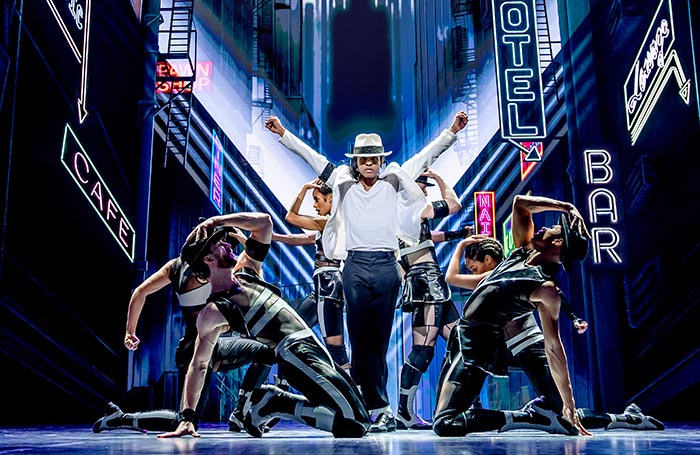
Myles Frost in MJ The Musical. Photo: Johan Persson
MJ The Musical has been a money-spinning success on Broadway, now it hopes to repeat the magic in London’s West End before conquering the rest of the world. The book is by double Pulitzer Prize winner Lynn Nottage who wrote Sweat. She covers Michael Jackson‘s life and career up until the eve of the Dangerous tour. This has the advantage that no mention need be made of the allegations of child abuse which were first publicised during that tour. That doesn’t stop all the critics mentioning the ‘elephant in the room’. But how did it affect their reviews? They were largely divided between those who can put the allegations aside and those who can’t. If you belong to the former, there is clearly much to enjoy in Christopher Wheeldon‘s choreography and of course Michael Jackson’s music, brought to life by the original Broadway star Myles Frost.
[Links to full reviews are included but a number are behind paywalls and therefore may not be accessible]
Neil Norman in The Express (4★) had a nifty way of justifying his concentration on the show: ‘Any attempt to cancel a man who has already been cancelled by God is a redundant exercise. The music stands. The songs are amazing. Let that be enough.’ And, pre-empting the criticism that this is just another jukebox musical: ‘Some may consider this a hollow, vacuous enterprise but this is show business, folks, and it is his artistic, not personal, legacy that is being celebrated.’
Dominic Maxwell in The Sunday Times (4★) was similarly accommodating. He accepted that it’s ‘a partial account’. ‘As drama it only goes so far. As spectacle, as a celebration of what he achieved in song and dance, it’s pretty much sensational.’ Earlier in his review, he praised it as ‘a jaw-droppingly well staged, fabulously sung and fluidly choreographed act of necromancy.’
The Independent‘s Alice Saville (4★) felt there was ‘enough darkness’ in the story up to that point. She was impressed by the way Lynn Nottage’s script ‘exposes Jackson through his songs, showing how he increasingly danced to the rhythms of past traumas’ (referring to his childhood). She liked the way Myles Frost ‘moves with a dreamy, fantastically eerie lightness’ and she praised ‘Derek McLane’s impossibly lavish scenic design and a universally strong cast.’
Sarah Crompton at Whats On Stage (4★) found that ‘it not only swerves the controversies surrounding him, but also never begins to reach the mystery that made his music so magical and yet the man so opaque.’ The quality of the production and its star seemed to compensate: ‘staged by Wheeldon with such energy and panache that the trajectory is breathtaking.’ (Frost’s) impersonation of Jackson’s choreography is razor sharp..but even more impressively he does manage to conjure something of the tortured soul behind the image.’
Nick Curtis in The Standard (4★) concluded: ‘You leave ravished by the spectacle of it all, with countless earworms lodged in your head, and then the moral dubiousness of the enterprise sinks back in.’ He explained why it is possible to get carried away and temporarily ignore what he calls ‘the elephant in the room’: ‘That the show still works is largely down to the half-quicksilver, half-machine performance of Frost…Christopher Wheeldon’s production is a superlatively directed and choreographed piece of absolute pizzaz…writer Lynn Nottage gets to deftly intertwine Jackson’s life and his art.’
For Andrzej Lukowski in Time Out (3★), ‘the omission of any allusion to his friendships with children feels… noticeable’, but concluded ‘A big commercial musical is probably never going to be the medium for the great Michael Jackson drama.’ He loved the ‘jaw-droppingly talented original Broadway star Myles Frost.. Jackson’s arsenal of moves were so singular – and so technically dazzling – that it doesn’t feel dated at all.’
While acknowledging that the show is ‘impossible to view today entirely outside the prism of the allegations’, The Telegraph‘s Claire Allfree (3★) was another critic who focussed on enjoying the show: ‘it’s arguably guilty of magical thinking in casting him exclusively as a victim. But does this make his art – as so beautifully honoured here – any less intoxicating? I’m not sure in the end it does.’ What intoxicated her most was Frost ‘capturing precisely Jackson’s sublime, peculiarly agitated grace, his limbs seemingly made from tensile liquid as he thrusts and coils, shimmers and spins, like a man made from air and light, dancing on water. Blending a pop-video aesthetic with simply superb choreography’.
In The Times (3★), Clive Davis was more cynical about the standard of the production: ‘If the day comes when musicals are created by artificial intelligence they may well resemble this jukebox show. It’s proficient, but oddly soulless.’ In a classic praise sandwich, he said: ‘Christopher Wheeldon’s production offers an immaculately choreographed evening of 24-carat karaoke anchored by the sleek dance moves of..Myles Frost.’
Anya Ryan in The Guardian (2★) was not seduced. She admitted ‘the stage becomes a hub of neon and gravity-defying dance moves’ and that Myles Frost is ‘a shapeshifting force’, however ‘Some might be able to separate Jackson’s art from the artist. But…I felt queasy – bad, even.’
Sam Marlowe in The Stage (2★) was another who felt ‘the glaring omission of any confrontation of the allegations against Jackson of child sexual abuse…makes its smooth, glossy, hagiographic tone feel hollow, if not plain dishonest.’ She was also more critical than some reviewers of the main elements of the show: ‘Lynn Nottage’s book is, at best, workaday and, at worst, excruciatingly contrived…dramatically, it’s all very bland.’ For her, in a statement that will shock Michael Jackson fans, ‘even the groundbreaking music..becomes a little monotonous.’ Taking an opposite view to The Standard (see above), she said it was ‘sounding strikingly dated’.
Alexander Cohen at Broadway World (2★) says it all in his opening paragraph: ‘At its best MJ: the Musical is a tribute act populated by a mixtape of Michael Jackson’s greatest hits and the signature silky angularity of his choreography. At its worst this slathered-in-schmaltz hagiography is like watching the Zone of Interest: you know the disturbing stuff is always just out of view.’
Ludovic Hunter-Tilney in the Financial Times (2★) chose a more sarcastic approach: ‘not since Jesus Christ Superstar has the West End hosted such a saintly protagonist as the hero of MJ the Musical.’ He had no illusions: ‘the production’s main rationale is to get as many songs on the jukebox as possible.’
Value rating 31 (Value rating is the Average Critic Rating divided by the typical ticket price.)
If you’ve seen MJ The Musical, please add your review and rating below (but please keep it relevant and polite)
Manage Consent
To provide the best experiences, we use technologies like cookies to store and/or access device information. Consenting to these technologies will allow us to process data such as browsing behaviour or unique IDs on this site. Not consenting or withdrawing consent, may adversely affect certain features and functions.
Functional
Always active
The technical storage or access is strictly necessary for the legitimate purpose of enabling the use of a specific service explicitly requested by the subscriber or user, or for the sole purpose of carrying out the transmission of a communication over an electronic communications network.
Preferences
The technical storage or access is necessary for the legitimate purpose of storing preferences that are not requested by the subscriber or user.
Statistics
The technical storage or access that is used exclusively for statistical purposes.The technical storage or access that is used exclusively for anonymous statistical purposes. Without a subpoena, voluntary compliance on the part of your Internet Service Provider, or additional records from a third party, information stored or retrieved for this purpose alone cannot usually be used to identify you.
Marketing
The technical storage or access is required to create user profiles to send advertising, or to track the user on a website or across several websites for similar marketing purposes.