Theatre reviews roundup: Bacchae

A faltering start for the National’s new director

Olivier Theatre, National Theatre
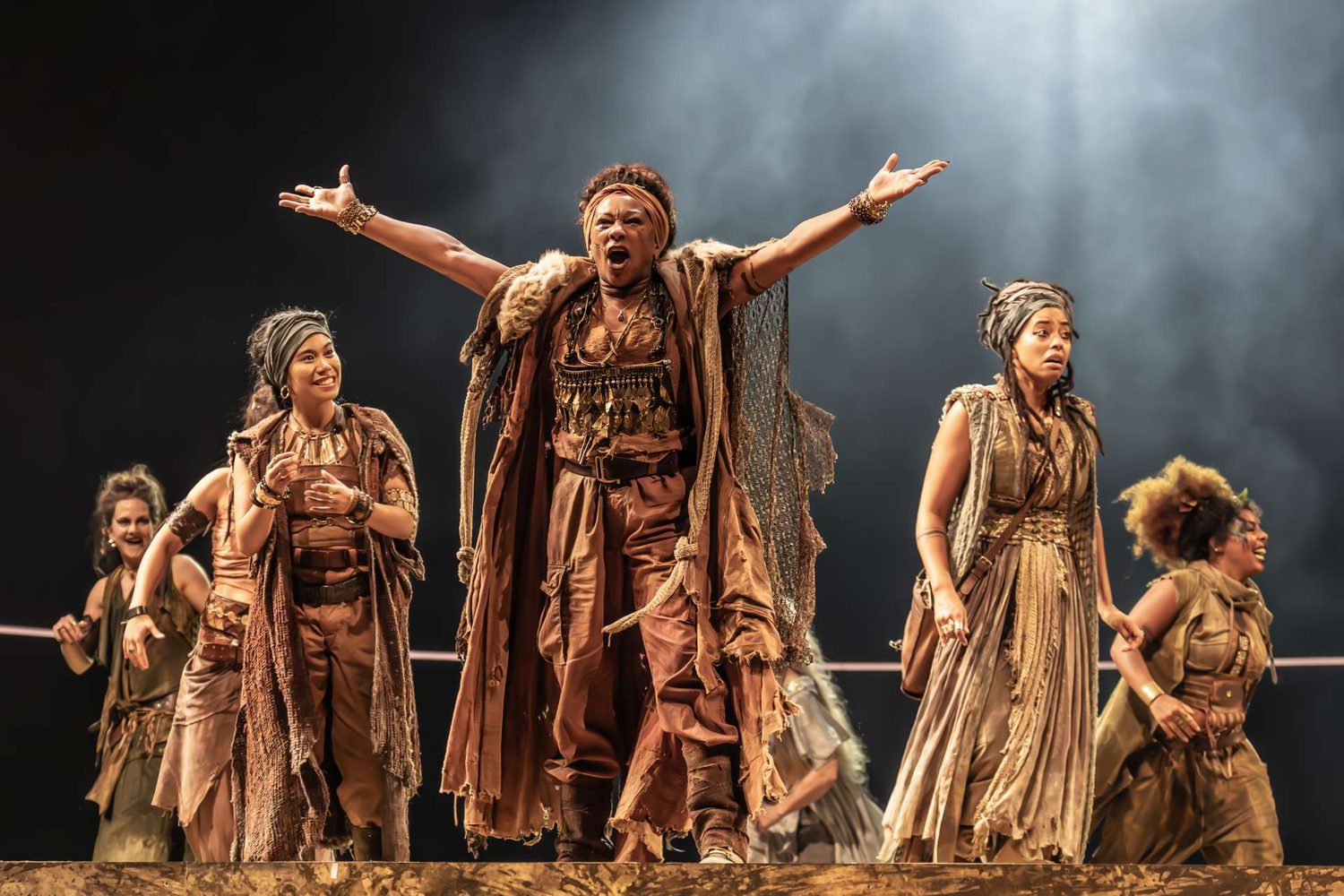
Bacchae at the National Theatre. Photo: Marc Brenner

Indhu Rubasingham has started her first programme of events as the National Theatre’s new Artistic Director with a headline grabbing choice- the first time a debut play has been staged in the giant Olivier auditorium. Nima Taleghani has written a new version of Euripides’ Bacchae that takes a feminist view of the tragedy and uses rap and rude comedy to make his points about family loyalty, political power and human desire.
There was something of a gender division in the reviews. The three 4 star reviews were all by women, who found it entertaining. Coincidentally, the rest were by men (apart from The Guardian’s Arifa Akbar) and ranged from 3 to 2 to a paltry 1 from The Times’ Clive Davis who called it ‘a travesty’.

[Links to full reviews are included but a number are behind paywalls and therefore may not be accessible]

4 stars ★★★★

The Independent‘s Alice Saville declared: ‘It’s a headspinningly smart, visually spectacular, and hugely entertaining opening move from new National Theatre artistic director Indhu Rubasingham.’ She continued: ‘for all his play’s delicious bloodthirstiness and queer excess, Taleghani also explores the pressures within protest movements with surprising subtlety.’

Sarah Crompton of WhatsOnStage reported: ‘As a statement of intent, the production couldn’t be more bold. From the dazzling opening when a huge, ghostly horse drops through a lighted ring from the flies, to the direct challenge of a closing scene which asserts the power of theatre as a forum for debate in a messy world, it has confidence stamped all through it.’ She noted: ‘Events unfold with remarkable pace on Robert Jones’ impressive set, which piles four square platforms on top of one another, spinning, rising and lowering them to create different dynamics within the space’. Her greatest praise is reserved for the director: ‘Within this vibrant setting, Rubasingham marshals the action with absolute assurance. She’s brilliant at driving things forward, but also at creating tableaux that constantly focus the eye on the important thing.’

Marianka Swain at LondonTheatre was impressed by the playwright’s ‘colloquial yet lyrically dexterous, rhyme-packed spoken-word poetry building to audacious rap, and, with anarchic wit and judicious changes, bringing a classic bang up to date.’ The director, too: ‘Rubasingham’s assured production balances emotional moments and heavier subjects with zippy irreverence.’ She ended: ‘I for one can’t wait to see what else Rubasingham has in store.’

3 stars ★★★

The Guardian’s Arifa Akbar laid into the writing: ‘the script often sounds off-key: unfocused, tonally untextured, its knockabout comedy smothering the emotional core of the play.’ She continued: ‘The raps burst with verve and a speed of ideas but lack the sharpness, poetry and emotional power to make the satire soar. The humour is hit-and-miss, characters broad and clownish.’ There was good news: ‘Rubasingham’s direction is nevertheless as polished as ever and the show has pace, with thrilling lighting by Oliver Fenwick…Kate Prince’s movement is a highlight and it is in the interludes of dance…that the show feels at its most elemental.’

The Standard‘s Nick Curtis wasn’t so sure: ‘If it were a triumph, life would be easier; the National in safe hands, theatre saved. If it were a dud everyone could cluck and crow. Instead it’s both, and also everything in between. Refugees, feminism, gender, sexuality, dictators, set to rap and dance…this is a production of wild mood swings, mediated through a production whose beauty often outstrips its substance.’

The Telegraph‘s Dominic Cavendish said: ‘It’s a relief to report that Rubasingham – the first person of colour and the first woman to run the NT – passes her high-pressure test in surprisingly flamboyant style (aided by a shifting set of giant slabs by designer Robert Jones), and, though it takes time to emerge, with a saving dollop of substance… it serves as a statement of intent about the kind of populist, accessible work that Rubasingham, 55, intends to programme.’

Describing the evening as ‘entertainingly messy’, Time Out‘s Andrjez Lukowksi said: ‘It’s fun to spend time with [the characters], as they swear and argue and rage, but there’s the nagging sense that it’s not clear where their story is going. Frankly it also seems a bit unexpected that a male writer would be out to reclaim Bacchae as a feminist work.’ He advised: ‘There’s … the question as to whether it even works as a tragedy after all Taleghani’s fiddling, jokes, microsubversions and humanising of both Pentheus and Dionysus. I would say… no, it doesn’t, and you’ll get more mileage out of it if you don’t treat it as a tragedy.’

2 stars ★★

Alexander Cohen at BroadwayWorld was unimpressed: ‘Bacchae arrives trumpeting fist clenched rebellion, only to implode into hashtag politics. In remoulding crudly Euripides’ tragedy into tawdry cabaret, the National Theatre has committed the deadliest artistic sin of all: cringe.’ He explained: ‘Tragedy requires sharp focus. Satire requires wit. Taleghani and Rubasingham proffer neither. What remains is noisy brashness straining itself in its attempts to be something it isn’t.’

1 star ★

Having called it ‘a travesty’, The Times’ Clive Davis lamented: ‘Nima Taleghani’s update of The Bacchae, studded with ultra-crude, in-yer-face banter, is so leaden that it makes the average panto look like a treatise on existentialism.’ Hardy any aspect of the production seemed to please him: ‘you’re left with a comedic storyline that’s dull and often confusing. Rubasingham’s staging is oddly pedestrian, too, while the designer Robert Jones’s functional asymmetrical platforms fail to summon up much sense of the divine.’

Critics’ Average Rating 3.0★

Value rating 43 (Value rating is the Average Critic Rating divided by the typical ticket price.)

Bacchae can be seen at the National Theatre until 1 November 2025. Buy tickets direct from nationaltheatre.org

Click here to read Paul Seven Lewis’ review of Bacchae

If you’ve seen Bacchae at the National Theatre, please leave your rating and review below
Theatre reviews roundup: The Weir

Modern classic returns in triumph and Brendan Gleeson makes an impressive West End debut

Harold Pinter Theatre
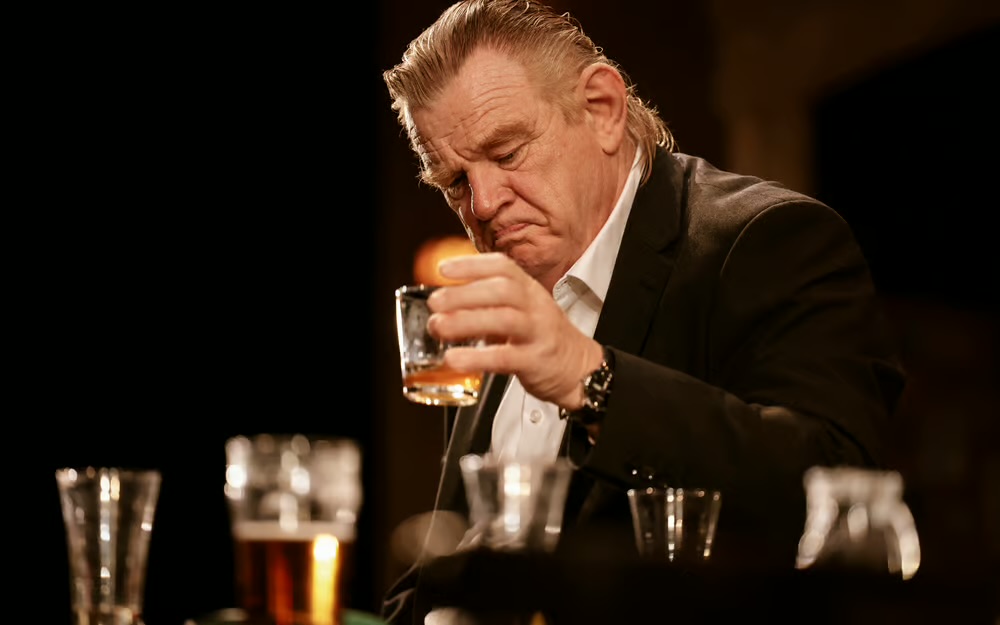
Brendan Gleeson in The Weir. Photo: Rich Gilligan

In the thirty years since its Royal Court debut, Conor McPherson’s first play The Weir has become a modern classic. Deceptively simple, it describes an evening in an Irish bar where a handful of male regulars tell spooky tales to impress a female newcomer, in the course of which much is revealed about their dreams and disappointments. The latest revival is directed by the author himself with, said the critics, much sensitivity. The great actor Brendan Gleeson makes his West End debut and received huge praise for his performance. The original production’s designer Rae Smith has returned to provide another impressive (said the reviewers) naturalistic set.

[Links to full reviews are included but a number are behind paywalls and therefore may not be accessible]

5 stars ★★★★★

Chris Wiegand in The Guardian was pleased to see The Weir return. He called it ‘a revival of such exactness it appears effortless’… ‘it’s an endlessly rewarding evening that proves McPherson’s play is built to last.’

Holly O’Mahony of LondonTheatre opined: ‘this production, almost 30 years on, is quite perfect’.

Brendan Gleeson was the centre of attention of the Telegraph’s Dominic Cavendish: ‘He’s the craggy-faced poster-boy for Conor McPherson’s spellbinding, atmospheric revival (of) the Dublin playwright’s early masterpiece of laughter, grief and supernatural anecdotage in a rural Sligo bar.’ He called the play: ‘a drama of breathtaking craft, tilting line by line between levity and profundity, the far-fetched and the truth, superstition and faith’.

WhatsOnStage’s Sarah Crompton declared: ‘What a great play Conor McPherson’s The Weir is. It seems so simple, five people gathered in a pub on a winter’s night, telling each other stories. Yet within that frame, McPherson weaves words with such care and precision that it never loses its tautness.’ She called it ‘a staggeringly good production of a play that is already a classic’.

The Mail’s Patrick Marmion noted: ‘it’s impressive how The Weir has stood the test of time. It catches an Ireland on the cusp of change, haunted by a mythic and painful past. But the warmth of the laughter that rolls off the audience is remarkable. And what better actor to pop the cork on such intoxicating liquor than the inscrutable, bearlike Gleeson?’

4 stars ★★★★

The Times’ Clive Davis was sceptical about just how good the play is ‘But an accomplished group of actors can find depths in glances and silences. Whether or not The Weir…really is an all-time classic, as many insist it is, this production, directed by McPherson, is worth catching to see Brendan Gleeson give a display that is as unyielding and enigmatic as a neolithic rock carving.’

David Nice for The Arts Desk thought: ‘This new staging of a long-running hit, directed…by the playwright, sustains the atmosphere of curious meetings in a rural Irish pub saloon (perfectly designed by Rae Smith) all the way through to the quiet coda’.

The Independent’s Alice Saville commented: ‘its carefully interwoven strands of the mundane and the supernatural give this play an enduring strength’.

BroadwayWorld’s Alexander Cohen explained: ‘What makes it magnetic is not the ghost stories themselves, but the way they open windows into the souls of those telling them. Beneath the spookiness lies something far more human: grief, regret and endless longing.’

The Standard’s Nick Curtis found: ‘The Weir retains its power to beguile and unnerve. It also proves a splendid vehicle for the mighty presence of Brendan Gleeson‘.

3 stars ★★★

Chris Omaweng at LondonTheatre1 was left cold: ‘Some interesting and mildly amusing stories helped to maintain interest, but I was never deeply invested in proceedings.’ He explained: ‘Something atmospheric appears to be lost by presenting this play in a West End proscenium arch playhouse, a distancing effect, if you will, that would not have been there in a studio space.’

Critics’ average rating 4.4★

Value rating 49 (Value rating is the Average Critic Rating divided by the typical ticket price.)

The Weir can be seen at the Harold Pinter Theatre until 6 Dec 2025. Buy tickets direct from theweirplay.com

If you’ve seen The Weir at Harold Pinter Theatre, please leave your rating and review below
Theatre reviews roundup: The Lady from the Sea

Ibsen update: intense or mundane?

Bridge Theatre
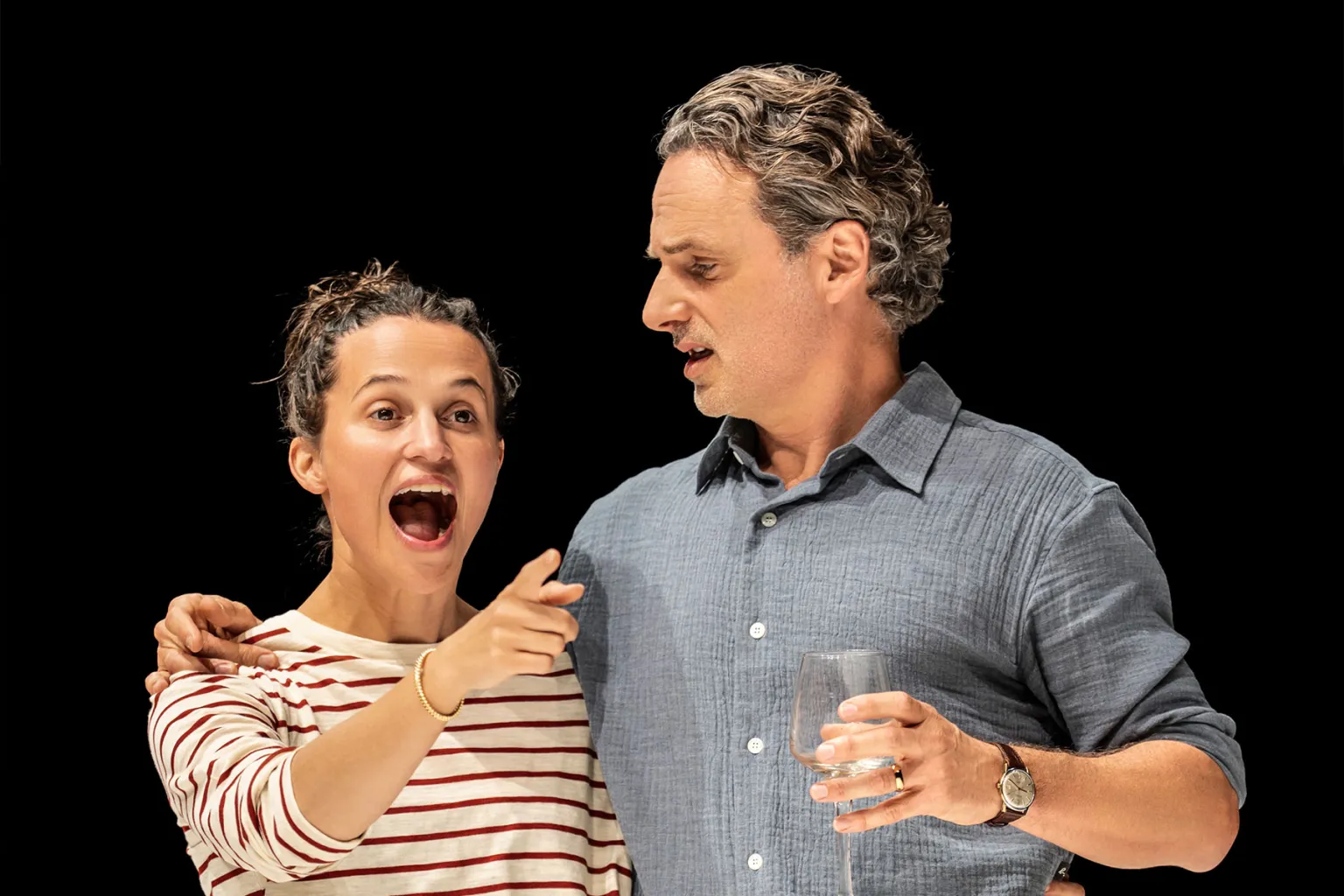
Alicia Vikander and Andrew Lincoln in The Lady from the Sea. Photo: Johan Persson

Following his visceral adaptations of Yerma and Phaedra, writer/director Simon Stone has turned his attention to Ibsen’s The Lady From The Sea. Screen stars Alicia Vikander and Andrew Lincoln, plus Joe Alwyn and Brendan Cowell, impressed the critics but opinions varied on the quality of the adaptation. As a modern day middle class marriage comes under fire, some found it intense, others thought it was meandering and an insult to Ibsen. Lizzie Clachan’s traverse set uses a lot of water in the second act to metaphorical effect, which most critics enjoyed but some found over the top.

[Links to full reviews are included but a number are behind paywalls and therefore may not be accessible]

4 stars ⭑⭑⭑⭑

The Guardian’s Arifa Akbar commented: ‘Simon Stone is known for his rock’n’roll takes on the classics. This is a characteristically high-octane version of Ibsen’s play: loud, modern and led by screen stars Alicia Vikander and Andrew Lincoln. Yet his script, again created in the rehearsal process, retains all of Ibsen’s layers and adds some of its own in the updating’. She talked of : ‘the full-bodied intensity of the production, which is fantastically original, gripping and magnificent to the end.’

The Standard’s Nick Curtis called it ‘a dense, emotionally intense and often hilarious three hours – and god knows, belly laughs aren’t common with Ibsen – marred by a certain glibness.’ He explained: ‘As he formerly did with Lorca’s Yerma and Seneca’s Phaedra, Stone rebuilt the play in rehearsal with his cast, and they’ve worked hard to create a psychological and narratively coherent modern parallel for Ibsen’s ocean-worshipping mysticism…It works, but it reduces the play to being all about daddy issues.’

Dave Fargnoli of The Stage praised the stars and the writer: ‘Heading a uniformly strong cast, Oscar-winner Alicia Vikander’s Ellida roils with subdued emotion, her anxieties and divided loyalties visibly bubbling under the surface’…’Andrew Lincoln gives a consummate performance as neurologist Edward, maintaining an air of focused calm and fairness in the face of continual provocation’…’Stone’s contemporary dialogue is fast-paced and ferociously entertaining, equal parts realistic rhythms and deliberately grandiose pronouncements.’

WhatsOnStage’s  Sarah Crompton  said: ‘The script is demotic, flowing, beautifully written, and the entire cast inhabit it with ease, drawing the lines of character with power and subtle’ but complained: ‘The production, however, is clumsier than the script. I took against Lizzie Clachan’s staging – in long traverse, with the audience surrounding the playing area – that means from where I was sitting, I viewed events through a table, or from the back of a sun lounger.’ She concluded: ‘It is a hugely enjoyable evening, full of insight and provocation.’

3 stars ⭑⭑⭑

Matt Wolf writing for The Arts Desk declared: ‘Like the lighting that crackles now and again to indicate an abrupt change of scene or mood, Simon Stone’s version of The Lady from the Sea is illuminated by the sense of adventure and excitement one has come to expect from this singular artist.’

The Financial Times’ Sarah Hemming found: ‘Stone’s dialogue crackles with wit…It’s peppered too with truths about love, the competing urges for freedom and security, the intensity of youthful emotions that blaze in the memory, the legacy of parental failings and frailties. Above all there’s the uncertainty and restlessness of living in such a messed-up world. It’s also superbly acted.’

Tongue in cheek, Andrjez Lukowski of TimeOut described a pattern in Stone’s adaptations: ‘rewrite the whole thing into aggressively modern English that revolves around long, light hearted stretches of posh people swearing amusingly, season with a bit of Berlin-indebted stage trickery, and finally change tack and wallop us with the tragedy, right in the guts.’ He concluded: ‘when it’s serious, it’s very good. And when it’s silly it remains maddeningly entertaining.’

Dominic Maxwell of The Times commented: ‘It’s full of skill and ingenuity. But the 21st-century self-awareness drowns out Ibsen’s alluring strangeness as much as it makes it resonate.’

The Telegraph’s Dominic Cavendish felt: ‘The snag is that the staging, by Australian hotshot Simon Stone (with semi-abstract design by Lizzie Clachan), leaves his cast first high and dry on an exposing platform, then drowning in directorial overkill, as a deluge turns the set into a raised pool.’

Fiona Mountford of the i started positively: ‘The great news is that Andrew Lincoln …and… Alicia Vikander – in her London stage debut – make for a phenomenal central pairing as a distinguished older man on his second marriage and an attractive younger woman on her first.’ However, ‘The trouble with Stone’s updating of this story – of past loves returning to haunt current lives – is that he attempts to afford too many characters too great a slice of the dramatic action.’

2 stars ⭑⭑

Alice Saville of The Independent was damning about Stone’s adaptation: ‘He’s taken Henrik Ibsen’s tragic fable and extended it into something both lengthy and oddly mundane, bloated with new dialogue that namechecks OnlyFans and Nineties rap groups. It’s an unlikely showcase for the talents of a confident Andrew Lincoln..and..Alicia Vikander, who seems understandably adrift making her stage debut in this directionless play.’ She went on: ‘it feels as though, in laboriously engineering a plausible 21st-century setting for Ibsen’s story to unfold in, Stone has lost sight of what this play’s actually about.’ She decided: ‘It’s all a bit undignified for poor Ibsen… this play thoroughly retools his dialogue without finding a language for his symbolism.’

The Mail’s Patrick Marmion was also disappointed, describing the main characters as ‘a blandly homogenous bunch of wittering, health-conscious hedonists, without a cultural, moral, or political compass between them.’

Critics’ Average Rating 3.2⭑

Value rating 35 (Value rating is the Average Critic Rating divided by the typical ticket price.)

The Lady from the Sea can be seen at the Bridge Theatre until 8 November 2025.  Buy tickets directly from the theatre

Click here to read Paul Seven Lewis’ review of The Lady From The Sea

If you’ve seen The Lady from the Sea at The Bridge, please leave your rating and review below


Theatre reviews roundup: The Land of the Living

Juliet Stevenson is a powerhouse in an underpowered drama

Dorfman at the national theatre
Juliet Stevenson in The Land of the Living. Photo: Manuel Harlan

The critics welcomed David Lan‘s well researched play about the Nazis’ policy of abducting children from occupied countries to replenish their ‘Aryan stock’. When a victim turns up years later at a woman’s flat and demands to know why she presumed to ‘rescue’ him from the Germans at the end of the War, she recalls the events of the past. The morality of her actions is questioned but there is a strong message that it is better to do something than nothing.

There was lavish praise for Juliet Stevenson‘s lead performance, Stephen Daldry’s direction and Miriam Buecher‘s set, but there was a feeling the play was too long.

[Links to full reviews are included but a number are behind paywalls and therefore may not be accessible]

4 stars ⭑⭑⭑⭑

Debbie Gilpin at BroadwayWorld declared: ‘this timely production reminds us of the human side of war, and highlights the subjectivity of morality in highly pressurised situations. Gripping, poignant and, at times, chilling – put it on your ‘must watch’ list.’

Marianka Swain popped up in the Telegraph and commented: ‘Lan’s sprawling, near-three-hour piece needs a firm edit. But Daldry often gives it the heart-pounding tension of a thriller’.

3 stars ⭑⭑⭑

Nearly all the critics would probably agree with Tim Bano’s statement in The Stage: ‘Stevenson is superb, conveying someone who cares deeply but brusquely, with a thorny moral absolutism that seems to reverberate through her body as physical agony.’

‘Juliet Stevenson gives a powerhouse performance’ said Theo Bosanhquet of LondonTheatre. He noted: It’s easy to feel numb to genocidal horrors but Lan humanises them and shows that intervention, however difficult the consequences may end up becoming, is always the right answer. In the end it’s a plea and a defence of good people doing something, and that’s a message we all need to heed.’

WhatsOnStage‘s Sarah Crompton described the production: ‘Stephen Daldry’s direction is devastatingly vivid, filling the small space of the Dorfman with an entire world of action and activity, letting still moments breathe. Miriam Buether has covered the long stage, with the audience packed around three sides, with a yellowing map of Europe, contested as the Allied powers seek to impose order and carve out influence.’ However: ‘the direction cannot disguise the fact that the play is too long, circling back on its arguments, and becoming over-extended and flat in the process.’

The Times’ Clive Davis declared: ‘If the occasionally baggy drama doesn’t quite justify a running time of nearly three hours, it’s held together by an imperious performance by Juliet Stevenson’.

Tim Bano for Time Out was concerned that ‘there is also a stiffness that stifles the emotion. It’s a blast of theatricality and a triumph of intellect which has obvious lessons for our times, even if they sometimes drown out the heart.’

The Guardian‘s Arifa Akbar had reservations too: ‘the pace is too slow (almost three hours) and the characters around Ruth are generic…And there is so much plot that it does not leave enough space for you to feel the play’s big emotional jolts, despite the stupendous central performances. Buether’s set design is superb, but its middle span of empty space does not lend itself to emotional intimacies.’

Anya Ryan for the Standard was a lone voice in being dissatisfied with Juliet Stevenson’s performance: ‘Stevenson, although as assured onstage as ever, seems to lack compassion.’

Critics’ average rating 3.2⭑

The Land of the Living can be seen at the National Theatre until 1 November 2025. Buy tickets direct from the theatre

If you’ve seen The Land of the Living at the National Theatre, please leave a review and rating below

Theatre reviews roundup- Romans: A Novel

Complex and long but compelling story of toxic masculinity

Almeida theatre
Romans: a novel. Photo: Marc Brenner

We often talk about mixed reviews but rarely are they so diametrically opposed as the 5 and 1 star scores that greeted Romans: A Novel. Alice Birch’s tale of the roots of toxic masculinity, told through the stories of three brothers and a whole century of events, managed to grip some critics but completely repel one. The fans liked her complex expressive writing and were interested in what she had to say, but.. well, see the extract below from the one star review in The Times for an alternative viewpoint. The actors were universally praised.

[Links to full reviews are included but a number are behind paywalls and therefore may not be accessible]

5 stars ★★★★★

Lucinda Everett for WhatsOnStage explained: ‘this is no shaming takedown; there are no cheap shots at manhood here (OK, maybe a few). It’s something much more useful. An era-spanning, heart-shattering exploration of the male experience – so often drenched in loneliness, repression and impossible expectation’. She was full of praise for the author: ‘Few working playwrights can match her instinct for story and form, but her mastery of language is almost mystifying. The stylistically kaleidoscopic script is also rhythmic, poetic, fiercely funny, deeply rooted in character, and at times literally breathtaking; it winds with brute emotional force.’

Katie Kirkpatrick for BroadwayWorld held it in high regard: ‘With an ever-shifting form, an array of subtle references, and an intricate, thought-provoking script, this is a play that many will find difficult and impenetrable. At its core, however, it’s a truly perceptive piece that understands masculinity like little else.’ She insisted : ‘It’s a play that really has something to say, beyond the standard ‘men are bad’ – Birch explores loneliness, honour, and a feeling of deserving more that really confronts our present moment’.

4 stars ★★★★

David Jays for The Guardian wrote: ‘Romans is a fascinating, upsetting project, and Sam Pritchard’s alert production quivers with tension under Lee Curran’s sculptural lighting. Ultimately, patriarchy seems a legacy of damage, its ravening adventures dwindling unhappily into domestic life.’

’it’s the writing that dazzles: surreal, savage and at times startlingly empathetic’ said Time Out’s Andrjez Lukowski. He told us: ‘Birch’s darkly hilarious prose is gripping, and Sam Pritchard’s production agreeably taut and minimalist, a showcase for the words and actors’.

The Standard’s Nick Curtis found it: ‘an effortful watch, but a rewarding one.’ He described how ‘Birch tracks the progression of the novel through romance, realism, modernism and postmodernism… Through all the playful shifts in mood, pace and tone, her voice remains sharp and unsparing: she has an uncanny ability to bring things into crystalline focus with a chilling image or a phrase.’

Dave Fargnoli of The Stage explained: ‘This is no straightforward act of adaptation. Birch has constructed an intricate analysis of form and structure, sampling widely from literary genres – Bildungsroman, epistolary, Boys’ Own adventure – to tell a timely story of toxic masculinity and the lifelong search for purpose and meaning. The result is bewildering, bleak and often darkly funny.’

Claire Allfree for the Telegraph called it a ‘formidable if provocatively unwieldy three-hour play, which examines the last 150 years of testosterone-fuelled cultural narratives through the diverging stories of three estranged brothers.’

3 stars ★★★

LondonTheatre’s Theo Bosanquet liked it but: ‘This near-three-hour sweep of the patriarchy in its various iterations is a piece that throws up no end of provocative moments and ideas. It will keep you talking long into the night. But it also feels baggy and unfocussed at times, a smorgasbord of ideas that never quite cohere into a satisfying whole.’

1 star ★

The Times’ Clive Davis was having none of it: ‘What’s particularly irritating about Alice Birch’s terminally dull play… is that it spends nearly three hours congratulating itself on its grand psychological insights when it has, in fact, nothing original to say.’ He saw it as symptomatic of today’s playwriting: ‘Romans is an empty vessel but it does convey a worrying truth about the state of theatre: we’re awash with outstanding actors but they’re starved of good new writing.’

Critics’ average rating 3.8★

Romans: A Novel can be seen at the Almeida Theatre until 11 October 2025. Buy tickets direct from the theatre.

If you’ve seen Romans: A Novel, please leave a review and rating below


Theatre reviews roundup: The Producers

The year’s best show so far, say the critics

Garrick Theatre
Andy Nyman & Marc Antolin in The Producers. Photo: Manuel Harlan

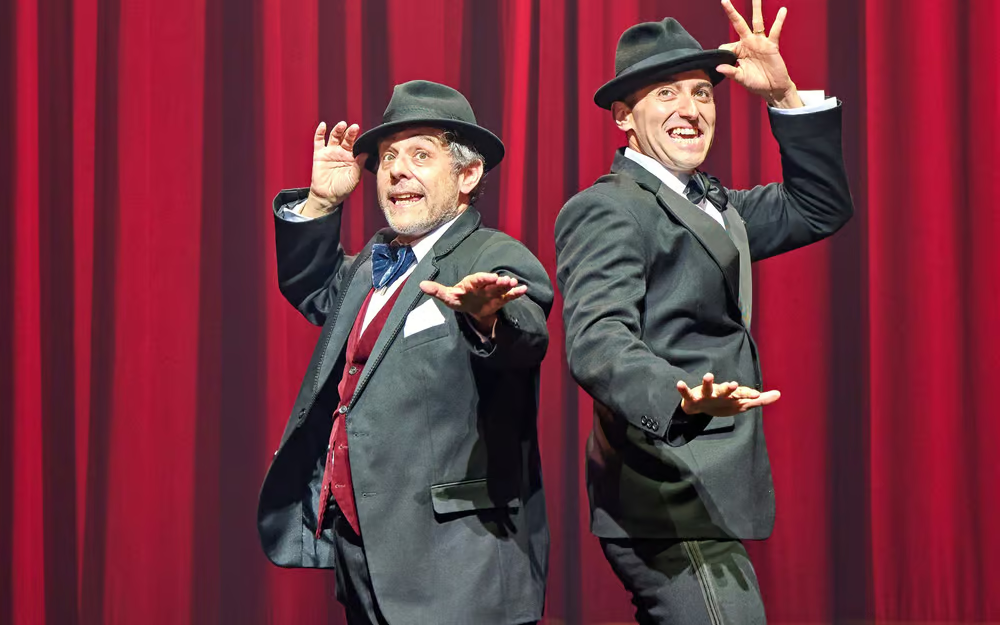
Now transferred to the West End, the Menier Chocolate Factory revival of Mel Brooks‘ musical The Producers has gone down even better with the critics. The reviewers lavished praise on Brooks, director Patrick Marber, and stars Andy Nyman and Mark Antolin who play the Broadway producers who try to create a flop in an effort to fleece their backers, the flop in question being a tribute to Hitler. The average rating of 4.5⭑ is as high as any current West End show. Reviews of the original Menier run are included after the reviews of the West End opening.

[Links to full reviews are included but a number are behind paywalls and therefore may not be accessible]

5 stars ⭑⭑⭑⭑⭑

It’s ‘the funniest show in London’ said the Standard’s Nick Curtis. ‘I honestly can’t find fault with it.’ For Chris Omaweng at LondonTheatre1 it was ‘a fantastic night out, just the tonic for anyone who doesn’t mind generous doses of impertinence delivered with exuberance and joy’.

The Times’ Clive Davis declared: ‘this feels like the show we need right now: a comedy that holds nothing sacred except the right to hold nothing sacred. Marber, the choreographer Lorin Latarro and the costume designer Paul Farnsworth blend spectacle, discipline and daftness. The chorus are supremely well drilled’.

Theo Bosanquet at WhatsOnStage called it ‘a giant slab of feel-good escapism and genuine hilarity’. He said: ‘It’s anchored by a pair of outstanding performances from Andy Nyman and Marc Antolin’. BroadwayWorld‘s Aliya Al-Hassan was pleased to see: ‘The whole main cast returns to the show and don’t miss a beat with their energy, deft movement and incredible comic timing. The ensemble is one of the best I have seen, each actor bringing huge character to the smallest parts.’

Anya Ryan at LondonTheatre announced: ‘Only a true misery guts could pick faults in Patrick Marber’s revival of Mel Brooks’s The Producers.’ (Andrjez Lukowski at Time Out take note!) She found: ‘it delivers one belly laugh after another. And still, there is so much more to this production than good, old-fashioned tomfoolery. Sewn together with an unceasing ability to laugh at itself, it is a musical as radical and joyously subversive as when it first appeared on film in 1967.’

4 stars ⭑⭑⭑⭑

The Telegraph’s Dominic Cavendish referred to it as ‘a winningly funny proposition for a new generation – and Marber pulls out all the stops to raise the Garrick roof.’ Paul Vale for The Stage noted that Patrick Marber ‘saturates this slick musical comedy with a wealth of physical gags, exquisitely timed double takes and an expertly judged sense of the absurd that enhances the show’s momentum.’ Adam Bloodworth at CityAM labelled it ‘a comic masterpiece’.

3 stars ⭑⭑⭑

Only Andrzej Lukowski of Time Out was lukewarm: ‘The Producers is a fine musical that had its moment a quarter century ago.’ But he added ruefully: ‘you’d have to be made of stone not to laugh at it’.

Critics’ Average Rating 4.5⭑

Value rating 50 (Value rating is the Average Critic Rating divided by the typical ticket price.)

The Producers can be seen at the Garrick Theatre until 19 September 2026.  Buy tickets directly from the theatre

Read Paul Seven’s review of The Producers here

Reviews from the run at the Menier –

Aliya Al-Hassan in BroadwayWorld (5) gave top marks: ’It’s far from subtle, but is funny, irreverant and witty.’ She praised the stars: ‘Nyman revels in his lank-haired, slightly chaotic persona. He has a palpable chemistry with Marc Antolin‘s adorably coy and neurotic Bloom.’ And the creative team: ‘Patrick Marber shows astute direction in his first musical. Lorin Latarro’s vibrant choreography defies the constrictions of the space, never seeming to be over-crowded or too busy.’

Helen Hawkins on The Arts Desk (5) called it ‘an uproarious adult panto.’ She said,  ‘Andy Nyman is the dynamo of the show, a convincing wheeler-dealer…His Leo Bloom, Marc Antolin, is spot on too, nervous and silly, but equally amiable’

The Guardian’s Arifa Akbar (4) said, ‘Still so original, and delightfully – daringly – funny, it is revived by director Patrick Marber with such vigour, sparkle and controlled wildness that it renders itself the London show of the festival season – funnier, camper and more outre than pantomime.’ She found it ‘irresistible, absurd and joyful, both celebrating and sending up the power of theatre. A blast of a show.’

WhatsOnStage’s Sarah Crompton (4) declared, ‘It’s not at all subtle, but speeds along with such pleasure at its own absurdity that it’s hugely entertaining.’ She said, ‘Nyman and Antolin anchor the show while everyone else goes so far over the top that the roof is in danger of coming off. Both Harry Morrison as the Nazi-loving author of the show and Trevor Ashley as the fabulously gay director Roger de Bris are unleashed into wild excess’.

Matthew Hemley for The Stage (4) pointed out, ‘this is a musical that still guarantees laugh after laugh after laugh, with a genuinely brilliant score from Brooks.’ He continued, ‘Marber keeps the show whizzing along, and Lorin Latarro’s slick choreography makes brilliant use of a tight space’. He described the stars:  ‘Nyman and Antolin work delightfully together, Nyman a ball of frustrated energy, Antolin on top form as his nervy, blanket-hugging sidekick. They sing and dance wonderfully, and they’re very funny, too – both the physical and verbal comedy is a genuine treat.’ He went  on, ‘The highlight, however, comes in the form of Trevor Ashley’s Roger De Bris, the director tasked with helming Springtime for Hitler, who eventually finds himself playing the Nazi leader…(his) expressions, voice and comic timing are spot on. His Judy Garland-infused Hitler is a wonder.’

The Financial Times‘ Sarah Hemming (4★) said, ‘director Patrick Marber, choreographer Lorin Latarro and the versatile cast go at it with unadulterated glee, plundering every cliché in the book and mischievously pickpocketing the musicals tradition.’ She continued, ‘At its heart are Nyman and Antolin, both terrific and a wonderful double act’ and concluded, ‘Despite all the absurdity…it’s rather sweet: a ridiculous love-letter to friendship and to the sheer craziness and passion of show business.’

Over at LondonTheatre (4) Olivia Rook showered praise all round and picked out various members of the cast: ‘Trevor Ashley is perfectly cast as the scene-stealing director Roger De Bris…Harry Morrison also gives a stand-out performance as the crazed Hitler fanatic Franz, spitting out his words with relish in a throaty German accent, and Joanna Woodward’s endearing, Marilyn Monroe-esque Ulla is a delight.’

Time Out’s Andrzej Lukowski (4) decided, ‘The Producers is a bit dated, a bit slow in getting going… But its pillorying of fascist iconography remains hysterically funny and steely sharp – perhaps sharper than it was before.’

Although Dominic Cavendish at The Telegraph (4) spent a chunk of his review comparing Nyman and Antolin unfavourably with the stars of the original movie, nevertheless he found it ‘perfectly suited for the festive need for cheer’.

Louis Chilton in The Independent (4) commented, ‘as a satire both of fascist nationalism and showbiz, The Producers remains ever-relevant. Directed by Patrick Marber … this production does a lot with a small, intimate stage; Lorin Latarro’s choreography is showy and dynamic – but lets the comedy rightfully hoard the focus…The jokes are rapid, the satire outrageous. How could it possibly fail?’

Critics’ Average Rating of Menier production 4.2★

If you’ve seen The Producers at the Garrick Theatre or the Menier Chocolate Factory, please share your review and rating below

Theatre Reviews Roundup: Deaf Republic

‘A marvel of a show’

Royal Court Theatre
Caoimhe Coburn Gray and Romel Belcher in Deaf Republic. Photo: Johan Persson

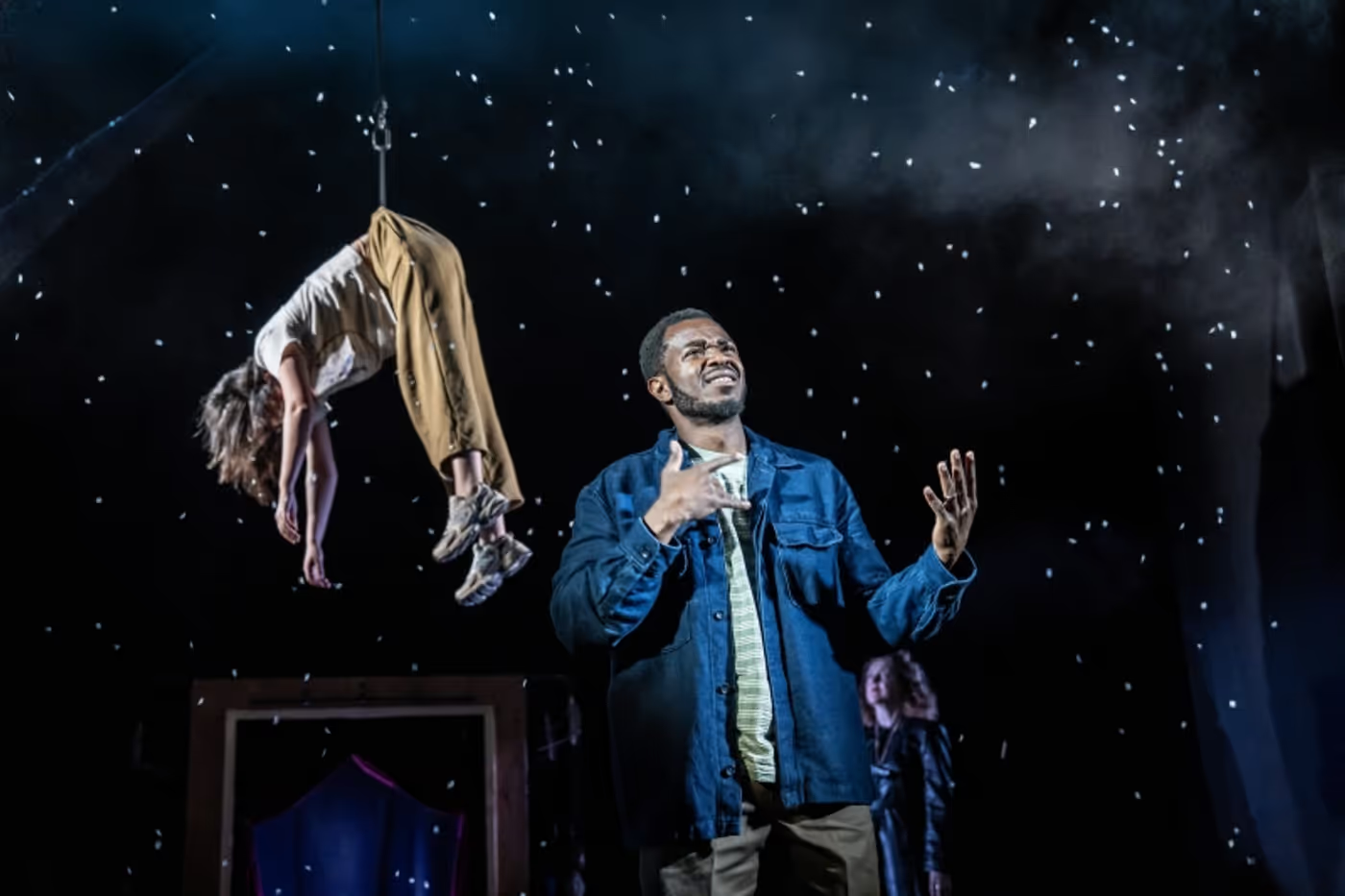
A town turns deaf overnight after a deaf boy is shot dead by a soldier. What follows in Dead Centre’s adaptation of a long poem by Ukrainian writer Ilya Kaminsky, mixes a show-within-a-show, puppetry, projections, and more, in a dizzying spectacle that looks at the nature of both war and theatre. It is written and directed by Dead Centre’s Ben Kidd and Bush Moukarzel in collaboration with BSL poet Zoë McWhinney.

[Links to full reviews are included but a number are behind paywalls and therefore may not be accessible]

5 stars ⭑⭑⭑⭑⭑

‘This is capital-T theatre: every moment of it thrills’ said Holly O’Mahony for LondonTheatre. She detailed many of those thrills in her review, ending: ‘It’s a brilliant showcase of what theatre can do, and a beautiful story of resilience, performed with spectacular creativity.’

Katie Kirkpatrick for BroadwayWorld agreed: ‘Deaf Republic is a marvel of a show. Using puppetry, live video, aerial, and a combination of spoken English, BSL, and captions, this is the kind of theatre that steps not only out of the box but into a whole new world.’ She explained; ‘It’s a visual spectacle, sure, but behind every gasp-worthy moment lie smart, prescient ideas. Parallels are drawn between sign language, poetry, and theatre, illustrating the amount of thought that has gone into the adaptation process.’

4 stars ⭑⭑⭑⭑

The Independent‘s Alice Saville declared it to be ‘an experimental epic of war and resistance that’ll make you rub your eyes and reach desperately for something real to hold on to. Puppets, circus, signing, film projections, spoken word – in scene after surreal scene, they pile on different storytelling techniques to explore how we talk (or don’t talk) about terrible things’. She concluded: ‘Deaf Republic is a slippery thing… It resists the easy, misleading clarity of a news report to show a world where normal life has been upended, exploded, silenced. And, fittingly, it leaves its audience grasping for a language to express what they’ve seen.’

Time Out‘s Andrzej  Lukowksi told us: ‘Dublin’s Dead Centre is a true marvel, a theatre company that makes intensely visceral works that feel like they’ve been wrenched from a beautiful dream and a screaming nightmare simultaneously.’ He described some of the details: ‘Kevin Gleeson’s droning sound design is gorgeous and primal. The interplay of Grant Gee’s dreamy video work and the gauzy scrims that descend from the ceiling is beautiful and disorientating. Jeremy Herbert’s set includes a full-sized car, which is just very cool.’

Dave Fargnoli reported for The Stage: ‘the piece plays, sometimes dizzyingly, with ideas of language, empathy, agency and resistance. The playful, metatheatrical text is delivered in a blend of British Sign Language, spoken lines, and surtitles. Moukarzel and Kidd’s lucid, confident direction holds the many threads together, employing video segments, live footage and some cheekily subversive puppetry, each new layer intentionally highlighting the artificiality of live performance.’

The Financial Times’ Sarah Hemming found ‘the sign language that runs through Kaminsky’s original takes on living form as an ensemble of deaf and hearing actors act out the story, buzzing between sign languages, surtitles, film and spoken dialogue. And language is just one strand of a richly textured, shape-shifting piece (directed by co-writers Ben Kidd and Bush Moukarzel) that draws on age-old theatrical tools of resistance — allegory, irony, puppetry — to add nuance and depth and, most significantly, to switch perspective.’ She vividly explained: ‘Perhaps most potently, Deaf Republic foregrounds the act of translation at the heart of all theatre: that this is manifestly not real, and yet it can express a reality that we struggle to articulate.’

Claire Allfree in the Telegraph called it ‘a wondrous two hours of storytelling’.

Chris Omaweng of LondonTheatre1 noted: ‘Some intriguing ideas are introduced in a visually impressive and marvellously unsettling production.’

3 stars ⭑⭑⭑

For Theo Bosanquet at WhatsOnStage: ‘It suffers somewhat from over-ambition, as it struggles to tie its disparate ideas together.’ However, ‘there’s a dystopian darkness underscoring it that leaves a lasting impression, and the fact it ends with a joke, told by the soldier, is as bleak a coda as one could imagine.’

David Jays for The Guardian described how ‘signing impels the show: a vivid choreography of communication. Signing, speech and surtitles are variously combined; panic and violence are loud in every register.’ He observed: ‘Dead Centre are masters of meta-theatrical dazzle. Here, we rarely watch in a single register. Live film sits atop the stage picture. Scenes are screened in dollhouse miniature then replicated at full scale (ingenious designs by Jeremy Herbert). A hovering drone scans the audience. There are so many moving parts that spectatorship becomes a testing exercise in awareness.’

The Times‘  Clive Davis had reservations. He acknowledged that the writers ‘have conjured up hallucinogenic tableaux, combining puppetry with video close-ups and a sliver of circus theatrics which demonstrate how easily everyday life can slip into random bloodshed.’ But he felt ‘At times, Deaf Republic has more of the static quality of an art installation.’

Critics’ Average Rating 3.9⭑

Deaf Republic can be seen at the Royal Court Theatre until 13 September 2025. Buy tickets directly from the theatre

If you’ve seen Deaf Republic at the Royal Court, please leave your review and rating below

Theatre reviews roundup: Cabaret

Dark immersive production Bowles critics over

Playhouse Theatre (KitKat Club)
Cabaret at the KitKat Club. Photo: Marc Brenner

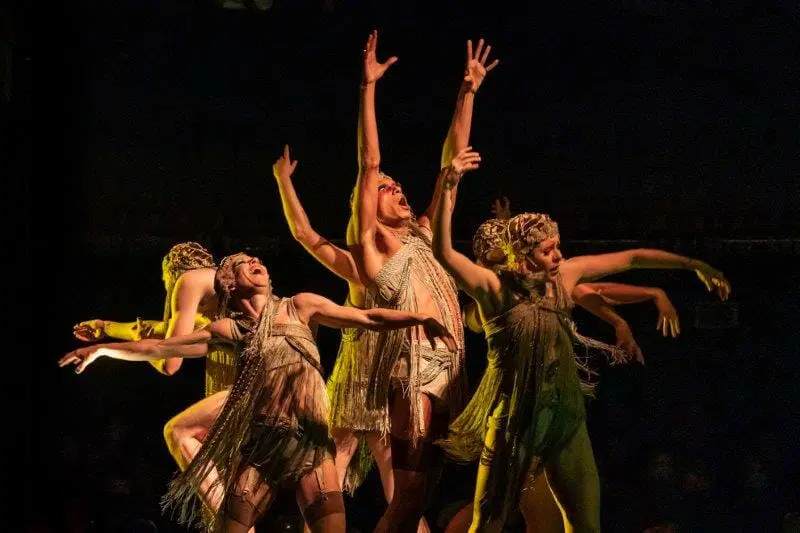
Cabaret is the top rated West End show of the 2020s. Only the eye-watering ticket prices have prevented it from being top value. The original stars Eddie Redmayne and especially Jessie Buckley (as Sally Bowles) were a significant focus of the many 5 and 4 star reviews, but the many subsequent replacements have shown that Rebecca Frecknall’s production is the true strength of the show. It is a dark interpretation of Kander and Ebb’s musical that uses a dazzling transformation of the Playhouse into the KitKat Club, and immersive elements within the performance to dupe the audience into being complicit in the growth of Nazism. The extracts from the reviews from the opening night that are reproduced below concentrate on the production rather than the stars.

5 stars ★★★★★

Nick Curtis of the Standard was Bowlesd over: ‘Wow. Rebecca Frecknall’s new revival of Kander and Ebb’s musical set in interwar Berlin is a stunning, breathlessly exciting theatrical happening. It feels loyal to the 1966 original yet astonishingly contemporary, and properly immersive.’

WhatsOnStage‘s Sarah Crompton declared: ‘The stamp of a great work of art is that it can bear many interpretations. Director Rebecca Frecknall…has taken Kander and Ebb’s 1966 musical and completely reimagined it. The result is both shattering and utterly magnificent.’ She went into detail: ‘ Scutt’s costumes are a riot of soft colour and texture, and Julia Cheng’s extraordinarily detailed choreography creates a tawdry, sexualised world, where everyone gets to express themselves and no-one is quite what they seem. By the close of a devastating night in the theatre, that image has been replaced with beige uniformity and straight lines of movement…The result, central to Frecknall’s thinking, is terrifying, with a darkness that reaches all the deeper because the audience has been made to feel complicit.’

Marianka Swain for BroadwayWorld said: ‘We came here to escape, but we emerge shattered. This is musical theatre at its absolute finest. A total knockout.’ She described ‘Julia Cheng’s rich choreography’: ‘a mix of styles, from jazz and contemporary to waacking, with angular freezes, chest pumps, swaying and shimmies – knowing and challenging.’ And how ‘Isabella Byrd’s exceptional lighting design creates eerie shadows, casts the characters in sudden shafts of light, or uses the lamps in the audience to draw us into the performance.’

Tim Bano at The Stage pointed out: ‘Frecknall’s direction doesn’t let style sideline substance. Perhaps her strongest play is the careful balance she maintains in terms of the Nazis as metaphor and as literal Nazis. This is a production specifically about antisemitism and the rise of fascism in 1930s Germany. It’s also about attacks on sexuality, gender, ethnicity and religion – or any other marker of identity at any other time.’ He ended: ‘While the whole nonsense of the Kit Kat Club – the secret entrance, the champagne – is completely at odds with what the musical is really about (not to mention the eye-watering ticket prices), it’s also perfect: the production dupes us, turns us into delusionists just like Sally, Cliff and the rest. It tricks us into feeling as if we’re at a party when really we’re at the most visceral display of political theatre in the West End.’

The Telegraph’s Dominic Cavendish wrote that Rebecca Frecknall ‘creates an immersive evocation of the Kit Kat Club, the early-1930s Berlin dive in which much of the action is set. She supercharges the ambience, though. The whole Playhouse has become a louche playground. In the modified auditorium, ranged with tables and with a raised, often revolving circular wooden stage at its heart, old-world decorum mingles with wild abandon.’

Roz Wyllie for LondonTheatre1 said: ‘The whole production is about as good as theatre gets; with every shade of emotion and absolutely no wasted dialogue or scene. It’s tight, it’s tender it’s shocking… it’s sinfully brilliant.’

Alexandra Pollard for The Independent commented: ‘Back in the Sixties, the musical’s original director Hal Prince called Cabaret “a parable of contemporary morality”. In such capable hands, it’s a parable that still packs a punch.’

4 stars ★★★★

Time Out‘s Andrzej Lukowski described the design: ‘the Playhouse Theatre has been heavily retooled by designer Tom Scutt, and literally renamed the Kit Kat Club… Scutt’s revamp is extremely classy. From opening up backstage areas and drenching them in atmospheric lighting to creating a secondary, gold-draped performance space for the fun (if inessential) pre-show cabaret-with-a-small-c entertainment, it’s full of quietly spectacular little flourishes.’ He continued: ‘costumes are angular, vivid, somewhat grotesque; the performers’ faces are sardonic, or sinister, not submissive or lusty. There is an alien harshness and a sense of confrontation and mischief, a feeling we have left the world behind: you really can picture this place as a strange nocturnal bubble removed from the increasingly grim realities of the Germany outside.’

The Guardian‘s Arifa Akbar found: ‘Rebecca Frecknall’s production on the whole lives up to its hype, magnetising us with flamboyant camp and then delivering menace that feels freshly charged.’

Suzy Evans at LondonTheatre noted: ‘Coupled with Tom Scutt’s immersive design and Isabella Byrd’s atmospheric lighting, this production feels like a world away from outside…And Frecknall doesn’t pull any punches with her high-concept approach…The approaching horror and absurdism of this escape is at the forefront, and her highly choreographed tableau feels like a ballet or a marionette show, where someone calculating is pulling all the strings.’

Fiona Mountford of the i pointed out: ‘Despite the immersive backdrop – all credit to designer Tom Scutt – this is a Cabaret that has been stripped back and cleansed of the reassuring layers of jollity that it often wears. Sex might be everywhere, but no one is enjoying it.’

Clive Davis of The Times was harder to please.  ‘Julia Cheng’s choreography for a blowsy set of dancers…never quite overcomes the limitations imposed by the lack of space.’

The Mail’s Patrick Marmion was less impressed than most but still gave it high marks: ‘It may be a little parsimonious in its pleasures, but this eagerly anticipated new staging of Cabaret certainly looks good, sounds good – and runs like clockwork.’

Critics’ average rating 4.5⭑

Value rating 36 (Value rating is the Average Critic Rating divided by the typical ticket price)

Cabaret is currently booking to 23 May 2026. Buy tickets directly from the theatre

If you’ve seen Cabaret at the Playhouse/KitKat Club, please add your review below 

Theatre reviews roundup: Born With Teeth

Charismatic stars save the play when Shakespeare meets Marlowe

Wyndham’s theatre
Ncuti Gatwa & Edward Bluemel in Born With Teeth. Photo: Johan Persson

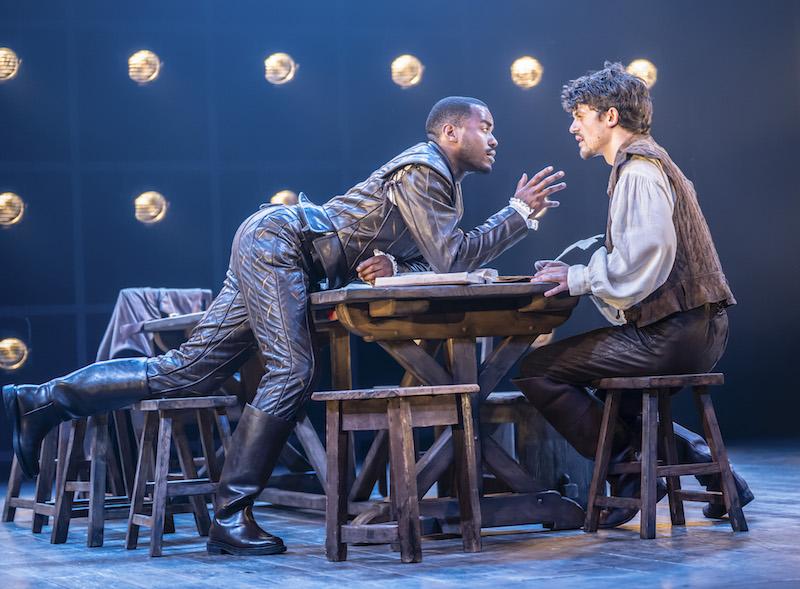
Born With Teeth is an RSC production receiving its premiere in London rather than Stratford, and directed by the company’s co-Director Daniel Evans. The critics were generally agreed that Ncuti Gatwa  and Edward Bluemel were the saviours of the drama. They liked the concept of rising playwrights William Shakespeare (Bluemel) and Christopher Marlowe (Gatwa) revealing their differing characters as they collaborated on a play, but many felt the execution was repetitive and lacking wit.

[Links to full reviews are included but a number are behind paywalls and therefore may not be accessible]

5 stars ⭑⭑⭑⭑⭑

In a review that must have had some of his readers reaching for the smelling salts, the Daily Mail’s Patrick Marmion detailed the outrageous behaviour of Ncuti Gatwa’s Marlowe before declaring: ‘Daniel Evans’s steamy production fizzes with rare theatrical chemistry.’

4 stars ⭑⭑⭑⭑

Marianka Swain for LondonTheatre called it ‘a seriously steamy cat-and-mouse game, as American dramatist Liz Duffy Adams places these two brilliant men in one room so we can watch the sparks fly.’  She assured us: ‘this is an accessible romp that honours Shakespeare’s populist spirit, jubilantly reclaims queer history, and explores a literary mystery that continues to fascinate.’

The Financial Times’ Sarah Hemming (sadly often hidden behind a very expensive paywall) said it was ‘a tantalising piece — for better and for worse. It’s greatly entertaining, peppered with literary gags and impish anachronisms, and delivered with immense flourish. What holds it back is a reluctance to dive deeper into the huge themes it raises and give its characters more time to explore loaded issues such as religion, artistic freedom and self-preservation.’

Nick Curtis of The Standard needed a bucket of water thrown over him: ‘Phwoar! The chance to see a jacked and shirtless Ncuti Gatwa snogging his snake-hipped, chisel-cheekboned former Sex Education co-star Edward Bluemel is undoubtedly part of the appeal of Liz Duffy Adams’s seductively clever two-hander.’ He liked the play, saying it ‘blends intrigue and shifty eroticism with in-jokes and a discourse on creativity. The keynote of Daniel Evans’s production…is fluidity: nothing is every quite what it seems.’ He ended: ‘the way Duffy’s script entwines the vicissitudes of sex, celebrity and Elizabethan politics is enormous fun. And as star vehicles go, Evan’s production is a smart and subtle one.’

Cindy Marcolina for BroadwayWorld was star struck: ‘The production would be a resounding flop without Gatwa and Bluemel. Their bond is fun and attractive, magnetic in how it compels us to forgive the flimsiness of the script, the fluctuating quality of its dialogues, and its (mis)use of specific terminology’. Both she and Time Out’s critic described the play as ‘slash fiction’, which she helpfully explained is ‘a genre of fanfiction that focuses on the romantic relation between preexisting fictional characters of the same sex.’ So now you know.

Heather Neill sitting at TheArtsDesk told us: ‘under Daniel Evans’ spirited direction, Ncuti Gatwa as Marlowe and Edward Bluemel as Shakespeare grab every opportunity to explore their versions of these fascinating, contradictory characters’. She told us the playwright ‘is interested in the cause of – and often barriers to – artistic freedom now as well as in Elizabethan England. This is echoed in designer Joanna Scotcher’s set, the stage surrounded by banks of lights that might suggest interrogation as well as theatricality, and her costumes combining punk materials with Tudor shapes.’

TheatreWeekly‘s Greg Stewart was more enthusiastic about the script than others: ‘a bold and cerebral imagining of a clandestine creative collision between Christopher (Kit) Marlowe and William (Will) Shakespeare.’ He continued: ‘Adams’ writing is dense and richly layered, peppered with references and easter eggs that will delight aficionados of both playwrights. While the dialogue occasionally veers into the overly verbose, it remains riveting, especially when delivered with the electric chemistry of its two leads.’

3 stars ⭑⭑⭑

Sarah Crompton of WhatsOnStage summed it up as ‘an odd confection, at once challenging and comic, slightly circuitous and oddly revealing… it’s brought to vital, charismatic life by its casting’.

Time Out’s Andrzej Lukowski found it ‘comes across like a particularly insane workplace comedy’. He went on: ‘Born with Teeth is pretty trashy. I rolled my eyes at the whole sexual tension thing: our two heroes do end up snogging, but it mostly seems to be because that’s what happens in slash fiction’. Getting down to the nitty gritty, he said: ‘ultimately what Born with Teeth suffers from the most is asking us to imagine a sex and paranoia crazed Elizabethan society while not actually showing it to us.’ He concluded: ‘Born with Teeth is a lot of fun: two charismatic actors having a ball pinging off each other while chomping down on a script that spikes the trashiness with some genuine wit.’

For The Guardian’s Arifa Akbar, ‘this is Gatwa’s show. His boisterous Kit sweats in Zoë Thomas-Webb’s leather two-piece, his every lithe action a flirtation’. For her, the play promised more than it delivered: ‘The stakes simmer throughout but never reach boiling point.’

Sam Marlowe of The Stage described the production: ‘The aesthetic of Evans’ staging is chic modernity. Andrzej Goulding’s video design intercuts fever-dreamlike, monochrome scenes of the two playwrights being subjected to torture by the Elizabethan state with pixellations and static – designer violence, MTV-style. Meanwhile, their interactions take place on a set by Joanna Scotcher, lit by Neil Austin, of enclosing walls made up of banks of lights.’ She ended: ‘We know where this story is heading – after all, there’s no Royal Marlowe Company – and Duffy Adams never builds much tension on the way there. But this is a diverting enough double act, glinting with wit and style.’

Praising the actors’ performances, Fiona Mountford of i-news said: ‘Bluemel gives an understated performance of someone growing in confidence, growing into themselves, whereas Gatwa’s Marlowe is a flame that burns with explosive brightness and is then extinguished.’

‘It’s tragi-comical-farcical-ludicrous’, said the Telegraph‘s Dominic Cavendish, ‘What keeps you watching is the lusty bravura of Gatwa … with Bluemel…neatly evoking Shakespeare’s growing confidence and gnawing doubts.’ He concluded: ‘It’s diverting enough, but ultimately toothless.’

Alice Saville of The Independent took a balanced view about Ncuti Gatwa: ‘Gatwa revels in his role to an almost distracting degree: brandishing an implausibly long feathered quill, making an Olympics-worthy leap across the stage, and baring his gleaming chest. It’s all incredibly enjoyable. But what he doesn’t do is bare his soul, or show the inner torment of a man so obsessed with power and political intrigue that he’ll sacrifice everything else, even his happiness.’ And about the play: ‘It sings with all the sex and politics and religious iconoclasm that the bard handled so carefully in his plays, showing that every literary choice he made was freighted with danger. What it doesn’t do is show the emotional cost of living in this world. And that makes it hard to get deeply invested in this impossible literary love story, however intriguing its twists and turns might be.’

The Times’ Clive Davis found: ‘You wait in vain for this Marlowe to acquire some nuance when he flirts with Edward Bluemel’s ingenuous Will’.  For all its literary references, ‘At its heart, though, it hovers at the level of conscientiously researched fan fiction.’ He was not amused: ‘the attempts at humour soon begin to pall. Each line lands with the same thudding note, so much so that, halfway through, I found myself harbouring nostalgic memories of the much more deft wit of Ben Elton’s Shaftesbury Avenue version of Upstart Crow.’

2 stars

Dominic Maxwell at The Sunday Times couldn’t wait for it to end: ‘Born with Teeth is the kind of night at the theatre I like least: it’s too good in its execution to simply dismiss, too pointless for me not to long for it to end.’

Critics’ average rating: 3.5⭑

Value rating 37 (Value rating is the Average Critic Rating divided by the typical ticket price.)

Born With Teeth can be seen at Wyndham’s Theatre until 1  November 2025.  Buy tickets directly from the theatre

If you’ve seen Born With Teeth at Wyndham’s Theatre, please share your review and rating below

Theatre reviews roundup: The Gathered Leaves

A well acted, old fashioned family saga

Park200
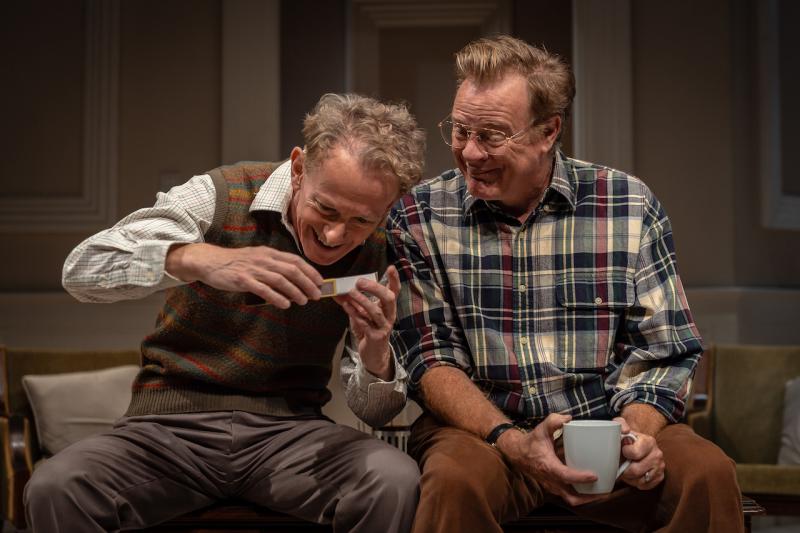
Richard Stirling and Chris Larkin in The Gathered Leaves. Photo: Rich Southgate

The Gathered Leaves seems to have been missed by some of the heavyweight media amidst all the reporting from the Edinburgh Fringe. I admit I missed its opening, but here’s a belated roundup of the limited number of reviews. The critics praised both the acting and Adrian Noble’s direction in this revival of Andrew Keatley’s family saga. Despite it being only ten years old, many felt the play was old fashioned (not always a bad thing) and a little too long.

[Links to full reviews are included but a number are behind paywalls and therefore may not be accessible]

4 stars ⭑⭑⭑⭑

The Standard‘s Nick Curtis declared: ‘It’s an old-fashioned and at times schematic family saga that nonetheless treats its multiple themes with seriousness and care and eventually exerts a cumulative power…Adrian Noble’s elegant revival is peopled with thoroughbred stage actors, who plough determinedly through the boggier bits of dialogue and exposition.’

Louise Penn for BroadwayWorld found: ‘Keatley’s writing rewards his starry cast in every line. The length of the play (2hr 20 of performance) allows storylines to shape and realities to be revealed. Director Adrian Noble and designer Dick Bird allow the beautifully realised set to spread beyond the confines of the stage, spilling out onto the sidelines and into the audience.’

3 stars ⭑⭑⭑

Miriam Sallon for WhatsOnStage claimed: ‘It’s not that Keatley’s writing isn’t sharp and witty, and at times insightful. It’s that it could have been excellent, and instead, he’s settled for something closer to fine.’

Over on TheArtsDesk, Rachel Halliburton wrote: ‘Dick Bird’s fastidiously observed design in beiges and pale greens sets the scene for emotional daggers in the drawing room.’ She ended: ‘You emerge from this play simultaneously feeling as if you’ve taken a gentle walk back in time and thankful that the world has moved on. Keatley’s script holds up well enough, but it’s Noble’s subtle direction – in which the cast doesn’t strike one false emotional note – that gives the evening its pull.’

Holly O’Mahony at The Stage felt it could have done more: ‘While avoiding melodrama is no bad thing, this staid story craves a s midge more disrepute.’

Alan Fitter at LondonTheatre1 had some thoughts about the set: ‘A special mention should go to Dick Bird’s set which is startling. The walls go all the way up to the ceiling of the auditorium, some 25 feet or so, with picture rails, architraves and cornices – just like the walls of a grand house would be. However, it does look as if most of the budget has been spent on the walls, as the furniture in the very grand house is sparce and quite cheap looking – not what you’d expect.’ He concluded: ‘The Gathered Leaves is interesting, if a little old-fashioned and long …What makes it work and what’s at the heart of Keatley’s play is that, amidst all the angst of a family in disarray, is the love and humanity of two brothers who will stick together whatever life throws at them.’

Critics’ Average Rating 3.3⭑

The Gathered Leaves can be seen at Park200 until 20 September 2025. Buy tickets direct from the theatre

If you’ve seen The Gathered Leaves at @sohoplace, please add your review and rating below

×