Theatre review: All My Sons with Bryan Cranston

Bryan Cranston, Paapa Essiedu & Marianne Jean-Baptiste are the perfect cast

Wyndham’s Theatre


⭑⭑⭑⭑
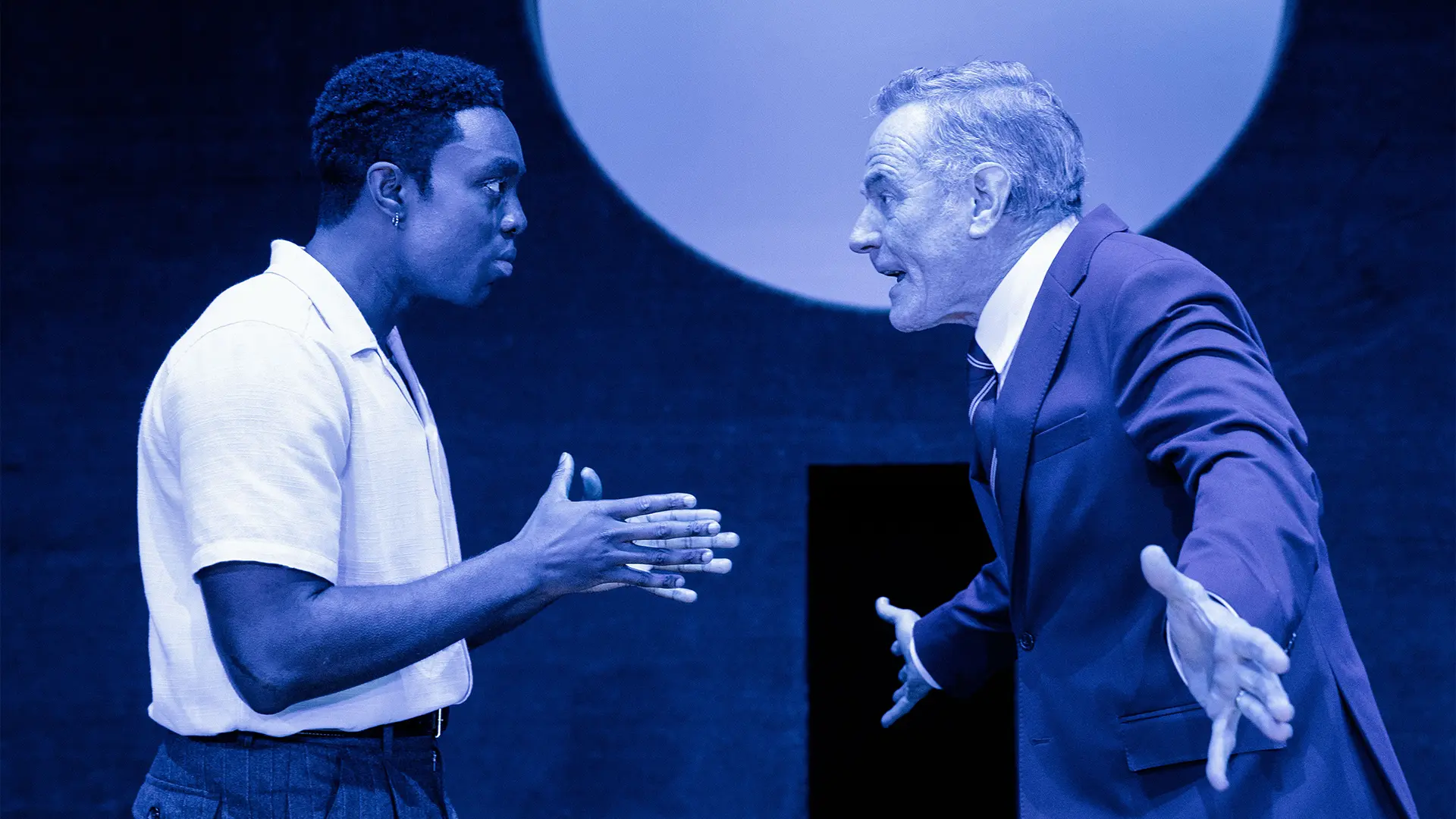
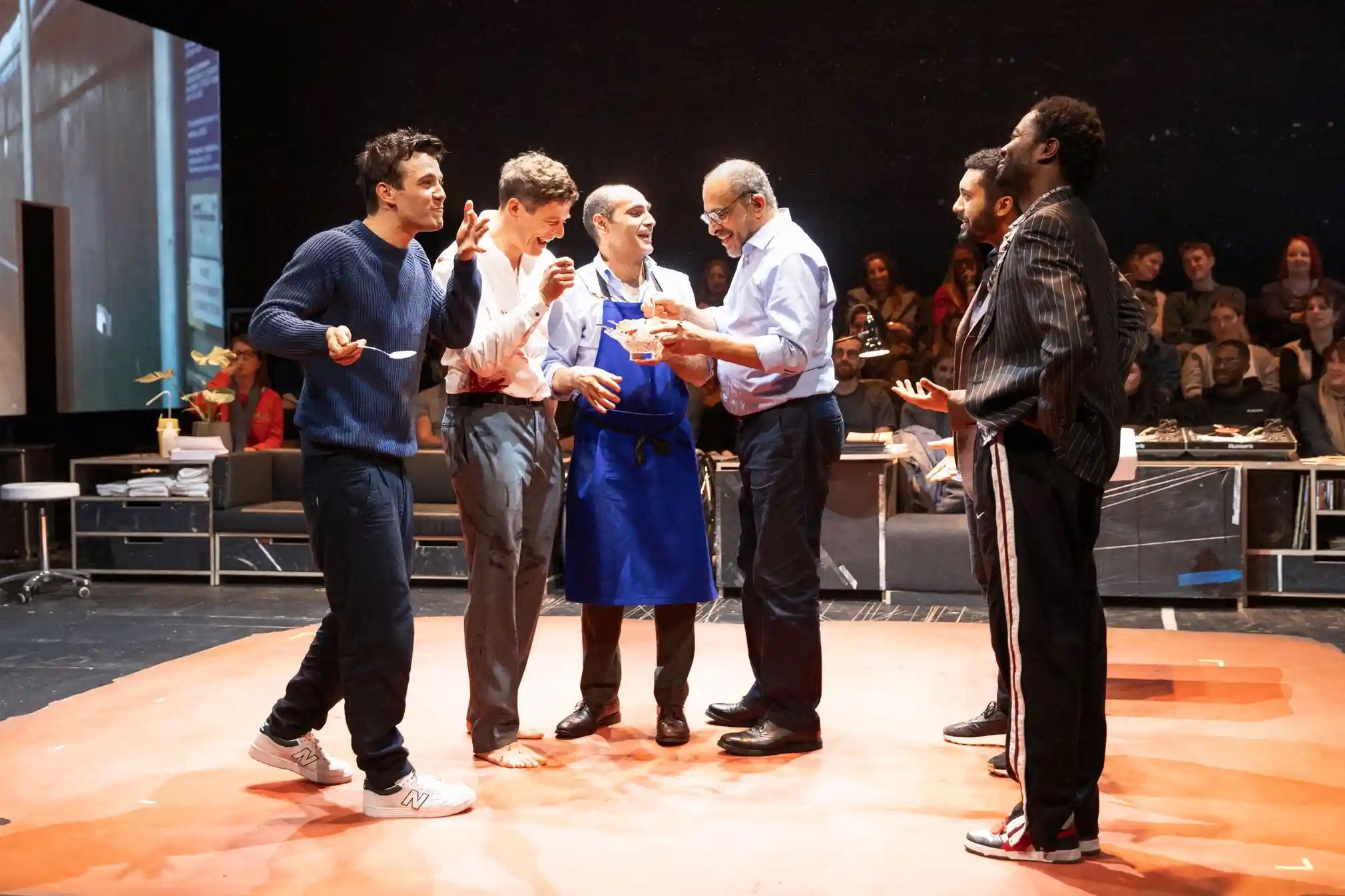
Paapa Essiedu & Bryan Cranston in All My Sons. Photo: Jan Versweyveld

When asked to name my favourite theatre production, I invariably cite Ivo van Hove and Jan Versweyveld’s stark staging of A View from the Bridge. Their return to Miller, this time with All My Sons—and with Bryan Cranston, Paapa Essiedu and Marianne Jean-Baptiste leading the cast—was therefore an enticing prospect. The result is a formidable, if not flawless, revival.

All My Sons remains a meticulously engineered dramas: the early hints, the incremental revelations, and the inexorable tightening of tension culminate in a climax of crushing inevitability. Its moral architecture—examining the corrosion that follows when a man, and indeed a society, elevates profit above humanity—remains chillingly contemporary. Miller’s characters, drawn with psychological acuity and emotional precision, still compel.

Van Hove and Versweyveld strip the stage of naturalistic detail, replacing Miller’s suburban garden and household façade with a bare stage. Lighting rigs stand in for hedges; the house becomes a blank wall with an aperture and a large circular window that variously evokes a sun, a moon, and, perhaps, an unblinking moral eye. It is a yellow circle when the play begins at dawn, before it unfolds over a single day. This follows an added prologue— we see the violent storm that fells the tree representing the missing eldest son. The fallen trunk remains onstage, the lone scenic element, a constant reminder of where the play is heading.

Versweyveld’s set is ingenious in its austerity, it anchors the play in the heart of mid Western industrial America but it is also universal in time as well as space. His lighting design holds the hand of the play throughout, carrying the emotional arc from the gentlest morning glow to a brutal, unforgiving glare.

Cranston’s Joe Keller is immediately persuasive: genial, grounded, radiating decency. Too good to be true? That’s the pleasure of acting of this calibre: for a time, we truly can’t tell as he walks the tightrope between public charm and private guilt. Paapa Essiedu as his son Chris charts a substantial arc, moving from principled idealism to profound disillusionment. He suggests, with remarkable nuance, the fragility of Chris’s outlook—an annoying idealism propped up by the wealth of the family business and his distance from its harsher realities; his life shaped by his experience of war. Paapa Essiedu matches Bryan Cranston in the depth of emotion he conveys.

Gradually we learn that the family lives beneath a shadow. During the recently ended Second World War, Joe’s factory produced a batch of faulty aircraft parts, leading to the deaths of several pilots. Joe was accused of knowingly shipping them, but ultimately his employee Steve was convicted and imprisoned.

His older son, Larry, was declared missing in action four years ago—but not because his plane contained one of the faulty parts (that would be too neat). His mother, Kate, refuses to accept his death. To do so would shatter the brittle righteous world she clings to. Marianne Jean-Baptiste is superb as Mother, revealing both the warmth that holds the family together and the ferocious denial that threatens to tear it apart. Her breakdown is executed with such controlled intensity that it becomes genuinely difficult to watch.

A catalyst arrives in the form of Ann, Larry’s former fiancée, now intending to marry Chris—and, crucially, she’s Steve’s daughter. Wearing a red dress that contrasts with everyone’s else’s duller browns and blues, she’s a spark tossed into a powder keg. The character can easily feel like a functional supporting role, but in Hayley Squires’ hands she is resolute, textured, and quietly courageous, weathered by hard experience yet capable of deep compassion.

This depth of casting extends throughout: the neighbours and relatives, each seem like real human beings with their own moral dilemmas. Take George, Ann’s brother, who storms through the auditorium in a frenzy of grief and fury to accuse Joe of framing Steve. Tom Glynn-Carney gives him the haunted volatility of someone consumed by pain yet desperate to believe he might be mistaken.

Bold in conception, thrilling in execution, and unquestionably relevant
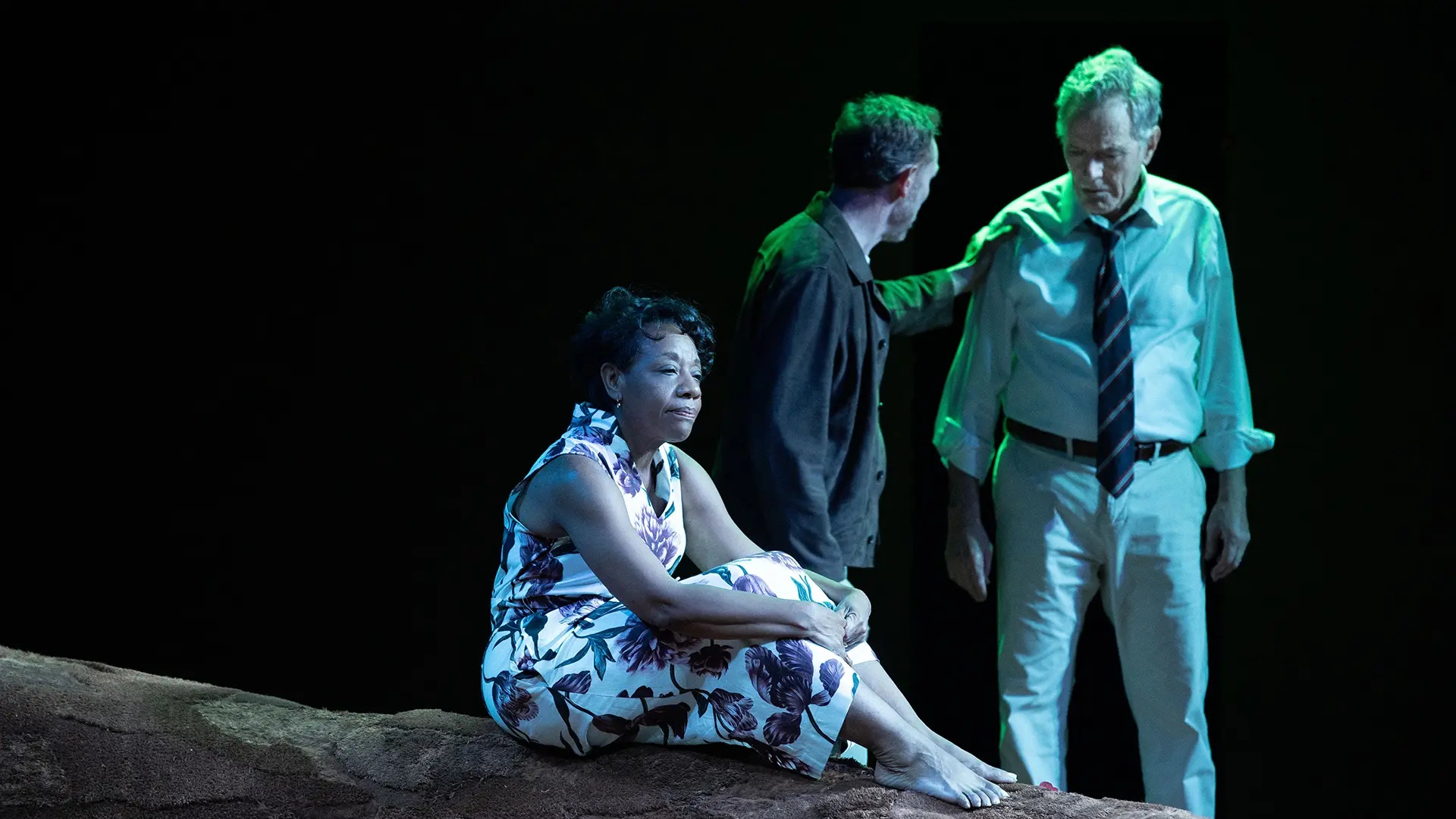
Marianne Jean-Baptiste & Bryan Cranston in All My Sons. Photo: Jan Versweyveld

As Joe offers his catalogue of justifications—military pressure, contractual anxiety, the reassurance that “everyone else was doing it”. These excuses echo across the decades: Boeing overlooking fatal design flaws; suppliers profiting from shoddy PPE during the COVID pandemic; water companies concealing pollution; social-media giants resisting regulation despite the harm to children, vulnerable people and democratic processes; politicians using public office to enrich themselves and their allies. The play has never felt more painfully relevant.

We are left in no doubt that there is no justification for placing profit above human life—even for the most seductive of all reasons: Joe’s claim that he did it for his family. And it is that very family we watch torn apart. “I know you’re no worse than most men,” Chris says, “but I thought you were better. I never saw you as a man. I saw you as my father.”

As the play progresses, Joe’s facade begins to crack, his easygoing selling of his image becomes more desperate, until he is finally confronted with the horror of what he has done. I swear, you can see the life draining from Bryan Cranston, as his face and body sag.

Miller never dilutes his central argument—that business must be governed by conscience and social responsibility—but the greatness of the play is in thw ay it shows us the humanity of the characters and acknowledges the agonising complexity of moral choice. All My Sons may begin in the realm of Ibsenite naturalism, but it concludes as a Greek tragedy of cause and consequence.

Van Hove and Versweyveld deliver a stark, intellectually rigorous interpretation that honours Miller’s ethical inquiry. That said, the production is not without missteps. The fallen tree which is only meant to be four years old is oversized, overly dominant  and overstates its symbolism. For someone who adores minimalism, I surprised myself by wishing for a modest table and chairs downstage and a smaller tree upstage. Then there was the incidental music- the persistent, plaintive plinking of piano and string. Though tastefully executed, it ultimately competes with, rather than elevates, the drama. Given the exceptional performances and the potency of Miller’s dialogue, such embellishment feels unnecessary.

These reservations notwithstanding, this is an incisive, superbly performed revival—bold in conception, often thrilling in execution, and unquestionably relevant. Not quite a five-star triumph, but a richly deserved and emphatic four.

All My Sons can be seen at the Wyndham’s Theatre until 7 March 2026. Buy tickets directly at allmysonsplay.com

Click here to watch this review on the YouTube channel Theatre Reviews With Paul Seven

Paul paid for his ticket.

Click here to read a roundup of other critics’ reviews of All My Sons at Wyndham’s Theatre
 

James Norton in A Little Life with Luke Thompson – review

James Norton is a terrific choice for the lead role in  Ivo van Hove’s production


★★★

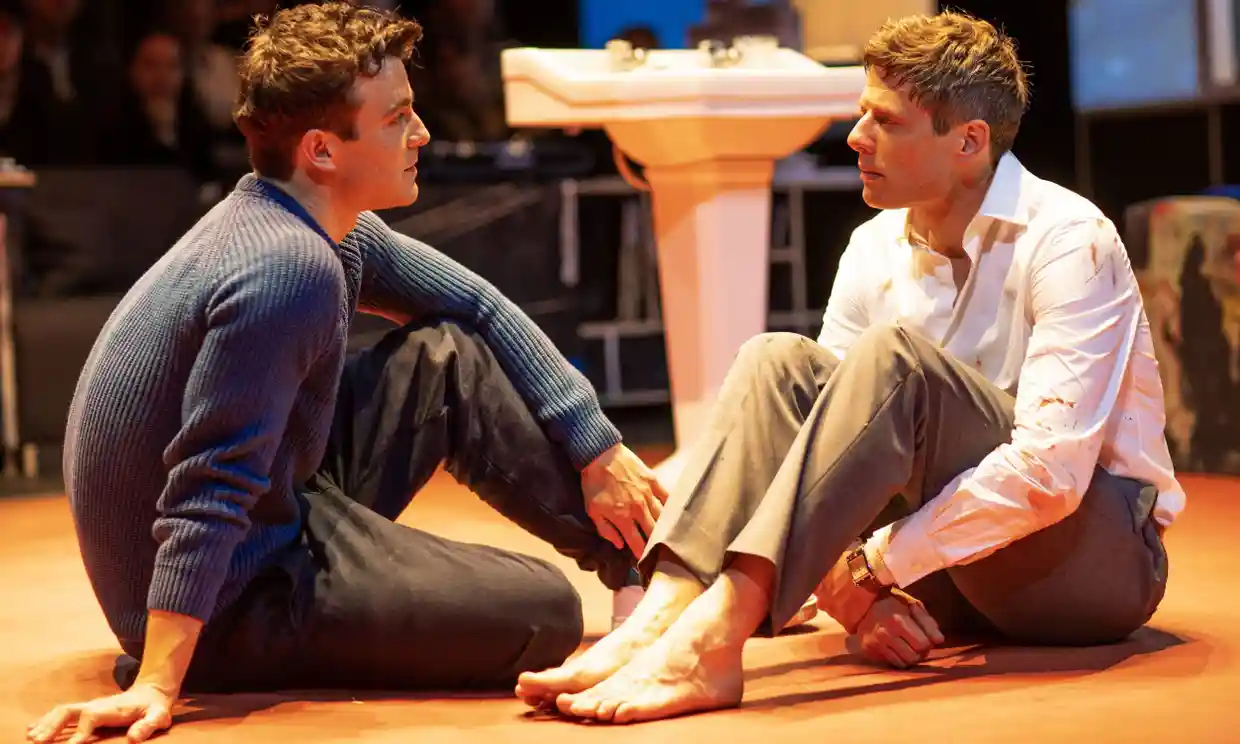
Luke Thompson and James Norton, two actors in A Little Life, are seated on the ground looking at each other
Luke Thompson and James Norton in A Little Life. Photo: Jan Versweyveld

Director Ivo van Hove has made quite a bit about the trauma the audience for A Little Life will have to go through when they see A Little Life at the Harold Pinter Theatre or later at the Savoy. There are indeed pints of blood spilt as the central character played by James Norton self harms and attempts suicide. But, to me anyway, this was clearly stage blood, so not that disturbing. I believe the real trauma audiences risk is in their reaction to the detailed descriptions of the physical and sexual and emotional abuse suffered by a child, and the catastrophic effect it has on his adult life.

The little life in question is that of Jude played by James Norton. We see chronological scenes from over twenty years of his adult life starting at 30 years old. Within this narrative are flashbacks to his childhood in which the abuse he has suffered is revealed, up to a point where you may wonder how one person could be so unfortunate. It is probably best to regard the play as a fable about suffering to avoid a reality check.

Although the play is set in New York in modern times, it is deliberately isolated from the historic events and detail of modern life, and we know nothing of the background to Jude’s childhood. This has the effect of making the story more timeless, more universal.

What we learn in the course of the play is not only how child abuse is hugely damaging psychologically as well as physically but also how the love of those in his circle helps him to manage his adult life, and to heal emotionally, at least to some extent. But it is a harrowing journey, in which the past is never far away. His self disgust leads him to self harm and attempt suicide.

Jude’s saviours take the form of his three friends from college who have formed a lifetime bond. Exactly what attracted them to each other is unclear, but I assume it was more than the fact they all pursued careers beginning with ‘a’- artist, architect, actor and attorney, the latter being Jude’s profession. Although he needs them, we find out they need him too.

James Norton, who you may know as Tommy Lee Royce from Happy Valley, is a terrific choice for the lead role. He never changes his appearance from when he is an eight year old to a fifty year old. Yet, through his posture and his body language, he convinces as a child who trusts and is betrayed, and his face as an adult make you feel his pain as well as his indomitable niceness.

The other characters are less well drawn. Luke Thompson as his best friend Willem gives a solid performance, showing love, confusion and desperation in his open face.

The two other friends- JB, an insecure artist JB and Malcolm, an architect with puppy-like enthusiasm- are played by Omari Douglas and Zach Wyatt. His tormentors are all played by Elliot Cowan sometimes oily, sometime vicious, but all unredeemable, unsubtle villains.

Jude’s guardian angel Ana, someone who helped him but sadly died, continues to stay at his shoulder (literally) as a voice in his head encouraging and warning him. Nathalie Armin gives her character strength and warmth. Emilio Doorgasingh plays Jude’s concerned medical friend.

Best of all, Zubin Varla, who has just won an Olivier Award for Tammy Wynette The Musical and who was impressive in Fun Home at the Young Vic, plays his mentor and adoptive father with humour and tenderness.

Tolstoy said in Anna Karenina: “Happy families are all alike; every unhappy family is unhappy in its own way.” And I think this is a clue to one of the failings of this play. The people who help the adult Jude are all nice, but, like happy families, it is difficult to make good, balanced people distinctive and interesting, compared with the unhappy person that is Jude.

Harold addresses the audience directly on a number of occasions to tell us about how to be a good parent, and indeed a good friend. There is quite of bit of exposition in this adaptation of Hanya Yanagihara’s book, almost as if we’re not trusted to draw our own conclusions.

We as an audience are commandeered into being part of Jude’s support group. It is stated explicitly near the end of the play but it is also implied from the start because there are three rows of audience at the back of the stage creating a traverse setting. This has the effect of making the actors closer to the audience, and the audience part of the play. It is as if simply by being there we are bearing witness to Jude’s suffering and giving him the love he needs.

A group of actors stand in a semi circle in a scene from A Little Life at the Harold Pinter Theatre in London 2023
Luke Thompson, James Norton, Zubin Varla,Emilio Doorgasingh, Omari Douglas and Zach Wyatt in A Little Life. Photo: Jan Versweyveld

The set, lighting and video are designed by Jan Versweyveld. Most of the stage floor is painted light red like a faded pool of blood. There are some accoutrements of a home, soft seating, a kitchen area on one side, and a washbasin in the centre representing the bathroom that is the scene of Jude’s self harming and suicide attempts.

One thing that fascinated me was the smells: onions cooking, and the strong scent of Dettol used to clean up the spillages of blood- and there was a lot of symbolic cleaning up by those around him. This may have been meant to underline for us how strong Jude’s memories were of the smell of his abusers.

There is music from a live string quartet placed very visibly at the front of stalls. Written by Eric Sleichim, it is slow, piercing and haunting, evoking Jude’s edgy state of mind. The musicians deserve a credit and are Alison Holford, Eleanor Parry-Dickinson, Hazel Correa, and Alison d’Souza.

A video is projected continuously on the side walls. It is mainly in slow motion, as a camera winds its way through the streets of New York, suggesting I think Jude’s enervated mind, but it quickens and is covered in screen noise as Jude gets high on self harming. At one point it goes as red as the blood being shed.

The nudity is about humiliation and vulnerability

You may have heard that there is nudity in this production. The abuse that Jude suffers involves him being forced to strip naked on a number of occasions. This also happens sometimes when he is attempting suicide. So, if you were wondering, far from being erotic or sexy, the nudity is about vulnerability and humiliation. By contrast, when he gets naked for a scene of lovemaking, he remains under the covers, while his lover parades easily in the nude, showing the equality of true love.

When he is stripped naked to be abused, James Norton adopts a hunched pose that reminded me of Masaccio’s renaissance painting of Adam and Eve, who having lost their innocence are expelled from Eden; and when his friends carry him tenderly to a hospital bed after a suicide attempt, another iconic image from religious paintings came to mind, this time by Caravaggio and Michelangelo‘s images of Christ being tenderly carried by those that cared for him from the cross to his tomb. If these Biblical allusions are deliberate, they may help explain a dramatic ending that could be intended to evoke the entombment of Christ.

The production is nearly four hours long. Not that I was bored, but I did wonder whether the effect of the play would have been the same if it had been an hour shorter and therefore the experience more intense, or if there had been less horror-film blood, or if the self harming had been described or mimed- as the sexual abuse is. I say this because by the end I was less shocked than I think I would have been if more had been left to my imagination. But it’s not for a critic to try to rewrite a play, we can only describe what we saw and felt.

I did find some of Ivo van Hove‘s adaptation and production heavy-handed, but there is much to recommend. As a visceral description of child abuse, A Little Life is painful to watch. As a story of the power – and limits – of love, it is moving. And James Norton does give an extraordinary performance.

The italicised sentence at the end of paragraph 2 was added a few hours after the review was posted, for clarification.

A Little Life is performing at the Harold Pinter Theatre until 18 June 2023 and then transfers to the Savoy Theatre until 5 August 2023. Details from https://alittlelifeplay.com/

Paul purchased his ticket to see A Little Life

Click here to watch this review on the YouTube Channel Theatre.Reviews With Paul Seven


All About Eve starring Gillian Anderson & Lily James

All About Eve directed by Ivo Van Hove at the Noel Coward Theatre London

[usr=3]

Watch the YouTube review of All About Eve here

You may well know the story. After all, the film All About Eve is a classic. Scripted by Joseph L Mankiewicz, it tells of a young would-be actor who ingratiates herself into the inner circle of an ageing stage star in order to further her career. If you’re not familiar with the story, be ready for surprises and twists.

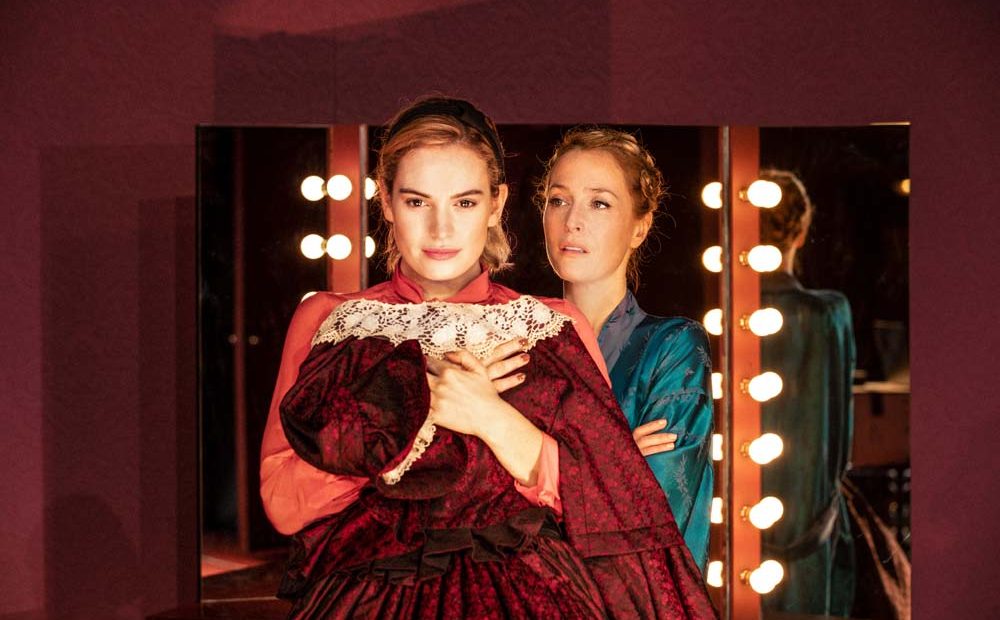
Production shot of Lily James & Gillian Anderson in All About Eve directed by ivo van Hove at Noel Coward theatre London
Lily James & Gillian Anderson in All about Eve. Photo: Jan Versweyveld

The first thing to say is the two leads are mesmerising. It’s worth the ticket price just for their performances. Gillian Anderson as the established and talented Margo Channing conveys the insecurity behind her diva facade that eventually brings out awful behaviour. Lily James as Eve turns on a penny from disingenuous devotion to cold eyed viciousness.


At which theatre can I see All About Eve?

Phoenix Theatre, Charing Cross Road, London WC2H 0JP until 11 May 2019. Booking line: 0844 871 7629    Website: https://www.atgtickets.com/venues/phoenix-theatre

Who directed All About Eve?

Ivo Van Hove

Who stars in All About Eve?

Gillian Anderson and Lily James


Add to that, a performance of great subtlety from Monica Dolan as Margo’s kindly but naïve friend Karen. Her hysterical laughter during a dinner is hilarious.

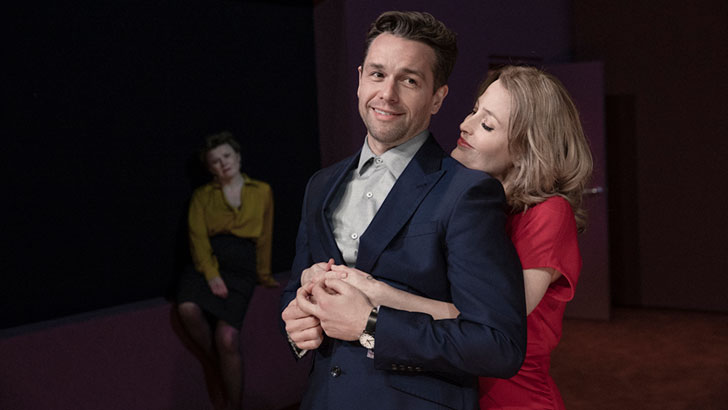
Also outstanding in a great cast are Julian Ovenden as Margo’s egocentric but loving partner Bill, Sheila Reid as Margo’s devoted but worldly wise Birdie and Stanley Townsend as the monstrous power-abusing critic Addison DeWitt.

Production shot of Julian Ovenden and Gillian Anderson in All About Eve directed by Ivo Van Hove at Noel Coward Theatre London
Julian Ovenden & Gillian Anderson in All About Eve. Photo: Jan Versweyveld

The production cleverly puts Margo dead centre, because, although the title is All About Eve, the play is much more about Margo, her coming to terms with getting older, her considering her position as a woman in society, and her fears about losing her younger partner. So Margo herself, the great star, is the centre of attention. Anything that happens that doesn’t involve her nearly always takes place off or to the side of the stage.

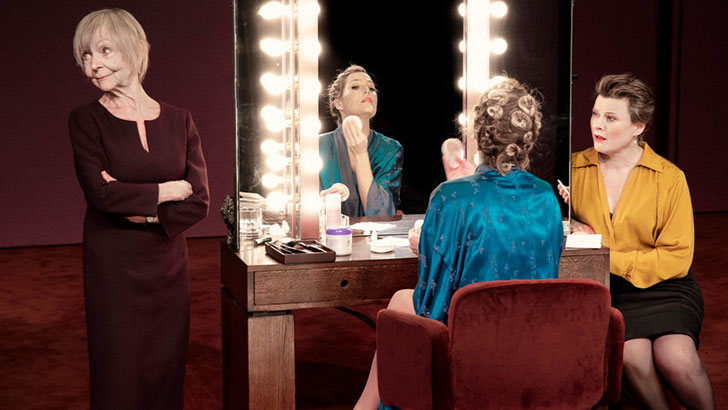
In this respect the set by Jan Versweyveld does a great job. Her room is the main set and her dressing table is right in the middle. Beyond the main set, we can see the backstage and wings.  Above there are giant video screens that convey live what is happening in these areas.  

Production shot of Sheila Reid, Gillian Anderson and Monica Dolan in All About Eve directed by Ivo Van Hove at Noel Coward Theatre London
Sheila Reid, Gillian Anderson & Monica Dolan in All About Eve. Photo: Jan Versweyveld

I didn’t like so much was seeing close ups of the people off stage. For me, the joy of theatre is its human scale. I saw no reason why these scenes shown on the screens shouldn’t be acted on the stage, maybe off centre.

There are occasions when the screens add to our understanding. There’s a camera in the mirror so we can see her face with all its middle aged details that the theatre audience can’t see. And there’s a great moment when the reflection of her face ages before our eyes.

A View From The Bridge at Young Vic was one of the best nights of pure theatre I’ve ever had, so I will always think of Ivo Van Hove as a great theatre director but sadly I have to say that, if he likes big screens so much, it’s time he went to Hollywood.

All About Eve is performing at the Noel Coward theatre until 11 May 2019

×