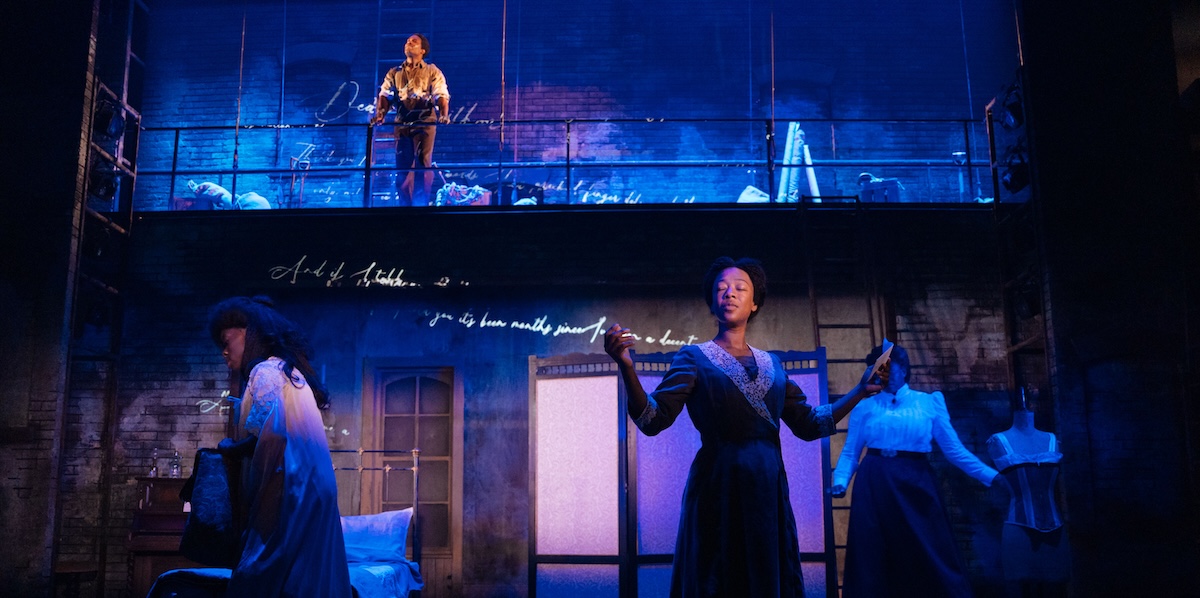
Theatre reviews roundup: Jack Lowden & Martin Freeman in The Fifth Step

Stars shine in serious comedy about addiction

@sohoplace
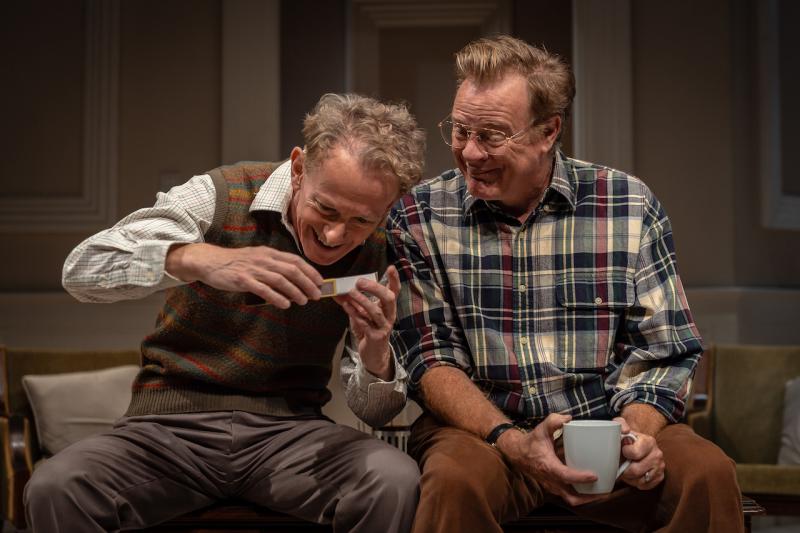
Martin Freeman & Jack Lowden in The Fifth Step. Photo: Johan Persson

The Fifth Step appears to have joined Cyprus Avenue and The Ulster American as one of David Ireland’s finest plays, judging by the critics’ response to it. In this two-hander, Jack Lowden, best known for TV’s Slow Horses, is Luka, a new member of Alcoholics Anonymous, and Martin Freeman  (Sherlock, The Hobbit, The Responder), is James, longtime sober, who agrees to be his sponsor. The ‘fifth step’ involves confessionals, and that’s where the relationship starts to fall apart in stories of drink, sex and religion. All the critics raved about the two stars’ performances, and most were knocked out by the wit and drama of Ireland’s writing, but a few found the play subdued.

[Links to full reviews are included but a number are behind paywalls and therefore may not be accessible]

5 stars ⭑⭑⭑⭑⭑

BroadwayWorld’s Cindy Marcolina was full of praise: ‘Plays like The Fifth Step don’t come around often. Those whose layered philosophical exoskeleton sublime their own dramatic contradictions into quietly superb theatre. At its core, though less pure black comedy and more complex introspective drama coated in dark irony than what you’d expect from David Ireland, it has that delicious push-and-pull that only Ireland can write.’

Jonathan Marshall for LondonTheatre1 declared, ‘Ireland is in his own lane when it comes to playwrighting. The script is meticulously constructed with our expectations constantly subverted. In the wrong hands, the idea of spirituality could come over as trite and clichéd. Here it is depicted with an authentic rawness that we buy into and believe.’ The Mail’s Patrick Marmion also gave top marks, ‘mobilising four-letter, weapons-grade repartee, Ireland is never merely gratuitous and has a genius for embarrassing moral dilemmas.’

4 stars ⭑⭑⭑⭑

Theatre Weekly’s Greg Stewart noted, ‘Ireland’s script dances around a myriad of different themes, yet remains sharp, laced with biting humour and moments of aching vulnerability, deftly navigating themes of addiction, masculinity, and the elusive nature of faith and religion without ever slipping into sentimentality.’ As for the actors, ‘Freeman delivers a stand-out performance as James, a man whose calm exterior masks a storm of guilt and regret. His every pause and glance is loaded with subtext, making his eventual unravelling all the more harrowing. Lowden, meanwhile, is magnetic as Luka—volatile, charming, and deeply wounded.’

Holly O’Mahony of LondonTheatre said, ‘It’s a serious subject matter, but scorching one-liners, usually delivered by a deadpan Lowden but sometimes a quick-to-bite Freeman, ensure the play remains surprisingly funny at every turn. And the pair bring compelling opposing energies, with Freeman’s initially upbeat, delicately curious James a delicious contrast to Holden’s blunt, unfiltered Luka. Whether tender or troubling, chemistry always bubbles between them as they ping-pong through Ireland’s terse script.’ For Chris Wiegand in The Guardian, ‘The timing is impeccable throughout but…both give unsettling performances in a drama that specifically interrogates the role of a sponsor yet applies to multiple positions of authority and influence’.

Sarah Crompton of WhatsOnStage summed up her perceptive review by saying, ‘Freeman and Lowden spar like champions. The Fifth Step, carefully directed by Finn den Hertog, spins through many moods and multiple questions but it never loses its grip. It is a fascinating study of men with lives out of control, and the danger of the ways they seek to exert their power over others and themselves.’

Nick Curtis of The Standard proclaimed, ‘It’s seriously good to see these two actors back in a theatre in such challenging material, on an open stage that offers nowhere to hide’. He gave an added incentive: ‘There’s also an absolutely magnificent final, visual gag that’s almost worth the price of admission alone.’ Dave Fargnoli of The Stage disagreed about the ending, it seems: ‘Although the writing is baggy in places, and never really finds a satisfying conclusion, Ireland opts to leave the piece feeling deliberately messy and unfinished, just like his complex characters’ journeys towards sobriety.’ However he called it a ‘knotty, introspective two-hander…Directed with unsettling, slow-burning precision by Finn den Hertog’.

‘Lowden is staggeringly good as a young loner, Luka,’ reported The Times’ Clive Davis, ‘all jitters and tics and swear words, who is trying to pull himself out of an alcoholic spiral. Freeman impresses too as James, the adviser who is trying to help his protégé through the 12-step programme to sobriety.’ Helen Hawkins at The Arts Desk found ‘Lowden, as is usual with this exceptional actor, totally inhabits (his) wired character’.

3 stars ⭑⭑⭑

For the Telegraph’s Dominic Cavendish, ‘despite bubbling with hard-won authenticity and again displaying Ireland’s flair for nifty, surprising dialogue, the short evening… winds up seeming curiously flat.’

Andrzej Lukowski of Time Out is not a fan of David Ireland’s provocative writing. He described this play as ‘uneven and didactic. Dialling down the outrage exposes the fact Ireland’s not exactly a man who writes deeply nuanced chracters. But it’s also funny, weird, well acted and provocative in a much more profound way than the nihilistic button pressing of old. And if Ireland has mellowed, its only so far – the intrinsically caustic nature of his writing has allowed him to write a play about the human yearning for spirituality that isn’t unbearably cringe.’

Alice Saville for The Independent was disappointed: ‘Director Finn den Hertog stages things simply, in the round. You’d expect a set-up like this to offer plenty of emotional punch, plenty of space for characters to unfurl, but the tension between these two performers doesn’t simmer as it should…this is a production that puts its hands firmly round your neck without ever delivering the expected throttling.’

Critics’ average rating 4.0 ★

The Fifth Step is at @sohoplace until 26 July 2025. Buy tickets directly from the theatre

Click here to read Paul Seven Lewis’ review of The Fifth Step

If you’ve seen The Fifth Step at @sohoplace, please add your review and rating below
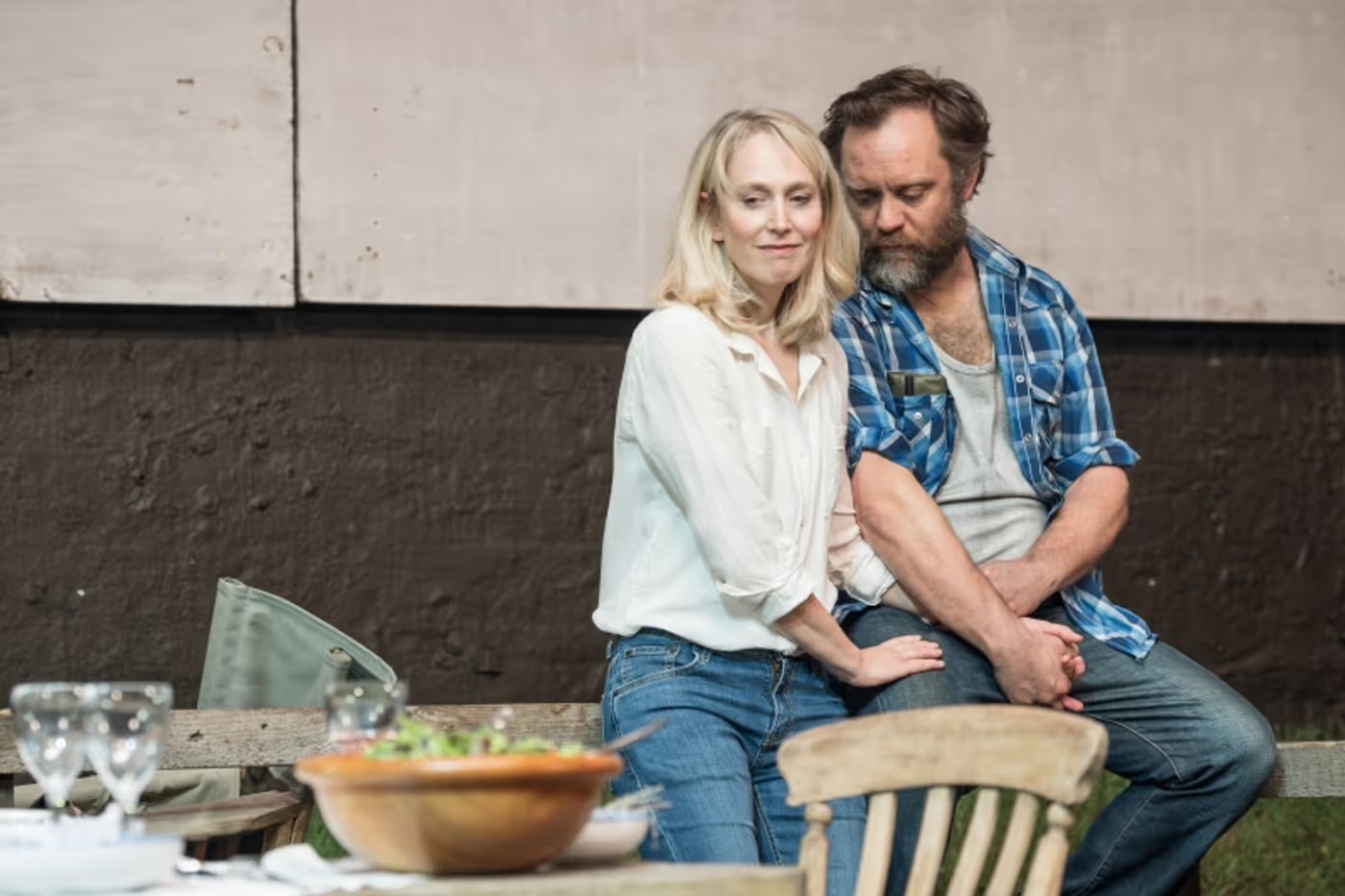
Theatre reviews roundup: The Mad Ones

London debut for American musical writers

The Other palace (Studio)
The Mad Ones at The Other Palace

Kait Kerrigan and Bree Lowdermilk are established musical theatre writers in the US but The Mad Ones is their London debut. It’s the story of a teenager driving her new car with her mother, her boyfriend and her dead best friend, and going back in time to wonder what she’s doing with her life.

[Links to full reviews are included but a number are behind paywalls and therefore may not be accessible]

5 stars ⭑⭑⭑⭑⭑

Paul Vale for The Stage rated it highly: ‘It’s refreshing to see such an experimental structure in a musical: it jumps around in time while playing fast and loose with the fourth wall. This format seems to allow the writers far more scope for creativity, each scene informing the narrative, as if they’re applying a fine wash to a painting, leading to a much greater depth of colour. It’s backed up by a beautifully crafted, compelling score that veers confidently between searing, heartfelt ballads and quirky comedy with whip-smart lyrics.’ He continued, ‘For a small-scale show in a studio space, Lloyd’s flawless production punches well above its weight, from the pitch-perfect cast to Reuben Speed’s ominous, fragmented glass set design, which mirrors Sam’s shattered life.’

4 stars ⭑⭑⭑⭑

LondonTheatre1‘s Chris Omaweng described it as ‘A charming journey that calls its audiences to consider what really matters in life, it’s sweet but not saccharine, multilayered but not overly complex.’

3 stars ⭑⭑⭑

Tom Ambrose at LondonTheatre wasn’t so impressed: ‘Although there is enough here to have an enjoyable, thought-provoking evening of musical theatre, it is not always clear what the point of the story is and, worse yet, The Mad Ones doesn’t know when it has outstayed its welcome.’

Harry Bower at All That Dazzles observed, Thematically…it’s a crowded field—grief, maternal pressure, queerness, friendship, teenage angst and relationship struggle, academic expectation, the fragility of youth. All rich veins, but rarely mined in depth.’

Cindy Marcolina for BroadwayWorld called it ‘a sweet contemporary musical with a heart of gold.’

Critics’ Average Rating 3.6⭑

The Mad Ones can be seen at the Other Palace until 1 June 2025. Click here to buy tickets direct from the theatre.

If you’ve seen The Mad Ones at The Other Palace, please post your review and rating here

Theatre Reviews Roundup: 1536

Best play in London?

Almeida Theatre / Ambassadors Theatre
Tanya Reynolds, Siena Kelly and Liv Hill in 1536. Photo: Helen Murray

There were four stars from many critics for Ava Pickett’s debut play, a product of the Almeida’s scheme to encourage new writing. Now, after a transfer to the West End and some minor alterations to the script, 5 star reviews dominate. The play imagines the devastating effect on the lives of three ordinary women when Henry VIII kills his wife Anne Boleyn. Modern parallels are inescapable when, throughout society, men are encouraged in their subjugation of women.  Some reviews suggested it tailed off a little at the end, otherwise it was high praise for a funny, heartbreaking production directed by Lyndsey Turner and starring Tanya Reynolds, Siena Kelly and Liv Hill. All aspects of the production were praised including the set design by Max Jones and the lighting by Jack Knowles.

[Links to full reviews are included but a number are behind paywalls and therefore may not be accessible]

Reviews for the West End transfer

5 stars ⭑⭑⭑⭑⭑ 

Alex Wood at WhatsOnStage summed up: ‘This is a play about the trickle-down effect of misogyny and how political events can ripple through society – to impact everything from female friendship to economic survival. It’s not hard to see why it feels so stirringly pertinent.’ He noted: ‘Director Lyndsey Turner keeps the pace as lean and dangerous as Pickett’s bracingly good script (reportedly tweaked since its initial spell last year). The cast of five is exceptional’.

‘1536 is a once-in-a-blue-moon theatrical experience. I laughed. I cried. I probably could have screamed too’ said Isobel Lewis at Time Out.

Debbie Gilpin at BroadwayWorld agreed: ‘the audience goes through a whirlwind of emotions; from its giddy beginning where the laughs come thick and fast, to the all-too sobering ending that leaves you slack-jawed and on the edge of your seat’. She continued: ‘It gives women an authentic voice, as you really do recognise three normal people just talking to each other; it’s something that regularly gets overlooked, and highlights the importance of letting women tell their own stories’. She declared: ‘This is a play that we have been crying out for – and a true testament to what theatre can do.’

‘Believe the hype’ shouted The Standard’s Nick Curtis. ‘Ava Pickett’s debut play… is every bit as arresting and electrifying as it was at the Almeida last year. It’s transferred to the suitably intimate Ambassadors with the alchemically potent acting trio of Liv Hill, Siena Kelly and Tanya Reynolds intact’. He was pleased that ‘Director Lyndsey Turner again expertly navigates the script’s blend of sweary modern and archaic language and its swings from laugh-out-loud humour to sudden, chilling horror.’ Referring to the fact that Anna Pickett is turning 1536 into a TV series, he pleaded: ‘I urge you to see this story in the theatre where it’s thrillingly, coruscatingly alive.’

The Telegraph’s Dominic Cavendish recorded: ‘It moves apace from some of the freshest, funniest writing around to some of the most devastating, with nuanced performances to match.’ He went on: ‘Lyndsey Turner’s direction manages each beat of the action impeccably, assisted by a superb design, lighting included. The building momentum and deepening sophistication are perfectly judged, and the accusatory message about women’s constrained lives, then and now, emerges via consummate craft.’

4 stars ⭑ ⭑ ⭑ ⭑ 

The Times’ Dominic Maxwell: ‘Turner’s cast are stars in the making. Hill is a gentle presence as Jane, who then turns compellingly vengeful. The reliably good Reynolds gives a masterclass in words unspoken as the seemingly sensible Mariella. And Kelly’s Anna drives it all with a free-thinking brio: a wit both alluring and hazardous. Pickett binds her characters lightly in a weird time that’s both quite unlike and quite like our own, then slowly but surely tightens the noose.’

Helen Hawkins at The Arts Desk noted: ‘Directed by Lindsey Turner, the production is exceptionally handsome and the staging exemplary. All the action takes place on the edge of a field of corn, with a withered tree to one side (design by Max Jones), where shifts in mood are emphasised through impeccable lighting (by Jack Knowles) that moves from a warm sunny orange and a dismal grey at night to an intense, lurid scarlet when danger looms.’

Critics’ average rating 4.7⭑

Value rating 52 (combination of critics’ rating and most common price)

1536 can be seen at the Ambassadors Theatre until 1 August 2026.

Read Paul Seven’s review here

If you’ve seen 1536, please post your review and rating here

Reviews of the premiere at The Almeida

4 stars ⭑⭑⭑⭑

The Guardian’s Miriam Gillinson got straight to the point: ‘Set against the impending execution of Anne Boleyn, 1536 is an effortlessly funny, bold and ballsy play, which asks the question: just how much have things really changed for women today?’

‘it’s a terrific debut, with meaty roles for three of our finest young actresses, and plenty for an incisive director like Turner to get her teeth into. Bravo,’ proclaimed The Standard’s Nick Curtis.

The Stage’s Sam Marlowe wrote, ‘Kelly, Reynolds and Hill are deliciously natural together, funny, irreverent, tender and teasing…There is, perhaps, nothing startlingly new here; but there’s a freshness and an ease about Pickett’s ear for conversational gambit and character foible that makes the play eminently watchable’.

Sarah Crompton at WhatsOnStage called it ‘an impressive, involving evening’.

Time Out’s Andrjez Lukowski summed it up as ‘A fascinating feminist hybrid of EastEnders, Samuel Beckett and Wolf Hall’ or, to put it another way, ‘1536 is a droll and perceptive period piece that’s also a searing and unsettling contemporary feminist drama’.

Ella Duggan for The Independent declared ‘Pickett…has written a script that is lean but dense, rich in vernacular and laced with wit’ and ‘Director Lyndsey Turner orchestrates it all with characteristic finesse, guiding us from rolling laughter to horror with a barely susceptible gear change.’

3 stars ⭑ ⭑ ⭑

Clare Allfree for The Telegraph describing the play as ‘effervescent, extremely funny’ noted, ‘Pickett characterises her protagonists with eye-popping vitality and, thanks in no small part to outstanding performances from Reynolds, Kelly and Hill, in ways that vividly energise our understanding of historic female experience at the hands of men.’

1 star ⭑

The Times’ Clive Davis was mystified by the play’s appeal to others. He called it ‘the kind of simplistic, feminist-lite drama about the evils of patriarchy that you normally encounter in a one-hour slot at the Edinburgh Fringe, where my instinct would be not to write a review to spare the feelings of everyone involved.’

Critics’ Average Rating 3.6⭑

1536 was at the Almeida until 7 June 2025 and can be seen at the Ambassadors Theatre 2 May-1 August 2026.

If you’ve seen 1536, please post your review and rating here

Theatre reviews roundup: The Deep Blue Sea with Tamsin Greig

Tamsin Greig triumphs

Theatre Royal Haymarket
Tamsin Greig in The Deep Blue Sea. Photo: Manuel Harlan

Lindsay Posner’s  production of Terence Rattigan’s play about a woman’s depression and breakdown was well received by the critics. They particularly praised Tamsin Greig  who was said to have brought a rare emotional depth to the leading role of Hester. The show’s transfer from the intimate Ustinov Studio in Bath to the ‘cavernous’ Theatre Royal Haymarket was too much for some, who missed both intimacy and volume.

[Links to full reviews are included but a number are behind paywalls and therefore may not be accessible]

5 stars ⭑⭑⭑⭑⭑

WhatsOnStage‘s Sarah Crompton gave a lot of background to Rattigan’s play which is worth a read in itself. As to this production, ‘Greig makes you feel every ounce of Hester’s desperation as she clings to a man she knows she doesn’t love her and is unable to match the feelings he has unleashed in her. The timing she has honed over years as a comic actress makes her a fine tragedian’. She concluded, ‘It’s a terrific production that reveals the extraordinary power in this slightly old-fashioned play that has outlasted many more modish works.’

4 stars ⭑⭑⭑⭑

‘Tamsin Greig is shatteringly good’ said Nick Curtis in The Standard.  ‘Greig perfectly balances how much she reveals of Hester’s inner torment,’ said Olivia Rook at LondonTheatre, Posner directs Rattigan’s play with sensitive precision’.

For Greg Stewart at Theatre Weekly, ‘With Tamsin Greig at its centre, this production is a devastatingly intimate portrait of love, despair, and the quiet agony of emotional isolation. Greig’s portrayal of Hester Collyer is nothing short of beautiful. Known for her deft comic timing and nuanced dramatic work, she brings a raw vulnerability to the role that is both harrowing and magnetic.‘

Matt Wolf for The Arts Desk said, ‘Greig, as ever, is second-to-none in her ability to communicate a soul in torment’.

3 stars ⭑⭑⭑

Dave Fargnoli for The Stage found, ‘Tamsin Greig gives a grounded, nuanced performance, finding believable need and vulnerability in a character who is obsessively, pathetically devoted to a man who cannot return her affections. Greig catches every detail with consummate skill, maintaining a facade of brittle politeness that barely conceals her withering disdain.’ He commented, ‘Peter McKintosh’s set is gorgeously gloomy, recreating Hester’s run-down rented apartment in detail.’

Anne Moloney for CityAM criticised the ‘plodding pace’ but said, ‘Greig’s performance as Hester is a triumph.’

Dominic Maxwell complained in The Times ‘I just wish we could hear them better’ (something Olivia Rook at LondonTheatre and Matt Wolf at The Arts Desk also mentioned), ‘which is an awful shame because I’ve never seen a Hester whose depression is so tenderly drawn…And Greig’s comic timing is as world-class as ever.’

Alexander Cohen at BroadwayWorld was not impressed: ‘Lindsay Posner’s austere production is almost obsequiously faithful to the text. No high-tech high-gloss spectacles here please…A shame then that the gamble doesn’t quite pay off…Now transferring to a cavernous West End theatre, the audience are relegated to observers peeping in, not guests at the dinner table. Perhaps that is why Tamsin Greig’s performance doesn’t quite hit the mark. …Icy glares directed out to the audience are not enough to convince that she is teetering on the verge of suicide or fill the vast space with groaning melancholy’.

Critics’ average rating 3.6⭑

Value rating 37 (Value rating is the Average Critic Rating divided by the typical ticket price)

The Deep Blue Sea is at The Theatre Royal Haymarket until 5 September 2025. Buy tickets from the theatre here

If you’ve seen The Deep Blue Sea at the Ustinov Studio or Theatre Royal Haymarket, please add your review and rating below

Theatre reviews roundup: The Comedy About Spies

Mischief reaches comedy heights

Noel Coward theatre
The Comedy About Spies.Photo: Mark Senior

Mischief made their name with The Play That Goes Wrong. Their follow-ups have never quite reached the height of comedy of the original- until now, it seems. A spoof of 1960s spy films, The Comedy About Spies is a convoluted story of British, American and Russian agents looking for the plans of a top secret weapon. The plot is probably less important than the quality of the script by Henry Lewis and Henry Shields, the direction by Matt DiCarlo, the design by David Farley, and the ensemble cast, all of which were lavished with praise by the critics.

[Links to full reviews are included but a number are behind paywalls and therefore may not be accessible]

5 stars ⭑⭑⭑⭑⭑

Greg Stewart at Theatre Weekly declared, ‘This finely tuned machine of comic timing and theatrical chaos is possibly Mischief’s best work yet’. He wrote, ‘Writers Henry Lewis and Henry Shields have crafted a script that is both lovingly referential and gleefully absurd. The dialogue crackles with wit, and the physical comedy…is executed with military precision. Some jokes are smooth as a Shiraz: quick and easy, delivered seemingly off the cuff in response to a previous line. However, the real magic lies in punchlines set up several scenes earlier, making the payoff all the more rewarding.’

Aliya Al-Hussan at LondonTheatre was just as enthusiastic: ‘Politically correct it certainly isn’t, but huge fun it definitely is.’ ‘The wordplay is incredibly silly, but also very clever,’ she opined. ‘The cast is tight, with a zany energy. The chemistry is palpable…As ever, Lewis steals every scene in which he appears.’

The Mail‘s Patrick Marmion was left ‘in awe at how it’s possible to devise something so complicated… and actually pull it off on stage.’ Calling it ‘slick as an oil spill on an ice rink,’ he said it was ‘a 360, all-round, head-spinning winner’.

4 stars ⭑⭑⭑⭑

The Standard‘s Nick Curtis got very excited: ‘Finally, Mischief Theatre may have found a show to match the frenetically daft wit and precise physical comedy of their breakout hit The Play That Goes Wrong.’ He praised the ‘cartoonish levels of gurning and mugging to augment the physical horseplay and…the plot is pure nonsense. But it made me laugh out loud more often than just about anything else I’ve seen in the last 12 months and the characters are charming and winningly delineated. The fans will love it: I and other sceptics may be converted.’

Clive Davis of The Times proclaimed, ‘this is just the kind of outrageously inventive humour that the world needs at the moment.’ He said, ‘Matt DiCarlo’s intricately calibrated production is a miracle of comic timing and ensemble acting.’ He noted, ‘David Farley’s set is a joy, the scenery changes unfurling like a succession of Russian dolls.’

The Telegraph‘s Dominic Cavendish warned, ‘if you don’t have a penchant for running gags flogged to death, rampant mugging, cheap sight gags and corny word-play then you may not be the ideal audience here. That said, even the most averse spectator will likely marvel at the gag-a-line detail, comic timing and sheer physical bravura of this company of fools’. He concluded,’I’d say it takes near genius to fashion something this incorrigibly goofy.’ ‘it’s escapism of the highest order, and in the end, hugely enjoyable,’ decided Chris Omaweng of LondonTheatre1.

Ryan Gilbey for The Guardian ‘was crying helpless tears of laughter within the first five minutes, and at several other moments throughout’. He provided his own humorous comment on the content, saying the show ‘offers farce, slapstick and multiple callbacks. So much of the script relies on linguistic misunderstandings (sweet/suite, need/knead, etc) that even the most tolerant viewer may become homophone-phobic.’ He noted, ‘David Farley’s doll’s-house-style cross-section set, which splits the hotel into colour-coded quarters in the first act, is glorious, but his designs grow fussy and over-dressed in act two’.

Franco Milazzo for BroadwayWorld, ‘the silliness is off the scale and the lexicon of laughs is explored every which way. There’s some excellent punning, running jokes and fantastical physical feats’. Tom Wicker in Time Out described it as ‘low-hanging fruit, of course, but ramped up by Mischief Theatre’s trademark ability to spin seemingly minor mishaps into total comedy meltdowns. Director Matt Dicarlo handles these set-pieces and Shields and Lewis’s penchant for fast-moving wordplay deftly, allowing us half a knowing wink before whisking us on to the characters’ next blunder.’

‘It is impossible not to be swept along by the giddily escalating mirth of Matt DiCarlo’s amiable production,’ claimed Fiona Mountford in the i.

3 stars ⭑⭑⭑

Alun Hood for WhatsOnStage had a more lukewarm response: ‘it’s crowd-pleasing stuff, if seldom as inspired as the best of the “….Goes Wrong” franchise that first put Mischief on the map,’ said . He explained, ‘The material is weaker than the structure and mechanics.’ Holly O’Mahony at The Stage felt that ‘while the physical comedy is impeccably executed, the bare-bones story it’s running on will leave some craving a little more substance.’ In her opinion, ‘loyal fans of the company won’t be disappointed. It’s pure escapism: it doesn’t make you think and you’ll see the jokes coming before they land.’

Critics’ average rating 4.1 ★

Value rating 48 (Value rating is the Average Critic Rating divided by the typical ticket price)

The Comedy About Spies is at the Noel Coward theatre until 5 September 2025. Buy tickets from the producers here.

If you’ve seen The Comedy About Spies at the Noel Coward theatre, please add your review and rating below
Theatre reviews roundup: Sondheim’s Here We Are

Sondheim’s last musical: good but not great?

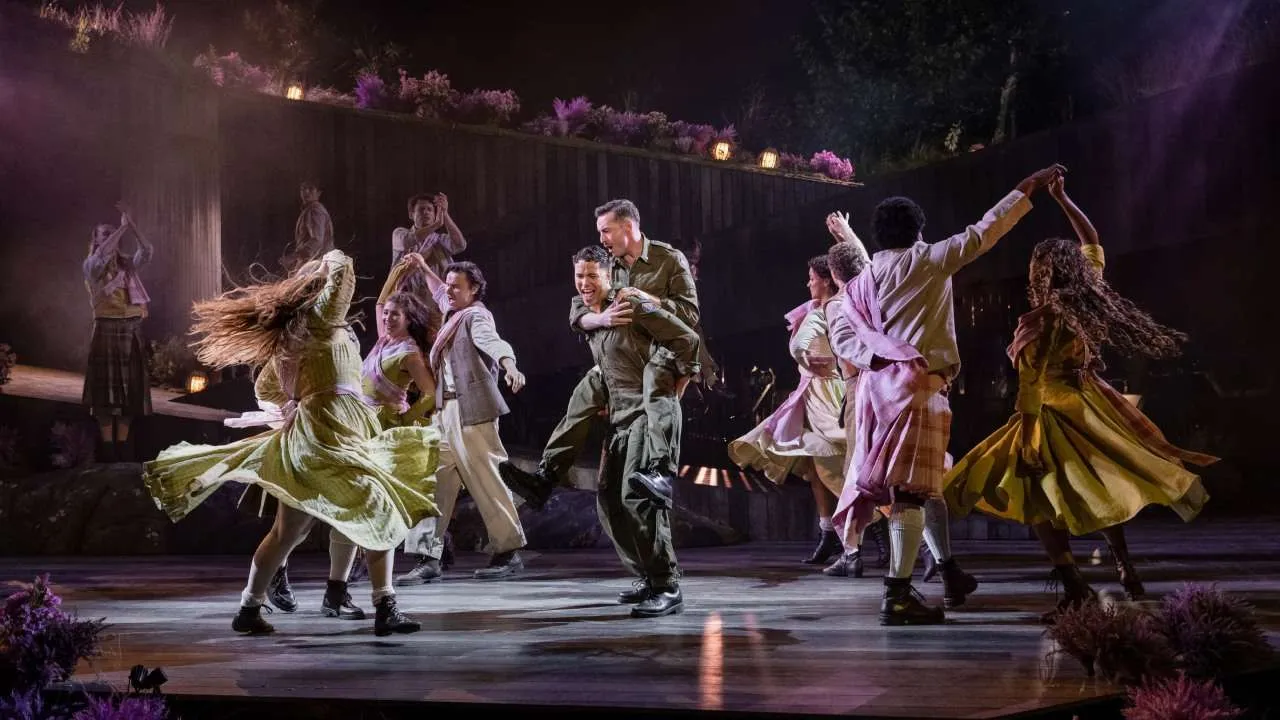
Here We Are at the National Theatre. Photo: Marc Brenner

Opinions on Stephen Sondheim’s final musical didn’t so much vary as go to polar opposites, from five stars to two. The show is a surreal critique of capitalism based on two films by Luis Bunuel, one of which was The Discreet Charm of the Bourgeoisie. In the musical, the bourgeoisie are Americans facing an existential crisis. Some critics thought it was deep, some found it shallow (feelings that were reflected in their view of David Ives’ book). Some heard music typical of Sondheim’s late great period, others felt he was not at his best. The fact that it was unfinished and notably short of songs in the second half didn’t bother some but ruined it for others. The reviewers all agreed it was a top class cast which included Jane Krakowski, Rory Kinnear, Jesse Tyler Ferguson and Martha Plimpton.

[Links to full reviews are included but a number are behind paywalls and therefore may not be accessible]

5 stars ★★★★★

Reviewing for TheArtsDesk, Matt Wolf, something of an expert on Sondheim, saw a perfection that others didn’t: ‘Musical theatre newbies may want more distinct numbers, not knowing that late-career Sondheim…some while ago dispensed with those. But those willing to meet the show on its own wacky, wonderful terms are in for a treat, and not just because the National has fielded a lineup of talent that is extraordinary, even at that address.’ Mr Wolf may look at his idol’s work through rose coloured spectacles, but it’s worth reading his insightful review.

4 stars ★★★★

The Times’ Clive Davis thought it was a ‘curate’s egg’: ‘The first part of the evening is quite simply extraordinary, the typically angular melodies delivered with panache by a first-rate ensemble…This show reminds us that (Sondheim) can also be very, very funny’. However, ‘It’s in the second act that something strange happens to Joe Mantello’s urbane production. An astonishingly deft piece of musical theatre slowly gives up on songs and becomes a mixture of comedy of manners and existential drama.’

Sarah Crompton of WhatsOnStage seemed   pleased just to be there: ‘Here We Are is not anywhere near peak Sondheim, but…there are constant glimmers of his wit, and his ability to grapple with the secrets of the human heart. It feels like a late-career bonus, a curiosity but one that gleams.’

The Telegraph’s Dominic Cavendish was sanguine: ‘We can carp until doomsday about what it lacks but it’s a boon to have it over here. Sure, it’s no masterpiece, but a minor-league swansong from a giant of musicals is still a major deal.’

Dominic Maxwell in The Sunday Times said it had flaws, ‘And yet: Sondheim’s songs, which nod to his back catalogue while always staying spry, still delight. Joe Mantello’s deluxe staging is swish, swift and surprising. The Anglo-American cast is sensationally good…When it’s just satirical, it’s so-so. When it surrenders to its strangeness, it’s an exquisitely unpredictable ensemble piece.‘

3 stars ★★★

Time Out’s Andrzej Lukowski decided to be ‘quite indulgent’ because audiences were warned in advance that the musical was incomplete. He called David Ives’ book ‘deft, funny and perceptive’. He concluded with an element of irony: ‘as final unfinished works go, it’s pretty bloody good. Here We Are is a really, really great example of half a musical. The luxury casting doesn’t simply flatter flimsy material: what Sondheim actually wrote was very good, and Ives’s second half is hardly a hack job.’

Arifa Akbar of The Guardian was disappointed: ‘for all its interesting ideas on life and death, rich and poor, it melts away rather too quickly afterwards.’ Adam Bloodworth at CityAM observed, ‘Much of the comedy is mined from Fawlty Towers-style farcical faffing – but on a grand, complex scale. It’s the type of tomfoolery that might look silly but is pulled off vanishingly rarely.’  ‘As for (Sondheim’s) ditties,’ he said, ‘they serve as a function to enable the story rather than existing to entertain us in and of themselves.’

2 stars ★★

The Stage’s Sam Marlowe called it ‘a strangulated swansong.’ The Stage gave her the opportunity to write a ‘Long Review’ and she certainly took advantage to explain her reaction at length. The characters were part of the reason: ‘There is an immediate, and fundamental, problem: not only are these shallow idiots – here a bunch of vacuous urbanites in search of a place to have brunch – too thinly drawn to feel properly human, but there’s not a single compelling or convincing relationship between them.’ That’s not all: ‘It’s all pretty tedious, and although the score is immediately recognisable as Sondheim – that bouncy chromaticism, those rising modulations from major to minor – it’s not especially memorable. Still less arresting are the lyrics‘. And if that’s not enough: ‘you just feel as if the performers are flailing about helplessly, with no guidance from Ives’ aimless book.’

Alexander Cohen of BroadwayWorld took a similar line. ‘There’s little dramatic mileage to be milked from characters who are deliberately flimsy caricatures,’ he said. He continued, ‘At its worst David Ives’ book is a single punchline Monty Python sketch dragged out into an entire musical – that punchline being that the one percenters barely possess a brain cell between them.’

The Standard’s Nick Curtis declared, ‘Here We Are is extremely sketchy and gets lumpier and messier as it goes on. The characters are barely-fleshed stereotypes’.

Critics’ average rating 2.9★

Value rating 33 (Value rating is the Average Critic Rating divided by the typical ticket price)

Here We Are is at the National Theatre until 28 June 2025. Buy tickets from the theatre here.

If you’ve seen Here We Are at The National Theatre, please add your review and rating below
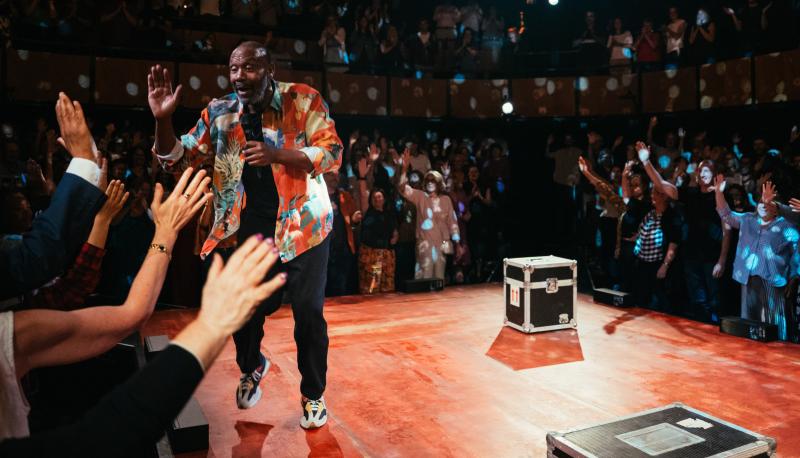
Theatre review: Conversations After Sex

Raw emotions in a play about loss

⭑⭑⭑⭑

A woman and a man in conversation sitting on a bed
Olivia Lindsay and Julian Moore-Cook in Conversations After Sex. Photo: Jake Bush

Mark O’Halloran’s Conversations After Sex is about a woman throwing herself into 12 months of casual anonymous sex. Having won the Irish Times Best New Play Award, it is receiving its UK premiere at the Park90 Theatre. The intimate venue is ideal for watching such private conversations. The set is essentially a bed with a small amount of space around it, and the audience closing in on three sides.

There are something like twenty short scenes in which the character referred to as ‘She’ and played by Olivia Lindsay has just had casual sex and then chats with the man in question. Sometimes he is a returning lover, although even then they don’t know each other’s names; more often he’s a passing acquaintance. All are played by Julian Moore-Cook. There are occasional scenes, just as brief, between ‘She’ and her sister played by Jo Herbert.

It seems ‘She’ has engaged upon a series of one night stands after a traumatic event involving her partner, about which more is gradually revealed in the course of the play. The meaningless sex is a kind of self therapy, both a distraction and a way of moving on. I doubt it’s a form of therapy any counsellor would recommend but, over twelve months, she does reach some kind of understanding.

Despite the conversations being post-coital, they are rarely about sex. Nor do we see the sex that preceded them. We join them at the moment when the participants’ defences are down, thanks to both the anonymity of the liaison and the abandonment involved in sex. So, the men are inclined to be more honest than they might otherwise be, when they have an image to project and protect.

Julian Moore-Cook conveys the multiple male characters with great skill. Without the aid of costume changes, he goes from puppyish young man to emotional jilted boyfriend to self confident cheat. His face is a valuable tool that he manipulates through boyish smile to bewilderment to jutting pride.

Olivia Lindsay and Julian Moore-Cook in Conversations After Sex. Photo: Jake Bush

The men tell tales of their adventures- one has had sex with half his neighbours, although he qualifies this by saying he lives in a cul-de-sac. They talk about their betrayals, like the one who gave his girlfriend chlamydia. They get upset about having been criticised. They rarely show self awareness as they reveal their self absorption. It is certainly an insight into the male psyche.

‘She’ seems glad of the company, and amuses herself (and us) with ironic comments. Some of her more serious remarks suggest she is looking for more than escape: ‘you remind me of someone,’ she says, as if these representatives of the male sex might offer a key to understanding her former lover.

Olivia Lindsay has a great way with an arched eyebrow and wry smile.  Every so often, something triggers ‘She’ to remember her pain and her own emotions spill out. Again Ms Lindsay conveys these bursts of sadness with great feeling.

Revealing portraits & questionable nudity

I can’t say whether this is an accurate portrayal of the world of casual sex but, in the confined space of this play, these sad, amusing and occasionally angry encounters come across as believable. The dialogue and structure are well nigh perfect. Although much of the conversation is on the level of a chat, every so often the men, stripped of their defences, reveal grief over the death of parents or departure of lovers. What emerges clearly is that the real theme of the play is loss. Even the Sister is experiencing a loss.

Despite their tears, the men don’t impress us.  This is partly because they seem peripheral, but also because they are portrayed as so narcissistic. By contrast, the ever present woman’s raw emotions as she navigates her grief touch your heart. The production is tightly directed by Jess Edwards, with splendid performances by all the cast.

But I have to question the use of nudity in this production. Nakedness on stage can be gratuitous, but in this case it is an important element of the story. The author’s intention in the script was that both main characters should start off naked. They soon get dressed, at least into their underwear, and remain so for the rest of the play, but I think this starting point is important because it symbolises the vulnerability of the characters in this situation, and reinforces why they are so honest about their thoughts and feelings. However, in this production, while Julian Moore-Cook is first seen completely naked, Olivia Lindsay is not.

I don’t know whose decision that was, and I’m not saying it ruined the production, but I do think it was a mistake, because the difference in the two characters’ first appearance created a misleading dynamic between them, suggesting only the man’s defences were down, which is far from the case.

Nevertheless Conversations After Sex is a fine piece of writing in a strong production and I would urge you to get to the Park Theatre and treat yourself to this little gem before it closes.

Conversations After Sex can be seen at the Park Theatre until 17 May 2025. Click here to buy tickets direct from the theatre.

Paul was given a review ticket by the venue.

Watch this review on the YouTube channel Theatre Reviews With Paul Seven


Theatre reviews roundup: Romeo And Juliet (Globe)

Doomed love goes West

Shakespeare’s Globe
Lola Shalam and Roman Asde in Romeo & Juliet at The Globe

A comedic version of Shakespeare’s most famous love story, set in the Wild West, went down well with the critics. The young stars Lola Shalam and Roman Asde made a strong impression in Sean Holmes‘ production.

[Links to full reviews are included but a number are behind paywalls and therefore may not be accessible]

4 stars ⭑⭑⭑⭑

Fiona Mountford, writing for the Telegraph, said ‘Holmes’s vision is no dispiriting instance of a classic play being shoe-horned into an outlandish concept, but something quite the opposite: it makes perfect sense for the Capulets and Montagues to be warring tribes in a place of barely suppressed lawlessness’.

The Guardian’s Arifa Akbar declared it to be ‘a rare production where high concept meets high-class execution.’ Tom Wicker for The Stage said, ‘Sean Holmes brings a light touch and plenty of humour to his staging of William Shakespeare’s enduringly popular tale of doomed romance’. As for the star cross’d lovers: ‘Shalam gives a star-making performance as a complicated and well-rounded Juliet…Asde does a good job of capturing Romeo’s bluster but also his vulnerability’.

Julia Rank for LondonTheatre noted, ‘Sean Holmes’s nifty production is set in the Wild West of the 19th century, where everyday violence pervades, and he also extracts the full comic potential of the play’. She praised the leads: ‘Asde speaks beautifully and nails the character’s impulsiveness, suggesting a young actor to watch. Fellow newcomer Lola Shalam is also eye-catching as Juliet, a strong-willed frontier girl who has been coached in what to say and feel but can’t contain her outspoken nature’.

Miriam Sallon for WhatsOnStage thought ‘The chemistry between Asde’s Romeo and Lola Shalam’s Juliet is brilliant in that they’re just two horny teenagers who happen to have landed on each other as targets.’

TheArtsDesk’s Rachel Halliburton noted, ‘Great ensemble work from the cast buoys the atmosphere of this giddy seesaw ride between life and death’. She enthused, ‘It’s a joyous, flamboyant launch to the Globe’s 2025 summer season’.

3 stars ⭑⭑⭑

Isobel Lewis writing for Time Out was concerned that ‘There are parts, however, where this comic focus doesn’t work‘. For her, ‘it’s the undeniable chemistry between Asde and Shalam that’s the star attraction.’

Dominic Maxwell in The Times said ‘there is a vivid sense of youth here that keeps the show fresh, even when overthought or oversold.’

Critics’ Average Rating 3.8⭑

Romeo And Juliet  can be seen at The Globe until 2 August 2025. Buy tickets direct from the theatre

If you have seen Romeo And Juliet at The Globe, please give your review and rating below

Theatre review: The Government Inspector at Chichester

Satire on corrupt officialdom is a splendid farce


⭑⭑⭑⭑

Tom Rosenthal and Lloyd Hutchinson in The Government Inspector. Photo: Ellie-Kurttz

Chichester Festival Theatre has pulled out all the stops for the launch of its 2025 season: a legendary director, a complex set, and a stage filling cast, plus three musicians as a bonus. In the end, this production of The Government Inspector turns out to be slightly less than the sum of its parts, it’s not for want of trying, and I thoroughly recommend it if you’re looking for a good night out. This satire on government corruption is still relevant, and there’s a moment of physical comedy that anyone who sees it will never forget .

Gogol’s The Government Inspector is a copper bottomed classic, revolutionary when it was written nearly two hundred years ago and still an enjoyable satire on corrupt local officials. Constant revivals and more contemporary plays inspired by it – Accidental Death of an Anarchist springs to mind- may have blunted its sharpness but its depiction of politicians’ greed, bullying and cowardice still strikes a chord. And no wonder in an era of the Covid scandals and a US President who humiliates and attacks his closest allies.

This production is helped by a febrile new translation by Phil Porter, but most of all by the decision of former RSC Artistic Director Gregory Doran to turn up the physical comedy to boiling point.

Some of the slapstick had me in stitches: there’s an extraordinary moment when someone falls through a roof and crashes onto a bed, which I still can’t believe happened. In fact I was too shocked to laugh straightaway. On another occasion, a character feels ‘weak at the knees’ and then walks as if his legs are made of rubber

The story is pretty simple. There’s a report that a Government Inspector is due to visit a town full of corrupt officials. A con man called Khlestakov is mistaken for the investigator and the frightened civic chiefs try to mollify him with flattery and bribes. The truth is eventually revealed but by then he has squeezed a fortune out of them and gone on his way.

All the characters are caricatures and none have any redeeming features:  in fact, the longer the play goes on, the more nasty they are revealed to be. Even the fake inspector, while he  might be a hero for exposing and humiliating the officials, is no better than them in his unpleasantness to everyone around him. His arrogance and general amorality is offset by his confidence and charm which are perfectly portrayed by an imperious, smiling Tom Rosenthal.

Leading the duped is The Mayor, a bustling little man and a classic bully, condescending and sometimes vicious to those below him, obsequious to those he considers his superiors. You can feel the mounting frustration and fear in Lloyd Hutchinson’s portrayal.

The Judge, an unashamed womaniser proud to take bribes, is a huge man, played by Joe Dixon with northern bluntness and silly walks.  Christopher Middleton as the Head of Schools is a wide-eyed nervous wreck. Oscar Pearce is The Charity Commissioner who is the most self serving and disloyal of all, and that’s saying something given the competition. 

Comedy heights

Bobchinsky and Dobchinsky could be straight out of Munchkinland- Tweedledum and Tweedledee might be another way of looking at them. They are on the outside of the corrupt group, trying to get in. Wearing almost identical dapper suits, these social climbers are constant rivals in their desperation to impress. Played by Miltos Yerolemou and Paul Rider, they provide the best verbal and physical comedy as well as the only moment of poignancy in the entire play, when they reveal to the fake inspector their chronic need for social status.

The Mayor’s wife is a familiar character from comedy down the ages.  Think Mrs Bennet or Sybil Fawlty, and any number of other ambitious middle class snobs. Sylvestra Le Touzel wrings plenty of laughs out of this stereotype. Her daughter, who is both subservient and a rival to her mother, is given a nicely judged performance by Laurie Ogden. Both are pursued by the indiscrimately libidinous Khlestakov.

Assisting him is another trope- the kind of clever, resourceful, put-upon servant that must have been a cliche even two centuries ago, but Nick Haverson throws himself into the role as if it was a fresh idea.

And that’s just half the cast.

The Government Inspector. Photo: Ellie-Kurttz

In what seems like a rarity these days, this classic is set in the original time and place- Russia in the early 19th century. This endows distance and means you can draw your own parallels with any government anywhere any time. Better still, it allows for some colourful  period costumes from designer Francis O’Connor, including the musicians playing between acts in what looks like traditional Russian folk dress. He also provides a surreal set that uses filing cabinet drawers overflowing with papers not only as part of the walls but also along the apron of the thrust stage. The effect is of chaotic bureaucracy bursting out of an old fashioned office.

The slapstick reduces in the second act as we discover the true barbarity of these comic characters, which frankly isn’t funny, but there is still time for an hilarious climactic fight involving almost all the cast. Congratulations, Movement Director Mike Ashcroft.

There may not be quite as many laughs as the opening scenes promise, nor is there a single twist you didn’t see coming but The Government Inspector at Chichester is still a a lot of fun, and as shockingly relevant today as it has ever been. Seeing those terrible politicians getting their comeuppance is worth the price of the ticket alone.

The Government Inspector can be seen at Chichester Festival Theatre until 24 May 2025. Click here to buy tickets direct from the theatre.

Click to watch this review on the YouTube channel Theatre Reviews With Paul Seven


Theatre review: The Brightening Air with Chris O’Dowd and Rosie Sheehy

Outstanding acting as dreams are crushed


⭑⭑⭑⭑

The Brightening Air at The Old Vic

Is The Brightening Air a comedy with a serious message or a drama with humour? Either way, it’s great entertainment showcasing outstanding acting.

If you’re thinking that a mixture of comedy and profundity sounds a bit Chekhovian, you’re right. Indeed, if you’re familiar Chekhov’s Uncle Vanya- and the playwright Conor McPherson certainly is, having directed a memorable production- you may recognise elements of the plot about a dysfunctional family stuck in the past that is forced to confront change by the arrival of a relative.

A mature brother and sister live in a run-down Irish farm in the 80s. Stephen is a failure as a businessman, Billie is unreliable due to what I take to be autism. With them, almost a lodger, is their sister-in-law Lydia, still in love with their long departed brother Dermot.

He is a successful owner of cafes, a business so perfect as a symbol  of the rise of individualised consumerism. His arrival at the farm with a much younger girlfriend Freya in tow, sets off a chain of events that blows apart all the characters’ dreams and self delusions.

There is one other significant arrival, back from the outside world as it were. Uncle Pierre, their father’s brother, is a blind priest, relying on Elizabeth, his housekeeper, companion and a little more besides, who needs a man she can control as much as he needs her care.

Billie is gifted with much insight but is not taken seriously because her autism causes her to shout and go off at tangents, like reciting the details of railway timetables. Rosie Sheehy, after her sensational starring role in Machinal, once again shows her greatness as an actor who can inhabit extreme emotions. For all the strong qualities of the other actors, it is her you can’t take your eyes off.

Stephen, played by Brian Gleeson, is depressed, lamenting his failure both at business and love. Also living in the past is Lydia, forever hoping that Dermot will return to her.

Dermot is cringingly sleazy. Chris O’Dowd is on top form as a self-centred alpha male. Not only has he abandoned the family farm to his younger sublings, he has no ability to commit to relationships, and chases after young women. How old is this one? ‘In her twenties, well twenty… next birthday.’

Since it is the 1980s when Ireland, once a backwater on the western edge of Europe is becoming the Celtic tiger, Dermot could be seen as representative of the booming economy and its detrimental effect on a traditional way of life.

Other members of this superb cast are Derbhie Crotty as the scheming passive-aggressive Elizabeth, Aisling Kearns as a wide-eyed Freya and Eimhin Fitzgerald Doherty as the young exploited farmworker Brendan.

The design by Rae Smith occupies every inch of the huge Old Vic stage. Although a shimmering grey curtain appears every so often at the back, the action is entirely downstage in one perfectly realised room of the farmhouse. I think this might signify the vastness of the world surrounding this small community but for me it had an alienating effect. I suspect the play would work even better if it was done in a more intimate set and auditorium.

After the interval, a metaphorical bomb explodes. I won’t spoil the plot but, suffice to say, all the characters’ lives are turned upside down. All three siblings are forced to reassess their situations and Father Pierre has an experience that’s the polar opposite to St Paul on the road to Damascus. In a tremendous monologue he explains God is a psychopath and that he will lead a new religion. His transformation is one of the highlights of this eventful play, although maybe he doesn’t change that much.

Exquisite comic timing

Rosie Sheehy in The Brightening Air. Photo: Manuel Harlan

There may be a message here, particularly relevant in a country that was dominated by the Catholic Church until this point in time, that there are always people willing to exploit others’ spiritual needs. Played with exquisite comic timing by Seán McGinley, Pierre’s behaviour to others is both hilarious and chilling. I should say, there are several moments in this play where a character’s needs are shaped or satisfied by their belief in mysticism or magic, including for example whether drinking certain water can make someone fall in love

So the characters’ dreams are crushed. The phrase ‘the brightening air’ is from a poem by WB Yeats and refers to the moment dreams meet reality. Another line from the great Irish poet springs to mind: ‘Things fall apart; the centre cannot hold; Mere anarchy is loosed upon the world’.

The play nears its end with another terrific monologue, this time from Billie, talking about the destructive nature of change, and the need for deep loving relationships. ‘In each other, we saw the face of God’ she says, and points out ‘how much of living is really just forgetting’.

Along with the laughs, there’s a lot to think about in this play, maybe a little too much, but It’s a fine piece of writing and wonderfully acted.

The Brightening Air can be seen at The Old Vic Theatre until 14 June 2025.

Paul was given a review ticket by the theatre

Click her to watch this review on the YouTube channel Theatre reviews With Paul Seven

×