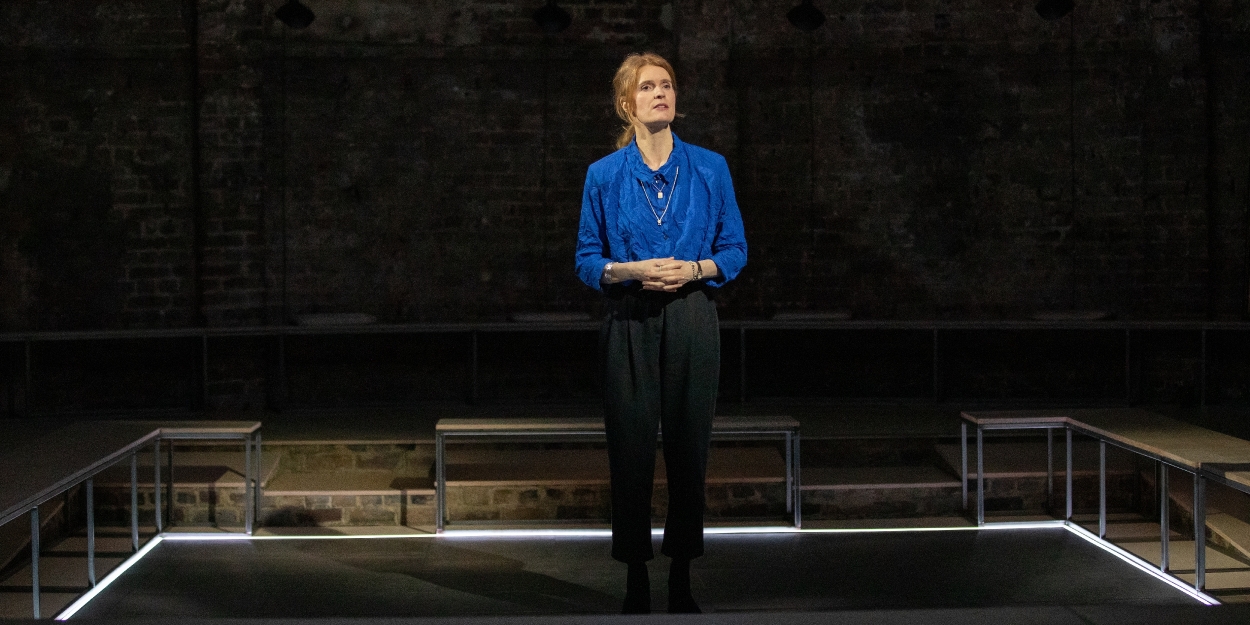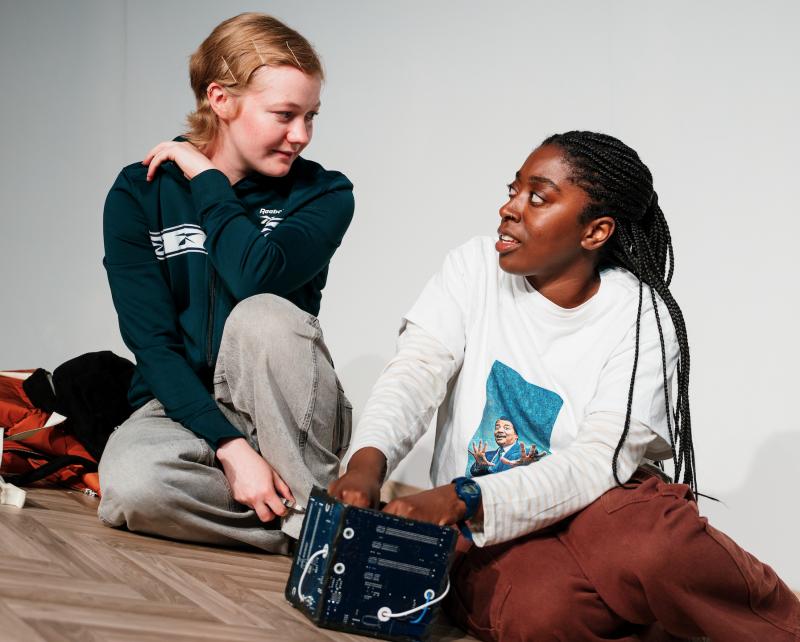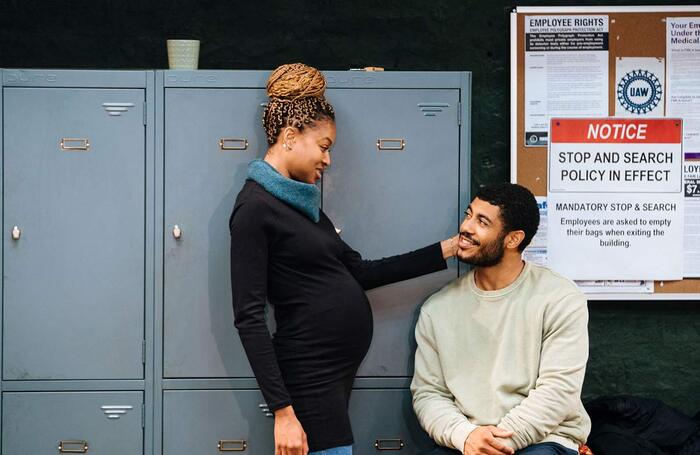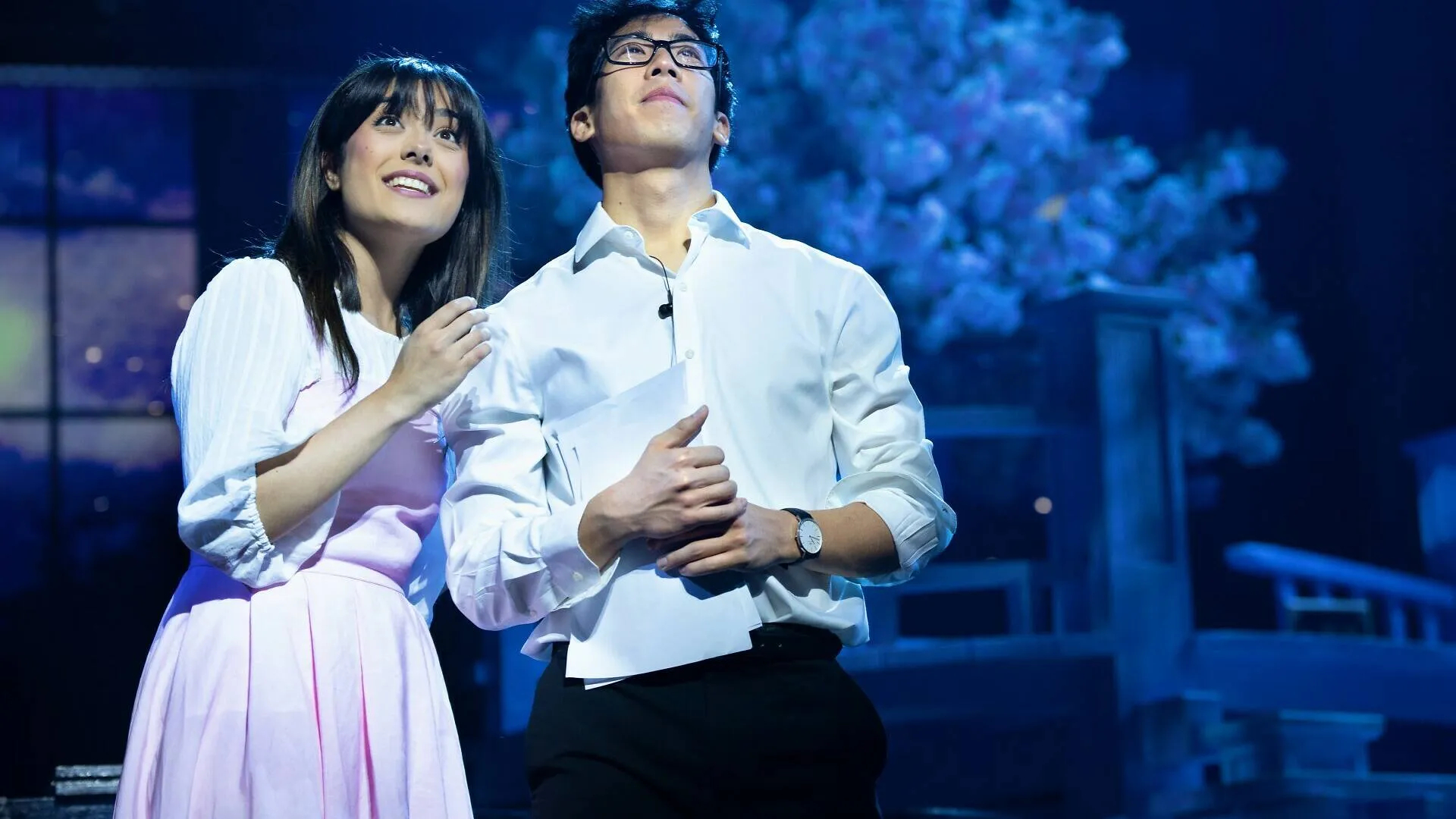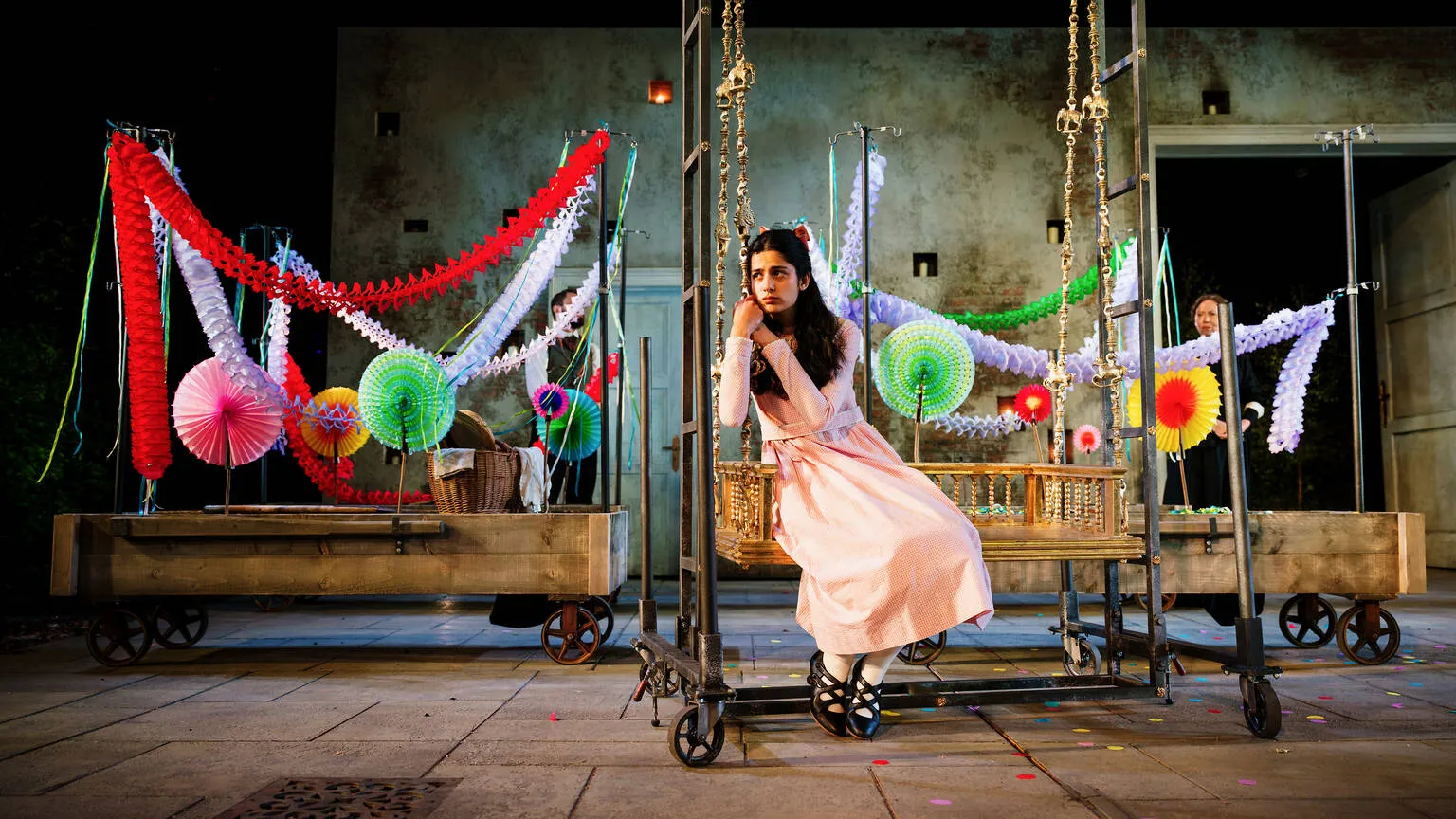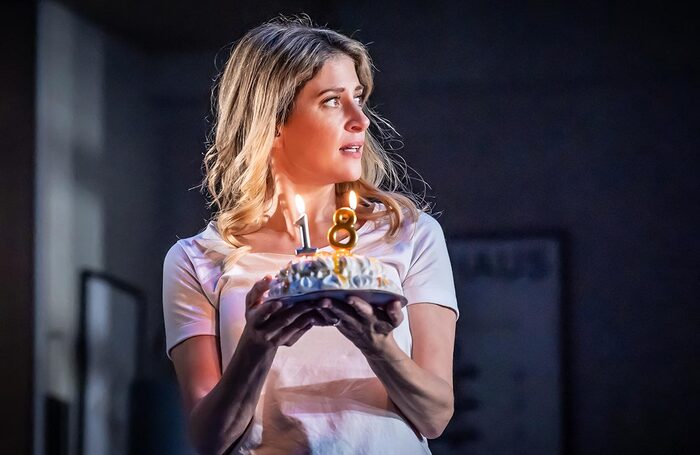
Sister Act The Musical. Photo credit: Manuel Harlan
A gangster’s moll sees a crime and goes into a witness protection in a nunnery where she teaches the nun choir to sing, and generally enjoy life a little more. The production has toured and played the Eventim Apollo in 2022 which is where it was reviewed by the London-based critics. Beverley Knight returns in what we inevitably think of as the Whoopi Goldberg role until 8 June 2024 when she is succeeded by Alexandra Burke. This roundup will be revised after the official opening night of the latest run. The critics previously loved Beverley Knight’s singing, although some had reservations about her skill as a comic actor. Other well-liked members of the previous cast return for the current run including Clive Rowe and Lesley Joseph. Ruth Jones is a newcomer as the Mother Superior.
[Links to full reviews are included but a number are behind paywalls and therefore may not be accessible]
Adam Bloodworth in CityAM (5) awarded the first 5 star review, calling it ‘simple, straightforward fun channelled through a production that is so precision-tooled that every moment becomes either a huge laugh or a visual spectacular.’
In her review of the opening night of the current run, Marianka Swain in The Telegraph (4) said ‘the Dominion Theatre is a perfect fit for Bill Buckhurst’s warm hug of a production.’ She picked out newcomer Ruth Jones playing the Mother Superior as ‘another reason to make a bee-line for Sister Act tickets.’ She concluded: ‘Watching the sisters in full flow, boogieing away in rainbow-sequinned habits, is sheer theatrical bliss.’
Franco Milazzo st Broadway World (4) also welcomes Ruth Jones: ‘What the Gavin and Stacey star lacks in lung power, she more than makes up for in sheer charisma.’ He also pays tribute to ‘a sterling cast, Menken and Slater’s songs and Morgan Large’s ingenious set.’
The earlier reviews were generally appreciative of the feel-good nature of the musical without being carried away by it. There were some notable exceptions. ‘This revival is heavenly’ said Nicole Vassell in The Independent (5★). ‘Alan Menken and Glenn Slater’s uplifting score is excellent,’ she wrote, and concluded: ‘the show’s an irresistibly great time.’ Neil Norman writing in The Express (4★) stated: ‘It puts a smile on your face that refuses to leave.’ About Beverley Knight, he said: ‘Not only is that voice goosebumpingly glorious, she has … impressive comedy chops.’ He also liked ‘Morgan Large’s simple but effective stained glass set design.’ Alex Wood for Whats On Stage (4★) agreed about Large’s ‘glittery menagerie of set pieces.’ He had mixed feelings about the songs: ‘“Fabulous, Baby!”, “Take Me to Heaven” and “Raise Your Voice” are all veritable ear-worms’ but ‘For every “Raise Your Voice” there’s a much more forgettable number.’ However, he was bowled over by ‘a deluge of sugar-rush sentimentality and spirited vim’ and concluded: ‘The revival lands squarely in the “feel-good and proud of it” camp.’
Andrzej Lukowski’s reaction in Time Out (3★) was more typical: While praising Beverley Knight – ‘she is an extraordinary singer’, he damned the first half with faint praise – ‘It’s a sturdy enough comic romp ‘- and damned the second half with no praise- ‘bloated and ponderous.’ It’s ‘an okay musical, he concluded. Natasha Tripney in The Stage (3★) took an opposite view of the musical’s progression: ‘Bill Buckhurst’s production takes a while warming up in the first half…but the pacing and energy levels improve significantly in the second half.’ She agreed about Beverley Knight, saying ‘She brings vocal heft and requisite presence to the role.’
Ryan Gilbey in The Guardian (3★) described Beverley Knight as ‘full-throated, comically twitchy’ but dismissed the plot, saying it ‘could be scratched on a sacramental wafer’. While he found ‘inspiration flags’, he conceded ‘good humour sees it through.’ The Standard‘s Nick Curtis (3★) enjoyed Beverley Knight’s ‘storming voice and personality’, but like most of the others thought ‘The plot is reduced to a skeletal framework on which to hang musical or comic set pieces’. He wasn’t too keen on Alan Menken’s score either, describing it as ‘only occasionally soulful and never funky’.
Clive Davis writing in The Times (3★) admitted ‘There are some inspired hot gospel belters’. Otherwise he was unimpressed: ‘The script, though, slips into automatic pilot after an engaging first act’, and ‘Morgan Large’s set design is a little basic’. The Telegraph‘s Dominic Cavendish (3★) decided: ‘The joy is preordained but it’s joy all the same.’
Average critic rating (out of 5) 3.4★
Value rating 38 (Value rating is the Average critic rating divided by the most common Stalls/Circle ticket price. In theory this means the higher the score the better value but, because of price variations, a West End show could be excellent value if it scores above 30 while an off-West End show may need to score above 60. This rating is based on opening night prices- theatres may raise or lower prices during the run.)
The American star of The Morning ShowBilly Crudup makes his West End debut in a monologue written by David Cale which has already been a hit in the US. Mr Crudup plays among other characters a shy gay American who, as well as pretending to be English himself, invents an alter ego, a Cockney ‘geezer’ called Harry Clarke.
[Links to full reviews are included but a number are behind paywalls and therefore may not be accessible]
Clive Davis in The Times (4★) described the play as ‘a shaggy dog story, and a thoroughly entertaining one.’ ‘Leigh Silverman’s direction is tightly observed yet unobtrusive’,’ he went on to describe Crudup as ‘utterly hypnotic’. ‘It’s very funny indeed,’ agreed Sarah Crompton at Whats On Stage (4★). She continued: ‘It’s a real tour de force of storytelling and performance, an old-fashioned pleasure with a modern twist.’
While feeling that the playwright could dig deeper into the psychological issues he raises,’ Sarah Hemming in the Financial Times (3★) praises ‘the slippery skill of Cale’s writing’ as well as ‘Crudup’s consummate, magnetic performance’. Chris Wiegand in The Guardian (3★) found ‘the script lacks the motor of a thriller and there is little at stake in this slight story’ but praised ‘Crudup’s vocal skill’. The Stage‘s Sam Marlowe (3★) took a similar view: ‘Leigh Silverman’s production is smartly paced, with a bravura solo performance from … Billy Crudup. But the play is effectively a series of Escher staircases leading nowhere, ingenious but inconsequential.’ Some reviewers (see below) criticised Crudup’s way of speaking English accents but for Andrzej Lukowski in Time Out (3★), the plot is such that ‘it makes sense that he sounds like an American doing an English accent’. He concluded: ‘it’s trashily entertaining and Crudup is magnetic.’ Billy Crudup gives ‘ a truly riveting performance’ agrees Claire Allfree in The Telegraph (3★) but, as to the play, ‘while, with its high-gloss blend of excess, madness and fabulous wealth, it flirts with the trappings of a thriller, there is precious little actually at stake’.
Fiona Mountford in the i (2★), advising her readers to save their money, criticised Billy Crudup: ‘a self-satisfied and showboating sort of performance’ in which his English accent ‘makes him sound like a strangulated minor royal’. She didn’t like the play much either: ‘the script, full of holes where plot logic ought to be, offers almost no sense of jeopardy.’ The Independent‘s Alice Saville (2★) agreed about the English accent: ‘his tones drifting from East End to Essex to New York like the world’s most incompetent Uber driver.’ The script disappointed her too: ‘the promised darkness never quite arrives, and nor does any kind of underlying message or shock twist.’ The Standard‘s Nick Curtis (2★) also criticised the script: Cale’s play, he said, ‘has almost no psychological depth’ but ‘Never mind the thin, shaggy dog-story of a plot: this monologue is all about Billy Crudup’s mercurial, showboating performance.’ He did agree with his fellow two star reviewers that Billy Crudup’s English accents were ‘terrible’ but, he added, ‘It doesn’t really matter.’ The theme continues over at Broadway World (2★) where Alexander Cohen criticises ‘a meandering script’ and was thankful for Billy Crudup: ‘Without him the show would crumble.’
Average critic rating (out of 5) 2.8★
Value rating 37 (Value rating is the Average critic rating divided by the most common Stalls/Circle ticket price. In theory this means the higher the score the better value but, because of price variations, a West End show could be excellent value if it scores above 30 while an off-West End show may need to score above 60. This rating is based on opening night prices- theatres may raise or lower prices during the run.)
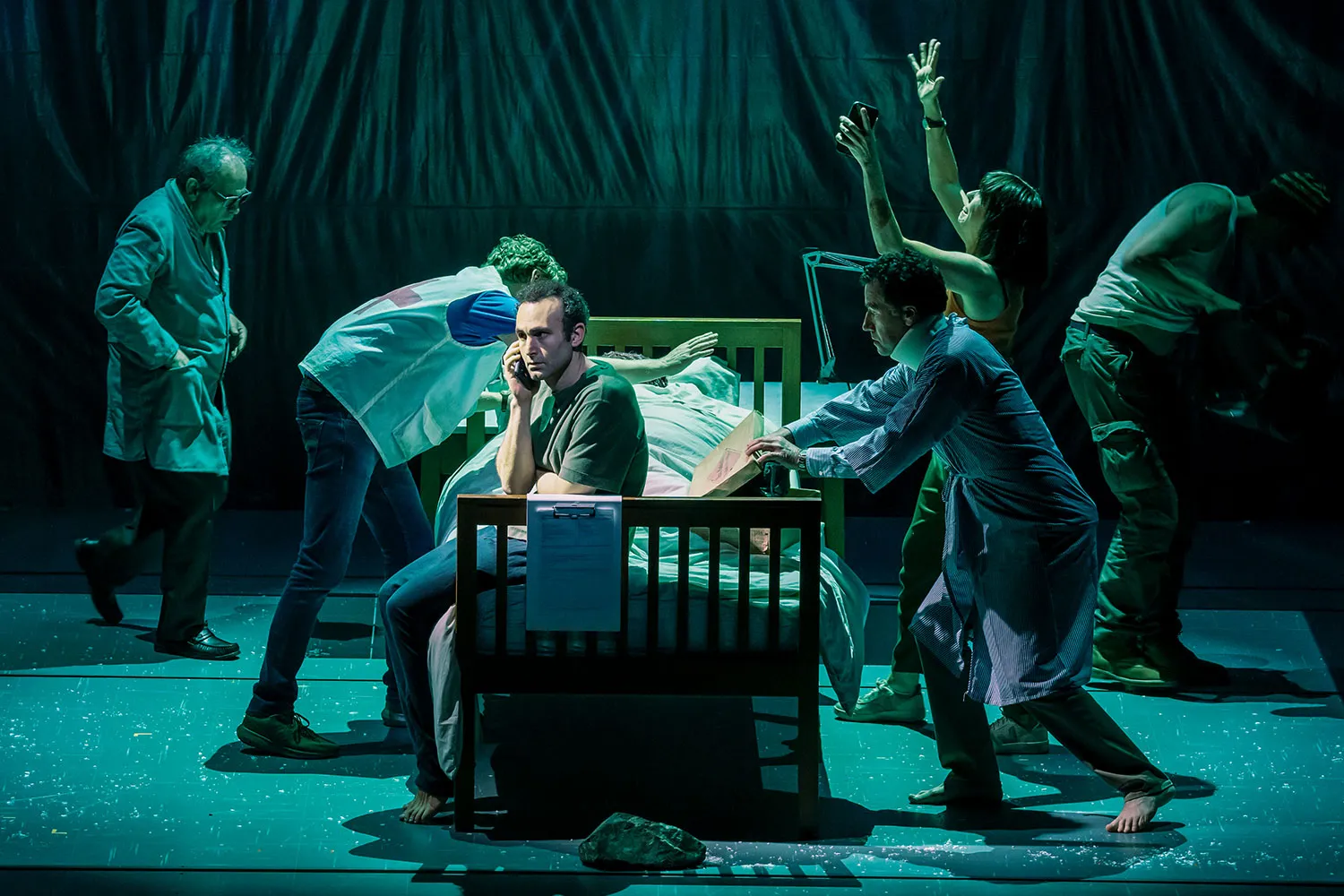
Nye tells the life story of the Labour minister who drove the formation of the NHS. While most reviewers plumped for 3 or 4 stars, there was one 5 and one 2 star review. In the title role is Michael Sheen who received widespread praise. He performs the show in pyjamas as a patient dying in an NHS hospital. Nye’s delirious moments in which he remembers a fantasy version of his past reminded quite a few reviewers of The Singing Detective. Director Rufus Norris‘s swansong production as Artistic Director of the National Theatre was also warmly received, as was Vicki Mortimer’s set. A number of critics were disappointed with Tim Price‘s script.
[Links to full reviews are included but a number are behind paywalls and therefore may not be accessible]
However, not Fiona Mountford reviewing in the i (5★). She complimented ‘Tim Price’s satisfying meaty, yet never less than nimble study’.
Sarah Hemming at the Financial Times (4✭) described Nye as ‘unashamedly, a play about principle, passion and compassion, driven by a fantastic ensemble and an electrifying performance from Sheen. ‘ She continued: ‘Director Rufus Norris stages all this with wit and drive.’ For Clive Davis in The Times (4★), ‘Sheen burns with passion’ adding ‘His charisma fills the gaps in the script.’ Dominic Cavendish in the Telegraph (4★) was also taken with Michael Sheen’s performance, saying “Sheen is in his element here…by turns down to earth and messianic, tender and full of clenched tenacity.’ Gary Naylor for Broadway World (4) had reservations- ‘flawed, sprawling and unmanageable – but when it works, it’s magnificent.’ Michael Sheen is given considerable credit: ‘carrying the play and the man with equal passion’ Mr Naylor also picked out ‘Jon Driscoll’s video work is as good as I’ve seen in a theatre, a tour de force.’ Neil Norman’s review in the Express (4★) described Nye as ‘a moving but unsentimental portrait of the man who changed British healthcare’.
Time Out‘s Andrzej Lukowski (3★) found it hard to get excited at what he called ‘a fairly conventional drama, jumbled up’ but was compensated by the fact that: ‘Sheen is a delight’ and ‘if the whole isn’t quite there, most of the individual scenes are scintillating.’ Alice Saville in The Independent (3★) had a similar thought: ‘a bit of a tired theatrical set-up, to have an ageing famous figure reliving his life in convenient vignettes,’ but she said: ‘Norris’s direction keeps things nimble and strange.’ Nick Curtis in the Evening Standard (3★) was unimpressed by the ‘lumpy and obvious script.’ ‘the narrative is too long-reaching and schematic’ complained Arifa Akbar in The Guardian (3★). Possibly alone, she had reservations about Michael Sheen’s performance: ‘He brings a curious fey playfulness and vulnerability but does not plumb the depths of his commanding character.’
While Sarah Crompton at Whats On Stage (3★) was impressed by ‘a central performance from Michael Sheen of charm and charisma, and an energetic and stylish production from Rufus Norris’. She was less happy with the script: ‘It’s engaging, never less than interesting, but it doesn’t always find the balance between great gobbets of historical information and reaching the heart of the man and his vision.’ For Sam Marlowe in The Stage (3★) ‘It’s crammed with information but remains surface-skimming’ although she did think: ‘Michael Sheen is a terrifically engaging Bevan’ and ‘Vicki Mortimer’s set is a kaleidoscope of green hospital screens’. The Sunday Times‘ Dominic Maxwell (3★) said it felt like ‘an artfully staged Wikipedia entry,’ commenting ‘while Nye gives its man some good lines, it goes light on big set pieces’. He didn’t feel ‘as if we’ve done more than traced the surface of an extraordinary man and his nation-changing achievement.’ Nevertheless, he concedes ‘there’s good stuff in Nye, and Sheen is tremendous’.
Susannah Clapp in The Observer (2★) called it ‘a wasted opportunity’. She said ‘the form is fractured, giddy’ and ‘interesting nuggets become mechanical explanation’. However she complimented Michael Sheen as ‘fiery’.
Average critic rating 3.4★
Value rating 38 (Value rating is the Average critic rating divided by the most common Stalls ticket price. In theory this means the higher the score the better value but, because of price variations, a West End show could be excellent value if it scores above 30 while an off-West End show may need to score above 60. This rating is based on opening night prices- theatres may raise or lower prices during the run.)
A painting by Adolf Hitler discovered in an attic leads to debate, controversy and comedy in Marius von Mayenburg’s Nachtland. It’s directed by Patrick Marber and the cast includes Dorothea Myer-Bennett, John Heffernan, Angus Wright and Jane Horrocks
[Links to full reviews are included but a number are behind paywalls and therefore may not be accessible]
The Independent’s Alice Saville (4★) enjoyed this ‘destabilising, endlessly fascinating new play’ with its ‘uniformly strong cast’. David Jays in The Guardian (4★) praised ‘Maja Zade’s spicy translation and … an excellent cast’. He concluded: it ‘doesn’t go deep, but prods modern Germany’s sore spots with provoking vigour.’ ‘The hit the Young Vic needs’ said the headline to Dominic Cavendish’s review in the Daily Telegraph (4★) in which he called it ‘a canny, if not fully achieved dark comedy.’ ‘Downright funny and disturbing in equal measure’ said John Nathan in the Jewish Chronicle (4★)
Susannah Clapp in The Observer (3★) commented ‘Marber’s production smartly swerves between naturalism and surreal derangement – raising the question of whether the two modes are actually distinct’. She was concerned that ‘Von Mayenburg makes saying the unsayable look too easy.’ Sarah Hemming reviewing for the Financial Times (3★) thought ‘The characters are sketchy, easy to dislike (would they be more unsettling if pleasant?) and sometimes too bluntly become mouthpieces for points of view’ but Patrick Marber and ‘his excellent cast are very good at delivering the unnerving black comedy’. ‘There are excellent performances’ said Andrzej Lukowski in Time Out (3★), ‘Heffernan is sublimely funny… Wright and Horrocks are gloriously weird’ but ‘but it often feels like the cast and Marber are more interested in being funny than the text is.’
The script came in for some criticism. The Stage’s Dave Fargnoli (3★) thought ‘Patrick Marber directs with a heightened, tongue-in-cheek tone’ but ‘cannot energise its overlong, artificial conversations.’ Theo Bosanquet on Whats On Stage (3★) said: ‘At times it can feel overly-arch, like agitprop, and as drama, it doesn’t really hold together.’ Adam Bloodworth at City AM (3★) noted: ‘It’s all slightly over-stuffed with ideas, both physical and thematic, and by the end there’s a slightly soupy feel.
‘For Nick Curtis in the Evening Standard (2★) it was ‘a disappointment’ explaining ‘After 100 minutes the play fizzles out, unresolved.’ Dominic Maxell in The Times (2★) was unimpressed: ‘For all the excellence of the cast, though, and for all the stripped-back poise of Patrick Marber’s production and Anna Fleischle’s thrust-stage design, I could never surrender to it as a piece of storytelling.’
Standing At The Sky’s Edge. Photo: Brinkhoff Moegenburg
The superlatives have been brought out, dusted and polished once again for Standing At The Sky’s Edge, the musical about three generations of residents in Sheffield’s Park Hill Estate, which has now transferred to the West End. Directed by Robert Hastie, Chris Bush’s book augmented by Richard Hawley’s songs and performed by an impressive cast has captured the hearts of nearly all the critics.
[Links to full reviews are included but a number are behind paywalls and therefore may not be accessible]
Stefan Kyriazis in the Daily Express 5★ repeated his previously expressed view that ‘this is the greatest new British musical for years.’ ‘Chris Bush’s note-perfect script tugs at heartstrings as much as it tickles funny bones,’ he said, and ‘Hawley’s exquisite compositions through the years are more like living poetry.’ As if that weren’t enough, he adds: ‘The entire cast is superb’. ‘Prepare to fall in love’ said Franco Milazzo in BroadwayWorld (5★) ‘Robert Hastie’s direction earns every laugh and tear ‘ he enthused, calling the show ‘an epic musical for (and about) the ages’.
Calling it ‘unmissable’, Alex Wood at Whats On Stage (5★)said: ‘It stands as a shining tribute to the combined power of both popular music and stage storytelling, and subsidised and commercial theatre.’
Caroline McGinn in Time Out (5★) was ‘blown away by the emotional power of this show’, dubbing it ‘an instant classic’. She picked out the female leads for special mention: ‘Rachael Wooding, Laura Pitt-Pulford and Elizabeth Ayodele and especially Lauryn Redding will break your heart with lungs of steel’. She summed up: ‘joy, lust, fear, sadness, despair, are crafted into an emotional edifice which stands nearly as tall as the place that inspired it.’
Dominic Cavendish in the Daily Telegraph (4★) praised Richard Hawley’s beautiful songs full of melancholy, tenderness, warmth and yearning, hammering at the door of your heart, demanding to be let in.’ He concluded: ‘It’s hard to feel anything other than enriched and often deeply moved by it. It offers rare intellectual and emotional ambition, songs that should stay with you, and sustain you, over a lifetime; and frankly deserves to be a huge hit.’ Dominic Maxwell in The Sunday Times (4⭐️) said: ‘it adds up to something special. I was more than happy to spend almost three hours letting Standing at the Sky’s Edge work its tender magic on me.’
Dave Fargnoli in The Stage (3★) was less carried away but still found it ‘a bittersweet, multigenerational epic’ in which ‘the big ensemble numbers … carry the production along.’ It was left to Clive Davis in The Times (3★) to bring the high-rise enthusiasm down to earth: ‘the script sometimes resembles a conscientiously assembled checklist of social issues’ the songs ‘sometimes seem to have been inserted into the action almost at random’
Standing At Sky’s Edge continues at Gillian Lynne Theatre until 3 August 2024.
Value Rating 51 (Value rating is the Average critic rating divided by the most common Stalls/Circle ticket price on a Saturday evening. In theory, this means the higher the score the better value but, because of price variations, a West End show could be excellent value if it scores above 30 while an off-West End show may need to score above 60. This rating is based on opening night prices- theatres may raise or lower prices during the run.)
Keeley Hawes and Jack Davenport in The Human Body. Photo: Marc Brenner
The Human Body is Lucy Kirkwood’s latest play following such successes as The Witches, The Children, Mosquitoes and Chimerica. Starring Keeley Hawes and Jack Davenport, both returning to the stage after a long gap, it tells the story of the birth of the NHS at a local level, wrapped up in a Brief Encounter-style romance. Directors Michael Longhurst and Ann Yee incorporate film into the production, which didn’t please everybody. The two stars were universally loved by the critics but some found the play unfocussed.
[Links to full reviews are included but a number are behind paywalls, and therefore may not be accessible]
Arifa Akbar in The Guardian (3★) wasn’t keen on the use of film but thought ‘Kirkwood’s script crackles with unspoken desires, disappointments, yearning and some fantastic humour’. Nick Curtis in the Evening Standard (3★) describes the production as ‘engrossing but meandering’, however ‘Davenport is very funny in it and Hawes is superb.’ The Stage‘s Sam Marlowe (3★) agreed calling the play ‘disjointed’ but saying it was ‘beautifully acted’. For Time Out‘s Andrzej Lukowski (3★) too, ‘the cast sells it’. Otherwise he is lukewarm in his praise of ‘a heartfelt but old-fashioned drama’. Dominic Cavendish in the Daily Telegraph (3★) felt it ‘urgently needs a scalpel to cut back excess flab’ but concurs with the general opinion that ‘There’s no faulting the leads’. Tim Bano in The Independent (3★) agreed about the acting (‘Hawes dazzles’) and about the need for some cutting, saying the play was a ‘fabulously rich piece of writing’ but ‘bogged down by an overstuffed production’.
Not even the acting saved the evening for Clive Davis in The Times (2★). Calling it a ‘sub-standard play’, he asks: ‘Is it a staid, semi-documentary celebration…Or is it a clever-clever meta-romance?’ before concluding ‘It fails on both counts.’
Lucy Kirkwood can take comfort from Sarah Crompton at WhatsOnStage (4★) who was forgiving of any flaws: ‘Kirkwood is such a wonderful writer and Longhurst…and Yee such confident, fluent co-directors that the occasional bagginess doesn’t matter.’ She too loved the acting: ‘The performances are a joy.’ It pressed all the right buttons for Cindy Marcolina at Broadway World (4★). She thought it was ‘a gripping comic drama’ and liked how a ‘deft use of camera feeds combines with a genre-hopping and tone-shifting chameleonic script to make The Human Body a feat of movement direction.’ She concluded: ‘this is a show to see.’
The Big Life, Paul Sirett and Paul Joseph’s 2004 ska musical, uses the plot of Love’s Labour’s Lost to tell a story about people arriving in Britain on the Windrush in the 1950s. Twenty years after it was launched there, it has been revived at Stratford East, directed by Tinuke Craig.
(There are links to the full reviews but these are sometimes behind paywalls.)
The Daily Telegraph’s Dominic Cavendish (4★) was very happy to see its return. Calling it ‘joyous’, he said: ‘watching it feels like a holiday in itself.. this slick, vividly staged revival by Tinuke Craig.’ ‘Joyous’ crops up in Anya Ryan’s review in Time Out (4★). She liked the ‘colossally talented cast, but the evening belongs to Tameka Empson’. Louise Penn in Broadway World (4★) praised ‘a big heart and a sense of fun’. Nick Curtis’ review for the Evening Standard (4★) said: ‘The Big Life is a big-hearted, baggy piece of work, more joyful than breast-beating, with a bouncy score by Paul Joseph. It’s not subtle, but it’s damn good fun.’
The Guardian’s Arifa Akbar (3★) also calls it ‘baggy’ but highlights ‘incredibly infectious songs, ebullient spirit and stunning performances’. Alun Hood in Whats On Stage (3★) doesn’t use the word ‘baggy’ but did say: ‘the lack of dramatic substance starts to become more apparent as Tinuke Craig’s production meanders on.’ Nevertheless he praised it as a ‘rollicking crowd pleaser.’ Clive Davis in The Times (3★) agreed that it could do with a 30 minute trim’ but described it as ‘very broad and very colourful’. Siobhan Murphy in The Stage (3★) found it ‘good fun’ but laments ‘the slightly meandering main action.’
Grace Hodgett-Young and Donal Finn in Hadestown. Photo: Marc Brenner
Hadestown is an American sung-through musical version of the Greek myth about Orpheus’ attempt to rescue his late wife and love of his life Eurydice from the Underworld (i.e. Hell) with Persephone’s story added to the mix. Written by Anais Mitchell, it began its life 18 years ago as a community project in Vermont and was presented at the National Theatre in 2018 before scooping 8 Tony Awards on Broadway.
[Links to full reviews are included but a number are behind paywalls and may not be accessible]
Clive Davis in The Times (5★), possibly our most parsimonious critic when it comes to handing out stars, gave Hadestown top marks, saying it’s ‘a reminder of what musical theatre can achieve when it sets its sights beyond the lowest common denominator. ‘ He loved the band: ‘a glorious noise’; he loved the singers ‘Grace Hodgett-Young’s voice has a raw northern edge…Gloria Onitiri is a thunderous, sexy Persephone.’ He concluded that Orpheus and Eurydice’s ‘final ill-starred journey still touches the heart.’
The Guardian‘s Arifa Akbar (4★) may have held back a star but she still enthused: ‘This is one of the best West End musicals around.’ ‘Every scene becomes a set piece: big, beautiful and emotionally blasting,’ she said in her review. Sarah Crompton at WhatsOnStage (4★) was similarly smitten: ‘the most exhilarating ride. That band, with its bluesy trombone and folksy guitar is consistently thrilling, the songs are vibrant and smart, the sung-through text is compelling..(Rachel) Chavkin’s direction is direct and impassioned.’ Her only reservation was, ‘the material just doesn’t quite coalesce into the ending I long for.’ Time Out‘s Andrzej Lukowski (4★) was particularly taken by the music: ‘It is essentially a staged concert, but it’s done with such pulsing musical intensity, physical dynamism and heft of meaning that it never feels like one..It’s a musical of beautiful texture and tone.. Mitchell has penned some flat-out brilliant songs.’ Marainka Swann at londontheatre.co.uk (4★) enjoyed ‘the quiet power of this singular show, which demonstrates the magic of a shared story, and how such a collective effort can change the world, is undeniable. This spellbinding West End production was well worth the wait.’ Fiona Mountford in the i(4★) talked about being ‘wooed by the hazy, dazy atmosphere of this splendidly sultry show’. Cindy Marcolina at Broadway World (4★) called the singers: ‘an exciting team who carry the intensity and high-stake energy of the tale with precise delivery’ and described Grace Hodgett-Young’s performance as Eurydice as ‘astounding’.
Dominic Cavendish in the Daily Telegraph (3★) couldn’t summon quite the same level of enthusiasm: ‘Yes, it can feel like one damned song after another. But it washes over you like a steam bath.’ He praised ‘the rich attention to detail in costuming, choreography, lighting and ensemble flamboyance’ and noted that ‘Donal Finn’s Orpheus can hit heavenly high notes.’ The Stage‘s Sam Marlowe (3★) just about managed to contain her excitement: ‘An uneven, unsatisfying creation, it is light on plot, heavy on pretentious portent – yet it’s fitfully seductive, with Mitchell’s New Orleans jazz-inflected score and Rachel Chavkin’s fever dream of a production both oozing spicy flavour. And the electrifying energy and knockout vocals of the cast come close to blasting away objections.’ The Observer‘s Susannah Clapp (3★) suggested ‘Rachel Chavkin’s production nudges the musical world along but does not remake it.’
It was left to Nick Curtis in the Evening Standard (2★) to sound a sour note: ‘The writer-composer’s score is catchy and eclectic but often bombastic, her lyrics pretentious or nonsensical…the endless reprises start to drag and, oh dear, the words within and in between the songs can be dire’
David Neumann’s choreography was widely but not universally praised: ‘energetic yet precise’ (WhatsOnStage), ‘ethereal’ (Times), ‘pneumatic’ (Time Out).
Hadestown at Lyric Theatre, Shaftesbury Avenue, London, is booking until 27 September 2026.Buy tickets directly here.
Average Rating 3.6★
Value Rating 40 (Value rating is the Average critic rating divided by the most common Stalls/Circle ticket price.)
If you’ve seen Hadestown, please add your review and rating below (but we ask you keep it relevant and polite)
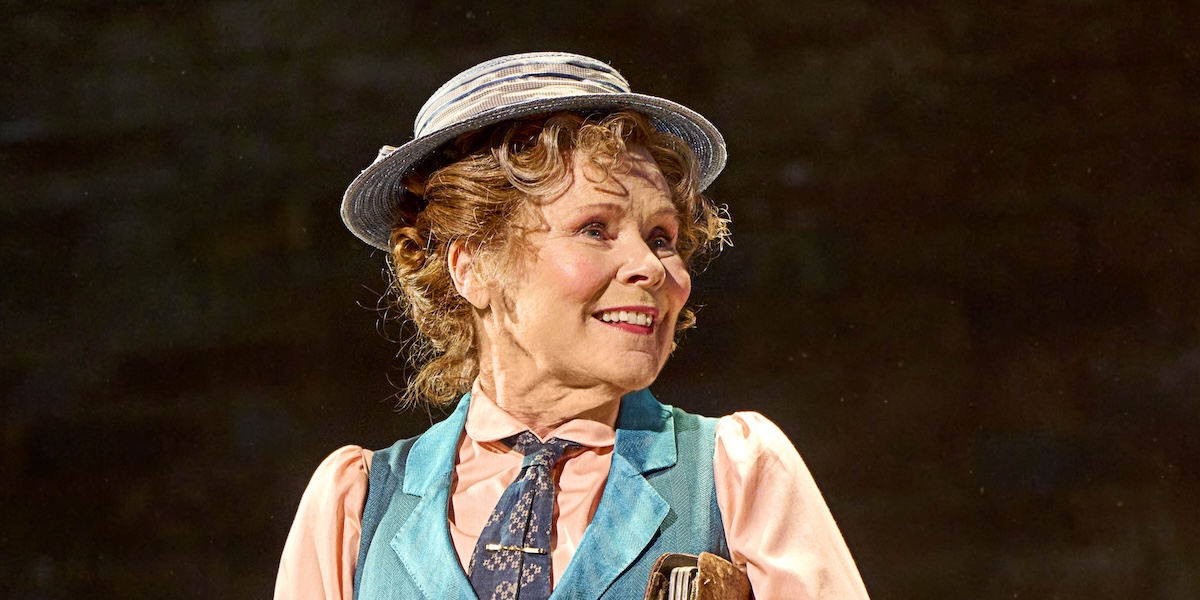
At 53, Danny Sapani is a relatively young King Lear at London’s Almeida Theatre, but the critics liked him and Yaël Farber’s staging. Many compared this version favourably with Kenneth Branagh’s shortened King Lear from a few months ago, which was almost universally panned.
[Links to full reviews are included but a number are behind paywalls and may therefore not be accessible]
Sarah Hemming in the Financial Times (4★) sums it up thus: ‘a mighty production that fuses the sense of ritual so often central to the director’s work with a modern setting to create a shattering piece of theatre, led by a towering, beautifully shaped performance from Danny Sapani.’ Over at The Times (4★), Dominic Maxwell thought ‘The first half is not just one of the best King Lears I’ve seen, but one of the best Shakespeares I’ve seen.’ He adds: ‘The last 90-odd minutes are…yes, pretty good.’ Susannah Clapp in The Observer (4★) compliments’Yaël Farber’s dark and swirling production’ in which ‘Danny Sapani’s Lear is commanding’.
For Arifa Akbar in The Guardian (4★) it is a ‘dark, doomy and epic production’. The Daily Telegraph‘s (4★) Claire Allfree calls it ‘a mighty, soul-pummelling evening’. and ends ‘This is a shattering, comfortless night’. This is a gripping piece of entertainment’ said Andrzej Lukowski in his Time Out (4★) review. Alexander Cohen at Broadway World (4★) likes Farber’s ‘razor-sharp focus on the text and the slimy political subterfuge bubbling beneath it.’ Dave Fargnoli’s review in The Stage (4★) concluded: ‘Unrelentingly grim as it is, Farber’s vision accurately reflects our compassionless times.’ Sarah Crompton at WhatsOnStage thought: ‘Each detail of the production feels meant and a terrific cast wrench sense from each fluctuation of character’ but she did find it a bit long.
Fiona Mountford in the i (3★) survived the storm unmoved: ‘Farber’s vision teems with ideas, but they do not lead us to a fresh understanding of Shakespeare’s most ferociously flawed play.’ The Evening Standard’s Nick Curtis (3★) reached this conclusion: ‘This is a strange, imperfect but intriguing take on Shakespeare’s play, in which Sapani triumphantly claims the central role.’
Sapani is the hit of the show, with high praise from The Guardian: ‘It is a supremely moving performance, among the most tragic King Lears I have seen.’ The Telegraph praised his ‘intelligently unshowy approach’. WhatsOn Stage says he is ‘a towering Lear, beautifully finding his way through the lines’.
There’s a lot of love for Clarke Peters too. The Stage thought he gave ‘a magnetic, scene-stealing performance’ and Broadway World said he is ‘mesmerisingly Beckett-like’. The Times enthused: ‘I’ve never seen a wiser, wittier counsel than Clarke Peters’ laconic fool.’
Much praise also for Merle Hanson’s set (‘creates an ambivalent atmosphere of strangeness, of beauty fashioned from the ugly, of violence brought into the domestic’ WhatsOnStage) and Peter Rice’s soundscape (‘arresting’ The Guardian).
Matt Smith in An Enemy Of The People. Photo: Manuel Harlan
Henrik Ibsen‘s play about a whistleblower has been reimagined for the modern world by German director Thomas Ostermeier. Former Doctor Who and The Crown star Matt Smith takes on the lead role in a production that places the story in the modern world and includes he and his friends singing Changes by David Bowie and a scene in the middle where the audience become the crowd. Some critics liked this attempt to modernise Ibsen’s classic, others found it didn’t work.
[Links to full reviews are included but a number are behind paywalls, and therefore may not be accessible]
Clive Davis in The Times (2★) said ‘Thomas Ostermeier’s sophomoric attempt to drag the Norwegian playwright into the 21st century is so clumsy it might be part of some sinister conservative plot to kill of left-wing theatre once and for all.’ Sam Marlowe in The Stage (2★) was equally unimpressed: ‘the production’s innovations are essentially arid and effortful’ and concluded ‘The whole thing is executed with superficial flair. But it feels like an elaborate exercise in preaching to the converted.’ Alexander Cohen in Broadway World (2★) was unmoved: ‘Explosive monologues saddled with politics are hurled at us without the humanity to anchor them…Interminable one-dimensionality plagues the performance as a result.’
Dominic Cavendish in the Daily Telegraph (3 ★) was lukewarm in his response: ‘A play for today, on paper, but the concept could use a digital-era upgrade, and a shot more vigour, to set the world on fire.’ Alice Saville’s review in The Independent (3★) thought the modernisation ‘makes its message still more biting’ but found it ‘a morally and.. messy political drama’ and said that it ‘periodically slips into smugness’. Nick Curtis in the Evening Standard (3★) described ‘coarse political sloganeering and audience participation’ and said: ‘The casually charismatic Smith and a fine supporting cast can’t stop it falling apart in the second half.’
Arifa Akbar in The Guardian (4★) had an opposite view. For her, it was ‘strangely subdued and halting in the first, less compelling act’ but said the second act ‘brings intensity, showcases Ibsen’s timelessness and also adapts the play’s moral arguments excellently for our times’ and described ‘an ending which is more equivocal and unsettling than Ibsen’s’. Time Out‘s Andrzej Lukowski (4★) also praised this ‘extremely droll’ production. His comment ‘The director chucks a lot of stylistic stuff in with more concern for impact than consistency’ may seem to be damning with faint praise but he likes the involvement of the audience (‘enormously provocative’) and the ‘deliciously punchy final third’. Sarah Hemming in the Financial Times (4★) said ‘the pacing feels a bit spongy at the outset and sometimes a lack of nuance grates’ but ‘the performances are great’. Sarah Crompton’s review at WhatsOnStage (4★) thought ‘The whole thing has a contemporaneity that makes it feel urgent, a tribute both to Ibsen’s prescience and to Ostermeier’s rigorous analysis of its relevance’ and loved the way ‘All of this is presented with the verve and energy of a rather wild sitcom, on a witty set by Jan Papplebaum’. Susannah Clapp in The Observer (4★) found it ‘a rousing evening’. Dominic Maxwell in The Sunday Times (4★) thought it showed ‘a good sense of humour’.
Matt Smith’s performance was well received. The Evening Standard said: ‘Smith’s performance is a nuanced, complex portrayal of a flawed man.’ The FT called it a ‘superb performance’. Whats On Stage observed an ‘edgy intensity’.
Average rating 3.3★
Value Rating 35 (Value rating is the Average critic rating divided by the most common Stalls/Circle ticket price. In theory this means the higher the score the better value but, because of price variations, a West End show could be excellent value if it scores above 40 while an off-West End show may need to score above 60. This rating is based on opening night prices- theatres may raise or lower prices during the run.)
If you’ve seen An Enemy Of The People you are welcome to add your review and rating below (but we ask that you keep it relevant and polite)
Manage Consent
To provide the best experiences, we use technologies like cookies to store and/or access device information. Consenting to these technologies will allow us to process data such as browsing behaviour or unique IDs on this site. Not consenting or withdrawing consent, may adversely affect certain features and functions.
Functional
Always active
The technical storage or access is strictly necessary for the legitimate purpose of enabling the use of a specific service explicitly requested by the subscriber or user, or for the sole purpose of carrying out the transmission of a communication over an electronic communications network.
Preferences
The technical storage or access is necessary for the legitimate purpose of storing preferences that are not requested by the subscriber or user.
Statistics
The technical storage or access that is used exclusively for statistical purposes.The technical storage or access that is used exclusively for anonymous statistical purposes. Without a subpoena, voluntary compliance on the part of your Internet Service Provider, or additional records from a third party, information stored or retrieved for this purpose alone cannot usually be used to identify you.
Marketing
The technical storage or access is required to create user profiles to send advertising, or to track the user on a website or across several websites for similar marketing purposes.