Theatre reviews roundup: Tom Stoppard’s Arcadia

A fitting tribute to the late Tom Stoppard

Duke of York’s Theatre (premiered at The Old Vic)
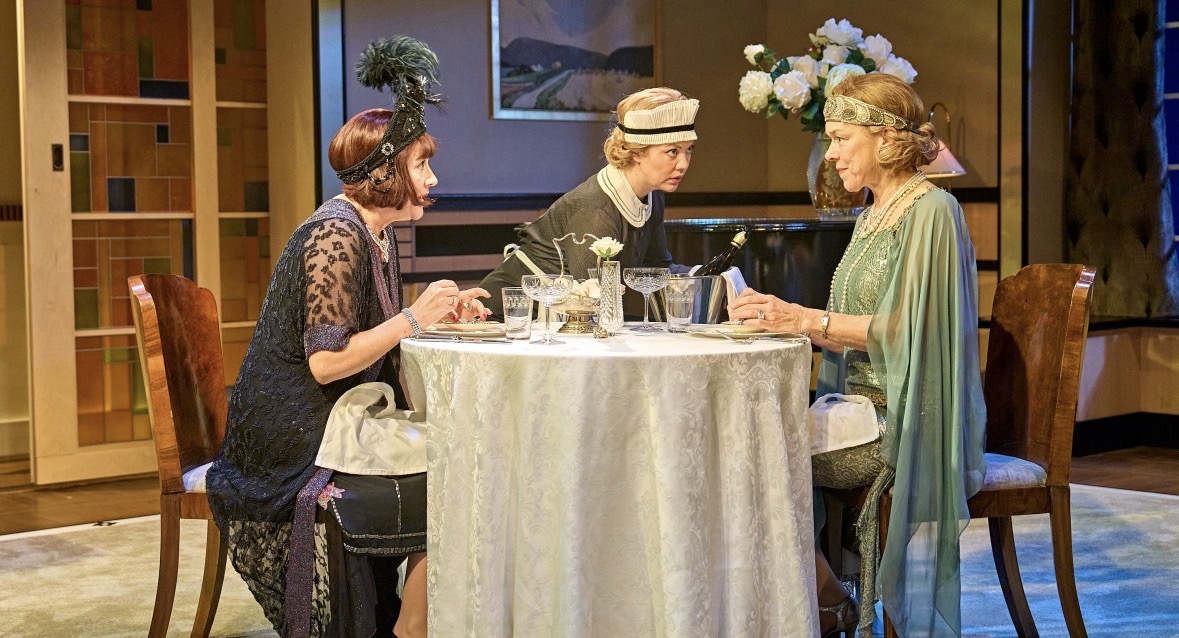
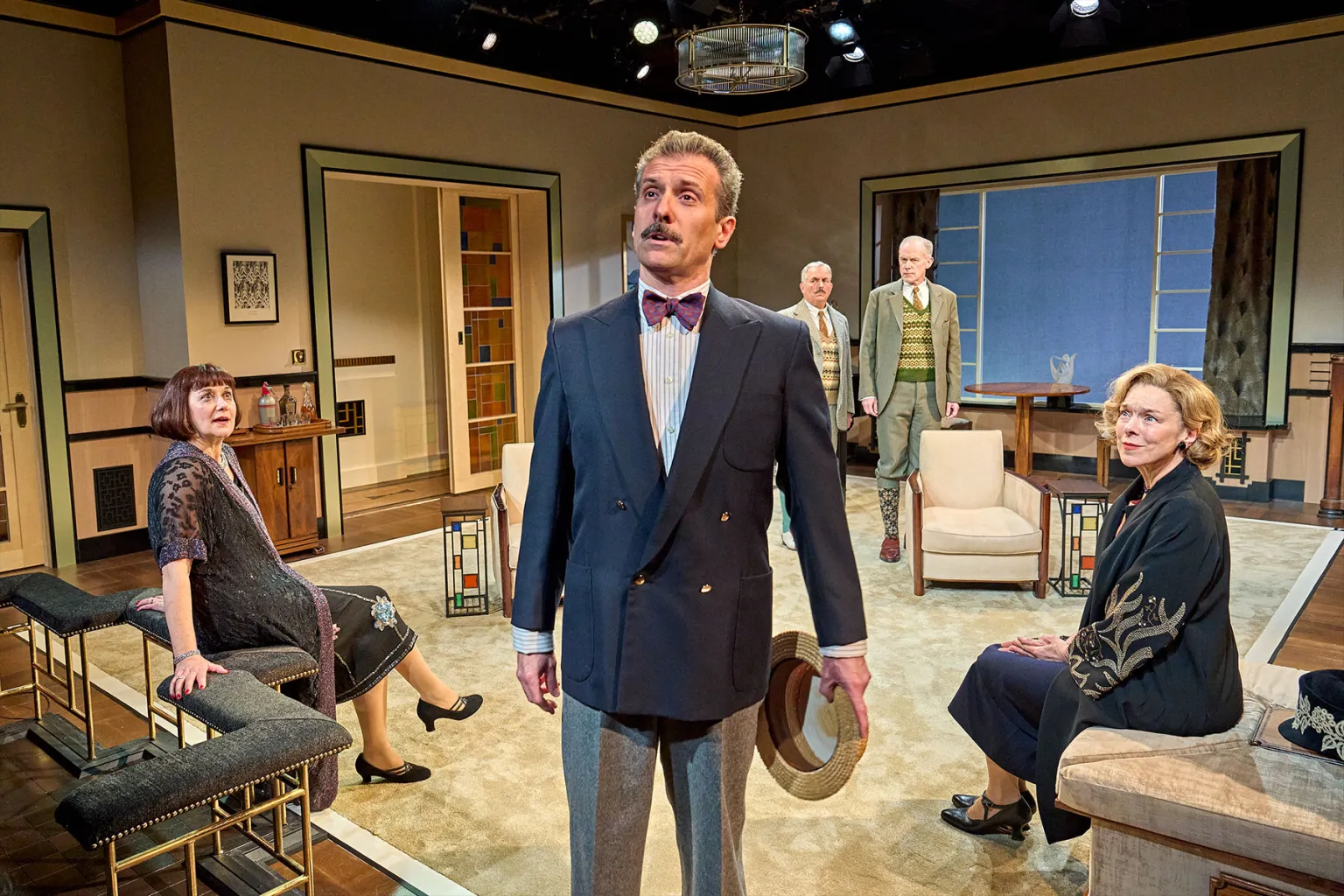
Isis Hainsworth in Arcadia. Photo: Manuel Harlan

Arcadia is widely considered to be Tom Stoppard‘s greatest play. Set in the 1800s and the 1990s, the play covers science, landscape design, writing and human attraction. It fizzes with ideas but is imbued with a strong sense of humanity.

The well received Old Vic production has transferred to the soon-to-be renamed Tom Stoppard Theatre in the West End. Alex Eales‘ has recreated his revolving in-the-round set that shows the two periods panning out in parallel. The critics were largely overwhelmed by the play and Carrie Cracknell‘s production, but some found Stoppard too clever by half. The cast were highly praised, with Isis Hainsworth in particular attracting attention.

Reviews of the West End transfer are immediately below. Those for the original Old Vic production follow. The ratings combine all reviews.

[Links to full reviews are included but a number are behind paywalls and therefore may not be accessible]

5 stars ⭑⭑⭑⭑⭑

Aliya Al-Hassan, reviewing for LondonTheatre, called it: ‘uncompromising in both scope and ambition. Combining vast subjects such as maths, landscape gardening, scientific theory, sex, and evolving knowledge, Stoppard is unafraid to challenge his audiences with his cerebral agility, yet there is also a huge amount of humour and heart thrown in. Brimming with big ideas, fierce intelligence, and some wonderful performances, Carrie Cracknell’s hit Old Vic production of the play now arrives in the West End.’

Christian Rose for BroadwayWorld opined: ‘Having studied the play extensively and seen numerous productions over the years, I can confidently say this is the finest interpretation I have experienced. Cracknell’s direction is insightful, intelligent and wonderfully inventive, illuminating the layers of Stoppard’s writing while allowing the emotional core of the play to shine.’ She picked out: ‘At the centre of the production is an astonishing performance from Isis Hainsworth as Thomasina Coverly. She captures every facet of the teenage prodigy with breathtaking sensitivity, balancing dazzling intellectual brilliance with youthful innocence, curiosity and vulnerability. Hainsworth’s Thomasina is endlessly captivating, inquisitive, energetic with warmth and humanity.’

4 stars ⭑⭑⭑⭑

Caroline McGinn for Time Out stated: ‘Even if its academic arguments sometimes outstay their welcome, it is satisfying and thought-provoking and rare to be able to spend three hours in the company of a drama whose fiery propulsive engine is an unquenchable search for knowledge.’

Alex Wood for WhatsOnStage declared: ‘I have to confess I’ve warmed to the show since its initial outing earlier this year. Where at the Old Vic it felt more distant, abstract and, perhaps, coolly remote, in the snug confines of the Stoppard Theatre, Cracknell’s staging roars with newfound heat and passion. Part of this is thanks to deeper, richer performances from returning cast members: Isis Hainsworth as the young genius Thomasina … Her transformation from wide-eyed 13-year-old 19th-century student to young woman is a masterclass in control and tender love for character. Dillane’s Hodge seems more riveting too – betraying some unspoken sadness while in awe of this young student he knows he has an unquenchable connection to.’

3 stars ⭑⭑⭑

Dave Fargnoli of The Stage commented: ‘Stoppard’s funny, melancholy, thought-provoking play of ideas certainly still grips, with its delicate human stories unfolding elegantly across two time periods, interconnected plot strands exploring everything from sexual attraction to the scientific search for truth, to landscape gardening and the heat death of the universe. Cracknell’s sedate pacing leaves the audience plenty of time to sit with each new concept.’

Reviews of Old Vic presentation

5 stars ⭑⭑⭑⭑⭑

The Standard‘s Nick Curtis described the play and the production: ‘This prodigious, teemingly intelligent, breezily witty 1993 play by Tom Stoppard packs in more challenging matter than most writers would attempt in a lifetime but has the seeming effortlessness of pure entertainment. It embraces thermodynamics, poetry, landscape design, sex and much more besides, in parallel timelines set in the 1990s and the early 1800s in one room of a Derbyshire country house. Carrie Cracknell’s superbly cast and elegantly realised in-the-round revival is a fitting tribute to the genius of Stoppard’.

Matt Wolf at The Arts Desk gave the detailed analysis of a devotee: ‘Having been in attendance at Arcadia‘s world premiere at the National some 33 years ago come April, I had always thought I’d never see a staging to match Trevor Nunn’s original…Yet here the play is again, with at least three performers who eclipse all memory of their forbears. And even those who don’t are superb in their own rights, the ensemble working in harmony to foreground feeling amidst the playfulness, fun and scientific and mathematical fodder that inform the text throughout’.

BroadwayWorld‘s Aliya Al-Hassan asked rhetorically: ‘Does it matter if you don’t understand the complex scientific and mathematical theories? Not at all. Carrie Cracknell’s magnificent revival has huge amounts of humour and heart, which is not always a given with Stoppard’s work.’

4 stars ⭑⭑⭑⭑

The Telegraph’s Dominic Cavendish called it a ‘triumphant return’ for an ‘intellectually thrilling and romantically stirring masterpiece’ that is ‘a spellbinding portrait oif transient, mysterious existence itself.’ He seemed to cope with the blitz of ideas more than some critcs: ‘It all grips like a thriller. The intimacy of Cracknell’s production – presented in-the-round, beneath two elliptical lighting rigs that suggest planets in orbit – creates a sense of magnified scrutiny; you can easily follow the trains of thought and marvel at the clockwork finesse of it all.’

Theo Bosanquet for LondonTheatre noted: ‘In Carrie Cracknell’s stripped-back, in-the-round production, Stoppard’s densely intellectual dialogue is given centre stage, while his dual-era narrative is enriched through subtle and sensitive overlapping.’

WhatsOnStage‘s Sarah Crompton pointed out: ‘It is also incredibly funny, and its richness lies in the way that its thoughts never compromise its humanity. Instead, they underline them as Stoppard shows chaos and unpredictability at work in human relations too. Sex and people “fancying people they shouldn’t” is another disruptor of the maths of the universe.’ She summed it up as: ‘a multi-faceted gem that glimmers in every light, thought-provoking and profoundly moving. It’s a glory.’

Dave Fargnoli of The Stage praised the cast: ‘Among the large ensemble, Isis Hainsworth stands out as teenage maths prodigy Thomasina with a believable balance of flashing insight, naivety and adolescent emotional spikes, swinging from frothy enthusiasm to tearful desolation in a heartbeat. Seamus Dillane is a fine foil as her tutor Septimus, deploying roguish charm and acerbic wordplay to create an appealingly rakish persona.’ He ended: ‘although the production may lose momentum at times, the script’s interplay of erudition, insouciant wit and relatable human drama is never less than intriguing and engaging.’

The Independent‘s Alice Saville reported on the look: ‘what Cracknell’s staging excels at is weaving together past and present. Designer Alex Eales has turned the Old Vic into an intricate miniature galaxy, with a revolving set whose rings let the cast orbit each other like planetary bodies. There’s a beautiful naturalness to the way that their paths seem set for collision but never quite meet – leaving historical mysteries forever unsolved.’

3 stars ⭑⭑⭑

The Guardian’s Arifa Akbar had ‘the sense of a playwright tossing about complex ideas with such excitement, dexterity and depth that it doesn’t matter whether you understand them. Or up to a point, at least. Everyone here is so clever, from the winningly precocious Thomasina to Stoppard himself that it can make your head hurt’.

The Times’ Clive Davis was less convinced than some about the play’s greatness: ‘There were more than a few moments during this evening when the lengthy disquisitions on the nature of the universe left me feeling as slow and ponderous as the tortoise that serves as one of the mischievous props (…) As in so many of Stoppard’s plays … the characters seem less like rounded individuals than repositories for his ideas.’ He acknowledged: ‘Arcadia does sparkle, especially in the opening scenes…Tutor Septimus Hodge (played with élan by Seamus Dillane) spars with his pupil, Thomasina Coverly, Isis Hainsworth’s portrayal of the young girl is a delight, conveying both innocence and knowingness as she tries to win Septimus’s approval.’

2 stars ⭑⭑

The i’s Fiona Mountford was the harshest critic: ‘Stripped of all décor, the play appears ever more daunting and ever less dramatic and in the underpowered first half of Carrie Cracknell’s production the atmosphere falls dangerously flat. Too often it becomes a seemingly never-ending lecture and we the poor students trapped inside the lecture hall.’

Critics’ average rating 4.0⭑

Value Rating 44 (Value rating is the Average Critic Rating divided by the typical ticket price)

Arcadia can be seen at The Duke of York’s Theatre until 12 September 2026. Buy tickets directly from the theatre.

If you’ve seen Arcadia at The Old Vic Theatre or the Duke of York’s, please share your review/comment and rating below

Theatre reviews roundup: American Psycho

A Fond Farewell to a Killer Show

almeida Theatre
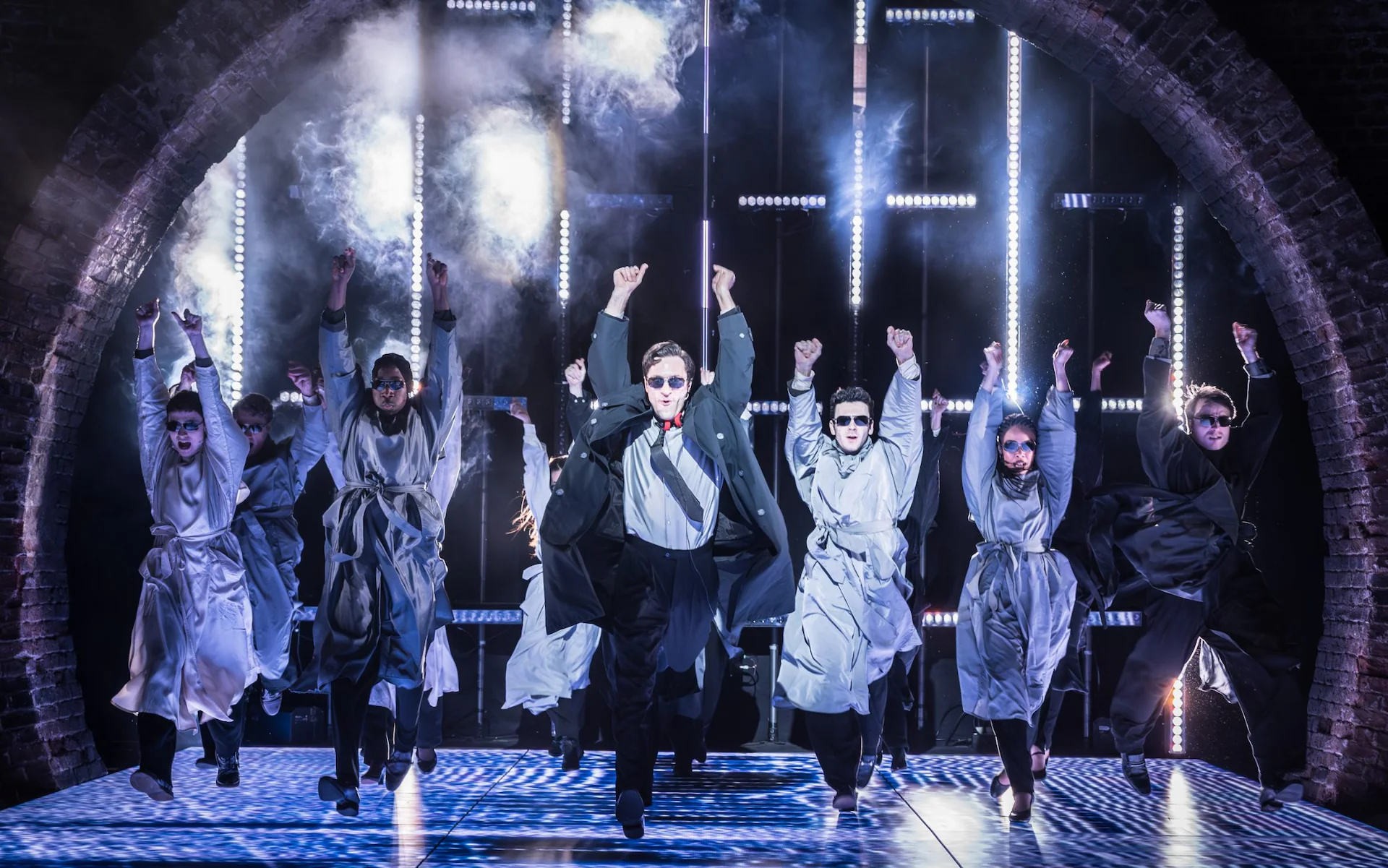
Arty Froushan and cast in American Psycho. Photo: Marc Brenner

Roberto Aguirre-Sacasa’s musical adaptation of American Psycho, Bret Easton Ellis’s satire of 1980s Wall Street consumerism, was a huge success in Rupert Goold‘s first season as Artistic Director of the Almeida (then it starred Matt Smith). Now, 13 years later, it forms part of his final season there. Here’s Alex Wood’s summary of the plot at WhatsOnStage: ‘That story…is of a disillusioned banker, Patrick Bateman, filling the emotional void in his life with consumerist jargon, macho-posturing and, eventually, a homicidal rampage through New York.’ The critics loved the production- the music, the set, the lighting, the choreography- and praised the cast especially Arty Froushan in the lead role. Some felt it wasn’t as effective as it could have been.

[Links to full reviews are included but a number are behind paywalls and therefore may not be accessible]

4 stars ⭑⭑⭑⭑

The Guardian‘s Arifa Akbar listed the reasons why she liked it so much: ‘First there is satire, deliciously dark, and then horror…unsettlingly effective when the violence comes (…) Duncan Sheik’s score contains one great electro-synth number after another, with a razor sharp book by Roberto Aguirre-Sacasa (…) Es Devlin’s fleet set design turns nightclubs into bedrooms into hideous mounds of twitching bodies. Jon Clark’s Stringfellows style lighting and Finn Ross’s projections give off a luminous, hallucinatory quality, insinuating Bateman’s unreliable reality.’

‘it’s big, bold, and deliciously sinister’ declared BroadwayWorld‘s Cindy Marcolina. She noted: ‘Arty Froushan is exquisite as Bateman. A psychotic glint in his eye and steely arrogance make him the quintessential finance bro. He makes his inability to get a table at the exclusive Dorsia restaurant the driving force of his homicidal streak, filling his nights with violent sex and murderous escapades. The musical spells out Bateman’s contradictions, and Froushan revels in them.’

Alex Wood for WhatsOnStage stated: ‘It’s not a perfect show, and its true impact is perhaps left that bit too late in the final scenes. That said, it’s still a hypnotic, bloody good time – one that perhaps says more about the macabre dimensions of modern masculinity than anything else on a UK stage right now.’

The Standard‘s Nick Curtis noted the look of the show: ‘If I say that Rupert Goold’s revival of his hit electropop murder musical is full of surface gloss and chilly razzmatazz, I mean it as a compliment. Bret Easton Ellis’s original 1991 novel was a slashing satire on late-80s consumerist capitalism, as lived by psychotic Wall Street banker Patrick Bateman. This shiny, energetic, body-conscious production lands when greed is once again good and looksmaxxing misogynists are literally all the rage in the manosphere.’ He explained more about the men’s bodies: ‘the hench torsos and sculpted six packs the younger male actors reveal …This fits the vanity (and the semi-suppressed homo-eroticism) of Bateman’s milieu. But it seems that stage actors, like movie stars, now have to have the body of a Calvin Klein model as well as talent.’

The Independent‘s Alice Saville had some doubts but ‘if this show’s message is uncertain, its impact is undeniable. It doesn’t look or sound like any other musical you’ll see in London, and there’s something entrancing about this icy injection of nihilism into a remorselessly peppy genre.’

Time Out‘s Andrzej Lukowski liked it but had reservations: ‘for all the demonic razzle dazzle that Goold and his top-notch creative team bring to bear – disturbingly twitchy choreography, infernal monochrome elegance, a lot of indoor sunglass wearing – American Psycho is a deadpan show with a downbeat story that sometimes feels in conflict with the maximalist nature of musical theatre. And in humanising Bateman and stressing his anxieties, his collapse into full-blown paranoia at the end feels less momentous than in book and film.’

3 stars ⭑⭑⭑

Claire Allfree in the Telegraph was dissatisfied with the adaptation: ‘Perhaps the greatest stumbling block is the fact that the original novel is a masterpiece in narrative ambiguity. Since this adaptation signals from the beginning that Bateman is a fantasist, any sense of ghastly jeopardy is lost. Froushan…expertly conveys the sense of both moral void and existential despair but he is never remotely terrifying.’

Holly O’Mahony at LondonTheatre cautioned: ‘It’s not that the story itself hasn’t aged well, or faded in relevance, but under Goold’s watch, Patrick Bateman (an appropriately beguiling Arty Froushan) never seems as void of feelings as he says he is. We witness him spiralling his way through an existential crisis, wearing his fragility on his sleeve. And making him a shade or two more ‘relatable’ diminishes the satire of Ellis’s story’.

The Stage’s Sam Marlowe was underwhelmed, saying it was ‘a highly enjoyable satirical romp – but one that, despite some vivid gory splatters, is essentially bloodless. It’s smart and horribly pertinent. But it probably won’t give you nightmares.’

The Times’ Clive Davis didn’t get it: ‘It’s slick, it’s shiny, it’s empty (…) There are solid performances all round, but is the show itself really worth reviving?’ Like Bateman, he put the axe in: ‘As for the music, Sheik…has assembled an efficient if colourless selection of technopop anthems.’ 

Critics’ average rating 3.6

American Psycho can be seen at the Almeida Theatre until 21 March 2026.

If you’ve seen this production, please leave your review and/or rating below

Theatre reviews roundup: Ballad Lines

A Musical with heart

Southwark Playhouse Elephant
Ballad Lines at Southwark Playhouse. Credit: Pamela Raith

Ten years in the making, Ballad Lines has arrived in London. Finn Anderson and Tania Azevedo’s musical follows connections between women and songs over the centuries. Some critics felt there was more work needed on it, but they loved the music and found the story heartwarming.

[Links to full reviews are included but a number are behind paywalls and therefore may not be accessible]

4 stars ⭑⭑⭑⭑

Cindy Marcolina for BroadwayWorld said: ‘Ballad Lines must be one of the most exciting new musicals to hit the stage in some time. We follow Sarah, an American queer woman, as she dives headfirst into her family’s roots. Through the centuries, the same melodies come back to link the women who came before her (…) it might be a bit corny here and there, but it’s a solid celebration of women’s endurance as well as the role of music and its influence on our lives. The score and the plot are equally engrossing; the direction and performances are inspired.’

‘Brimming with ambition and warmth, it has the makings of the next brilliant thing’ reported Aliya Al-Hussan for WhatsOnStage. She admitted: ‘Touching on family, identity and motherhood, there’s a lot to pack in and some characters inevitably feel less rounded than others, but Azevedo directs with great fluidity.’ She concluded: ‘Heartwarming, poignant and deeply human, it has the potential to go far.’

Emma John in The Guardian explained; ‘It was the Ulster immigrants, passing down their boisterous tunes and melancholy ballads, who gifted the US some of its first iterations of country music.’ Anderson’s score powerfully evokes the source material it is exploring, and the ensemble’s singing positively electrifies the traditional song (…) Composer Finn Anderson and director Tania Azevedo have used that journey to tell a musical story across generations.’

Gary Naylor at The Arts Desk praised the show but ‘You shouldn’t be standing back, but few aspects of life are as inaccessible to a man as pregnancy and childbirth (…) For all the heart and soul and technical achievement on stage, that yawning empathy gap was never bridged – at least not for me. I appreciated the show because it’s a really fine musical, but I didn’t really feel it. Many will. ‘

3 stars ⭑⭑⭑

The Stage’s Sam Marlowe noted: ‘There are some soaringly impassioned performances in this new musical, but it’s the songs that are the star. Woven around traditional Appalachian folk tunes and accompanied by a live band dominated by lyrical fiddle, they are lilting, haunting and oozing with gorgeous harmonies.’ However, ‘McNamee sometimes seems a little stranded, a bystander floating at the verge of more interesting tales, and the piece sometimes bobs too long among the eddies and whorls of the multi-stream storytelling.’

Matt Wolf for LondonTheatre called it ‘a show suffused with passion and heart that comes tethered to a surging score from the fast-rising Scottish singer-songwriter Finn Anderson’. He declared: ‘There’s no faulting an eight-person cast…and McNamee should go far with her stirring occupancy of the show’s star part.’ Unfortunately, ‘Too often, the writing lapses into clunky portentousness’ and it’s also in ‘desperate need of trimming and shaping’, he said.

Anna Maloney in CityAM described the story: ‘Ballad Lines dives into the lives of Cait, Jean and Sarah, three women from the same blood line but very different times…connected by heritage, womanhood but, more importantly, the power of song, with the score blending Scottish, Irish and Appalachian folk ballads.’ She suggested it was not quite complete: ‘this could be the kind of show that really benefits from scale. With a few set pieces and the potential for big, gorgeous ensemble numbers, Ballad Lines could be a hit in waiting.’

Critics’ average rating 3.6⭑

Ballad Lines can be seen at Southwark Playhouse Borough until 21 March 2026. Buy tickets directly from the theatre

If you’ve seen Ballad Lines at Southwark Playhouse, please leave your review and/or rating below

Theatre Review: The Producers – Now and Then

Mel Brook’s musical is almost as offensive as ever (Thank goodness)

Garrick Theatre

⭑⭑⭑⭑⭑

Andy Nyman & Marc Antolin in The ~producers. Photo: Manuel Harlan

The Producers was and still is one of the great musical comedies, so why was I slightly disappointed in the current West End production? Not so let down by it that I didn’t find it laugh-out-loud funny nor so dissatsified that I wouldn’t recommend it, but left with the feeling that it is unwise to mess with perfection.

This production is the first one in London that Mel Brooks has allowed that doesn’t have to stick to Susan Stroman‘s original Broadway direction. It was probably necessary to have that agreement simply to be able to present it in the tiny space of The Menier Chocolate Factory, where it was created pre-transfer.

The spectacle may be reduced but there is still enough going on to dazzle the audience and fill the Garrick stage. As well being effective in puncturing the  vainglory of fascism, The Producers is (like Spamalot!) an affectionate send-up of Broadway musicals. No matter how much fun there is along the way, the success of the show is founded on it being a great musical itself. Director Patrick Marber shows he is aware of this: the clever songs, the slapstick and the dancing are done to perfection.

You wallow in the glory of the big build of Springtime for Hitler number with its goosestepping troopers in Busby Berkeley style formation, King of Broadway, where Max (played by Andy Nyman) lamenting his failure becomes a pastiche of Fiddler On The Roof, the hilarious zimmer frame number danced by the old ladies who give Max cheques in exchange for sex, and I Wanna Be A Producer sung by Leo played by Marc Antolin, who brilliantly develops his character from a nervous accountant to confident impresario. Mr Marber, directing his first musical, has been well served by choreographer Lorin Latarro and set designer Scott Pask.

However a slight reduction in scale isn’t the only change. There is a noticeable shift from the 2001 production that may, or may not, be designed to accommodate changing sensitivities. That may seem an odd thing to say about a show that is renowned for shocking audiences with its offensiveness, ever since the film was released in 1967. It was written to shock liberal audiences with its swastikas, campness, and more.

That’s all still there. If anything, it’s even more camp, and the Nazis even more shocking. The scene where the producers recruit director (and transvestite) Roger de Bris  now contains a living statue with an enormous penis (which Roger slaps), and a Jesus in a nappy that could have stepped straight out of Jerry Springer The Musical. Trevor Ashley as Roger and Raj Ghatak as Carmen Ghia are on a Liberace level of campness that still somehow remains rooted in real characters.

The idea of camp as synonymous with being gay dates from a time when it was necessary to negate and subvert homophobia. On the other hand, while there is no longer a stereotype gay person, unapologetically camp celebrities like Alan Carr and Julian Clary remain popular gay icons. In the case of The Producers, you’ll remember that when the two producers Max and Leo plan to create a musical flop, they decide to put on a show celebrating Hitler, written by a Nazi pigeon fancier played by Harry Morrison, who is all the more funny for being serious. Their mistake is to make everything as camp as possible (Keep It Gay), which, in mocking Hitler and the Nazis, transforms their musical Springtime For Hitler into a hit.

Not offensive enough?

So the campness is essential, but something has changed. To understand what, you only have to look at Umma’s scene.  This is where a woman auditions before Max and Leo. Inevitably she is Swedish, partly because in the world of Mel Brooks stereotypes, Sweden is synonymous with sexual liberation, and also because in that same world, accents are always funny. She sings When You’ve Got It Flaunt It. Only, in this production, she doesn’t. Flaunt it, I mean. In the original production, she showed a great deal of cleavage, fulfilling Max’s request for ‘big tits’, which she thrusts under their noses, and her legs couldn’t have got further apart when she danced around the stage.

Marc Antonlin & cast in The Producers. Photo: Manuel Harlan

In this version of Umma, as portrayed by Joanna Woodward, she has a wonderful voice and is undoubtedly beautiful, but she dresses and dances demurely. It is hard to believe her audition would generate the famous punchline from Max: ‘We may be sitting but I can assure you we are giving you a standing ovation.’

So, despite the book (script) remaining untouched, the really noticeable change in the treatment of it is in the sexism. Patrick Marber was quoted in an interview as saying: ‘Things have changed a lot… and it is quite old fashioned in some of its attitudes. We’ve tried to do what we can with that.’ It seems that the attitudes to women have been the focus of his concern.

All the women who once showed legs and cleavage, here keep their flesh quite well covered by looser and less revealing garments than seen 25 years ago. I can see the sexism can be problematic for today’s audience, but then again The Producers is a period piece, so why not embrace it, as being of its time?

Mel Brooks is equal opportunities in his offensiveness. Just as he can laugh at Nazis and camp theatricality, he also sees the funny side of sex. His musical does not endorse sexism: his character Max was always seedy, as played by the great Zero Mostel in the film and Nathan Lane on Broadway. Here, perhaps acknowledging a (rightly) less tolerant time, he is presented as downright sleazy. Andy Nyman, unshaven with greasy hair plastered to his scalp and yellowing teeth, still gives Max a soft centre, but there is no way you could approve this man’s attitude to women. The women’s dancing was always a parody of the sexist fantasies of male directors, so there is no reason why we shouldn’t laugh if they were to ‘flaunt it’ in this iteration. It’s ironic that a production of a musical which doesn’t care who it offends should on this score, apparently, be so timid about causing offence.

Nevertheless, it’s great to see The Producers back on a London stage, and this production is a triumph that both pays homage to the original and sets the stage alight once more.

The Producers can be seen at the Garrick Theatre until 19 September 2026.  Buy tickets directly from the theatre

Click here to watch this review on YouTube

Click here to read the roundup of critics’ reviews of both the run at The Garrick and at The Menier

Theatre reviews roundup: Beautiful Little Fool

The worst show of the year so far

Southwark Playhouse Borough

The worst reviews of the year so far greeted Beautiful Little Fools. The musical tells the story of Scott and Zelda Fitzgerald though the eyes of their daughter, but none of the critics thought it did justice to the legendary literary couple. The score by Hannah Corneau, who also plays Zelda, was agreed to be unmemorable. The actors could sing apparently but found nothing in the songs or the book by Mona Mansour to get their acting teeth into.

[Links to full reviews are included but a number are behind paywalls and therefore may not be accessible]

3 stars ⭑⭑⭑

Alun Hood for WhatsOnStage tried his best to be positive: ‘It’s a frustratingly inconsistent evening but, for all that, it’s heartening to see a new musical genuinely trying to break into unusual and challenging territory. In its present form, it’s equal parts beautiful and foolish, but with a little work, it could become something special.’

2 stars ⭑⭑

The Standard’s Nick Curtis didn’t hold back: ‘This banal meander through the lives of Zelda and F Scott Fitzgerald is… unsubtle and trivialising. Michael Greif’s awkward production features a cast of five and a band of four, and just about every cocktail-clinking, writer’s-blocking cliché you could wave a volume of short stories at.’

The Stage’s Sam Marlowe came up with a striking simile: ‘the show feels a bit like a gaudy chocolate box – alluring, but full of empty wrappers.’

There have been no reviews so far from the Times, Telegraph, Independent nor the i. The Guardian was one of the few heavyweight news media to send a reviewer, although the producers may wish they hadn’t when they read Emma John’s damning critique: ‘no melodies linger from the many ballads, and there is no sense of the spark or wit of these two wordsmiths colliding beyond a single waspish argument on the Riviera. The show steadfastly ignores Zelda’s mental health issues for the sake of its sudden, damn-the-patriarchy climax.’

BroadwayWorld’s Aliya Al-Hussain had some choice words for the show: ‘fails to get beyond something shallow and unsatisfying’, the songs: ‘clunky lyrics sound like they could have been written by ChatGPT’ and the performers: ‘As F Scott, David Hunter is not quite tortured enough as the alcoholic and tormented writer. His vocals are strong, but he struggles to make much of the one-dimensional character he is given.’

Gary Naylor forThe Arts Desk joined the chorus of disapproval, describing it as ‘a misfire, not taking us into the Fitzgerald’s marriage nor into their work, the detail required to locate poor Zelda’s health issues within their time and place left unexplored. Great musical theatre songs can rescue an ill-focused book, but there just aren’t enough to raise a show that has a marvellous story to tell, but not the tools to tell it.’

Time Out didn’t supply a star rating for Tim Bano’s review but it didn’t seem likely to warrant more than two with a comment like this: ‘like a Wikipedia page with songs’. He ended: ‘These are legendary lives diminished by being squashed into a musical, pulled out of time by the score. Beautiful Little Fool takes all the glamour, the outrageousness, the cleverness, the vitality, the fights, the drinking, the intensity of the lives that F Scott and Zelda lived and reduces them to schmaltz.’

Critics’ Average Rating 2.2⭑

Beautiful Little Fool can be seen at Southwark Playhouse Borough until 28 February 2026.

If you’ve seen Beautiful Little Fool, please leave your review and/or rating below

Theatre reviews roundup: Guess How Much I Love You?

Harrowing play about a couple facing a dilemma

Jerwood Theatre Downstairs, Royal Court
Rosie Sheehy and Robert Aramayo in Guess How Much I Love You? Photo: Johan Persson

The Royal Court’s 70th anniversary season got off to a tremendous start with a new play by Luke Norris, directed by Jeremy Herrin. The story of how a couple nearly fall apart when faced with a terrible decision during her pregnancy was harrowing, the critics all agreed and gave 4 and 5 stars. Only one dissenter gave 2 stars, calling it ‘grief porn’. Rosie Sheehy was highly praised for her no holds barred performance as the woman.

[Links to full reviews are included but a number are behind paywalls and therefore may not be accessible]

5 stars ★★★★★

The Guardian’s Arifa Akbar said it was ‘a harrowing portrait of pregnancy and grief, plumbing the depths of sorrow within a marriage. But it is not only that. It is funny and profound, intense without ever becoming overwrought.’ She continued: ‘Plot twists bring shock and dread, but alongside this there is both whimsy and deep rumination on mortality’. She concluded: ‘This is a tear-jerker with 100% heart, 0% sentimentality. What a start to the Royal Court’s 70th anniversary season. What an emotional tour de force.’

4 stars ★★★★

The Independent’s Alice Saville explained: ‘It starts with a couple at their 20-week antenatal scan, their hope visibly curdling as they realise the road ahead isn’t the sweetly straightforward one they’d imagined. Then, it follows them to the proverbial hell and back, in an emotionally exhausting journey through suffering and redemption.’ She reassured us: ‘For all its overpowering bleakness, there’s something ultimately hopeful about Norris’s play, and the way that he details every hideous contour of this pair’s suffering – then shows us that this, too, is survivable.’

In a typically perceptive review, Sam Marlowe’s reported in The Stage: ‘Norris’ chamber drama, wrapped around a couple in their 30s, Him (Robert Aramayo) and Her (Rosie Sheehy), is a sort of gloriously profane hymn to hope and human resilience, and to love; mingled with the obliterating pain is passion and poetry, tenderness and laughter, faith and deep despair. It’s mercilessly concentrated and intimate, almost as if the characters are being gradually stripped of their skin. And yet the writing also exudes a profound compassion.’

‘This harrowingly powerful play by Luke Norris about grief, loss and love features exceptional performances from Rosie Sheehy and Robert Aramayo’  began The Standard’s Nick Curtis, and continued: ‘What follows is hard to watch but impossible to tear your eyes from. It’s as bleak as Beckett but also brutally funny and agonizingly empathetic.’ He declared: ‘Norris, an accomplished actor as well as a writer with a growing reputation, knows how to compose dialogue that addresses the unsayable but also embraces the unsaid.’

Anya Ryan at LondonTheatre described how the couple cope: ‘Together, they circle their options, fracture, and test the limits of their love. From the one central, damning dilemma, Norris’ script opens out into an examination of human feeling at its most raw: passion, guilt, impossible inner battles, and grief without reprieve.’ She was particularly impressed by Rosie Sheehy: ‘Continuing her reign as one of the country’s finest stage actors, Sheehy is nothing short of extraordinary. Flitting from sharp sarcasm to raw, animalistic despair, she behaves like a body reacting before her mind has time to catch up.’

WhatsOnStage’s Sarah Crompton commented: ‘For all the agony, Guess How Much I Love You? is a play illuminated by love. It takes an extreme version of the fears facing every couple who have ever tried for a baby and examines it with compassion and sensitivity. It doesn’t have any huge relevance beyond itself, but it does shine a light on ordinary people faced with extraordinary circumstances and lets them live on stage.’

The Times’ Dominic Maxwell praised the two leads: ‘   Aramayo is terrific as the more passive partner trying to be supportive, straining to stay included.’ He concluded: ‘Yes, I chafed slightly at some overwriting, but the last half hour moved and gripped me entirely. It is not easy. It is not exactly enjoyable. And yet this smartly observed, cannily constructed, beautifully performed play will stay with me.’

Time Out’s Andrzej Lukowski agreed it ‘does ring painfully emotionally true.’ He pointed out: ‘The sense of paring things back is matched by Jeremy Herrin’s production, which is naturalistic and uncluttered. But there’s a little more to it than that. The relative lack of other cast members (Lena Kaur plays a midwife in one scene) and the fact Grace Smart’s sets don’t tend to fill the stage, but rather sit in inky pools of darkness, gives it an unsettling, claustrophobic feel.’

Debbie Gilpin for BroadwayWorld found it ‘a thought-provoking play that is full of humanity, with a great many moments of lightness which balance out the dark topics at its core; it’s a reminder that although grief can and will persist, so does hope.’

Aleks Sierz at The Arts Desk declared: ‘Sheehy and Aramayo take us on a journey that is both agonising yet also affirmative of the power of love’s survival in a climate of adversity. It’s a very hard watch, but also, by the end, oddly uplifting. A good balance, right? At the same time it’s a demonstration not only of the power of theatre to dig into common, if also taboo-charged, experiences, but likewise a testament to the relevance of the Royal Court’s project of staging the best, and most beautiful, intense new writing it can find. Happy 70th!’

2 stars ★★

Claire Allfree at the Telegraph was the one dissenting voice: ‘while Norris is clearly motivated by the need to tell a ghastly story that could affect any prospective parent, his subject feels like a creative cop-out. Landing smack alongside the debate over grief porn generated by Hamnet and H is for Hawk, his play insists we respond from the gut to his couple’s predicament, or not at all. And if we don’t, he has nothing to offer us. There is an occasional nod to religious sensibilities but it’s low stakes stuff. Another writer might have given us a chewy back and forth debate on the ethics of the couple’s dilemma. Norris essentially dramatises only how it makes them feel.’

Critics’ Average Rating 3.9⭑

Guess How Much I Love You? can be seen at Jerwood Theatre Downstairs, Royal Court, until 21 February 2026

If you’ve seen Guess How Much I Love You? please leave a review and/or rating below

Theatre reviews roundup: Gerry & Sewell

Northern play heads South

Aldwych Theatre
Jack Robertson and Dean Logan in Gerry & Sewell. Photo: Von Fox Promotions

A fringe success from the North East has opened in the West End. Among the handful of reviews, three gave it two stars but its rating was balanced by a 5 and a 4 star review. The latter liked the humour and the portrayal of working class life in Gateshead; the low scorers found it unable to make its mind up whether it was a comedy or a tragedy. Jamie Eastwood’s play stars Dean Logan and Jack Robertson in the title roles.

[Links to full reviews are included but a number are behind paywalls and therefore may not be accessible]

5 stars ★★★★★

Amber-Rae Stobbins, a native of Newcastle, popped up at BroadwayWorld to hand out full marks: ‘Jamie Eastlake’s brilliantly witty and raw play is just as upfront and vulnerable as the real-life people it is about’. She gave all the cast high praise including Logan: ‘Every word he says catches the audience and holds them, all while never missing a beat.’ And ‘Robertson’s comedic timing is unmatched, all while never dropping the beat. Moments of fourth-wall-breaking humour really connect his performance with the audience in a way that can only be put simply as ‘masterful’. And Clayburn: ‘Her ability to effortlessly contrast her characters through voice and physicality made her performance a joy to watch. Clayburn humanises characters that society often doesn’t – a marvel to see.’ And the ‘incredible singing voice of Halfpenny: ‘She represented those of us who left Newcastle to move to London for the sake of our art beautifully, and I couldn’t ask for more from her for that.’

4 stars ★★★★

The Independent’s Alice Saville had reservations: ‘It’s hard to get the genre’s balance of harrowing realism and crude joys right on stage. And as funny as this show’s offbeat animal puppets and showboating song-and-dance moments are, they sit weirdly alongside the story’s nihilistic trajectory.’ Nevertheless, ‘what Jamie Eastlake’s production really does nail is the humour. It’s hilarious from start to finish, providing you don’t gag at toilet jokes. And it’s also constantly, wittily self-aware of all the tensions of telling a story of poverty and deprivation in front of a middle-class audience’.

3 stars ★★★

The Stage’s Sam Marlowe said: ‘It’s frustratingly scattershot, and just about hangs together thanks to the sheer energy of its execution. But you can’t help wishing Eastlake would tighten the focus on Logan’s wiry, buoyant yet sensitive Gerry and Robertson’s food-obsessed, wise-cracking, clumsy and kindly Sewell.’

2 stars ★★

The Times’ Clive Davis was disparaging: ‘In an intimate community centre, it might just have worked; under the proscenium arch, it has all the allure of watching a bad Sunday League game on a quagmire of a pitch.’

’it’s less of a play than a hectic series of sketches that’s hard to take seriously as a comedy or a tragedy’ said LondonTheatre’s Julia Rank.

The Guardian’s Arifa Akbar noted: ‘the script as a whole is messy and incohesive, its various parts pulling away from each other (…) The season ticket storyline is beached by the end and some basic plotlines remain fuzzy.’ She conceded: ‘Still, there are sparks of brilliance and much potential – as well as a ton of heart and soul.’

Critics’ average rating 3.0★

Gerry & Sewell can be seen at the Aldwych Theatre, London, until 24 January 2026. Tickets from nederlander.co.uk

If you’ve seen Gerry & Sewell at the Aldwych, please leave a review and/or rating below

Theatre reviews roundup: A Ghost in your Ear

Sounds frightening

Hampstead Theatre Downstairs
Jonathan Livingstone & George Blagden in A Ghost in Your Ear. Photo: Marc Brenner

Yet another horror story has the critics jumping out of their seats. Unlike the  Paranormal Activity or 2:22 A Ghost Story, which relied on visual stage magic, A Ghost in your Ear relies on sound effects over headphones. An actor played by George Blagden records a horror story alongside a studio engineer played by Jonathan Livingstone. We see him reading the story but, more to the point, we hear the increasingly terrifying recording. Four stars all round for writer/director Jamie Armitage in collaboration with sound design geniuses Ben and Max Ringham.

[Links to full reviews are included but a number are behind paywalls and therefore may not be accessible]

4 stars ★★★★

‘If you’ve come to be scared, you’re in the right place. This is a good, old-fashioned ghost-train of a story’ declared The Guardian’s Arifa Akbar. Miriam Sallon for WhatsOnStage agreed: ‘on a bleak, cold January night, what better than a good haunting tale to get your blood pumping again?’

The Times’ Dominic Maxwell was truly spooked: ‘I spent much of these 90 minutes getting the willies in just the way Armitage wanted me to. Does it add up in the cold light of day? Not sure that matters: Anisha Fields’s shadowy set design and Ben and Max Ringham’s sound design help to ensure the light of day isn’t let anywhere near.’

Tim Bano for the Financial Times  explained: ‘It’s a piece that uses mood as much as jump scares to unseat us. The big, loud frights are few, and each is terrifying. As a ghost story, it twists and unsettles and gets under the skin. As a technical achievement, it’s pretty remarkable. It knows we might think the binaural thing is a bit of a gimmick, and even George is sceptical. Until those voices start to whisper in our ears.’

Katie Kirkpatrick at BroadwayWorld said: ‘It’s hugely impactful, and a stellar fit for the horror genre: it creates the illusion that the action is taking place all around instead of on an isolated stage, and weaves its way into the fabric of the piece. You feel breaths on the back of your neck, voices in the distance, creaking floors – it’s very effective and very scary.’

Rachel Halliburton on The Arts Desk praised the cast: ‘Plaudits to both Blagden and Livingstone for an enjoyably compelling management of the journey from the rational to the irrational. Whether or not you believe in ghosts, this should prove at the very least a decent work out for your adrenal gland’

The Standard‘s Nick Curtis assured us: ‘this is a meticulous and artfully conceived blend of storytelling, technology and actorly skill’. Oh, and frightening as well: ‘And the scares? Again, it would be a shame to spoil them, but they are extremely potent and even those that can be anticipated induce horripilation (a lovely word one rarely gets to use, it describes hair stirring on a scalp tightening with dread).’

Holly O’Mahony for The Stage gave some details: ‘It’s when the studio starts mimicking the setting of the story that this horror really takes hold, and the experience of watching it in the Hampstead’s intimate downstairs space begins to feel cleverly claustrophobic and inescapable (although as a voice tells us at the start, you can always remove your headphones if it gets too much). Anisha Fields’ set, which traps George in a soundproofed booth between two glass windows, contains all sorts of hidden facets primed to chill. And Ben Jacobs’ lighting cloaks portions of the stage in thick blackness, making you dread what might be in a corner.’

Time Out‘s Andrzej Lukowksi was impressed, saying it: ‘maybe feels a little too much like an extended episode of Inside No 9 for its own good. But horror theatre is a small, weird and often terrible genre and this is a proper scary little gem’.

Critics’ average rating 4.0⭑

A Ghost in your Ear can be seen at Hampstead Theatre until 14 February 2026. Buy tickets directly from hampsteadtheatre.com

If you’ve seen A Ghost in Your Ear, please leave your review and/or rating below

Theatre reviews roundup: High Noon

Stage Western emphasises politics rather than drama

Harold Pinter Theatre
Denise Gough & Billy Crudup in High Noon. Photo: Johan Persson

It is always asking for trouble from the critics when you adapt a well-loved film for the stage.  And so it proved with High Noon. Some critics, including one giving a 2 star review, found the stage show came off a poor second to the Oscar winning original. Others liked it in its own terms, enjoying Billy Crudup‘s more modern male, Denise Gough‘s stronger woman, and the shift in political message toward a more contemporary examining of why people would allow a bad person to come to power. The basic plot is the same: Will Kane is getting married and giving up his job as the town’s US marshal. News comes that a notorious killer is returning from prison on the noon train to wreak revenge on Kane, the man who put him away. None of the townspeople will help him. His Quaker wife Amy won’t stand by him either. Carl Foreman‘s original screenplay has been adapted by first time playwright but established screenplay writer Eric Roth. The critics liked the two leads’ performances, although some seemed to feel Denise Gough was too good for the part.  At least she got to sing some added Bruce Springsteen songs to considerable acclaim. There was disagreement among the reviewers about the level of tension supplied in Thea Sharrock‘s production.

[Links to full reviews are included but a number are behind paywalls and therefore may not be accessible]

5 stars ★★★★★

Gary Naylor for BroadwayWorld confessed he doesn’t like Westerns and has never seen the original movie, but this stage version made him realise ‘Not all Westerns are the same.’ He credited the script but added ‘Casting is key’:  ‘Billy Crudup… catches our hero’s flawed dignity and dangerous dilemma perfectly, a quiet man unexpectedly pitched into a life or death situation as the clock, handily visible above the stage, rolls towards midday.’ He explained the fifth star: ‘I was moved. I was there in the room with Kane as he failed to find the trust of his erstwhile supporters, with Amy as she wrestled with her conscience and ultimately left admiring a man who could do what I can’t (yet) in these difficult days for the world – The Right Thing.’

4 stars ★★★★

The Guardian’s Arifa Akbar was lukewarm about it as a piece of theatre, but ‘As a debate play…it gathers a locomotive energy as it travels towards the showdown’. She noted: ‘Eric Roth’s script uses many lines from Foreman’s screenplay but fleshes out the debates on the ethical stance of a community in the face of wrongdoing and misguided American myths around immigration.’ Regarding the two stars: Billy Crudup ‘manages to hold up the part on stage as an upstanding, earnest and increasingly desperate man. Gough makes her part grittier and more modern than that of her film counterpart, Grace Kelly. The pair are convincing as a couple although their narrow characterisation hems in the full scale of their abilities.’ She concluded: ‘For all its early stiffness, it builds in momentum and there are moving moments. Ultimately, the political message speaks loudest, harnessing the McCarthyist fear of then and the Trumpian terror of today.’

3 stars ★★★

For WhatsOnStage’s Sarah Crompton,  it was ‘careful and elegantly enjoyable, but lacks that emotional punch’. She explained: ‘the central debates of the film, the agonised wrestling with what is truly right, are slightly muted here as the play tracks Kane’s quest for support from various groups of townspeople… He keeps saying he must do what he must do, but the moral thrust of the film is somehow missing’

The Times’ Clive Davis liked the way Billy Crudup ‘delivers a more ambivalent version of an unassuming man who is trying to do his duty… His voice is often jittery, his gestures stiff-limbed.’ However: ‘Roth doesn’t quite persuade you that this is a story that needs to be remade. If you haven’t seen the movie, you may well find the play’s storyline a tad one-dimensional. Anyone, on the other hand, who is familiar with the original will struggle to shake off memories of a showdown in New Mexico.’ He praised the look of the show: ‘Tim Hatley’s set design, with its sliding wooden-slat walls, evokes a fragile, dusty township. But while a clock hanging above the stage ticks away as we wait for the villainous Frank Miller to arrive on the noon train, the climactic shoot-out looks perfunctory.’

Alice Saville of The Independent said: ‘Billy Crudup lends a quiet integrity to the role of … Kane, who finds his town turns its back on him, while an impassioned Denise Gough throws his values into question as his pacifist new wife.’ She ended: ‘it doesn’t deliver either the adrenaline or the emotional punch that gives Western movies their enduring power.’

Julia Rank of LondonTheatre thought the same: ‘Crudup brings gravitas and quiet dignity to the role, as well as a touch of delicacy (he could have been ruthless in his approach, but he wasn’t), though he lacks a big stirring speech to bring everything together.‘ As for his co-star, ‘Gough conveys her quiet strength in a relatively underwritten part… and she has the chance to showcase her singing ability with songs by Bruce Springsteen and others.’

For Time Out’s Andrjez Lukowski, the film adaptation ’doesn’t quite cut it on the stage. Magnetic as Crudup is, and solid as the gunplay bits are, none of it can negate the fact that the story ends weirdly abruptly – it needs a much longer final act. Gough is great, but she’s playing an amped up version of a relatively small character and the part doesn’t really justify an actor of her towering abilities…there’s a feeling that some of the songs etc are just there to find Gough something to do.’

2 stars ⭑⭑

The Telegraph’s Dominic Cavendish was disappointed: ‘Billy Crudup and Denise Gough can’t match Gary Cooper and Grace Kelly on screen, and Thea Sharrock’s stylish and yet grit-free production stokes only fitful tension.’ He analysed the many ways the stage adaptation is inferior to the classic film, including the ending: ‘the big gun-slinging denouement, albeit rushed in the film, here lacks the requisite adrenal quality – less high noon, more morning elevenses.’

Critics’ average rating  3.3⭑

Value Rating 34  (Value rating is the Critics’ average rating divided by the typical ticket price)

High Noon can be seen at the Harold Pinter Theatre until 6 March 2026. Buy tickets directly from highnoontheplay.com

If you’ve seen High Noon at The Harold Pinter Theatre, please share your review/comment and rating below

Theatre review: When We Are Married

Dull Yorkshire comedy rescued by cast

Donmar Warehouse

⭑⭑⭑

John Hodgkionson, Marc Wootton & Jim Howick in When We Are Married. Photo: Johan Persson

Bah ‘eck, I’m puzzled as to why director Tim Sheader chose to revive J B Priestley‘s When We Are Married. In its day, it was a very popular comedy, but that day has passed. Three couples celebrating their silver weddings find they were never legally married. There’s much potential for comedy but little of it is developed. Most of the fun seems to derive from puncturing the pomposity of these people, and having a laugh at their Yorkshire dialect. Fortunately, the cast are exceptional and they can generate laughter from the smallest facial flicker or vocal inflection, despite the mediocre script.

John Hodgkinson plays Joseph Helliwell, a domineering, self-righteous community leader, with relish. As his wife Maria, Siobhan Finneran is a delight: a snob who appears to be permanently sniffing something unpleasant under her nose. Mark Wootton is perfectly cast as a bombastic loudmouth, his beard almost as outsized as his voice. Sophie Thompson, as his submissive wife Annie, steals the acting honours with her exquisitely contemptuous looks and increasing confidence.

The final couple, Clara and Herbert Soppitt, are played by Samantha Spiro and Jim Howick. Herbert is a textbook—by which I mean clichéd—henpecked husband, but the dynamic is handled with real finesse: his repeated attempts to speak, only to be briskly cut off, are timed to perfection. Herbert’s tender moment with Annie is a rare hint that more could made of this marital crisis.

Instead, although all the couples are forced to reassess their relationships and view their partners afresh, the socialist J. B. Priestley concentrates on satirising the two pompous businessmen, while advancing a broader message about the need to value and respect women.

Director Tim Sheader has streamlined the play by cutting and consolidating roles: the maid and housekeeper, for instance, are merged into a single, gloriously disruptive character, played with gleeful, mischievous cackling by veteran performer Janice Connolly. Likewise, a newspaper reporter and photographer are combined, allowing Ron Cook to deliver some superb physical comedy as his increasingly inebriated character stumbles out of control—an act that may evoke fond memories, for those of a certain age, of the great Freddie Frinton.

The remaining supporting roles are all convincingly cast. Tori Allen-Martin brings far more nuance than expected to Lottie, who arrives to claim her newly single lover. Reuben Joseph and Rowan Robinson acquit themselves well in the thankless parts of the rather bland young couple, whose marriage-for-love is held up as a moral counterpoint. Leo Wringer is engaging as the priest tasked with untangling the marital chaos, beginning with calm authority before becoming progressively—and amusingly—exasperated. The reduced cast lends the production focus and momentum, sharpening the pace throughout.

That said, the script itself feels dated, and I’m not convinced it would survive without such a skilled ensemble to carry it over the finishing line. Comic sensibilities have shifted: contemporary audiences tend to favour sharper wit over broad humour and an exploration of transgression over a reliance on funny accents.

Imaginative production

Jim Howick, Sophie Thompson, Siobhan Finneran & Samantha Spiro in When We Are Married. Photo: Johan Persson

Even so, Sheader’s production is peppered with thoughtful and imaginative touches. I particularly enjoyed the way each half opens with a period song and closes with a contemporary one. The Biggest Aspidistra in the World, written around the time of the play, speaks to pride and status—and is echoed visually by the enormous aspidistra dominating Peter McKintosh’s largely naturalistic set. The first half  ends with Beyoncé’s feminist anthem All the Single Ladies, signalling the freedoms now beckoning the women.

The second half opens with the music-hall number A Little of What You Fancy (Does You Good), written at the time the play is set and rich in a sexual innuendo sadly absent from Priestley’s text, hinting at possibilities that ultimately remain both unrealised and largely unaddressed. We depart the theatre to the strains of Bruno Mars’ celebratory Marry You, neatly puncturing the pomposity of the powerful. These musical bookends add a layer of commentary that the script alone mostly lacks.

I also have a fundamental problem with staging a play like this on a thrust stage. Too often, you experience a sense of theatrical FOMO. Sitting in one of the side blocks, I had my view completely obscured by an actor, for what must have been five minutes of Ron Cook’s comic business—quite possibly some of the funniest moments. I’ll never know.  I might well have enjoyed the production more from a central seat.

While audience-surrounded staging can heighten intimacy—as demonstrated recently by The Lady from the Sea at the Bridge Theatre—in this instance I can’t help feeling the play would benefit from a traditional proscenium setup, with a single, shared viewpoint. It would certainly make life easier for the actors, who currently have to accommodate multiple sightlines.

Perhaps the production will transfer to a more conventional West End theatre. Judging by the largely enthusiastic reviews, it may well do so. Tim Sheader has an impressive track record from his time at the Open Air Theatre of successfully reviving classics and sending them on to the West End, much to the benefit of the balance sheet. He may repeat that success with this Donmar production. That said, I hope revivals of dated plays remain the exception. There is a place for revisiting a genuine classic but I don’t believe the Donmar is it. I hope Mr Sheader concentrates on the new work and inventive revivals of more recent plays that have characterised his time in charge there, such as Natasha, Pierre & the Great Comet of 1812, The Fear of 13, The Maids, and, one of my favourite plays of 2025, Intimate Apparel.

When We Are Married can be seen at the Donmar Warehouse until 7 February 2026.

Click here to watch this review on the YouTube channel Theatre Reviews With Paul Seven

Click here to read a roundup of other critics’ reviews of When We Are Married

×