Theatre review: 1536

Delightful and devastating, controlled and convincing drama

Ambassadors Theatre


⭑⭑⭑⭑⭑
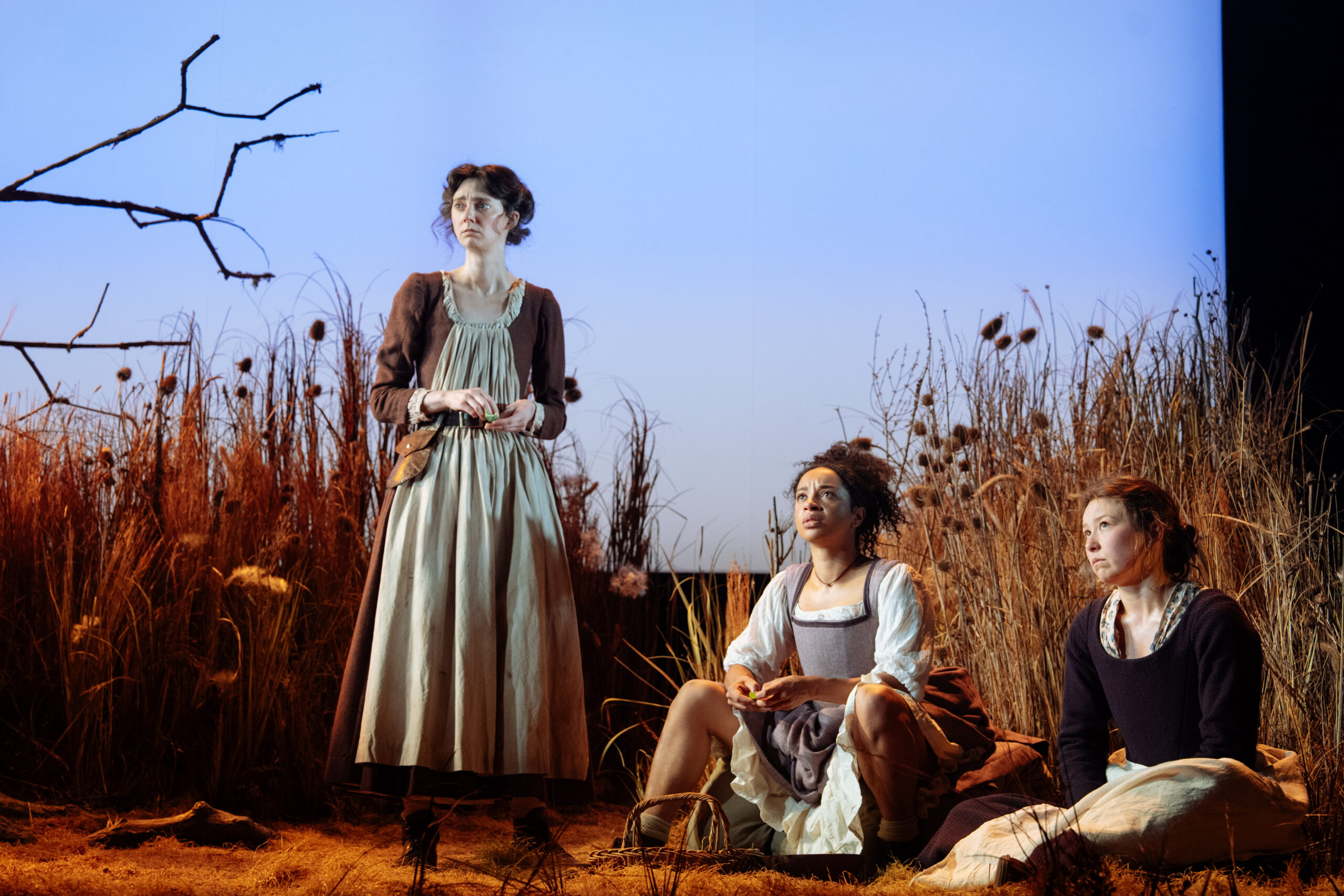
Tanya Reynolds, Siena Kelly, Liv Hill in 1536. Photo: Helen Murray

Don’t be fooled by the posters showing women in smart Tudor dresses. SIX it ain’t. 1536 is the year Henry the 8th accused his wife Anne Boleyn of treason and killed her. Ava Pickett’s play imagines the effect this might have had on women at the lowest levels of society, and, by implication, how the behaviour of powerful men today might influence other men in their attitude to women. And what a well written, superbly acted drama, it is.

It looks at three, I suppose we’d call them, peasant women- their camaraderie, their mutual support, and their ultimate downfall at the hands of men, who are emboldened by the King’s actions. It starts out with some very funny scenes as Ava Pickett’s fast-moving, scintillating dialogue establishes the characters of the women, but it ends in overwhelming tragedy.

Anna played by Siena Kelly enjoys sex. She knows she looks attractive and makes sure she exploits what she sees as an asset. It’s her power over men. She has a sharp tongue and a ribbing sense of humour. The butt of her jokes is usually Jane, played by Liv Hill, Anna’s polar opposite: slow-witted, shy and a virgin. Tanya Reynolds plays the conciliatory Mariella, a worldly midwife saddened by thwarted ambitions.

It’s a joyous portrait of female friendship. The conversation between them is so easy and natural- they speak like modern Essex women (Ms Pickett is from Colchester), which adds to the sense that you could bump into them on a night out.

Then they are shaken by the news (two days old) that the King has imprisoned the Queen. They find it impossible to believe. Inevitably rumours abound but the word is she has had many lovers, including her brother. She may even have plotted to assassinate the monarch. Can it be true? It doesn’t matter. If the King says it is, it must be.

We meet two of the men in their lives. Richard, played by Oliver Johnstone, is one of Anna’s lovers, even while he is courting Jane (for her dowry). George Kemp is William, a married property owner who has a relationship with Mariella. Both appear to be mild mannered.

When things start to go wrong, the male hierarchy follows the King’s example. Anna is labelled a whore while Richard is seen as having been seduced. The other two are also treated badly and (what’s new?) not believed. It’s clear men call the shots and the play proceeds to become very dark indeed, as the bonds with men on which the women relied start to break. As in any oppressive society, the oppressed women not only take the blame for men’s wrongs but start to turn on each other.

It would be so good to be able to say how much society has changed. Shamefully, far too many of today’s powerful men set an example of verbal and physical abuse of women.

Tender and tragic
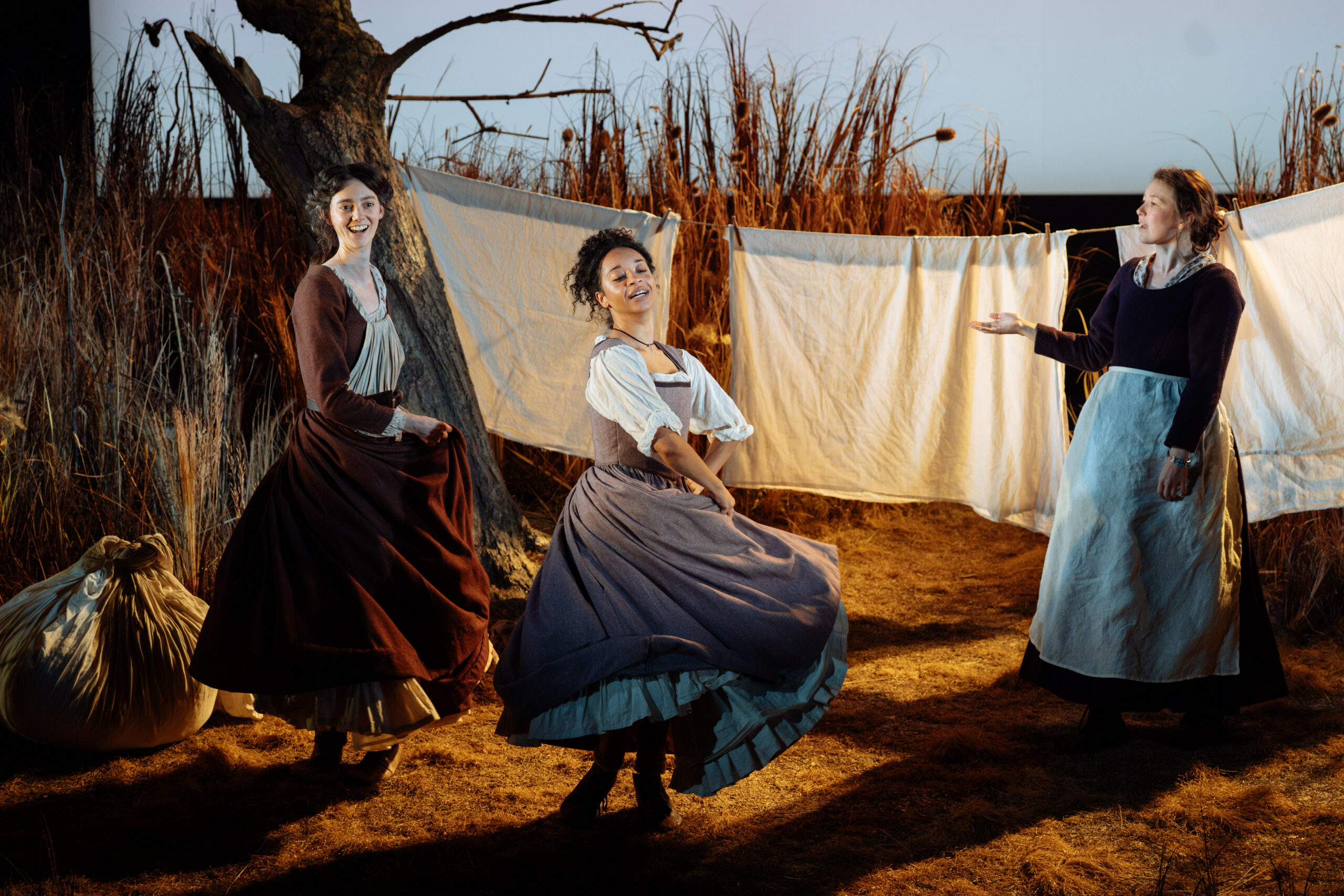
Liv Hill, Siena Kelly & Tanya Reynolds in 1536. Photo: Helen Murray

All this is acted out on a single set cleverly designed by Max Jones. Clumps of dry trodden down grass, a dead tree and scrubby bushes symbolise the oppressive country. It is meant to be excessively hot, and we feel the heat that is beating the women down at the same time as it stirs the men to cheer the execution of the King’s wife without ever questioning her guilt. Then as now people in power control the information, and gossip (for which read social media) whips up the fake news.

The lighting by Jack Knowles contributes to the atmosphere, and between scenes plunges us into impenetrable blackouts that parallel the darkness in which the local population is kept.

It’s a stunning achievement for a debut play. Credit to the Genesis Almeida scheme for commissioning it, and to the Almeida for this pacey production directed by Lyndsey Turner. West End transfers from small theatres sometimes don’t work but the Ambassadors is appropriately intimate. 1536 is tender and tragic, delightful and devastating, controlled and convincing.

1536 can be seen at The Ambassadors Theatre until 1 August 2026.

Paul was given a review ticket by the producer.

Read a roundup of other critics’ reviews of 1536 here

Click here to watch a video of this review on the YouTube cahnnel Theatre Reviews With Paul Seven

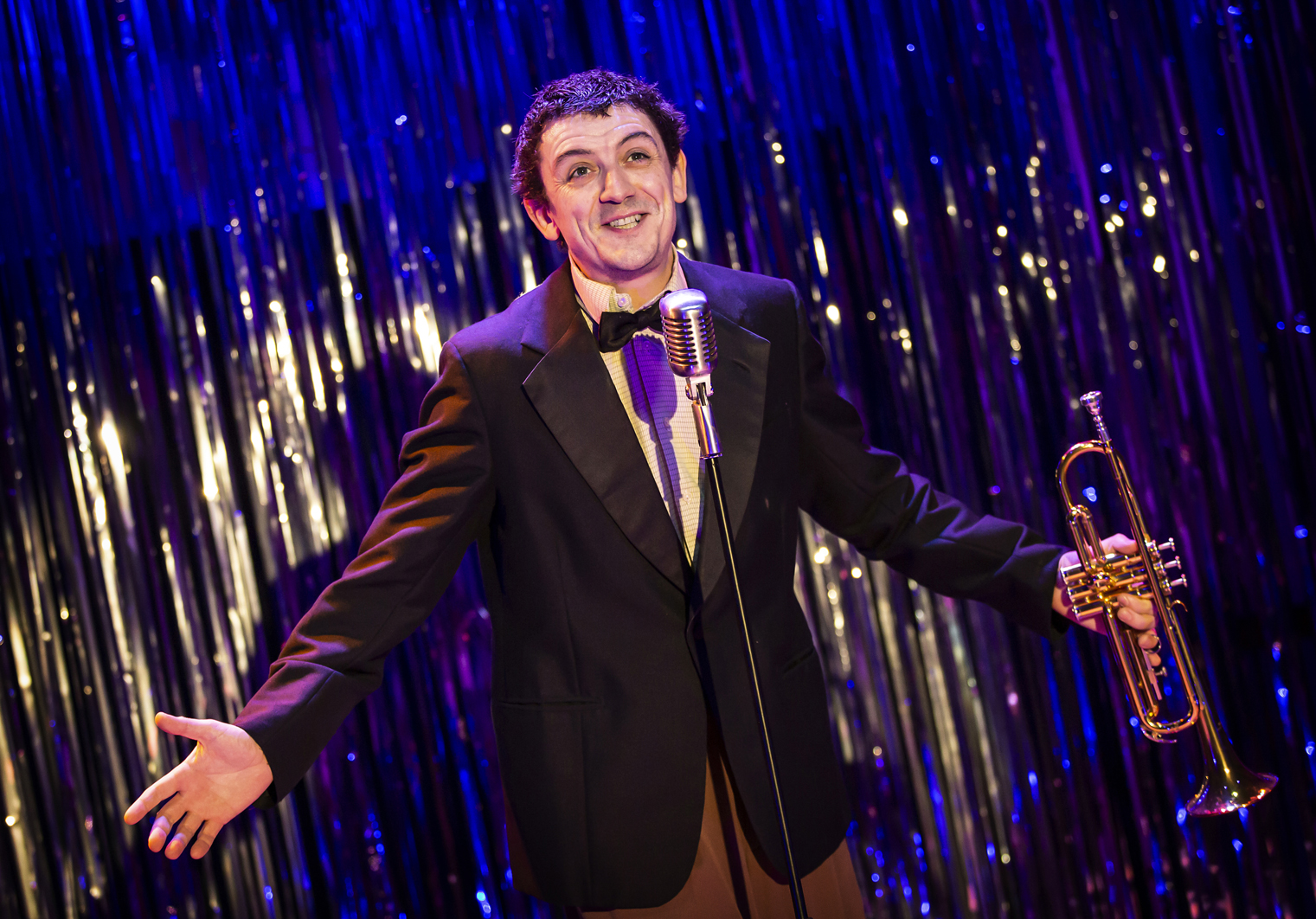
Spike by Ian Hislop & Nick Newman – review

An entertaining look at a comic genius but without his anarchic spirit

★★★

Production photo from Spike by Ian Hislop and nick Newman at The Watermill Theatre in Newbury UK
Spike at The Watermill Theatre. Photo: Pamela Raith

Spike by Nick Newman and Ian Hislop at The Watermill Theatre is a labour of love. Spike Milligan had a long association with Private Eye and the authors, both from the magazine, clearly feel great affection for him. However, they faced three challenges in conveying his comic genius, and weren’t entirely successful in overcoming them, despite devising an entertaining play

Firstly, I’m not sure that many people under 60 will know about Spike Milligan or remember The Goon Show. He was a brilliant comic writer and performer, best known as the writer of The Goon Show. Trouble is, the last Goon Show to be transmitted on what was then called the BBC Home Service was back in 1960, followed by a couple TV specials over the next decade or so.

It was Milligan’s surrealist and absurd humour that made The Goon Show a phenomenal hit. He was an acknowledged influence on future comedies and comics including Monty Python and Eddie Izzard.

After The Goons, Milligan continued to be a fountain of anarchic humour. He wrote poetry, plays, and books, and appeared in a number of TV programmes through the 70s and 80s. He died twenty years ago.

The Goon Show is still what he’s best known for and that’s what this play concentrates on. We see the early resistance from the BBC to the Spike’s revolutionary and rebellious style, through to the show becoming hugely popular. We also learn about Spike’s difficult personal life, his traumatic experience as a soldier in the second world war and his mental illness, and how the pressure of writing the Goon Show took its toll.

Secondly, the actors playing Milligan and his fellow Goons Peter Sellers and Harry Secombe cannot hope to recreate their genius: their voices, their timing, their understanding of each other, the way they perform as if they have just seen the script and are enjoying it as much as the audience.

Sensibly the cast don’t try to do impressions of the originals. Instead, they act out their own interpretation of these characters. Which makes it an interesting story about three friends but nothing like as funny as you might expect from a show about The Goons. The jokes are there, of course, particularly plays on words- a sign on Milligan’s door says ‘Do not disturb, I’m disturbed enough already’- but they cannot hope to deliver them with the power of the actual Goons. The voices can never be quite as ridiculous nor the irony as sharp.

Production photo of John Dagleish in Spike at The Wtermill Theatre in Newbury
John Dagleish in Spike. Photo: Pamela Raith

I’m not in any way denigrating the actors. John Dagleish as Milligan is an excellent comic actor with a great plasticine face and he plays his part with verve, giving a strong impression of a man on the edge. George Kemp as Sellers and Jeremy Lloyd as Secombe provide excellent support. Robert Mountford represents the stiff voice of authority very well. Margaret Cabourn-Smith, James Mack and Ellie Morris complete a talented cast.

The tortured comic genius is a familiar trope. Stories of artists rebelling against and being rejected by the establishment until they are finally embraced are familiar too. But, in the case of Milligan, it’s a tale still worth telling.

To beef up the laughs, the writers cleverly weave in an almost discrete story about the sound effects. Sound effects were an important part of The Goon Show. Spike Milligan set the challenge of producing surreal sound effects. Margaret Cabourn-Smith, in Joyce Grenfell mode, humorously explains how they were achieved. Perhaps because the audience has no ‘original’ to compare this with, she gets the most enthusiastic response of the evening.

Director Paul Hartwho is The Watermill’s Artistic Director, keeps up a good pace, so you won’t be bored.  Katie Lias helps with a set designed to change quickly from a recording studio to various offices, a battleground, a pub and Spike’s home. She uses the back of the stage well. Often there are Milligan-ish cartoons telling us the location of the scene, and projections high up suggest the state of Milligan’s mind.

Which brings me to the third challenge.  In a play mainly about Milligan’s mental state, how do you convey his exploding mind? Yes, John Dagleish sparks with happiness and crumples with despair, and yes, the story tells us how, in his mind, his battle with army officers becomes a battle with the BBC authorities. It’s an interesting observation of him but the play doesn’t get inside his head. It’s conventional in a way that Milligan would never have been.  In producing a tribute to Spike Milligan, maybe Nick Newman and Ian Hislop should have injected their play with more of their hero’s anarchic spirit.

Spike is at The Watermill Theatre in Newbury until 5 March 2022

Paul received a complimentary review ticket from the producers.

Click here to watch this review of Spike on YouTube


×