National’s new director turns ancient tragedy into modern comedy
Olivier stage at the National Theatre
⭑⭑⭑
I was excited at the prospect of Indhu Rubasingham‘s first production as the National Theatre’s Director. She is after all the first woman and first person of colour to run the country’s leading theatre, and she came up with another first- it was the first time an author’s debut play had been produced in the Olivier, the National’s largest auditorium. And what a start from Nima Taleghani. It was a very modern, feminist interpretation of the Euripides’ Bacchae in both the contemporary language he used and the way he placed the chorus at the centre of the action. It was as if Ms Rubasingham wanted to say: ‘from now on this is the people’s theatre.’ A good message, and show had all the makings of a triumphant start to her reign. It was certainly pacey and eye-catching, but I was left a little disappointed.
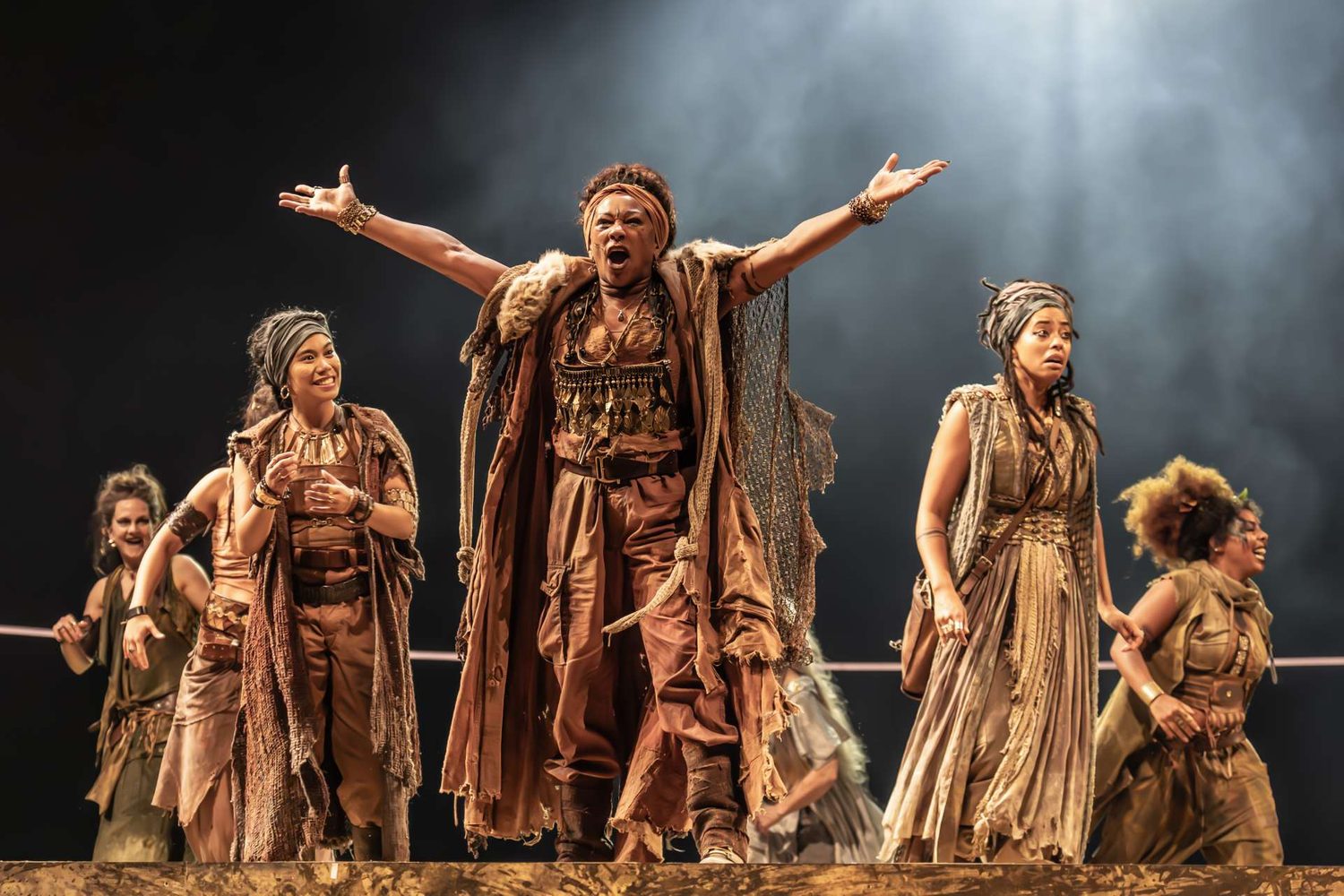
Bacchae opens as dramatically as you could wish, with a gigantic horsecovered in blood dominating the stage. In fact, Robert Jones‘ moving tiers of stage floors and eye-catching costumes- some Mad Max style, others simply dazzling- along with Oliver Fenwick‘s flashing, whirling lighting, are a continual spectacle. Indhu Rubasingham’s tight direction keeps the pace moving, despite the large number of chorus members that she needed to move.
Choruses are a constant in Ancient Greek drama but usually they are a homogenous group witnessing and commenting on events. Sometimes they have a role beyond that, as in Bacchae, when they are the group of women who worship the demi-god Dionysus. They follow him through his triumphs and troubles, and Euripides extends their role to more active participation in the action. Nima Taleghani has gone even further, making them the driving force in the events that take place on the Olivier stage, a group determined to bring down authoritarian regimes run by men oppressing women.
I don’t want to say too much about what happens in case you don’t know the twists of the story, but suffice to say there is considerable bloodshed and one terrible key moment involving a mistaken victim of a murder. It’s a great play that asks lots of questions about religious fanaticism and the way passion can override reason.
In this adaptation, the chorus are given individual personalities and even split into factions. One is led by Clare Perkins, who brings authority, reason and humour to the part of Vida, the other by a blood-soaked Sharon Small whose demonic eyes that suggest a career in horror films might beckon.
The dispute between King Pentheus and Dionysus is central to the play. The former has banned the latter’s religion and denied his divinity. In this version, the two characters are somewhat maginalised, although James McArdle‘s portrayal of the King as uncertain of his masculinity and Ukweli Roach‘s Dionysus, shown as an unworldy man more into love than war, provided an amusing contrast to the bloodthirsty women. Simon Startin was a dryly funny Tiresias, and so traditional in style that he seemed like a deliberate contrast to the radical changes all around.
Tragedy lost in comedy
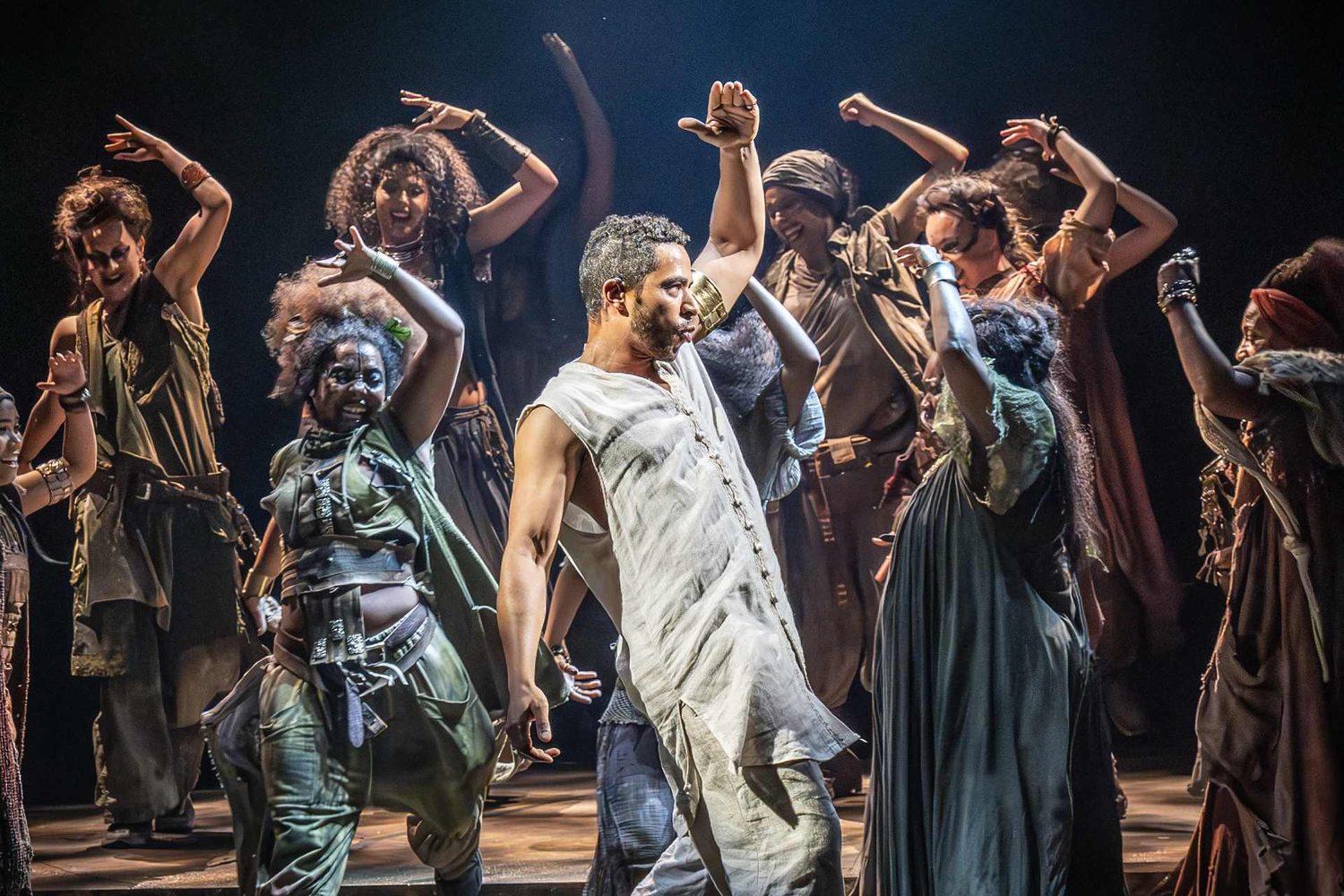
Ultimately, far from pondering on the madness of what has taken place at their instigation, the chorus latches onto the fact that Dionysus is, among his many responsibilities for promoting pleasure, the god of theatre. And Vida promises that the theatre they are in will from now on reflect real people’s lives.
All of this is done using some, at times, witty and amusing poetry and rap, peppered with strong language, and many crude references to women enjoying sex. Kate Prince choreographed rambunctious dancing to DJ Walde‘s insistent beats. For my taste, the many rousing speeches were shouted rather than delivered, and had me reaching in my bag for an aspirin. Don’t misunderstand me, it was fun, but Bacchae was written as a tragedy, and that essential element of it is lost in all the comedy. The remoulding of the plot to support the positive message, not only makes the story confusing, it undermines events that should leave us shell-shocked.
So, I did find Bacchae entertaining, and I am looking forward to what else Indhu Rubasingham will bring to our national theatre, but I hope there will be less messing about and more substance.
Bacchae can be seen at the National Theatre until 1 November 2026. Buy tickets direct from the theatre
Paul was given a review ticket by the theatre.
Click here to read a roundup of other critics’ reviews
Click here to watch this review on YouTube