Theatre reviews roundup: The Estate

Did two plays become one?

Dorfman Theatre at National Theatre
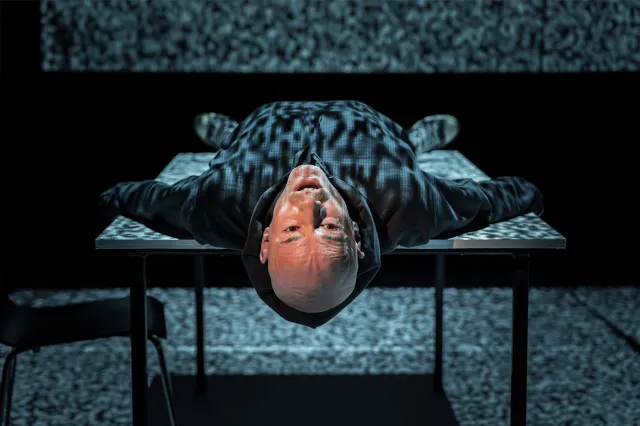
Adeel Akhtar in The Estate at the National Theatre. Photo: Helen Murray

The National Theatre’s smallest space The Dorfman has reopened following a refurbishment with a debut play by Shaan Sahota. It concerned a British politician with a Punjabi background vying for the party leadership while in the midst of a family feud following the death of his father. Many of the reviews praised her writing and her ambition but didn’t think her attempt to amalgamate the two stories worked. Adeel Akhtar took on the lead role to considerable acclaim.

[Links to full reviews are included but a number are behind paywalls and therefore may not be accessible]

4 stars ★★★★

Calling it a ‘deliciously vicious satire’, Dave Fargnoli at The Stage said: ‘the piece has a slow-building heft, starting out as a sparky, close-to-the-knuckle political caper but growing increasingly grim and shocking as the characters’ facades of privilege and civility are stripped away to reveal the seething greed, entitlement and cruelty beneath.’

The Standard’s Nick Curtis declared: ‘Though contrived in parts, Shaan Sahota’s debut play about a British Sikh politician wrestling with his family and his desire to lead his party is an absolute blast. It’s anchored by an extraordinary performance from Adeel Akhtar, in which emotion seems to possess and convulse his wiry body. Wildly funny, sometimes shocking, occasionally absurd, Daniel Raggett’s shouty, kinetic, music-studded production is a hell of a ride.’

The Guardian’s Arifa Akbar agreed. She began with the star: ‘his creepingly explosive turn in Shaan Sahota’s debut drama is unmissable. It carries this first play, almost eclipsing its imperfections.’ She had good things to say about the playwright: ‘It is exciting writing, fast and funny in its political satire’. But there are Buts: ‘But there is too much stuffed in, jostling for air’ and ‘But the biggest hole is that none of it resembles the politics of today.’ Nevertheless ‘it is a sensational debut, and if the best kind of failure is one that bears too much ambition, there is an admirable kind of over-reaching here, and a great playwright in the making.’

Chris Omaweng of LondonTheatre1 thought, to paraphrase, that the story was a lot of fuss about nothing, even so, ‘What the play and this production of it provides, in bucketloads, is dramatic tension.’ Despite his reservations, he labeled it ‘entertaining, engaging and energetic.’

Theo Bosanquet of LondonTheatre concluded: ‘it’s always welcome to find a dramatist who can deliver a serious message with such a light touch. All told it makes for an ideal summer play, a highly enjoyable evening that will give you plenty to debate on the journey home. It confirms Sahota as a writer to watch, and Akhtar as one of our most luminous acting talents.’

Alex Wood at WhatsOnStage praised the star: ‘At the heart of it all is Adeel Akhtar, giving a brilliant sleight-of-hand performance. At the start of the show, put-upon and beleaguered, he feels like some socially awkward school prefect…Like Atlas, weighed down by the overwhelming mass of constitutional concerns, he leans, crouches, staggers almost. By the close, a toxically masculine metamorphosis has taken place…and Akthar breathes genuine menace into Singh.’

3 stars ★★★

Time Out’s Andrzej Lukowski found it ‘funny and frustrating in equal measures.’ He explained that there are two ‘pretty good plays’ that don’t align: ‘Daniel Raggett’s production the comedy bits are so broad as to undercut the more sensitive bits. It feels like two different shows crashing into one another, bound only by a corrosive skepticism about politicians.’

Alexander Cohen at BroadwayWorld took a similar view: ‘the personal and political are layered on top of each other until they collapse under their collective weight.’ But ‘In Daniel Raggett’s sharp direction subtle touches dissolve tension and hint at the silliness beneath it all’.

The Telegraph’s Dominic Cavendish described it as an ‘impressive but uneven debut play’. He explained: ‘The play’s ambition – as it shifts from lighter moments to vexed concerns about equality, race, patriarchy and trauma – is refreshing. But Sahota covers so much terrain that Daniel Raggett’s production sometimes stumbles when the mood shifts and the piece becomes hobbled in terms of plausibility by its plot-motoring twists.’

Alice Saville in The Independent found the author’s writing ‘refreshing’ but said Daniel Raggett, who directed Accidental Death of an Anarchist, ‘hasn’t quite worked out how to bring together this more serious play’s two disparate halves here, even if there’s enough pace and slickness to disguise the joins. Chloe Lamford’s design is a literal cabinet that ingeniously slides open to reveal hidden spaces. Sahota’s writing doesn’t always achieve the same feat,lacking the surprise revelations and twists that normally power both funeral sagas and political dramas.’

2 stars ★★

The Times’ Clive Davis was blunt: ‘Two plays are running side by side here and neither of them really works.’ He continued: ‘Sadly, Daniel Raggett’s hectic production can’t compensate for the wild implausibilities in the storyline and while Angad has all the makings of a man of straw, there are some uneven performances elsewhere.’

Critics’ Average Rating 3.5★

The Estate is at the National Theatre’s Dorfman Theatre until  23 August 2025. Buy tickets from the theatre here.

If you’ve seen The Estate at Dorfman Theatre, please add your review and rating below


Theatre reviews roundup: The Merry Wives of Windsor

Bad play, good fun

Shakespeare’s Globe
The Merry Wives of Windsor at Shakespeare’s Globe. Photo: Marc Brenner

It may be one of Shakespeare’s worst plays, but, in the opinion of most of the critics, this production of The Merry Wives of Windsor still manages to be funny, thanks to Sean Holmes’ direction and the comic performances of the cast.

[Links to full reviews are included but a number are behind paywalls and therefore may not be accessible]

4 stars ★★★★

Anya Ryan at LondonTheatre was impressed: ‘This production fizzes, right from the start, with zooming scenes and every speck of humour wrung out and paraded.’

The Standard’s Nick Curtis ended his review: ‘This Shakespearean curiosity has been most handsomely and thoughtfully mounted’.

Dominic Cavendish of the Telegraph called it ‘lucid, edited for swiftness, emphatically spoken and offers those seeking some light relief at Shakespeare’s Globe a dependably enjoyable, if basic outing – possibly, on a balmy evening, a blissful one.’

For The Guardian, Mark Lawson wasn’t enthusiastic about the play but liked the production: ‘The cast, though, also bring out what is most Shakespearean about this potboiler frivolity: the fascinated ear for speech.’ He concluded that it was ‘a joyous production that is a perfect summer night’s revel for tourists and citizens alike.’

3 stars ★★★

Alex Wood for WhatsOnStage called it ‘a completely serviceable and entertaining evening’. He praised George Fouracres: ‘(His) mastery of the text, his ability to pluck a laugh from a frenetic Falstaff aside, has to be commended. He also revels in the paradox of this central figure: a womanising, callous and selfish figure no doubt, but also a pitiable man swaddled, mocked and beaten by his peers.’

Holly O’Mahony for The Stage thought Fouracres, ‘along with a first-rate ensemble, lathers this tricksy play with sparkling humour, although Holmes’ staging doesn’t illuminate or elevate this lesser comedy in any way.’

Abbie Grundy for BroadwayWorld disagreed with Ms O’Mahony about the director: ‘confident direction from Sean Holmes allows for a laugh-a-minute production that’s full of sleazy charm, trickery, and wit’ but agreed ‘George Fouracres is absolutely fantastic as Falstaff, commanding the stage with natural charisma throughout.’

TimeOut’s Andrzej Lukowski concluded: ‘it’s not a great play, and rather than bend over backwards to try and make it look like it might be one, Holmes has opted to have fun. And so long as you’re not expecting too much from this flimsiest of works, you’ll have fun too.’

Rachel Halliburton for The Arts Desk summed up: ‘this shamelessly silly interpretation that won’t go down as a classic, but still provides more than enough hedonistic fizz for a summer’s evening.’

Patrick Marmion of the Mail was not impressed: ‘Excruciating subplots pass in a blur of regional accents and false beards…Cutting half an hour would be a small mercy — especially the random Welsh parson teaching grammar…But the set design of Liberty print wallpaper and matching costumes is easy on the eye, and the physical comedy just about gets us over the line.’

Critics’ Average Rating 3.5★

The Merry Wives of Windsor can be seen at Shakespeare’s Globe until 20 September 2025. Buy tickets directly from the theatre.

If you’ve seen The Merry Wives of Windsor at the Globe Theatre, please leave your rating and review below


Theatre reviews roundup: Noughts & Crosses

Critics split on drama about racism

Regent’s Park Open Air Theatre
Noughts & Crosses at Open Air Theatre. Photo: Manuel Harlan

Using Dominic Cooke‘s 2007 adaptation of Malorie Blackman’s novel Noughts & Crosses, Tinuke Craig directs her first production for the Open Air Theatre. The Romeo & Juliet-like story is set in a world where black people rule and the whites are subjugated. There was a significant split in the critics’ reaction to this revival: three 4 star reviews and three giving 2 stars, with five in the middle. Some found it ‘powerful’, others ‘dated’. Although they all praised the actors, there was no agreement on the quality of the adaptation, direction or set.

[Links to full reviews are included but a number are behind paywalls and therefore may not be accessible]

4 stars ⭑⭑⭑⭑

Holly O’Mahony of LondonTheatre called it ‘an action-packed take, with swift storytelling neatly compressing the plot into a little over two hours.’ She picked out the two young stars: ‘Fuelling it are a pair of passion-charged central performances. Corinna Brown plays the spunky cross Sephy Hadley, whose easy, comfortable confidence could only come from being born into privilege. Opposite her, Noah Valentine – in an impressive professional stage debut – is the downtrodden nought Callum McGregor, outwardly awkward but with a blaze in his belly.’  She concluded: ‘This moving and powerful production is a welcome political addition to the summer’s bill.’

‘As family-friendly shows go, this is no easy watch, but it’s thought-provoking and ambitious,’ said Alun Hood at WhatsOnStage. He pointed out: ‘Tinuke Craig’s tense, grungily handsome production is a surprising choice for Regents Park – Colin Richmond’s towering, brutalist set, all platforms, grotty tiles and rusting staircases, sits in stark contrast to the loveliness of the sylvan greenery – but wields considerable power.’

Chris Omaweng of LondonTheatre1 came new to the story, despite its history as a novel and TV series, but he was impressed: ‘Noughts & Crosses has much to say about tensions in the community, inequalities in society, political inertia, and terrorism in the modern world, amongst other things. A thoughtful, gripping and unsettling production, it’s worth seeing.’

3 stars ⭑⭑⭑

Having praised the lighting, sound and set, Ella Duggan for The Independent bemoaned: ‘The script feels burdened by its source material, cramming in plot points at a relentless pace, often in blunt and heavy-handed ways. Themes are spelt out with all the subtlety of a Tannoy announcement, and characters are rarely allowed the space to develop before the next crisis strikes. As a result, many of their decisions feel confusing rather than tragic, hollowing out the emotional resonance that made Blackman’s novel so powerful and leaving audiences emotionally short-changed.’

Kate Wyver for The Guardian liked the story but not the adaptation: ‘Though Craig’s direction is punchy and clear, the emotional impact frequently feels pushed aside in order to move on to the next scene. Cooke’s excessive use of direct address repeatedly tells us everything we need to know, rather than letting us work anything out for ourselves.’

Theatre Weekly‘s Greg Stewart was lukewarm: ‘There is much to admire in this Noughts & Crosses; its ambition, its aesthetic, and its lead performances chief among them. But despite the best efforts of this bold and timely revival, the production never quite reconciles its competing themes or finds a consistent emotional rhythm.’

While acknowledging ‘ Craig directs forcefully, stylishly and brings clarity to a sprawling story’, Andrzej Lukowski at Time Out complained: ‘it feels both clunky and dated’. He was concerned that ‘racial discourse has changed over the last quarter century and there are bits of Noughts & Crosses that now play out uncomfortably close to a modern-day white grievance fantasy.’

‘This is strong stuff, sometimes expressed in broad strokes, but depressingly relevant,’ opined The Standard‘s Nick Curtis. However, ‘at just over two hours’ stage time, some characterisations are inevitably thin and some issues skated over.’

2 stars ⭑⭑

Clive Davis of The Times was critical: ‘Dominic Cooke’s adaptation… constantly strikes a moralising note, while Tinuke Craig’s lacklustre production rushes through scene after scene, leaving us to try to make sense of a collection of remorselessly one-dimensional characters.’ He continued: ‘A bleak storyline is complemented by unalluring visuals. The designer, Colin Richmond, has created a grim backdrop of rusting steel corridors, columns and ladders; his costume palette is dominated by muted greys and blues. Scenes of violence add routine touches of slow-motion choreography.’

The Stage‘s Sam Marlowe was left cold: ‘Directed by Tinuke Craig and unevenly acted by an energetic but haphazard ensemble, it lacks both theatrical coherence and political punch, leaving the narrative’s rather simplistic premise exposed.’ She ended: ‘Cooke’s adaptation is blunt-edged and the pacing of Craig’s staging is painfully sluggish, particularly in the protracted second half. It’s difficult to invest in what feels like storytelling by numbers: disappointing.’

Claire Allfree at the Telegraph said the play ‘comes a cropper in Tinuke Craig’s frenetic, over-emphatic revival…which is more interested in making sure we understand the importance of its message than in making us care about the characters. It’s like being battered over the head with a strobe light.’ She went on: ‘No one talks when they can shout instead.’ And, ‘there is often a disconnect between character reactions and the actual plot, which makes such great leaps in time and logic that the audience finds itself struggling to keep up.’

Critics’ Average Rating 3.0⭑

Noughts & Crosses can be seen at the Regent’s Park Open Air Theatre until 26 July 2025 and will then tour. Click here to buy tickets direct from the Open Air Theatre 

If you’ve seen this production of Noughts & Crosses, please add your review and rating below

Theatre reviews roundup: Evita with Rachel Zegler

Rachel Zegler wows critics, but is it the event of the summer?

London Palladium
Evita at the London Palladium. Photo: Marc brenner

Evita may turn out to be the theatrical event of the year, not only because of the most famous balcony scene since Romeo And Juliet. There has been massive publicity surrounding the appearance of Rachel Zegler each evening at 9pm singing Don’t Cry For Me Argentina, not to the audience inside the Palladium, but to the general public outside. This was just one of many innovations the critics loved.
Director Jamie Lloyd returned to the West End with another Lloyd Webber musical, following up his award-strewn Sunset Boulevard, which also featured off stage activity relayed to the audience via video. This time he has revived and enhanced his 2019 Open Air Theatre version of the story of Eva Peron.  The critics enjoyed Rachel Zegler’s performance and the company’s energetic dancing. The positive reviews praised the rock concert atmosphere, Soutra Gilmour‘s minimalist set of bleachers for the cast to climb, the show’s critique of populism, and the zoning in on the actors. The negative comments suggested the loud sound and spectacle drowned out emotion and narrative.

[Links to full reviews are included but a number are behind paywalls and therefore may not be accessible]

5 stars ⭑⭑⭑⭑⭑

The Standard’s Nick Curtis encapsulated the positive response: ‘Great theatre can be about many things: star quality, spectacle, the lightning-in-bottle capture of a moment, the alchemical power of song or speech on a bare stage. In this Evita, all those things come triumphantly together.’

Dominic Cavendish of the Telegraph was blown away. It was, he wrote, ‘a total triumph, dominated by a powerhouse, reputation-restoring performance from Zegler, 24, and stamina-testing choreography by Fabian Aloise (who deserves equal credit with Lloyd).’ He expanded on the qualities of the star: ‘Her talent demands our rapture; equally, her mass seduction of the audience feels carefully plotted, enhancing the show’s thematic thrust. Lloyd ensures the evening stokes a cult of personality – combining whistle-stop biography with a parable for our age of showbiz politics.’ Going against the conclusion of many of his peers, he noted: ‘Evita could easily be too cool for us to care about – yet the go-for-broke momentum reveals redeeming cracks of vulnerability. The demand to be adored eats Evita up, before cancer claims her.’

Sam Marlowe at The Stage referred to the first iteration of this production back in 2019 at the Regents Park Open Air Theatre: ‘it’s punchier, darker, more exhilaratingly dynamic and more brilliantly layered than ever. It is meta, without being arch, and while it has the raw energy and high-octane energy of a rock gig, it’s also full-bloodedly theatrical. It knocks the breath from your body and leaves you gasping, every moment taut and vibrating with passionate intensity.’ It is, she said, ‘unmissable’.

The i-paper’s Fiona Mountford called it ‘a thrilling shot in the arm for the much-loved musical with its divinely tuneful score…throbbing with sex and muscle, as never before has the transactional nature of Eva’s rise from rural poverty to the heights of Argentine society been so clearly delineated.’ She noted: ‘Lloyd is not a director inclined to bother with the faff of scenery, meaning that our attention here is rewardingly re-angled towards the words and music. There is a stage-spanning flight of steps, over which the ensemble pound in Fabian Aloise’s pulsating choreography.’

Sarah Crompton of WhatsOnStage said Zegler ‘really is superb, with a clear, strong voice and astonishing amounts of energy as she powers her way through the show.’ she also identified: ‘Lloyd’s quality as a director is that he generates huge momentum, but he also understands stillness and subtlety. He lets the acting breathe.’

Of the balcony scene, LondonTheatre’s Marianka Swain observed: ‘Having now seen it from inside the Palladium, I’m thrilled to report that it’s just as electrifying, if not more, as part of the show. On a giant screen we see, live, not just Eva but hundreds of watching people, camera phones raised aloft, transfixed by her – a jaw-dropping encapsulation of this timely tale of populist politics, showbiz, celebrity worship, and purposeful myth-making.’

Dominic Maxwell in The Sunday Times said: ‘That alfresco balcony scene is both an outlier and a hallmark of the boundary-pushing fun to be found throughout.’ He concluded that the production is ‘properly sensational, in that it hits the senses first, the brain second. Did I feel huge amounts for our morally ambiguous heroine? Not really. Did I care that I didn’t care? Not really. What a circus. What a parade.’

The Independent’s Alice Saville gave an analysis of its politics: ‘this gorgeous sensory overload of a show is its own comment on the rising tide of fascism. Populism is sexy, captivating, overpowering – a way for weary people to escape the dull realities of right and wrong. You know there’s something deeply twisted under that pretty shiny surface, but, like the audiences of Evita, you’re powerless to resist.’

4 stars ⭑⭑⭑⭑

‘This Evita is not without its flaws, it’s rushed, flashy, and sometimes narratively thin, but it’s also thrilling, stylish, and full of theatrical bravado,’ said Greg Stewart in his TheatreWeekly review.

Time Out’s Andrjez Lukowski declared: ‘Coherence isn’t this Evita’s strong suit. But there is so much that is good about it – from Zegler, to the choreography, to the timely antifascist sentiment, to That Scene – that I can look past a few negatives. It’s not just the London theatre event of the summer, but the London event of the summer full stop.’

3 stars ⭑⭑⭑

Adam Bloodworth for CityAM was impressed by the ‘utterly incredible choreography and the litany of musical numbers…It’s difficult to imagine that anything this stimulating has ever played in the West End before’ but found that ‘the show is hard to follow for people who don’t know the story well. It’s endless energy and high-octane choreo with very little time to actually sit with the characters and their feelings.’

The Guardian’s Arifa Akbar made a similar point: ‘There is an approximation to the characters as a whole, with very little focus on Perón’s interiority. Maybe that is not the point, but how then can the audience feel the tragedy of her untimely death – which takes up so much time in the second half of the musical – if they cannot connect with it emotionally?’ She did concede: ‘If a successful musical is simply about the singing, dancing and spectacle, this one soars. The choreography… is out-of-this-world imaginative. The ensemble mesmerise with their sexual energy and charismatic aggression.’

Clive Davis of The Times complained: ‘(Zegler’s) voice is fine but it has to compete with the musical director Alan Williams’s wildly amplified orchestra. Too many songs whirl past in a semi-audible maelstrom.’ He commented: ‘I’d be genuinely surprised if newcomers to the show have a clue what is happening for much of the evening as this dressed-down, concert-style spectacle… rattled through Eva Peron’s journey…Call it TikTok musical theatre, if you like. Everything is radically compressed, and for all the verve of the ensemble dancing you’ve no time to tease out the meaning of a song before the next one crashes down upon you.’

2 stars ⭑⭑

Gary Naylor for BroadwayWorld was as ruthless as one of Peron’s assassins: ‘Out goes set design, out goes Argentina, out goes costuming and in comes lights (constellations of them), in comes Eurovisionish big, frenetic dance routines and in comes a Hollywood superstar. What emerges after all this reconceptualising is easier to define by saying what it isn’t rather than what it is – because it certainly isn’t musical theatre.’ Among the many targets of his vitriol were: ‘All (Zegler) has to work with are the songs and three costumes and she’s fighting music mixed far too loud far too often. She has no chance of ever developing a rounded, nuanced Eva.’ Although she ‘fares better than James Olivas as Perón, who gets no full fig military uniform and has to make do with an absurd short tie, like a rebellious Year 9 schoolboy’. And ‘Most egregious of all is the treatment of the beautiful lament, “Another Suitcase in Another Hall”. Bella Brown delivers a bravura performance of one of the show’s greatest numbers, but we hardly know that she was Perón’s mistress being ruthlessly shunted out of his life by Eva because there’s no backstory’.

Critics’ Average Rating 4.2⭑

Value rating 44 (Value rating is the Average Critic Rating divided by the typical ticket price.)

Evita can be seen at the London Palladium to 6 September 2025. Click here to buy tickets directly from the theatre 

If you’ve seen Evita, please add your review and rating below

Theatre reviews roundup: Intimate Apparel

A perfect production of a superb play

Donmar Warehouse
Samira Wiley in Intimate Apparel. Photo: Helen Murray

Lynette Lynton made her name as a director with her Donmar production of Lyn Nottage’s Sweat. She returns to the same venue and author with a revival of the modern classic Intimate Apparel. With the exception of LondonTheatre1, the critics loved everything about it- the dialogue, the acting (notably Samira Wiley), the direction and the story of a shy black seamstress, back in the 2020s, who lives through others’ romances until she falls for a pen pal.

[Links to full reviews are included but a number are behind paywalls and therefore may not be accessible]

5 stars ★★★★★

David Jays for The Guardian explained: The acting is incredibly fine: Linton’s great gift is to see people from every angle….This tremendous production and Wiley’s superb performance fill out a life unknown.

WhatsOnStage’s Sarah Crompton declared: ‘Wiley…holds the heart of the play, and she does so with remarkable subtlety…a great portrayal in a truly entrancing play.’

LondonTheatre‘s Marianka Swain called it: ‘utterly gorgeous gem of a play…so rich and compelling that you become invested, heart and soul, in the fates of its characters’. She concluded: ‘The production is riveting in its intimate study of the minutiae of women’s lives, and in exploring what constitutes value, self-worth, acceptance, family, and love, with various threads neatly tied up in a powerful second half. This is a perfectly crafted show: not a stitch wasted.’ She included a tantalising promise: ‘The play also has the hottest scene I’ve seen this year, and it simply involves two people running their fingers over silky material.’

Fiona Mountford, writing for the Telegraph, described it as a ‘devastatingly fine production, headed by a remarkable leading performance from Samira Wiley’.

TheatreWeekly’s Greg Stewart delivered another high scoring review: ‘This is storytelling at its finest. Intimate Apparel is a beautifully woven triumph; Nottage’s script is rich with nuance and compassion, and the Donmar’s production honours it with grace and intelligence. The ensemble cast, under Linton’s sensitive guidance, delivers performances that are deeply felt and beautifully judged.’

4 stars ★★★★

‘it’s an irresistibly charming story’ said Holly O’Mahony for The Stage . She praised director Linton: ‘In her care, the narrative unfolds to reveal a rich tapestry, each patch of which is neatly sewn into the next.’

The Standard’s Nick Curtis found: ‘The play is very funny and in some ways romantic but ultimately grounded in harsh reality. Linton’s production serves the material, and the cast, extremely well. And she gets a revelatory performance out of Samira Wiley.’

Alexander Cohen at BroadwayWorld noted that the play ‘gorgeously weaves a lyrical tapestry of a metropolitan urban melting pot, shedding light on the resilience of immigrant communities, their collective endurance, and their support for one another. A lesser playwright would brashly capitalise ideas, but Nottage cherishes quiet humanity first and foremost.’

3 stars ★★★

Chris Omaweng of LondonTheatre1 couldn’t see what all the other critics were raving about: ‘In the closing scenes, the narrative strands are tied up too neatly, which would be more forgivable if this were a Disney musical. It’s also a pity that the storyline proceeds at such a sluggish pace – I had trouble maintaining interest’.

Critics’ average rating 4.4★

Intimate Apparel is at Donmar Warehouse until  9 August 2025. Buy tickets from the theatre here.

If you’ve seen Intimate Apparel at Donmar Warehouse, please add your review and rating below

Theatre reviews roundup: A Moon For The Misbegotten

Ruth Wilson, Michael Shannon & David Threlfall triumph 

Ruth Wilson in Moon For The Misbegotten. Photo: Marc Brenner

Exciting director Rebecca Frecknall, having thrilled audiences with Cabaret, A Streetcar Named Desire and more, has turned her attention to Eugene O’Neill’s sequel to Long Day’s Journey Into Night. Some critics thought she could have done more to enliven a slow-moving three hour play, while others were mesmerised by her faithfulness to the unpeeling of layers of character.  All agreed on the high quality acting of Ruth Wilson, Michael Shannon and David Threlfall. The story concerns a 1920s farm, occupied by s father and daughter, which the owner proposes to sell  The daughter plans to seduce him in order to persuade him to change his mind. It’s a play full of self deception and revelation.

[Links to full reviews are included but a number are behind paywalls and therefore may not be accessible]

5 stars ⭑⭑⭑⭑⭑

Claire Allfree for the Telegraph declared: ‘It’s three hours long, and barely anything happens, yet Rebecca Frecknall’s production… is utterly spellbinding. It also contains some of the finest acting you are likely to see on a stage this year.’ Heaping praise on the director, she said: ‘Increasingly, she comes across as one of our most radical directors, staging old-fashioned plays that reveal human truths through character rather than through ideological messaging. These great mid-century American dramas, with their compassionate emphasis on human frailty, could so easily feel out-of-step with our shriller, narcissistic modern moment – but Frecknall makes them speak anew.’

4 stars ⭑⭑⭑⭑

In The Stage, Dave Fargnoli began: ‘Breathing fresh life and painfully relatable emotion into Eugene O’Neill’s tender, tawdry tragedy of missed connections and unconsummated longing, this riveting revival seethes with unspoken subtext.’

Alice Saville of The Independent was moonstruck: ‘Rebecca Frecknall’s latest gorgeous resurrection of a mid-century American gem makes spotlights orbit round her cast on rollercoaster-style rails, capturing every shifting phase of their sub-lunar interactions. It’s utterly luminous.’ She highlighted: ‘Wilson’s brilliant performance has an inherent dignity that means that the misogyny of the men around her is diminished, shown for what it is. Misery never shone so bright.’

3 stars ⭑⭑⭑

In his Time Out review, Tim Bano praised the play and its director: ‘every line is a punch or a jab or a dagger…Frecknall handles it brilliantly: she knows how to let the humour ebb away, how to let the anguish build…(she) turns the tilth on a half-buried play, and digs up something extraordinary.’

The Times’ Clive Davis said: ‘Rebecca Frecknall’s typically poetic revival unites three remarkable actors in Ruth Wilson, Michael Shannon and David Threlfall. Watching them bring O’Neill’s dialogue to life compensates for all the moments when the play starts to turn in circles.’

Theo Bosanquet for WhatsOnStage had mixed feelings: ‘Although the bagginess of the play remains a sticking point, this is a valuable chance to see it delivered with dynamism and no small amount of humour from an ensemble of the very highest quality.’

Holly O’Mahony of LondonTheatre found Frecknall’s direction a mixed blessing: (She) ‘takes an almost painstaking amount of care to infuse meaning into every word, glance and touch here…(but) Clarity loses a foothold in the play’s dense scheming and knotty double-crossing, meaning revelations of trickery don’t always smack as hard as they might.’ Thank goodness for the stars: ‘Ruth Wilson, Michael Shannon and David Threllfall, each of whom delivers a performance worthy of their reputation…Wilson is luminous as Josie…her early teeth-baring and puffed-up bravado dissolves into a heart-wrenching puddle of insecurity and maternal longing’

Alexander Cohen at BroadwayWorld called it ‘A strong production subdued by the limitations of the play.’

2 stars ⭑⭑

The Guardian’s Arifa Akbar complained: ‘Frecknall has stepped back to let the play do the speaking but this faithfulness lays bare the datedness of the drama, which creaks with age at times. The production itself seems imbalanced too: glacial in pace, it stretches across three hours, not gathering enough intensity and chugging anti-climactically to its end.’

Critics’ average rating 3.7

A Moon For The Misbegotten is at The Almeida until 16 August 2025. Buy tickets from the theatre here.

If you’ve seen A Moon For The Misbegotten at The Almeida, please add your review and rating below

Theatre reviews roundup: Disney’s Hercules

Hero or Zero?

Theatre Royal Drury Lane
Hercules at Theatre Royal Drury Lane. Photo: Matt Crockett

Taking the stage left empty by the departure of Frozen, Disney’s Hercules didn’t impress the critics as much as its predecessor, let alone the benchmark Lion King. Despite two 5 star and three 2 star reviews , it was generally received politely but without enthusiasm. There was disagreement about whether the book by Kwame Kwei-Armah and Robert Horn (of Shucked fame) helped or hindered. Not that the rush of little feet through the doors is likely to be affected by the critics’ opinions.

[Links to full reviews are included but a number are behind paywalls and therefore may not be accessible]

Five stars ⭑⭑⭑⭑⭑

Olivia Garrett for Radio Times couldn’t have been more on board: ‘This lustre-dusted show-stopper of a musical is everything you could want.’ She expanded: ‘We all know half-measures is not a term they’re familiar with at Disney HQ, but the size and scale of this production still manages to surpass expectation.’ She continued: ‘The leads are also exactly as you’d hope them to be. Luke Brady is a doe-eyed Labrador who lights up the scenes with his big cheeky grin, while Mae Ann Jorolan is a cutting, cynical Meg, who manages to be just as much of a hero as Hercules in this version.’  Her enthusiasm knew no bounds: ‘It’s got glitter and spectacle coming out of every pour [sic], but manages to match that with heart and soul in abundance.’

‘With thunderous flair and lightning-fast wit, Hercules storms the stage at Theatre Royal Drury Lane in a heavenly display of theatrical might,’ declared Theatre Weekly‘s Greg Stewart. ‘Visually, the production is a triumph. Dane Laffrey’s scenic design, complemented by George Reeve’s video work and Jeff Croiter’s lighting, creates a dynamic and immersive world’. He concluded: ‘It’s a show that embraces its mythological roots with a wink and a smile, delivering a thunderously entertaining evening. Hercules is a heroic hit, complete with tunics, thunderbolts, and toe-tapping tunes.’

Four stars ⭑⭑⭑⭑

‘Casey Nicholaw’s production packs in big tunes, gorgeous costumes, and plenty of groan-worthy laughs,’ said Olivia Rook at LondonTheatre. She had ‘no doubt this feel-good family show will delight Drury Lane’s youngest audience members.’

Three stars ⭑⭑⭑

The Guardian’s Arifa Akbar gave a thorough analysis of this ‘conveyor-belt musical’. She described it as a ‘sturdy enough Disney vehicle, with strong songs and plenty of splash. The characters are not so much divine as 2D, although the sound and optics are always eye-popping, the swivelling set designs intent on moving heaven and earth.’ Among the positives were the lead: ‘Luke Brady is an incredible singer’. But, in the end, ‘this feels like old-school Disney, its hero not quite self-mocking enough… and the earnestness heaped heavy.’

WhatsOnStage’s Sarah Crompton declared: ‘It’s a show where it’s perfectly possible to have a good time. Yet something is missing. The wit and warmth that made the 1997 classic rather endearing have been replaced by something much more mechanical and heavy-handed.’

Andrzej Lukowksi of Time Out described it as ‘a sturdy action-adventure romp that absolutely does the trick and is eminently worth taking The Kids to during the hols.’ He cautioned: ‘Dane Laffrey’s sets and George Reeves’s video design are often impressive, but they never don’t look like a themed restaurant’. He suggested: ‘accepting it’s not a screechingly ambitious piece of work then perhaps all it really lacks is a big showstopper moment’.

Kat Mokrynski for BroadwayWorld found it ‘a fun, flashy, yet not-so-faithful adaptation of the original film that lacks the flair and (literal) fire that made the 1997 film so special. It’s an enjoyable theatrical production, but struggles to find the sweet spot between being a silly show for kids and a more adult musical about finding your place in the world.’

Clive Davis of The Times found it ‘hard to work up much enthusiasm about Casey Nicholaw’s musclebound production…True, the temperature rises whenever the five muses deliver hand-clapping gospel fervour…otherwise this is a show which ticks along competently enough. The new numbers are efficient but unmemorable’. He thought ‘A trip to Mount Olympus ought to leave you gasping, but this version of the home of the gods looks more like a Vegas theme park on a quiet Sunday afternoon’ and ‘The puppet reincarnation of the movie’s fearsome hydra is underwhelming’.

The Standard‘s Nick Curtis called it ‘pacy and family friendly, full of cheery songs and snarky jokes’ and decided it ‘chugs along agreeably enough’, but ‘there’s no real sense of threat or danger. If only scriptwriters Robert Horn and Kwame Kwei-Armah had put as much effort into the plot and emotion as they do into the one-liners.’

Over at the Express, Stefan Kyriazis clearly liked the original movie and admitted this stage version is ‘undeniably often hugely entertaining. Families will love it.’ But he noted: ‘the new stage production has ditched all the edge and rolled out the full cheese trolley.’ He lamented: ‘Where’s the big budget and jaw-dropping spectacle of the staged Aladdin and recent Frozen’?

Two stars ⭑⭑

Patrick Marmion of The Mail was underwhelmed: Hercules has ‘been reduced from legendary hero to close to zero by a laboured new musical version of his derring-do’. ‘(T)he superhero action sequences are lugubriously undercharged’, he said, and ‘Music and lyrics by Alan Menken and David Zippel are audaciously bland.’

The Independent‘s Alice Saville gave a review from hell. She said ‘this stodgy new stage version…hits the expected beats without capturing the lovable zaniness that makes Hercules a fan fave.’ Considering its chances of a long run, she claimed: ‘Hercules has two things stopping it from going the distance: a lack of stagecraft to create moments of real awe and wonder, and a lack of consistency in a script that doesn’t really have a cohesive take on who these mythic figures are, and why we should care about them.’

Over at the i-paper, Fiona Mountford was even more blistering, describing it as a ‘hideous grab-bag of classical mythology’. Among her many criticisms, she blamed the script: ‘Robert Horn and Kwame Kwei-Armah have collaborated on a new book and the resulting two charm-free hours exist in a state of almost constant narrative bewilderment.’ She had much more to complain about but concluded: ‘it’s a dismal evening. Alan Menken (music) and David Zippel (lyrics) have expanded upon the film’s original score, yet very little sticks apart from “Go the Distance”. I would recommend that you go quite some distance to avoid this.’ (Ouch!)

Critics’ Average Rating 3.2⭑

Value rating 40 (Value rating is the Average Critic Rating divided by the typical ticket price.)

Hercules can be seen at the Theatre Royal Drury Lane until 5 September 2026. Click here to buy tickets direct from the Theatre Royal Drury Lane

If you’ve seen Hercules, please add your review and rating below

Theatre reviews roundup- 4:48 Psychosis

Suicide play splits critics

ROYAL COURT UPSTAIRS
4:48 Psychosis. Photo: Marc Brenner

The 25th anniversary production of Sarah Kane’s play reunites the cast, director and venue from when it was first performed one year after she took her life. It explores suicidal feelings in an experimental style. Some critics found it had lost impact, others thought it had gained in power.

[Links to full reviews are included but a number are behind paywalls and therefore may not be accessible]

5 stars ★★★★★

WhatsOnStage’s Sarah Crompton was overwhelmed. Her review analysed in detail why the play is a classic, and she lavished praise on the production: ‘The  acting is intense, spare, and watchful. Every line has meaning, every movement has intent. It is an overwhelming experience.’

‘I found myself revelling in the brilliance and wit of the mind it conjured,’ wrote Time Out’s Andrzej Lukowski. ‘Madeleine Potter is gravelly and cynical; (Daniel) Evans is lighter and more morally flexible; Jo McInnes is droll and down to earth but capable of the most volcanic emotional peaks. They take us on a journey: for all the text’s abstractions, it’s quite easy to follow what’s going on here’.

Jonathan Marshall for LondonTheatre1 said: ‘The artists and creatives behind the production truly understand the work and its nature of nonlinear form. We sense all are aboard here in showcasing the swansong of a great.’

Four stars ★★★★

Holly O’Mahony for LondonTheatre noted: ‘There is more sense of ennui than psychological distress…It verges on being mechanical in places; overly conscious of protecting its original features like a precious museum artifact. And yet this allows Kane’s words, rather than the performances, to remain the posthumous star of the show.’

The Stage’s Sam Marlowe declared: ‘This is a stark, brave drama from a truly remarkable playwright; 25 years on, it still devastates.’ But not perfect: ‘The text is often overwrought, the metaphors clunky and the language self-conscious.’

Three stars ★★★

The Guardian’s Arifa Akbar described the design: ‘Jeremy Herbert’s set is a white square with functional table, chairs and an overhanging mirror that reflects the audience and the protagonist’s selves which acquire more fractured counterparts in shadow.’ She felt the production lacked impact: ‘dramatically it is sedate. You wish for something messier, louder, angrier’.

Nick Curtis of The Standard admitted: ‘I came out of the Court feeling subdued, sad and unenlightened, but writing this hours later in a bright dawn, I find the play’s combative humanity and its striking final image of escape have stayed with me.’

2 stars ★★

The Times’ Clive Davis suggested it ‘ isn’t a play at all, rather the random, agonised reflections of a mind that has passed beyond its breaking point…There’s wave upon wave of self-loathing, icy anger and mangled religiosity, yet flashes of mordant humour too…Bleakness is piled upon bleakness. But…the words begin to turn in a monotonous circle. This production is an exercise in the actor’s craft, an exquisitely wrought gilt frame surrounding an empty canvas.’

Critics’ Average Rating 3.9★

4:48 Psychosis can be seen  at the Royal Court (royalcourttheatre.com) to 5 July, and then at the RSC Stratford 10-27 July 2025 (rsc.org.uk)

If you have seen this production of 4:48 Psychosis, please leave your rating and review below


Theatre review: Natalie Dormer in Anna Karenina at Chichester Festival Theatre

Game Of Thrones star soars in clipped Tolstoy

⭑⭑⭑

Natalie Dormer in Anna Karenina. Photo: Marc Brenner

For the second time in less than a week, I’ve sat through a play more than three hours long. Stereophonic which I saw a few days ago was, for me, too long. But Anna Karenina was actually too short. It barely gave Tolstoy or Natalie Dormer the chance to show off their brilliance. It was a good try but fell short of doing justice to a great novel.

At three hours, this stage adaptation by Phillip Breen can only hope to present a fraction of Tolstoy’s novel which runs to 38 hours on Audible. Mr Breen has chosen to try to tell the stories of all three of the main women: Anna, Dolly and Kitty. As a result none of them get a full swing at their characters in the time available.
Nevertheless the actors give impressive performances, not least Natalie Dormer as Anna who, within the scope she is given, brings a tornado of emotion to the role, so much so you find yourself longing for her next moment on stage. She has a rich colorata voice like a full bodied red wine, and her piercing eyes and curling mouth give passion to her words.
Naomi Sheldon as Dolly is wonderfully over the top as she harangues her useless philandering husband, bemoans her ageing body and rails against everything with a tirade of very modern expletives. Incidentally I thought the use of contemporary, particularly sexual, terms, while anachronistic, did work well as shorthand for the characters’ feelings.
Kitty was the most one dimensional of the main protagonists but Shalisha James-Davis made the most of this woman constantly on the verge of a nervous breakdown, as she assesses her obsessive suitor-then-husband.
The actors certainly convey the essence of their characters but inevitably much colour is lost. A great deal of narrative is also lost to what much of the time becomes a plot summary.
So, what is the plot? Anna is dissatisfied with ordinary family life and her husband Karenin, a seemingly nice, tolerant chap, and nicely played by Tomiwa Edun. She leaves him for a more passionate life with her lover Vronsky, whose fire cracker character is beautiully conveyed by Seamus Dillane. However, this being the mid 19th century, and she finds herself ostracised from society and separated from her children. Worse still, she begins to doubt Vronsky’s faithfulness. In fact all the men seem to have a roving eye whether they act upon it or not.
Two other unhappy relationships are explored. Levin, played with passion by David Oates, loves Kitty but she resists him. She thinks he will be unfaithful because of his past record of bed hopping. Eventually she is reassured and marries him but her doubts continue right up to a traumatic childbirth.
Dolly is already well into a marriage and has many children. Her husband Stiva gambles and womanises, in a splendidly spineless characterization by Jonnie Broadbent, and she constantly rails at him and at her own lack of attractiveness.
The problem with this filleting approach is that we lose much of the complexity of the characters and their lives. Rather than the flesh, we get the bare bones of the plot. When it comes down to it, plot is only the structure on which good novels or plays build their characters’ development. In this adaptation we are given three women who don’t trust their partners, shout and cry a lot, and end more or less happier than they began. And Tolstoy’s novel is a great deal more than that.
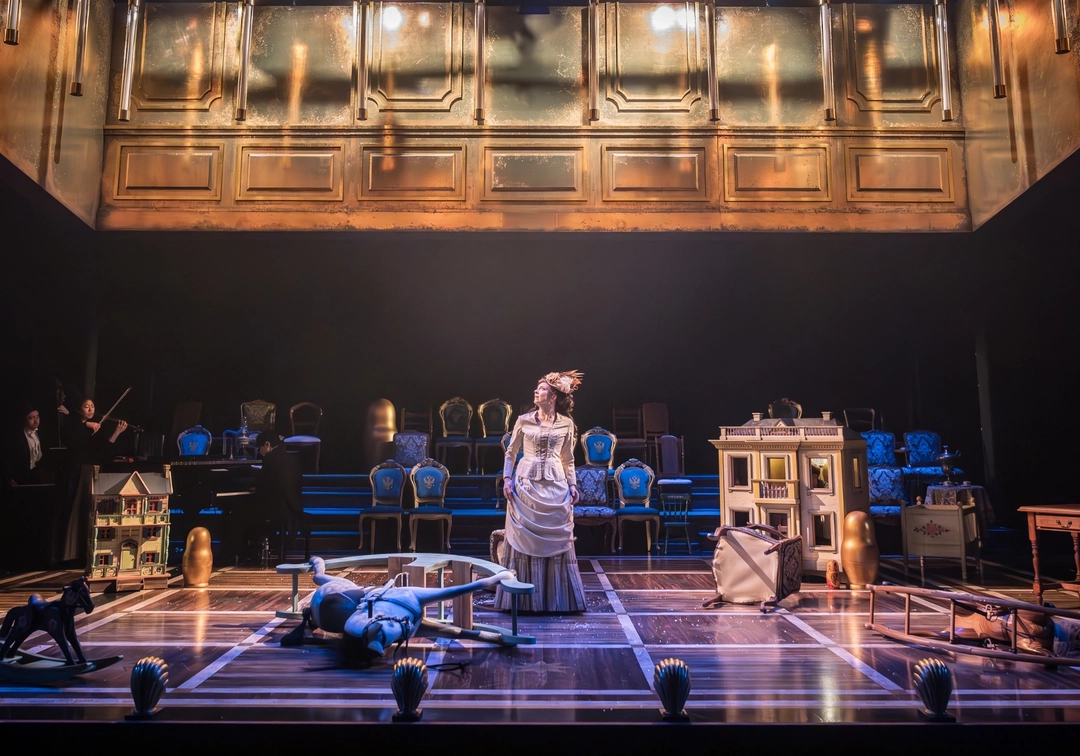
Anna Karenina at Chichester Festival Theatre. Photo: Marc Brenner

The other challenge is how to design it. The open Chichester stage doesn’t allow for solid scenery, except at the very back. So how to present horses and trains, very important components of this story? Since the adaptor Phillip Breen is also the director, we can assume he had a hand in the approach.

Although Max Jones’ exciting design is busy with many chairs that are moved around, the most noticeable aspect is a nursery theme. Children’s toys are scattered round the stage- dolls houses, horses, a train set. It serves to emphasise, perhaps, that women in this period are still treated like children in terms of their rights. I’m pretty sure the doll’s houses were meant to remind us of Ibsen’s play about another woman trapped in domesticity, a part which Natalie Dormer surely must play. The train set reminds us that the world is changing: modern inventions such as the railways and electricity have arrived. While the former is central to the story, the latter is also given its moment in the spotlight, so to speak, in the form of tubes of light which descend and form, of course, a cage.
The wooden horses come in handy as substitutes for the real thing but frankly the sight of a man shooting an ‘injured’ one was comical- shades of Monty Pyhton and Spamalot. And when Les Dennis in a delightful cameo as the world weary servant Petka drives a carriage drawn by rocking horse, it’s silly rather than amusing. I would rather have used my imagination more, something which we had to do, when it came to the all important train.
I liked many of the effects. The trio of Japanese musicians who played Paddy Cunneen’s edgy music. The way the large cast ( and there are nineteen named actors) sat in chairs at the back of the stage, especially the moment they scraped cutlery together during a dining scene.
There are too many short scenes which become messy but there are some scenes which really hit home, like Anna’s secretive visit to see her son. A rare moment when you really understand profoundly what she has given up.
This adaptation of Tolstoy’s novel is a brave attempt but, like Scott’s trek to the South Pole, it falls short of total success.
Anna Karenina can be seen at Chichester Festival theatre until 28 June 2025. Buy tickets directly here.
Paul was given a review ticket by the theatre.

Review: Jack Lowden & Martin Freeman in The Fifth Step

Two screen stars excel in black comedy about addiction

@sohoplace

⭑⭑⭑⭑

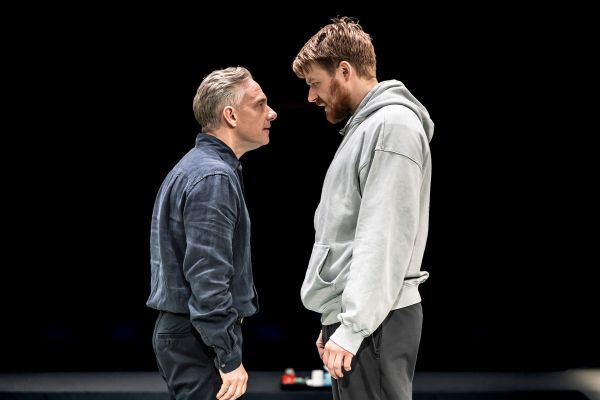
Martin Freeman & Jack Lowden in The Fifth Step. Photo: Johan Persson

The most important thing to say about The Fifth Step is, it’s very funny. Yes, it’s about two recovering addicts, one taking the first steps in the Alcoholics Anonymous programme, the other his older sponsor. Yes, there are shocking revelations and even violence. Yes, it explores trust in authority, toxic masculinity, lack of self esteem, and self deception but it’s written by David Ireland, the master of black comedy responsible for Cyprus Avenue and The Ulster American. And it stars Jack Lowden, who’s River Cartwright from Slow Horses, and Martin Freeman of Sherlock and The Hobbit fame. I can’t imagine any pair of actors doing it a better job of balancing over-the-top humour and mental anguish.

Jack Lowden and Martin Freeman are on stage continuously for the entire hour-and-a-half. The wonderful in-the-round stage of @sohoplace has never been better used. Milla Clarke‘s set is minimal, with a few collapsible chairs and a table that can be brought out or tucked away, as needed. There is nowhere for the actors to hide, any more than their characters can, no matter how much they try. Director Finn Den Hertog choreographs the movement of the actors and furniture, like a boxing match. And, if we’re going for metaphors, there’s also a raised edge that the characters can walk along precariously between scenes. Because these are men on the edge.

Jack Lowden is Luka, a newly recovering addict nearing the fifth step of the AA programme, Martin Freeman is James, an older mentor who has been through it and offers his experience to the younger man. At first, Luka is man who needs help. He doesn’t know what to do or where to turn once he has given up drink. Jack Lowden gives Luka teary eyed desperation as he says, “I think I might be an incel.” James offers wisdom and advice, but whatever crutch Luka reaches for, like a bouncing puppy with wide-eyed hope,  James moves him on- ‘don’t go to the pub, don’t masturbate, don’t have an affair with a married woman, don’t believe in Jesus.’ These are some of the funniest moments, as when sexist Luka speaks in a filthy way about women, without seeing the problem, while an exasperated James makes wry, often cynical,

It turns out that neither of them are fully to be believed. The two actors excel at conveying and concealing layers of truth. At first Martin Freeman is smiling, firm in his pronouncements, with a gimlet eye on Luka, but there is something about his controlling manner and his pointing finger that make you wonder about him even from the start. The meetings between the two continue and Luka gains in self esteem, until they reach the fifth step, which is confession about the harm their addiction may have done.

It’s then that we see what happens when faith is exploited and trust breaks down.  The newly confident Luka challenges his mentor as revelations about James’ contradictory instructions and hypocritical behaviour emerge. When that happens, James starts to break down with an aggressive defensiveness that includes nasty insults and actual, truly shocking violence near the end (it drew a gasp form the audience and was one of the best choreographed fights I’ve seen). Questions about the nature and abuse of authority come to the fore, already primed by earlier references to abuse of children by priests.

I felt the ending was silly, soft and rather sentimental, after such searing black comedy, and I could have done without so much reference to the importance of spiritual belief, even if there are some good jokes about it. Nevertheless, this is such a funny and profound play, and so well acted, I am happy to overlook those slight flaws, and thoroughly recommend The Fifth Step.

The Fifth Step is at @sohoplace until 26 July 2025. Buy tickets from the theatre here.

Paul paid for his own ticket.

Click here to watch this review on the YouTube channel Theatre Reviews With Paul Seven

Click here to read Paul’s roundup of other critics’ reviews of The Fifth Step.


×