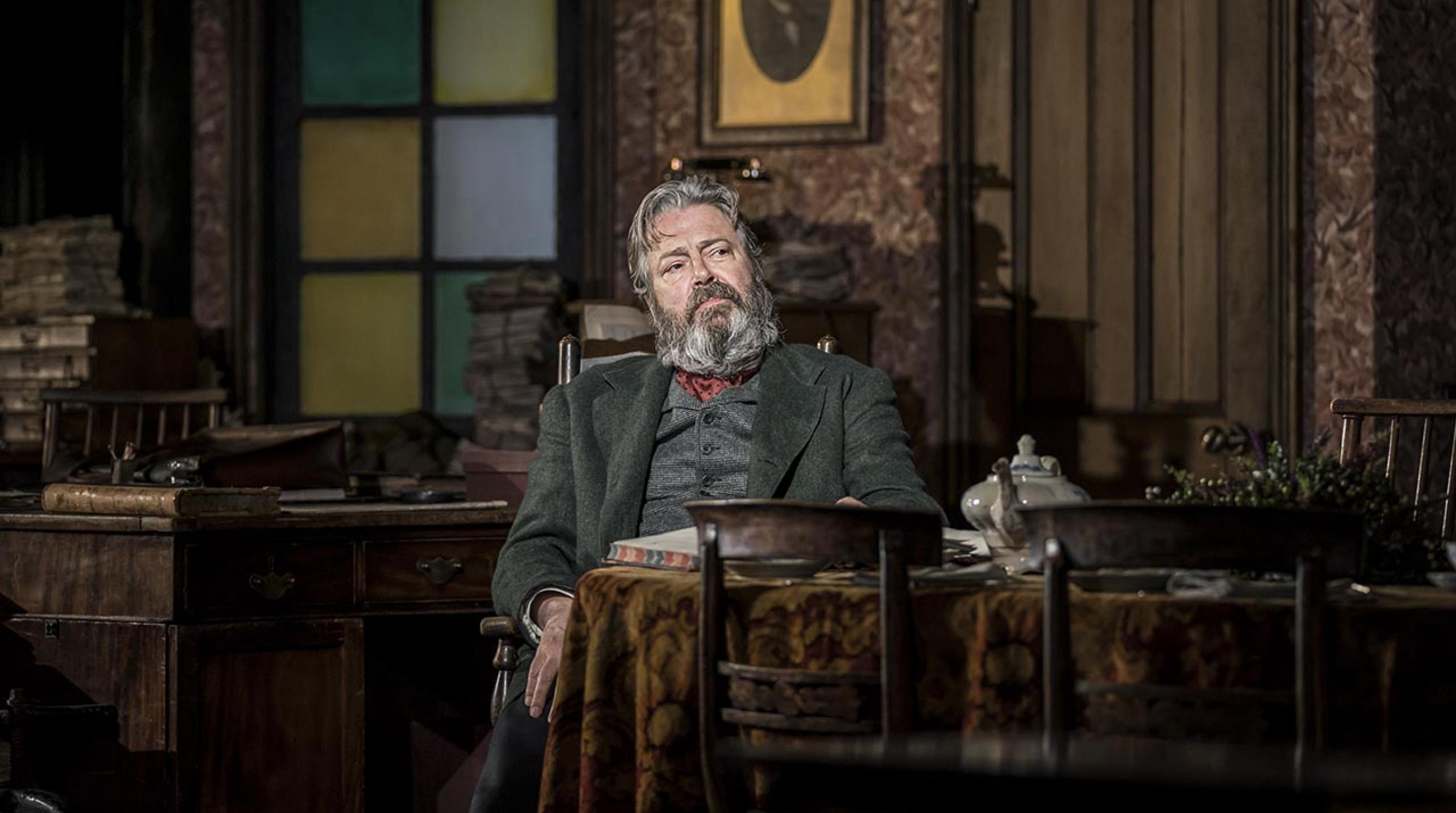
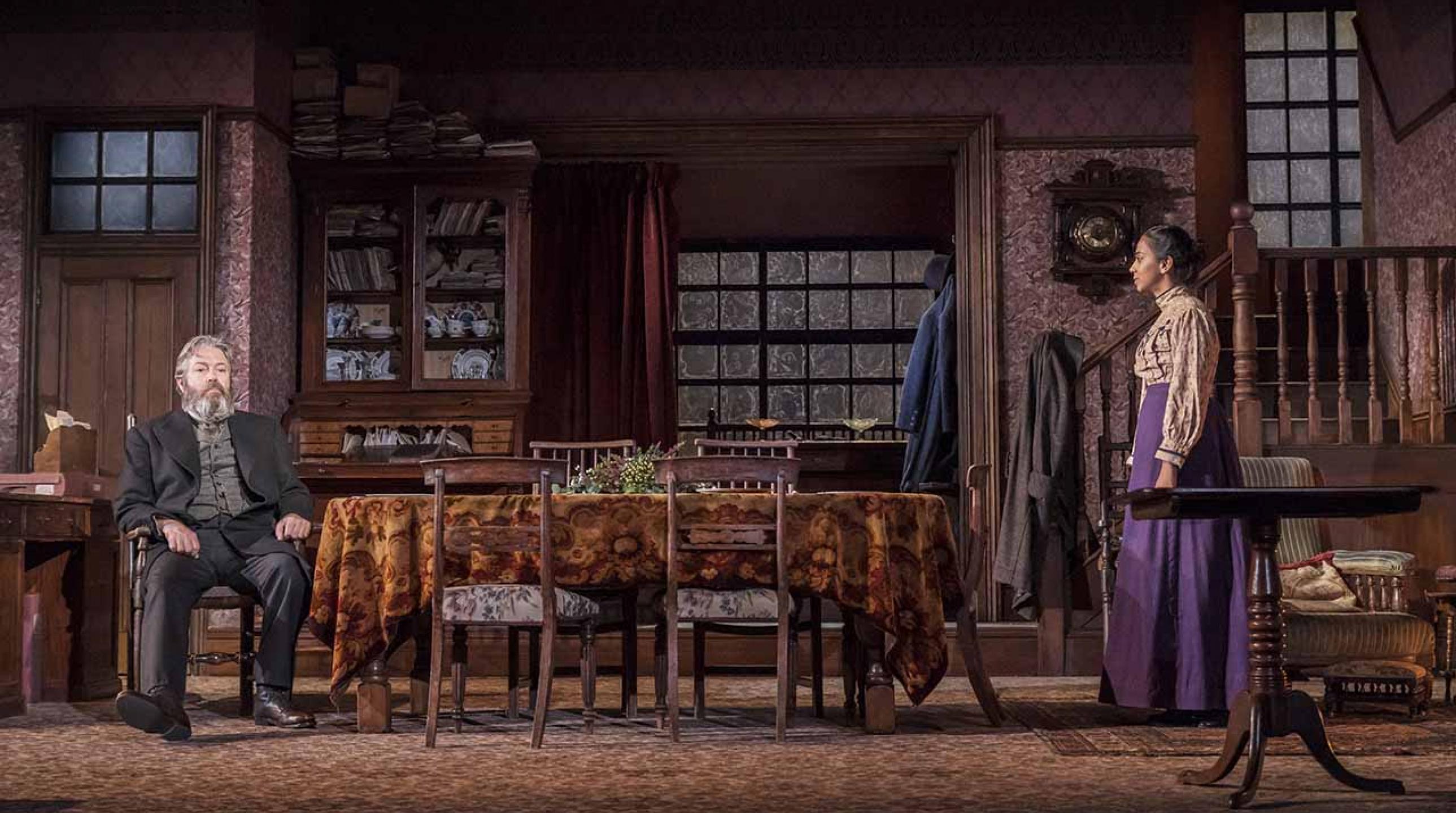
Roger Allam in a masterpiece of comic timing
⭑⭑⭑⭑
There was a time when there were five plays by Alan Ayckbourn running at the same time in the West End. That was 1975. His work is not so regularly performed these days, so it’s possible there are theatregoers who have never seen one of his plays. In which case, this is the perfect introduction. A farce about infidelity infused with deception and misunderstandings, a cast whose comic timing works with the precision of a Swiss watch, and, talking of running at the same time, a set in which two sitting rooms occupy the same space and the action segues between the two.
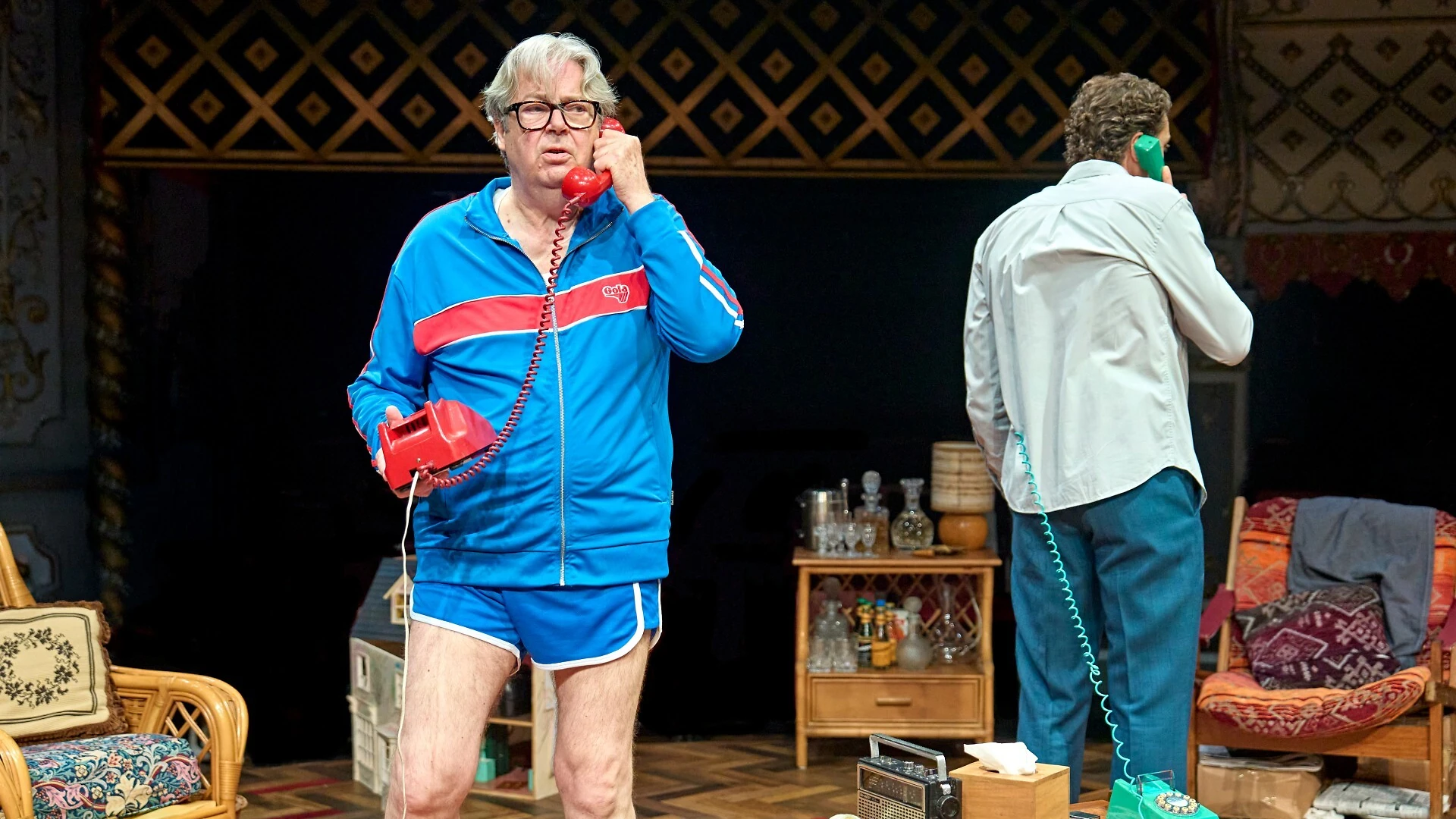
This production at The Old Vic takes place in the round, as it did when it was premiered back in 1969. Since it’s nearly always performed within a proscenium arch, it’s fascinating to see what a difference this makes. You really feel you’re in the thick of it, with actors entering and exiting in four different directions, front, back and sides. Rob Howell‘s set is a masterpiece of construction. He presents two sitting rooms in the same space while keeping it simple enough not to block anyone’s view,. It also evokes the late sixties and early seventies with some deft touches in the choice of furniture and costumes, including Roger Allam‘s very short shorts.
The households that are both present on stage belong to two couples- well-off Frank and Fiona, and flat dwelling Bob and Teresa. Fiona and Bob are having a secret affair. To try and keep it that way when their partners become suspicious, they both, independently, pretend that they are spending time helping someone who suspect their partner is having an affair. The two ‘someones’ are another couple William and Mary. Things start to spiral out of control when Frank and Teresa invite William and Mary to dinners on successive nights. The simultaneous view of what other characters are doing elsewhere underlines the secrets, the lies and the self deception.
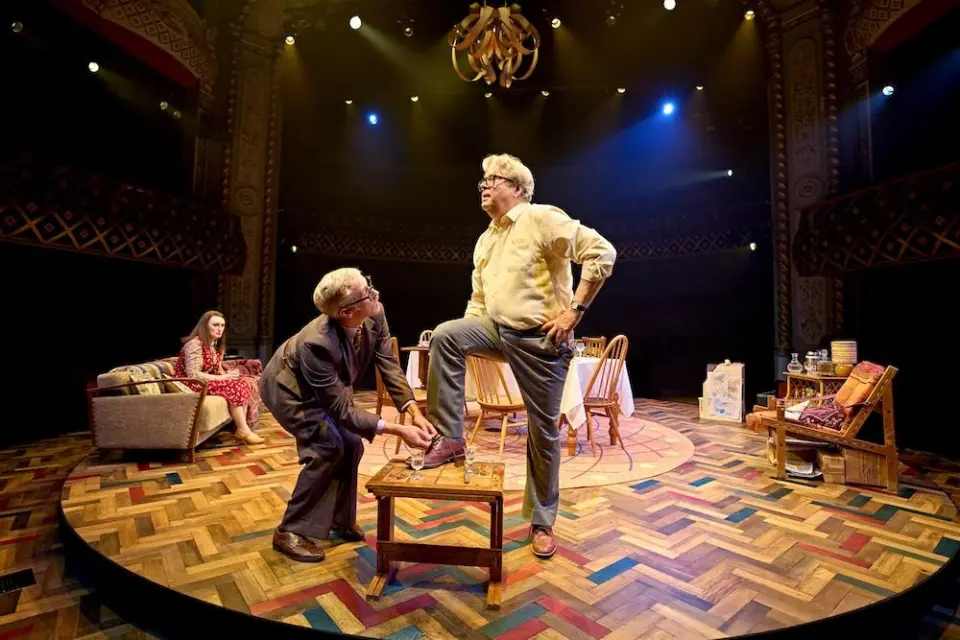
The genius of the play is to be seen when the consecutive dinners take place on stage simultaneously with William and Mary flitting between them, culminating in an hilarious incident with flying soup.
You may know that on this website I compile roundups of critics’ reviews. Well, they all praised Roger Allam‘s performance as Frank, more than one referring to his masterclass in comic timing. I absolutely agree that there can be no-one better at the pause and the look, before pouncing with a killer line. His character is pompous but with a dimness that doesn’t live up to his image of himself as someone in charge of situations. So he puts two and two together and makes five with continuous regularity while being so absorbed in his view of the world that he doesn’t notice hat’s happening in front of him.
Excellent as he is, all the cast are to be commended for their comic timing, as is Philip Breen for directing their propulsion through time and space. Dorothy Atkinson‘s flustered Fiona is a triumph of staring looks and tight lips. Rowan Polonski moves smarmy Bob from inconsiderate to downright nasty. You can almost see the sparks coming off Ayesha Antoine‘s explosive fiery Teresa. William, an abusive husband, is given a slimy obsequiousness by Adam Gillen. Laura Elsworthy as Mary is painfully shy but so full of emotion it feels like she could explode at any moment.
Although it concerns three very different marriages, none of them entirely happy but all of them somehow rubbing along, How The Other Half Loves only looks in depth at Frank and Fiona. We can see why she might have wanted a temporary escape from the dullness of her patronising husband. Less fully portrayed are the other two couples. In both of their cases, the men are abusive and the women seem to forgive them relatively easily. More insights into the female characters would be needed if the play was written today.
As a farce, though, it’s a great night out.
How The Other Half Loves can be seen at The Old Vic until 19 September 2026. Buy tickets directly from the theatre www.oldvictheatre.com
Follow Theatre Reviews With Paul Seven on Instagram, threads, Mastodon, BlueSky and Facebook
Click here to watch this review on the YouTube channel Theatre Reviews With Paul Seven