Theatre review: The Truth

Stephen Mangan dominates light comedy

Apollo Theatre, Shaftesbury Avenue


⭑⭑⭑
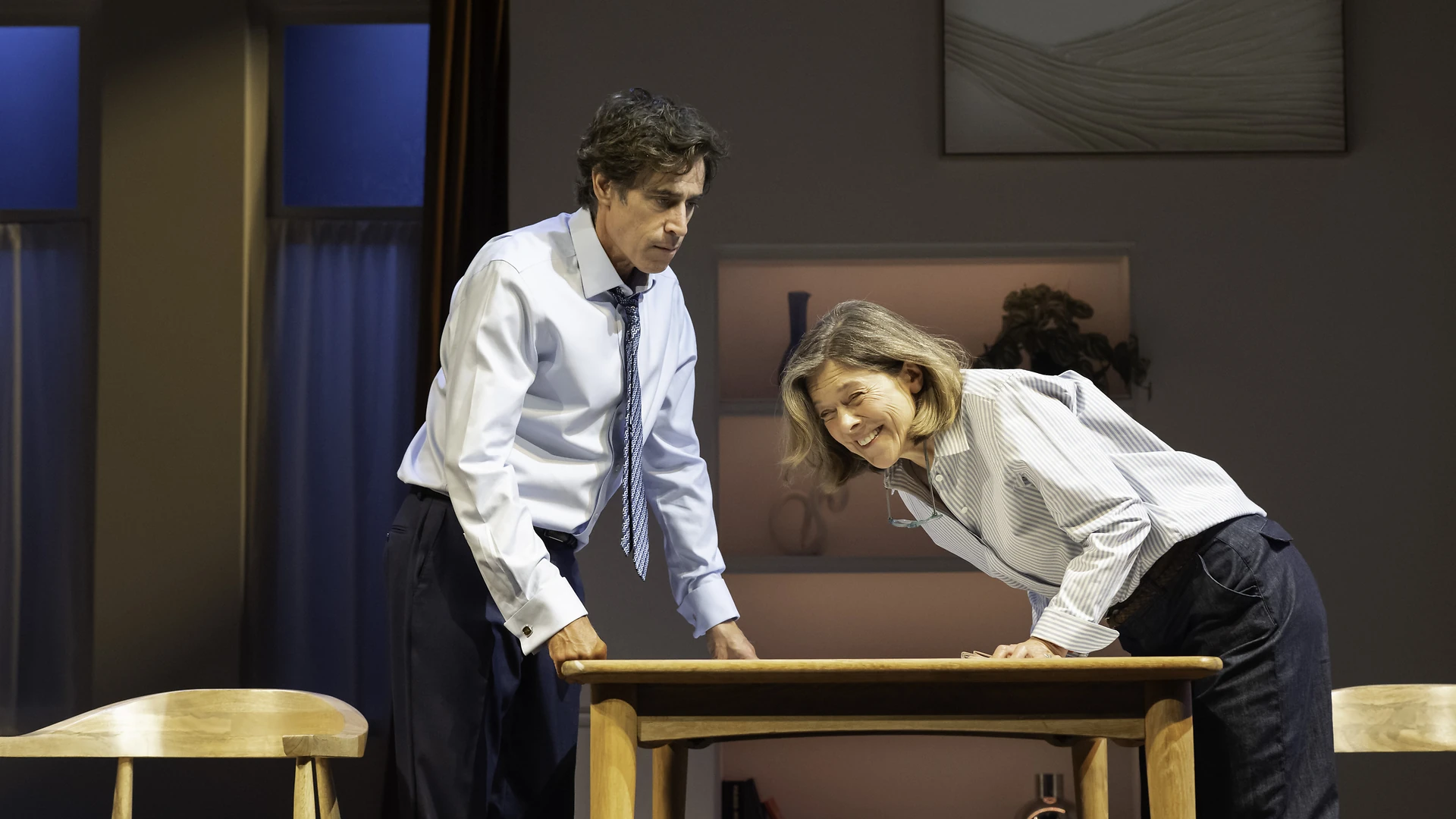
Stephen Mangan & Janie Dee in The Truth. Photo: Johan Persson

What can I say about The Truth? No, I mean, literally, what can I say about this comedy by Florian Zeller without it being a spoiler.  I can describe the first scene to you. After that, twist follows revelation follows surprise, so much so that to say anything may be to say too much. What I can tell you is that the four actors are fabulous and funny.

So, in the first scene, we find Michel played by Stephen Mangan in bed with Alice, played by Sarah Hadland. They are having an affair. It turns out Alice’s spouse Paul is Michel’s best friend, and her lover seems more guilty about betraying her husband than his wife. In fact, he seems to think it quite normal to be commit adultery.

Six more scenes follow in which Michel meets each of the other three one at a time. In these amusing confrontations, truth sometimes seems like a lie, sometimes is a lie, and sometimes what seems like a lie turns out to be true. The second scene sets the pattern. Michel is with his wife Laurence, played by Janie Dee, who seems suspicious about what he might be up to. He gets more and more tied up in his casual lies, and stutters his way into further deceits. Even after an hour and a half without interval, some questions of what is true and what is a deception are left hanging deliciously for us to chew on as we leave.

Zeller’s companion piece The Lie, that followed The Truth a few years later and featured what appear to be the same characters, explores the notion that deception makes the world go round and truth brings it to a halt. But that’s a more serious play. This is out-and-out comedy, written before Zeller got into ‘reverse theatre’ in a big way, causing us to question truth and reality by showing us scenes from various subjective perspectives, something that reached the height of confusion in his latest play on the subject of adultery The Forest.

Without the later plays’ theatrical trickery, the thin plot is exposed. While the many twists are funny, the play relies on its lead actor to do the heavy lifting as far as the laughs are concerned. Fortunately, in Stephen Mangan, the production has a player made for the part. Unfortunately, and not his fault, his blustering becomes repetitious, and there is no character development to offset the monotony. – no sense of a lesson learned or an issue resolved.

The fun is in what the characters say and don’t say, and how they react to what they’re told. And in an extension of that, how we as an audience react knowing what we think we know, and then finding out we didn’t know after all.

Perfect casting

Ardal O’Hanlan & Stephen Mangan in The Truth. Photo: Johan Persson

The casting is perfect. Stephen Mangan is like a naughty child, crashing into situations his own constructions like a toddler learning to walk, shouting as way of defending himself, and even at one point sitting sulkily in the corner with a big bottom lip. He not only doesn’t listen to others, he doesn’t listen to himself, being so self-centred that he cannot see the hypocrisy of being outraged by the betrayal of his friend deliberately losing at tennis, but oblivious to the upset caused by the revelation of his betrayal of wife and friend. Janie Dee’s facial expressions are quite brilliant: a slight widening of her eyes becomes as revelatory as a whole speech. Ardal O’Hanlan as Paul  quietly hides behind his neat beard, displaying a tight smile and a penetrating look that could be concealing either a secret or a feeling. Even Sarah Hadland‘s emotive Alice appears to have something up the sleeve she seems to wear her heart on.

In Lizzie Clachan‘s set design, hotels, a changing room, and sitting rooms all look similarly anodyne- there is even a joke about hotel rooms looking the same- suggesting an emptiness to these characters’ lives.

There is a familiarity about the creative team. This is an excellent translation by Christopher Hampton, who has brought seven of Zeller’s plays to English speaking audiences, including most famously The Father. Director Lindsay Posner has previously directed The Truth and The Lie at The Menier, and we should probably be thankful that he moves the production with such a pace that we have no time to dwell on the some of the more unlikely or more repetitive elements of the plot.

The Truth is a straightforward play compared with Zeller’s other hits, although you can argue that it m akes some profound points about the importance of deception to human society. It may also have become more relevant in an age of media and of leaders who give equal weight to lies and truth.

I think I’ve said enough.

The Truth can be seen as the Apollo Theatre in Shaftesbury Avenue, London, until 12 September 2026. Buy tickets directly from www.thetruthplay.com

Paul paid for his ticket.

Watch this review on the YouTube channel Theatre Reviews With Paul Seven
Read a roundup of other theatre critics’ reviews of The Truth (with ratings ranging from 2 to 5 stars) here

Sandy Wilson’s The Boy Friend at the Menier – review

Janie Dee leads delightful revival of The Boy Friend ★★★★

Production photo of Dylan Mason and Amara Okereke in Sandy Wilson's The Boy Friend at The Menier Theatre in London
Dylan Mason & Amara Okereke in The Boy Friend. Photo: Manuel Harlan

Even when it was first performed in 1954, Sandy Wilson’s The Boy Friend appeared to hark back to a bygone era, a time of flappers and musical comedies, that preceded the then modern muscular realist musicals like Oklahoma! That it still appeals 65 years later suggests that the secret of its longevity is that it is set not so much in the past as in a world of its own.

This is a world where rich young English ladies attend a finishing school under the benign supervision of Madame Dubonnet, in which English reserve melts in the warmth of the Mediterranean sun and the charms of the French, and in which a little deception and misunderstanding are mere ripples on a smooth voyage to romance and happiness. Put simply, its appeal is that it offers us a utopian world of innocence.

There isn’t much plot to tell you about. A young heiress wants to be loved for herself not her money. She meets a poor delivery boy, they fall in love, but he’s not all he seems. Don’t worry it all works out. In fact, it all works out for everybody’s love lives.

Sandy Wilson could have tried harder to incorporate some less predictable twists or more plausible predicaments but that’s not the point. The point is, to escape to this fantasy world for a couple of hours and bathe in the brightness of the song and dance.

Romantic jaunty and poignant song and dance

Mr Wilson’s delightful songs aspire to Cole Porter and, while not actually reaching the great man’s heights, there is a lot of humour in lines like ‘The mere idea of living in a palace is, so full of fallacies’. Memorable numbers include the romantic I Could Be Happy With You, the jaunty It’s Never Too Late To Fall In Love, an unexpectedly poignant Poor Little Pierette and of course The Boy Friend. A quick word of praise here for Simon Beck and his live orchestra for driving the show at a jolly pace.

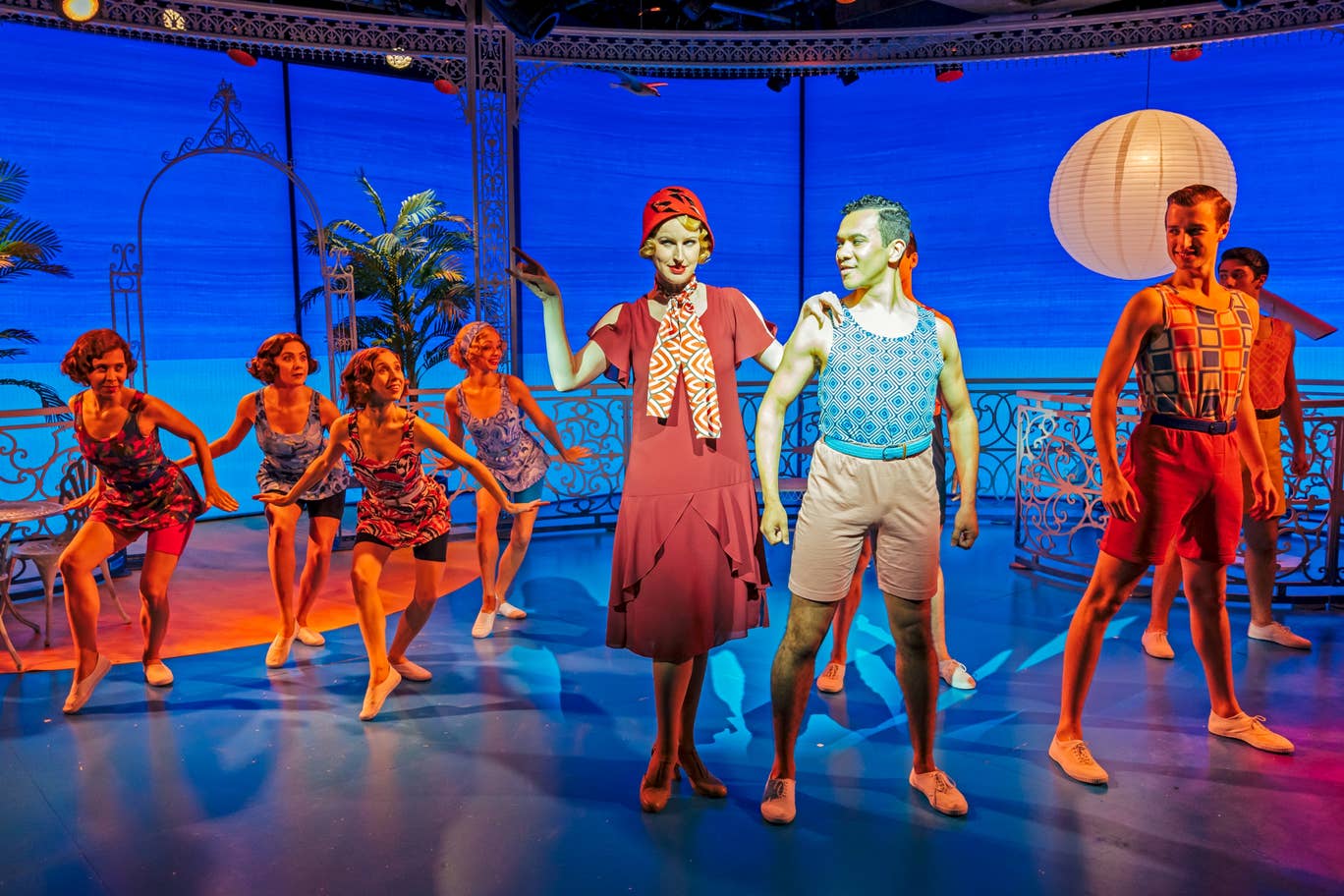
Production photo of Tiffany graves and the Compnay of The Boy Friend at Menier Theatre
Tiffany Graves & Company in The Boy Friend. Photo: Manuel Harlan

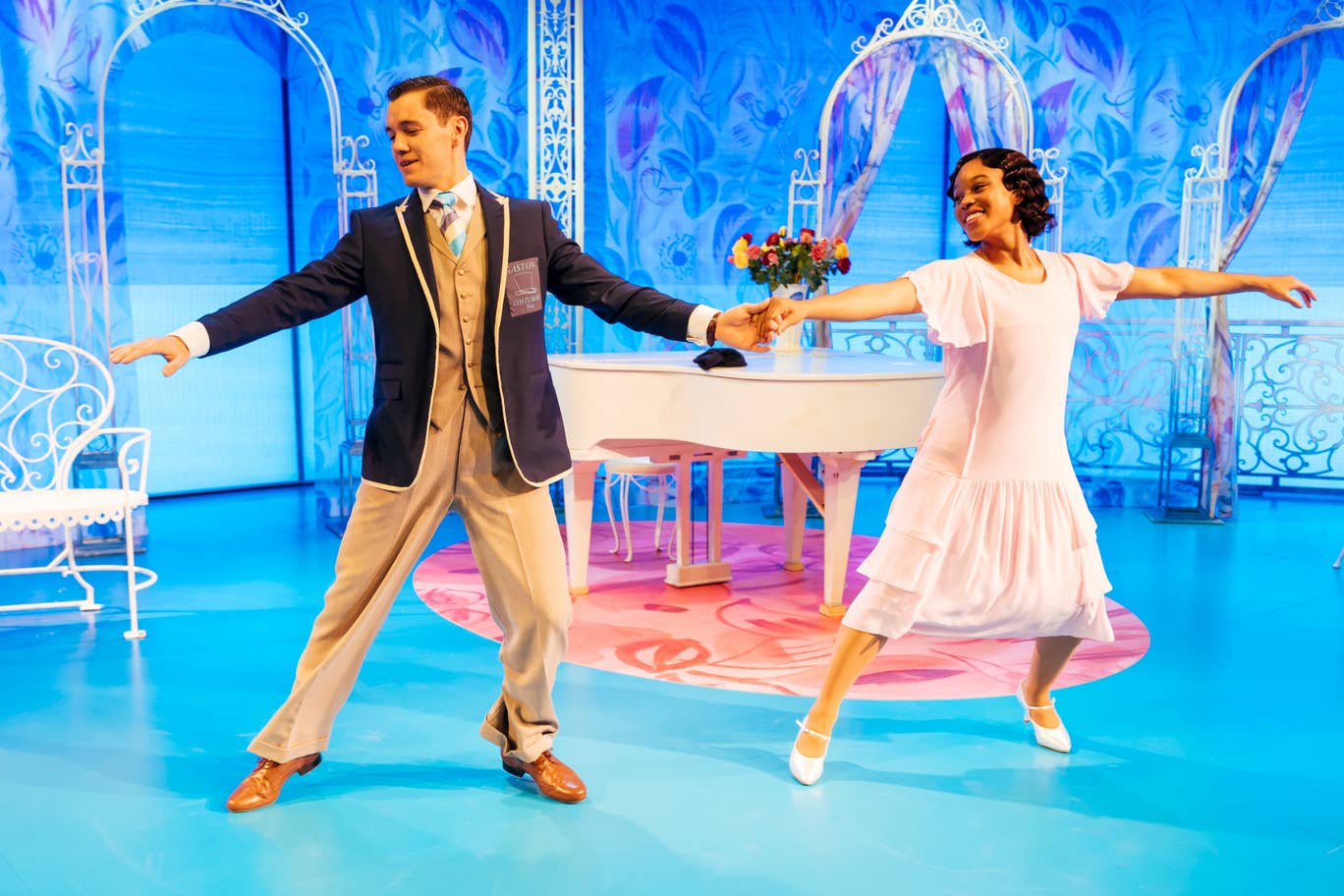
In the intimate space of the Menier, the kicks are so high and the lifts bound so far across the stage that people in the front row may need to duck. Among the many glorious dances, there’s an infectious Charleston performed by Gabrielle Lewis-Dodson and Jack Butterworth (both talented performers to watch out for in the future) and an amusing tango in which the couple come to blows while maintaining the moody moves.

The splendid chorus lines extend to the girls speaking in unison as they flirt with their potential husbands. In fact, given that choreographer Bill Deamer is listed as associate director, it is hard to say where his choreography ends and Matthew White’s direction begins. But all praise to Mr White for honouring the gossamer lightness of this musical while introducing enough down-to-earth physical comedy (with homage to vintage TV) to keep a contemporary audience happy. For example, when the stern French maid Hortense, played with gusto by Tiffany Graves, describes the demureness taught at the school while leaving her legs wide apart as she crosses them. Shades here of Kenny Everett.

Adrian Edmonson squeezes every laugh he can

There’s a touch of Benny Hill when Adrian Edmonson, once a Young One, appears as an old  English lord, whose lechery is thwarted at every turn. It’s behaviour we wouldn’t expect to find funny anymore but in the world of The Boy Friend, even lechery is innocent fun and Mr Edmonson squeezes every laugh he can out of it. He even eats an ice cream lasciviously.

And he is just one of a terrific cast brought together in this Menier production. It’s led by one of the great musical stars of the older generation Janie Dee who steals every scene she’s in with her ‘Allo ‘Allo style French accent (another blast from the TV’s comedy past) and her knowing smile, especially when she seeks to rekindle an old romance with ‘Petit Percy’ played by an appropriately starchy Robert Portal.

And it’s a pleasure to see a star of the new generation Amara Okereke in the lead role of Polly Browne. Her sweet soaring voice and subtle acting convey both the strength and vulnerability of a young woman looking for love. Dylan Mason plays her suitor with fresh faced innocence.

Paul Farnsworth’s simple Mediterranean blue set is entirely appropriate and his 1920s style costumes are bright, elegant and fun.

You won’t come away from The Boy Friend feeling you’ve had a substantial meal but you will have enjoyed a superb sorbet.

The Boy Friend is performing at The Menier Chocolate Factory Theatre until 7 March 2020.

Click here to watch this review on YouTube

Sondheim’s Follies at the National Theatre

Superb Cast Make Follies A Night To Treasure

[usr=4]

Follies at the National Theatre reviewed by Paul Seven Lewis of One Minute Theatre Reviews
Follies at the National Theatre. Photo Johan Persson

Stephen Sondheim’s Follies is a difficult musical. To carry it off, you need an extraordinarily good cast. Fortunately the National Theatre production has one.

Imelda Staunton is now the preeminent West End musical star, certainly for the more mature roles. Her performance as Sally consolidates her reputation by offering a perfect, beautifully acted and sung portrayal of sadness and illusion. That would be joy enough but just as perfect is Janie Dee. In the role of the cynical but brittle Phyllis, her voice, her acting and her dancing reminded me that she belongs in the highest ranks of musical performers.

Dee gets the most laughs with her songs Could I Leave You? and The Story Of Lucy And Jessie. When she finally crumbles, her performance is every bit as poignant as Staunton’s, who expresses her damaged character through the songs Don’t Look At Me, Too Many Mornings and Losing My Mind.

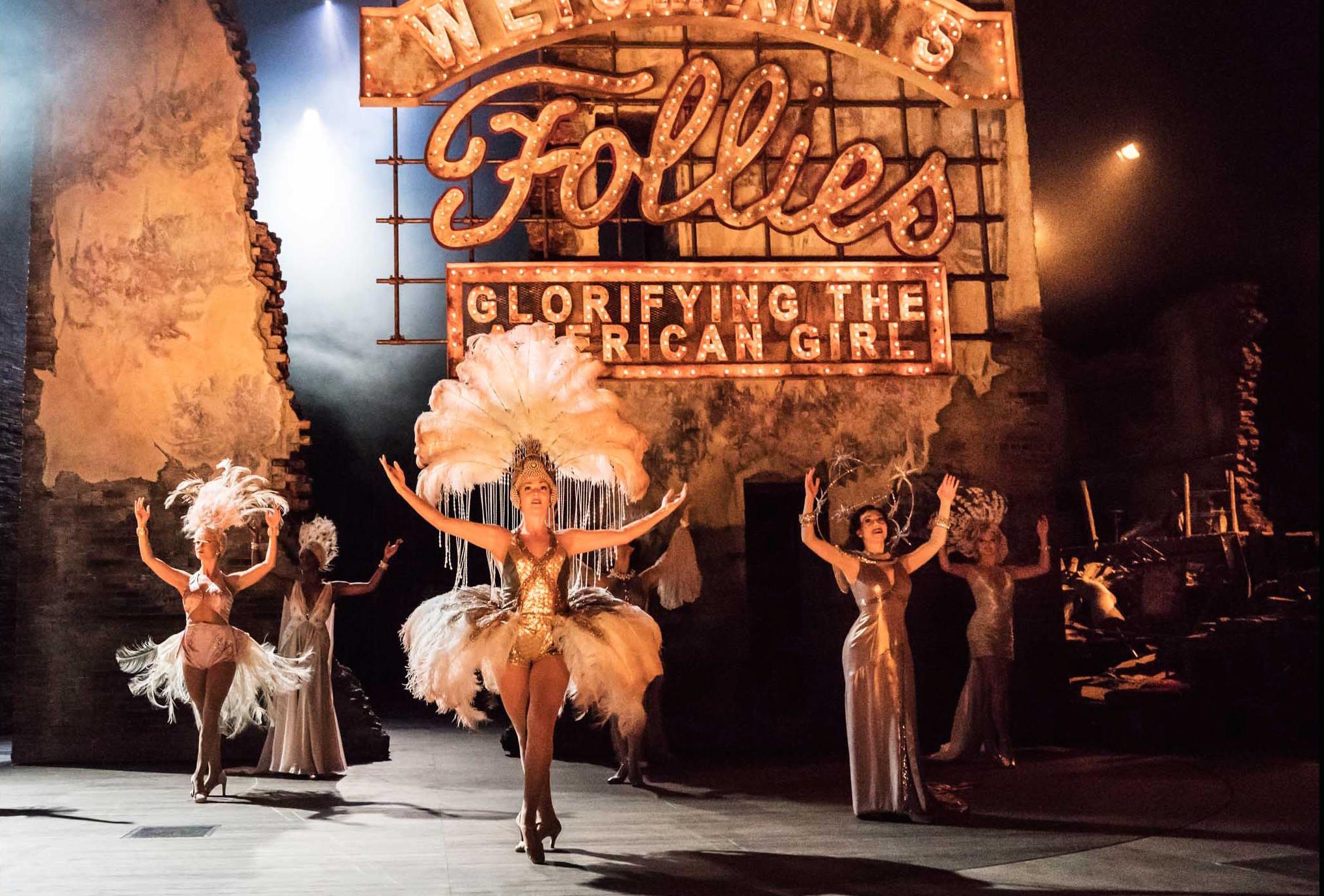
The musical is set in 1971 in a condemned theatre where former showgirls from Weismann’s Follies, a series of Ziegfeld-style musical reviews from the inter-War years, are gathering for a reunion. Attention centres on two of the women and their husbands. We discover that both couples have relationship problems which date back to their Follies days. This is cleverly told by showing us the ‘ghosts’ of their younger selves.

Other women reveal their illusions about their lives and relive their glory moments, again accompanied by their younger selves. More top class performances include those of Josephine Barstow, Dawn Hope and Tracie Bennett.

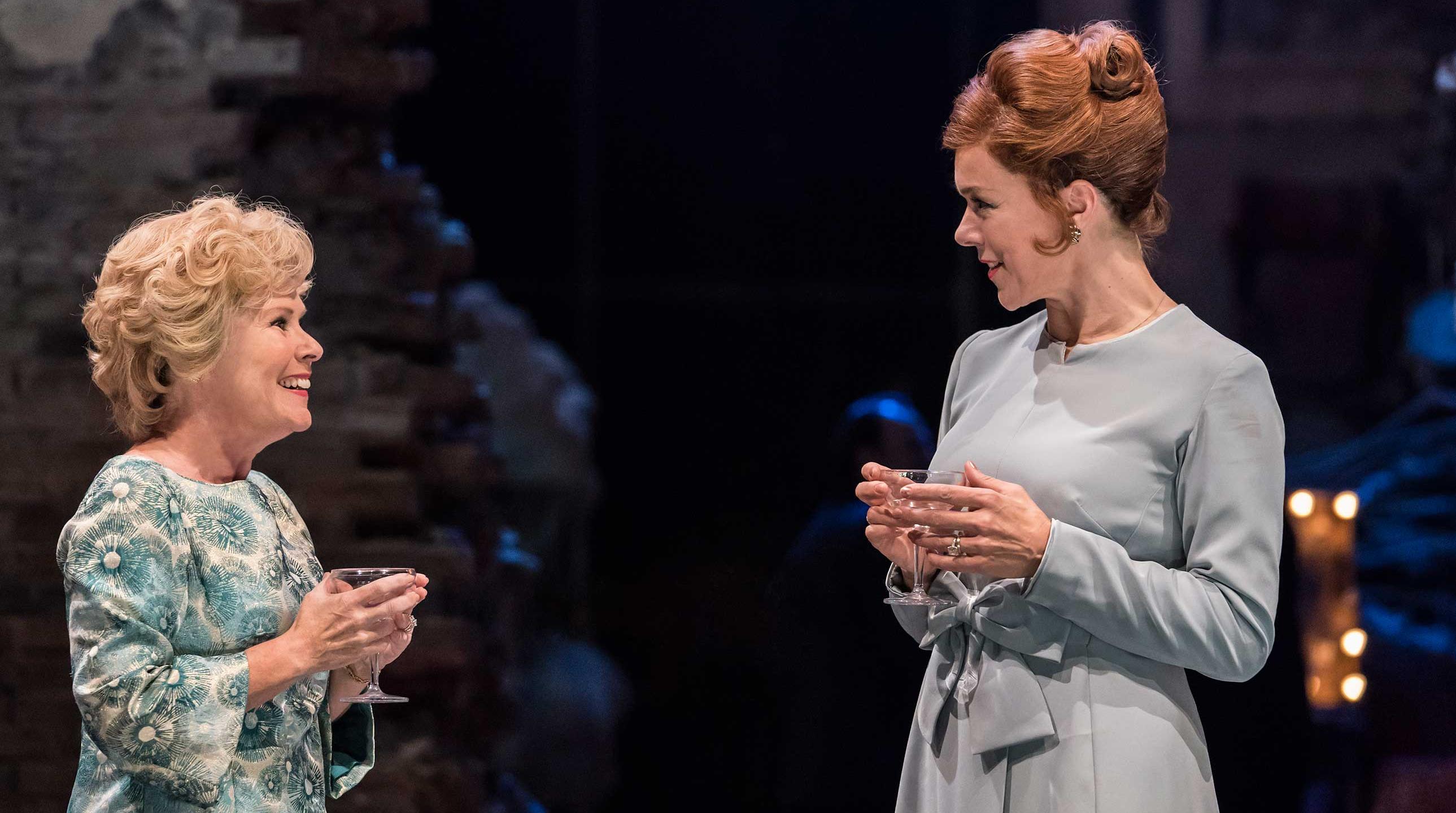
Imelda Staunton & Janie Dee in Follies reviewed by Paul Seven Lewis of One Minute Theatre Reviews
Imelda Staunton & Janie Dee in Follies. Photo Johan Persson

Janie Dee and Imelda Staunton are magnificent

Why do I say Follies is a ‘difficult’ musical?  There is very little in the way of plot. The exploration of the main characters’ unhappy present relationships and past regrets is told for a substantial part of it as a series of book or character songs.

Sondheim’s music is complex and deep with emotion but, knowing that I was watching a production that runs for two hours and ten minutes without an interval, there was a moment when I wondered whether it was ever going to move along.

Just when it seemed Follies was getting nowhere, we were treated to impressive song-and-dance numbers like Who’s That Woman and a series of pastiches of pre-war Broadway musical songs, excellently choreographed by Bill Deamer. They provided some much needed fun and spectacle.

Follies comes to a climax with Loveland, a collection of Broadway parodies in which each of the main characters sings about their ‘folly’, whether of youth or maturity.

The production, directed by Dominic Cooke, does the musical proud with its 37 strong cast and 21 piece orchestra. The large Olivier stage is used well by designer Vicki Mortimer to create the crumbling theatre complete with a flickering neon sign and, when it provides the setting for the more glitzy Broadway numbers, it gives an apt visual representation of the contrast between past and present. The space is great for the song-and-dance numbers but too big for the book songs but that is the paradox of this brilliant, broken musical.

Click on this link to watch my YouTube review at One Minute Theatre Reviews or watch it below

Stephen Sondheim’s Follies runs until 3 January 2018 at the National Theatre.

A Kendall commented on my YouTube review: “The criticisms of James Goldman’s book as having little ‘plot’ are shown to be irrelevant when you have this good a production, because what it becomes is, in effect, a meditation on ageing, the death of dreams, the sense of regret, guilt and much more. That is why it draws people in so very deeply to it. And in that sense, it is to musical theatre what some of Wagner’s mature works are to opera.”

It’s a good point. Maybe we can too hung up on stories in musicals and should sometimes just enjoy the mood of the work.

×