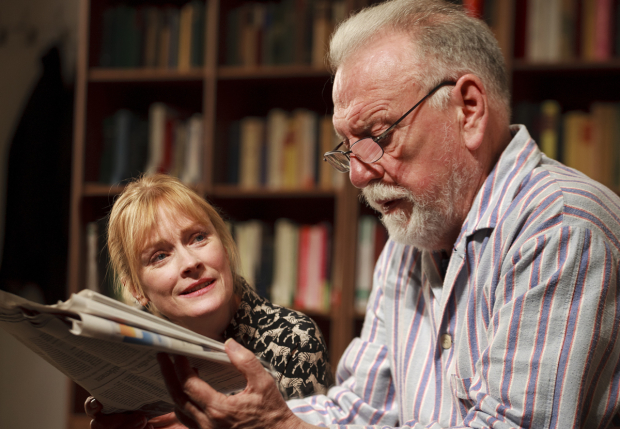
Stephen Mangan dominates light comedy
Apollo Theatre, Shaftesbury Avenue
⭑⭑⭑
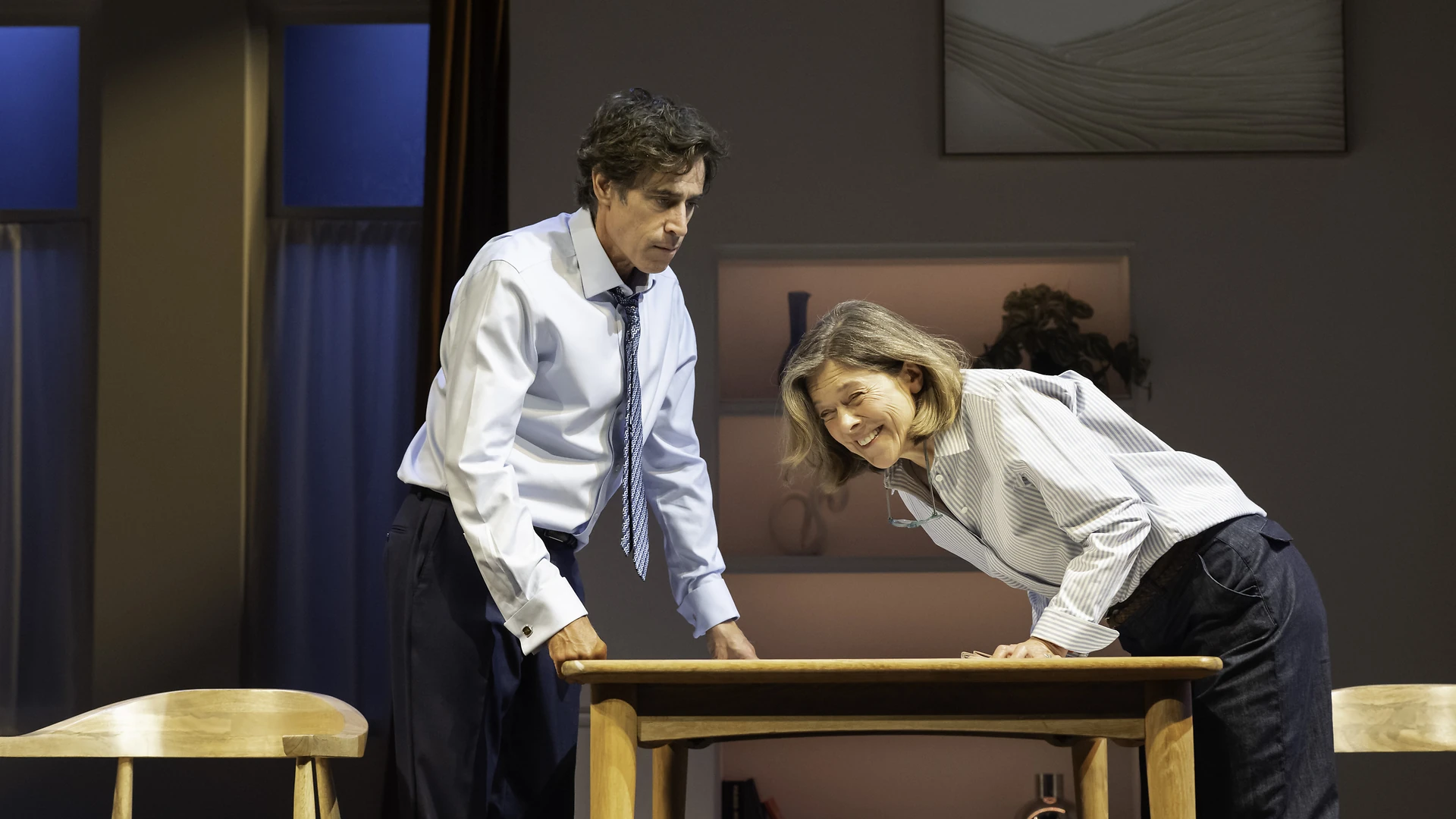
What can I say about The Truth? No, I mean, literally, what can I say about this comedy by Florian Zeller without it being a spoiler. I can describe the first scene to you. After that, twist follows revelation follows surprise, so much so that to say anything may be to say too much. What I can tell you is that the four actors are fabulous and funny.
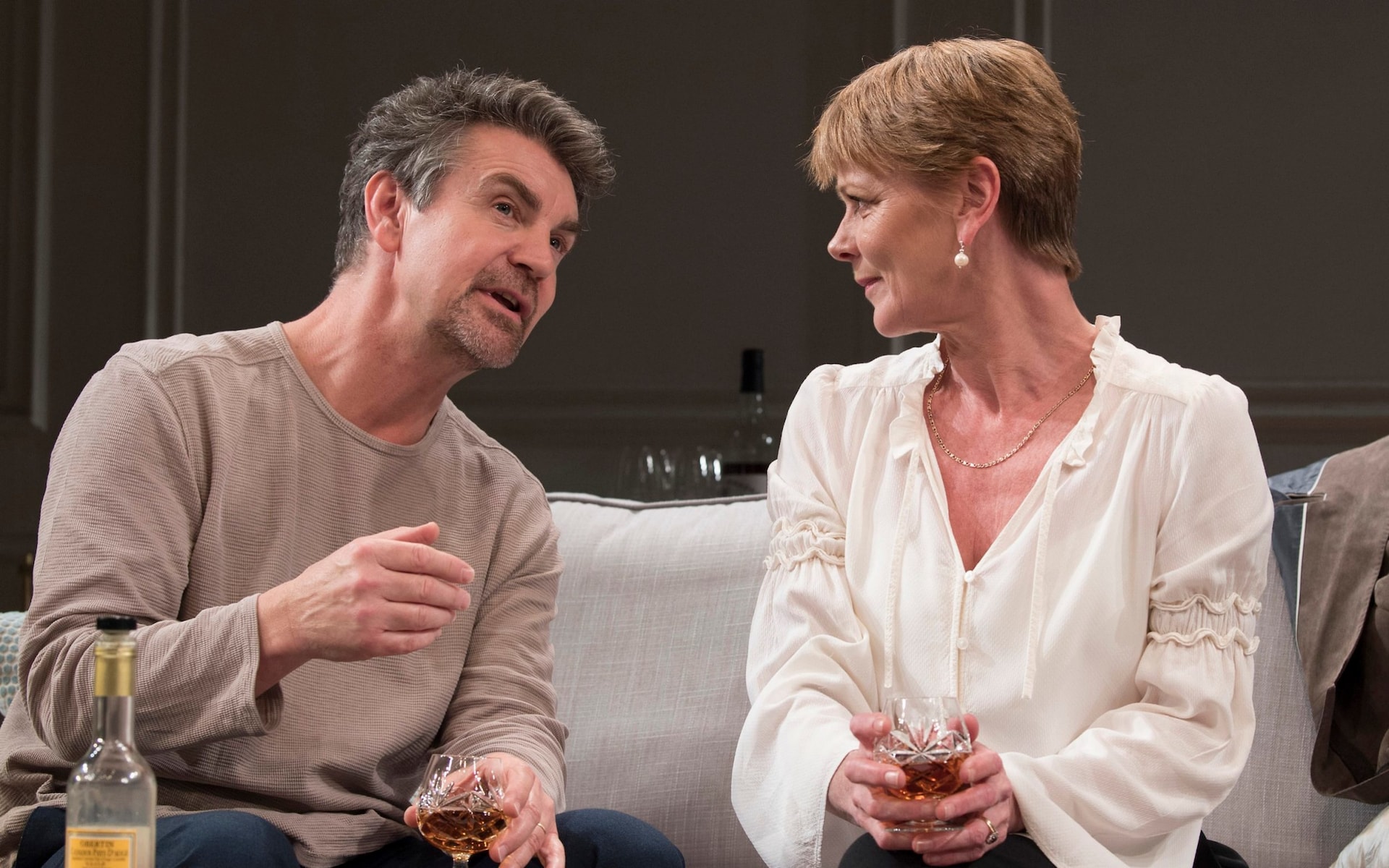
So, in the first scene, we find Michel played by Stephen Mangan in bed with Alice, played by Sarah Hadland. They are having an affair. It turns out Alice’s spouse Paul is Michel’s best friend, and her lover seems more guilty about betraying her husband than his wife. In fact, he seems to think it quite normal to be commit adultery.
Six more scenes follow in which Michel meets each of the other three one at a time. In these amusing confrontations, truth sometimes seems like a lie, sometimes is a lie, and sometimes what seems like a lie turns out to be true. The second scene sets the pattern. Michel is with his wife Laurence, played by Janie Dee, who seems suspicious about what he might be up to. He gets more and more tied up in his casual lies, and stutters his way into further deceits. Even after an hour and a half without interval, some questions of what is true and what is a deception are left hanging deliciously for us to chew on as we leave.
Zeller’s companion piece The Lie, that followed The Truth a few years later and featured what appear to be the same characters, explores the notion that deception makes the world go round and truth brings it to a halt. But that’s a more serious play. This is out-and-out comedy, written before Zeller got into ‘reverse theatre’ in a big way, causing us to question truth and reality by showing us scenes from various subjective perspectives, something that reached the height of confusion in his latest play on the subject of adultery The Forest.
Without the later plays’ theatrical trickery, the thin plot is exposed. While the many twists are funny, the play relies on its lead actor to do the heavy lifting as far as the laughs are concerned. Fortunately, in Stephen Mangan, the production has a player made for the part. Unfortunately, and not his fault, his blustering becomes repetitious, and there is no character development to offset the monotony. – no sense of a lesson learned or an issue resolved.
The fun is in what the characters say and don’t say, and how they react to what they’re told. And in an extension of that, how we as an audience react knowing what we think we know, and then finding out we didn’t know after all.
Perfect casting

The casting is perfect. Stephen Mangan is like a naughty child, crashing into situations his own constructions like a toddler learning to walk, shouting as way of defending himself, and even at one point sitting sulkily in the corner with a big bottom lip. He not only doesn’t listen to others, he doesn’t listen to himself, being so self-centred that he cannot see the hypocrisy of being outraged by the betrayal of his friend deliberately losing at tennis, but oblivious to the upset caused by the revelation of his betrayal of wife and friend. Janie Dee’s facial expressions are quite brilliant: a slight widening of her eyes becomes as revelatory as a whole speech. Ardal O’Hanlan as Paul quietly hides behind his neat beard, displaying a tight smile and a penetrating look that could be concealing either a secret or a feeling. Even Sarah Hadland‘s emotive Alice appears to have something up the sleeve she seems to wear her heart on.
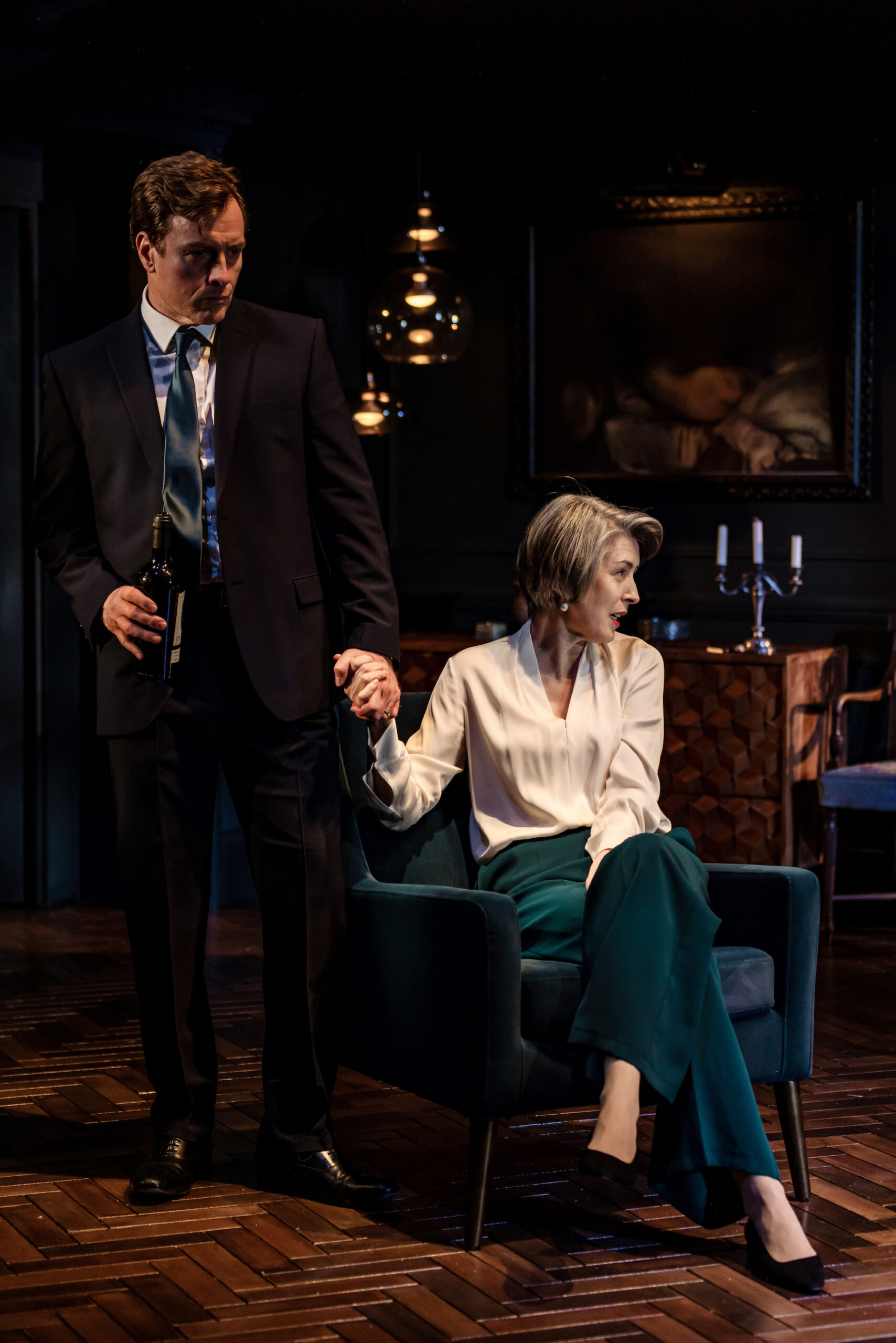
In Lizzie Clachan‘s set design, hotels, a changing room, and sitting rooms all look similarly anodyne- there is even a joke about hotel rooms looking the same- suggesting an emptiness to these characters’ lives.
There is a familiarity about the creative team. This is an excellent translation by Christopher Hampton, who has brought seven of Zeller’s plays to English speaking audiences, including most famously The Father. Director Lindsay Posner has previously directed The Truth and The Lie at The Menier, and we should probably be thankful that he moves the production with such a pace that we have no time to dwell on the some of the more unlikely or more repetitive elements of the plot.
The Truth is a straightforward play compared with Zeller’s other hits, although you can argue that it m akes some profound points about the importance of deception to human society. It may also have become more relevant in an age of media and of leaders who give equal weight to lies and truth.
I think I’ve said enough.
The Truth can be seen as the Apollo Theatre in Shaftesbury Avenue, London, until 12 September 2026. Buy tickets directly from www.thetruthplay.com
Paul paid for his ticket.
Watch this review on the YouTube channel Theatre Reviews With Paul Seven